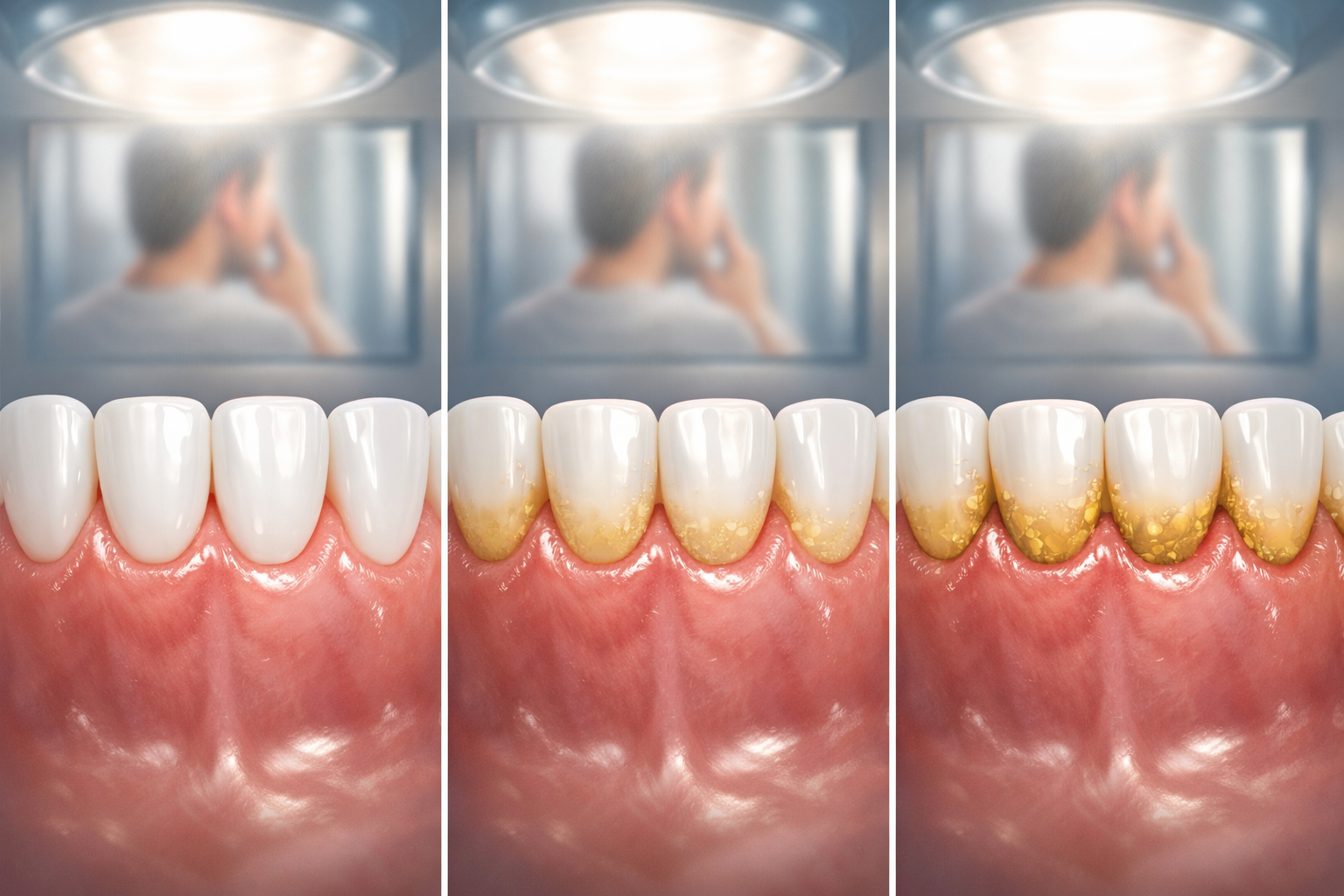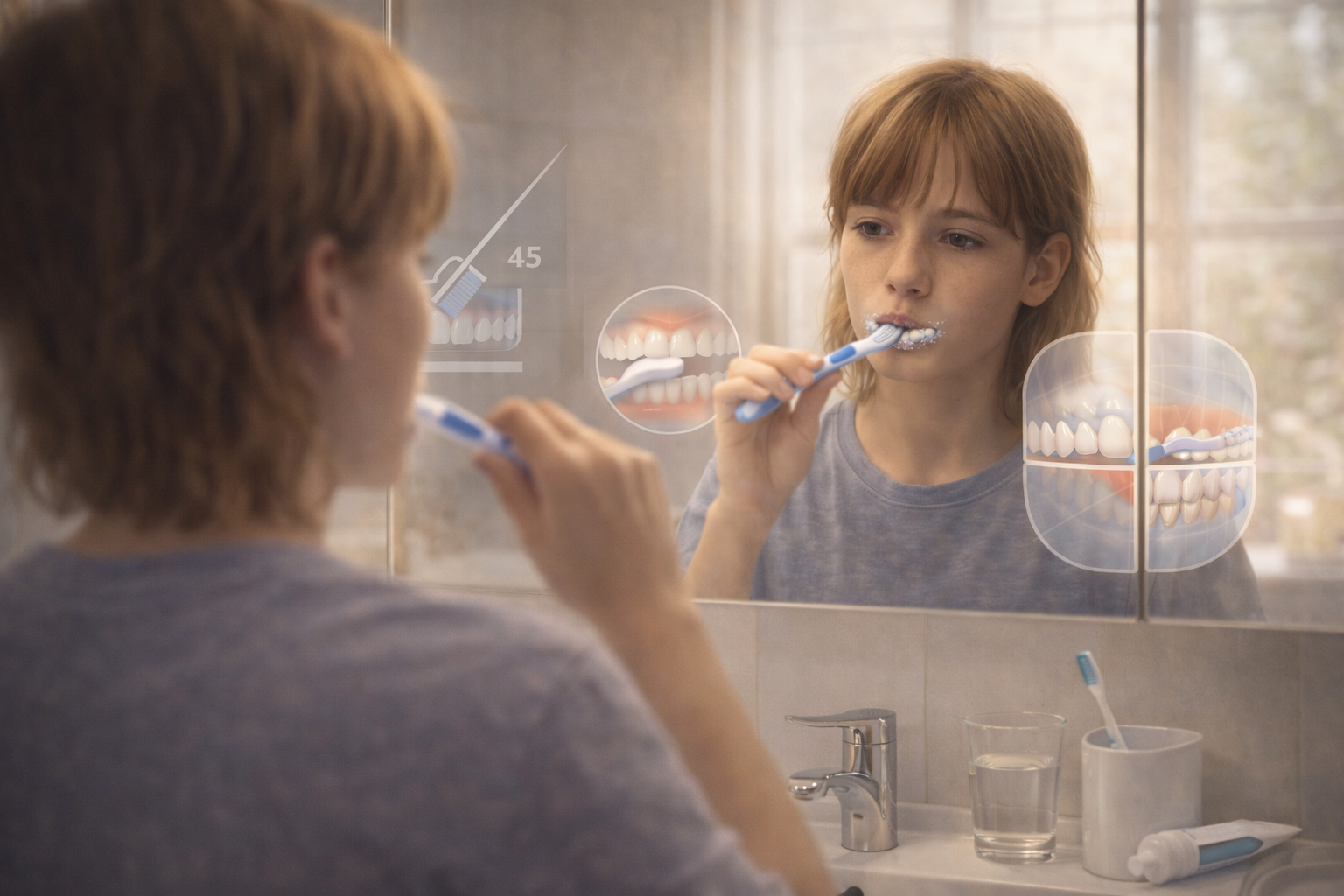
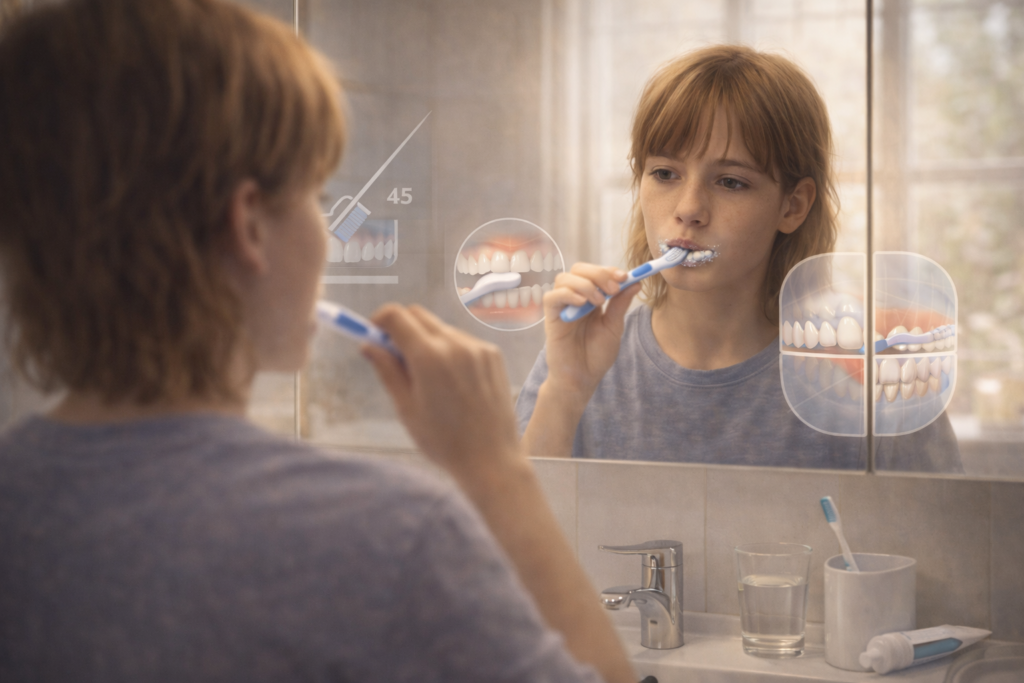
I used to think brushing my teeth was the simplest part of my day.
No thinking required. No effort beyond muscle memory. Just pick up the toothbrush, add toothpaste, scrub for a bit, rinse, and move on. It was routine in the purest sense—automatic and unquestioned.
But that changed the morning I caught my reflection mid-brush.
There was toothpaste foam everywhere, my hand moving quickly back and forth like I was trying to clean something stubborn off a plate, and my mind already drifting to the rest of the day ahead. I paused for a second, toothbrush still in hand, and wondered something I hadn’t really asked before:
Am I actually doing this right?
That question stayed with me longer than I expected. And the more I paid attention, the more I realized that brushing isn’t just a routine—it’s a skill. One that most of us were never really taught properly, just demonstrated once as kids and expected to figure out on our own.
So I decided to relearn it. Slowly. Step by step.
Step 1: It Starts Before the Brush Touches Your Teeth
The first surprise? Proper brushing doesn’t start when the toothbrush hits your teeth.
It starts with preparation.
I used to rush this part—quickly wet the brush, squeeze on a random amount of toothpaste, and go. But there’s a subtle difference when you slow down, even for a few seconds.
A pea-sized amount of fluoride toothpaste is enough. Not a thick ribbon like you see in commercials. That visual was designed for marketing, not accuracy.
And the brush itself matters too. A soft-bristled toothbrush is what dentists recommend most often. Hard bristles might feel like they’re cleaning better, but they can be too aggressive on both enamel and gums.
Even before you begin, you’re already setting the tone: gentle, controlled, intentional.
Step 2: The First Contact — Slowing Down
When the toothbrush finally meets your teeth, the instinct is to start scrubbing immediately.
I did that for years.
But proper brushing starts slower than you’d expect.
Instead of rushing, place the toothbrush gently against your teeth at about a 45-degree angle toward the gumline. This angle isn’t random—it’s where plaque tends to build up the most.
The first few seconds feel almost too slow, like you’re not doing enough. But that’s part of the adjustment. You’re not scrubbing—you’re guiding the bristles into the spaces where they’re actually needed.
Step 3: Small Movements, Big Difference
This was probably the hardest habit for me to change.
I was used to wide, fast strokes—covering as much surface area as possible in the shortest time. It felt efficient.
But efficiency isn’t the goal here. Precision is.
Instead of big movements, use small, gentle circular motions or short back-and-forth strokes. Think of it as massaging your teeth and gums rather than scrubbing them.
At first, it felt almost too delicate, like it couldn’t possibly be effective. But over time, I noticed something surprising: my mouth actually felt cleaner.
Not just “minty fresh,” but genuinely clean.
Step 4: Dividing the Mouth Into Sections
One of the biggest mistakes I didn’t realize I was making was uneven brushing.
I’d spend more time on the front teeth—the ones I see in the mirror—and rush through the back ones. Sometimes I’d miss certain areas entirely without noticing.
The solution is simple but powerful: divide your mouth into sections.
Upper right, upper left, lower right, lower left.
Spend about 30 seconds on each section. That’s how you reach the full two minutes dentists recommend.
When I started doing this, brushing stopped feeling random. It became structured. Intentional. Balanced.
No area left behind.
Step 5: Don’t Forget the Inside Surfaces
This was my blind spot.
The inside surfaces of the teeth—the parts facing your tongue—are easy to ignore because they’re harder to see. But they’re just as important.
For the front teeth, especially, the technique changes slightly. Instead of holding the brush horizontally, tilt it vertically and use gentle up-and-down strokes.
It felt awkward at first, like learning a new way to write with your non-dominant hand. But once it became familiar, it made sense.
These are the areas where plaque quietly builds up when you’re not paying attention.
Step 6: The Chewing Surfaces Need Attention Too
The flat surfaces of your molars—the ones you use to chew—are like tiny landscapes with grooves and ridges.
Food particles love to settle there.
For these areas, you can use slightly firmer back-and-forth motions, but still controlled. Not aggressive. Just enough to reach into those grooves without damaging the enamel.
It’s a different texture compared to the rest of your teeth, and brushing them properly feels different too—more deliberate, slightly more focused.
Step 7: Your Tongue Is Part of the Routine
I used to skip this step entirely.
It didn’t feel essential. Brushing teeth was the priority—everything else felt optional.
But your tongue holds bacteria that contribute to bad breath and overall oral health.
Now, at the end of brushing, I gently brush my tongue or use a tongue scraper. It takes maybe 5–10 seconds, but it changes the entire feeling of cleanliness.
It’s like finishing a task properly instead of stopping just short of completion.
Step 8: Rinsing — Or Not?
This one surprised me the most.
I used to rinse my mouth immediately after brushing, swishing water around until all the foam was gone.
But many dentists actually recommend minimizing rinsing right after brushing.
Why? Because rinsing washes away the fluoride from the toothpaste—the part that protects and strengthens your enamel.
Instead, you can spit out the excess toothpaste and leave a thin layer behind. It might feel unusual at first, but it allows the fluoride to keep working.
It’s a small shift, but one that makes brushing more effective without adding any extra time.
Step 9: Timing Matters More Than You Think
Brushing twice a day is standard advice, but when you brush can also make a difference.
At night, brushing is especially important. It removes the buildup of the entire day—food, bacteria, everything that’s accumulated.
In the morning, brushing helps freshen your breath and clear away bacteria that developed overnight.
But there’s also that detail many people overlook: waiting a bit after eating before brushing, especially if the food was acidic.
It’s not about doing more—it’s about doing it at the right time.
Step 10: Consistency Over Perfection
After learning all of this, I expected brushing to feel complicated.
Like something I’d have to concentrate on every single time.
But that’s not what happened.
Instead, it became calmer.
More intentional, yes—but not harder.
The steps started to blend into a rhythm. Angle, gentle motion, section by section. No rushing, no aggressive scrubbing, no guesswork.
Just consistency.
And that’s really what this whole process comes down to.
A Quiet Shift in Perspective
There wasn’t a dramatic moment where everything changed overnight.
No sudden transformation.
Just small, quiet improvements.
My gums felt less sensitive. My teeth looked a little brighter. Dental visits became less stressful because there was less uncertainty about what I might hear.
But more than anything, brushing stopped being something I had to do—and became something I understood.
Something I paid attention to.
The Truth About “Doing It Right”
If there’s one thing I’ve learned through all of this, it’s that proper brushing isn’t about perfection.
It’s about awareness.
Most of us aren’t taught the details—we pick up habits and stick with them for years without questioning them. And sometimes, those habits are just slightly off in ways that add up over time.
The good news?
They’re easy to fix.
Not with expensive tools or complicated routines—but with small adjustments, done consistently.
Now, every time I pick up my toothbrush, I don’t just go through the motions.
I notice the angle. The pressure. The pace.
And every once in a while, I catch my reflection again—same mirror, same routine—but with a quiet sense that I’m finally doing it the way it was meant to be done.
Step by step.