I didn’t always think much about my breath.
Like most people, I assumed that brushing twice a day was enough. A quick mint before meeting someone, maybe a piece of gum after lunch—that felt like a complete routine. But one afternoon changed that for me in a way I didn’t expect.
I was sitting with a group of friends, laughing over something completely unimportant, when I noticed something subtle. Not obvious, not dramatic—just a slight hesitation when I leaned in to speak. No one said anything. No one needed to. That moment lingered longer than it should have.
On the way home, I kept replaying it. Was it my breath? Had it always been like this? And more importantly—why didn’t I notice?
That’s when I started paying attention. Not obsessively, but curiously. And what I discovered surprised me: fresh breath isn’t just about toothpaste or mints. It’s deeply connected to how we treat our bodies, what we eat, how we hydrate, and even how we live day to day.
So if you’ve ever wondered how to get fresher breath naturally—without relying on artificial fixes—this is the journey I wish someone had shared with me earlier.
It Starts in Places You Don’t See
The first thing I learned is that bad breath doesn’t really start in your mouth the way we think it does.
It starts with bacteria.
Your mouth is full of them—millions, actually. Most are harmless, some are helpful, but a few produce sulfur compounds that create that unpleasant smell. When your mouth is dry or unbalanced, those bacteria thrive.
That realization shifted everything for me. Instead of covering up the problem, I started asking: What makes those bacteria worse?
Water: The Simplest Fix I Was Ignoring
I used to go hours without drinking water. Coffee in the morning, maybe juice or soda later, but rarely plain water.
What I didn’t realize is that saliva is your body’s natural defense against bad breath. It washes away food particles and keeps bacteria in check. When your mouth is dry, bacteria have the perfect environment to grow.
So I started small. A glass of water when I woke up. Another before meals. Sipping throughout the day instead of waiting until I felt thirsty.
The change wasn’t instant, but it was noticeable. My mouth didn’t feel as sticky. My breath felt more neutral, more natural. Not minty—just clean.
The Foods That Quietly Affect Your Breath
I used to think of food only in terms of taste and hunger. But food leaves a trace long after you finish eating.
Some foods help your breath without you even realizing it.
Apples, for example, became my quiet ally. Crunchy, refreshing, and surprisingly effective. They help clean your teeth as you chew and stimulate saliva production. Carrots and celery do the same thing.
Then there are herbs like parsley and mint—not the artificial kind, but the real leaves. I started adding them to meals without thinking much about it, and over time I noticed how they subtly freshened my breath.
On the other hand, I became more aware of foods that linger.
Garlic and onions are obvious, but it’s not just about what stays in your mouth. The compounds enter your bloodstream and come out through your breath hours later. That explained why brushing didn’t always fix things.
Instead of avoiding these foods completely, I learned to balance them—pairing them with fresh greens, drinking more water, and simply being aware.
Cleaning Your Tongue Changed More Than I Expected
This was the habit I resisted the most.
Brushing my teeth? Easy. Flossing? Manageable. But cleaning my tongue felt unnecessary—until I tried it consistently.
The tongue is one of the biggest places where odor-causing bacteria live. If you skip it, you’re leaving behind a major source of bad breath.
At first, it felt strange. But after a few days, it became routine. And the difference was undeniable. My mouth felt cleaner in a deeper way—not just surface-level freshness.
It’s one of those small habits that quietly makes a big difference.
Sugar Isn’t Just About Teeth
I never connected sugar with breath before.
But sugar feeds the very bacteria that cause bad odors. The more sugar you consume, the more those bacteria thrive.
I didn’t cut sugar out completely—that wasn’t realistic. But I became more mindful. Less constant snacking, fewer sugary drinks, and more whole foods.
The result wasn’t just better breath—it was a more balanced feeling overall.
Your Gut Has More to Do With It Than You Think
This was the most surprising part of the journey.
Sometimes, bad breath doesn’t come from the mouth at all. It can come from the digestive system.
When your gut isn’t functioning well, it can affect your breath in ways brushing can’t fix. I noticed that on days when I ate heavy, processed foods, my breath felt different—heavier, harder to freshen.
So I started paying attention to my gut health.
More fiber. More fermented foods like yogurt. Less processed, greasy meals.
It wasn’t about perfection. Just awareness.
And gradually, everything felt more balanced—including my breath.
Stress Has a Quiet Role
This was something I didn’t expect.
Stress dries your mouth. It changes your breathing patterns. Sometimes you even breathe more through your mouth without noticing.
All of that contributes to bad breath.
During busy or anxious days, I noticed my mouth felt drier, and my breath wasn’t as fresh. So I started doing small things—pausing, breathing through my nose, drinking water more often.
Not as a “fix,” but as a way to stay grounded.
Natural Doesn’t Mean Complicated
What surprised me most is how simple everything turned out to be.
I used to think fresher breath required special products, strong mints, or complicated routines. But the most effective changes were the simplest:
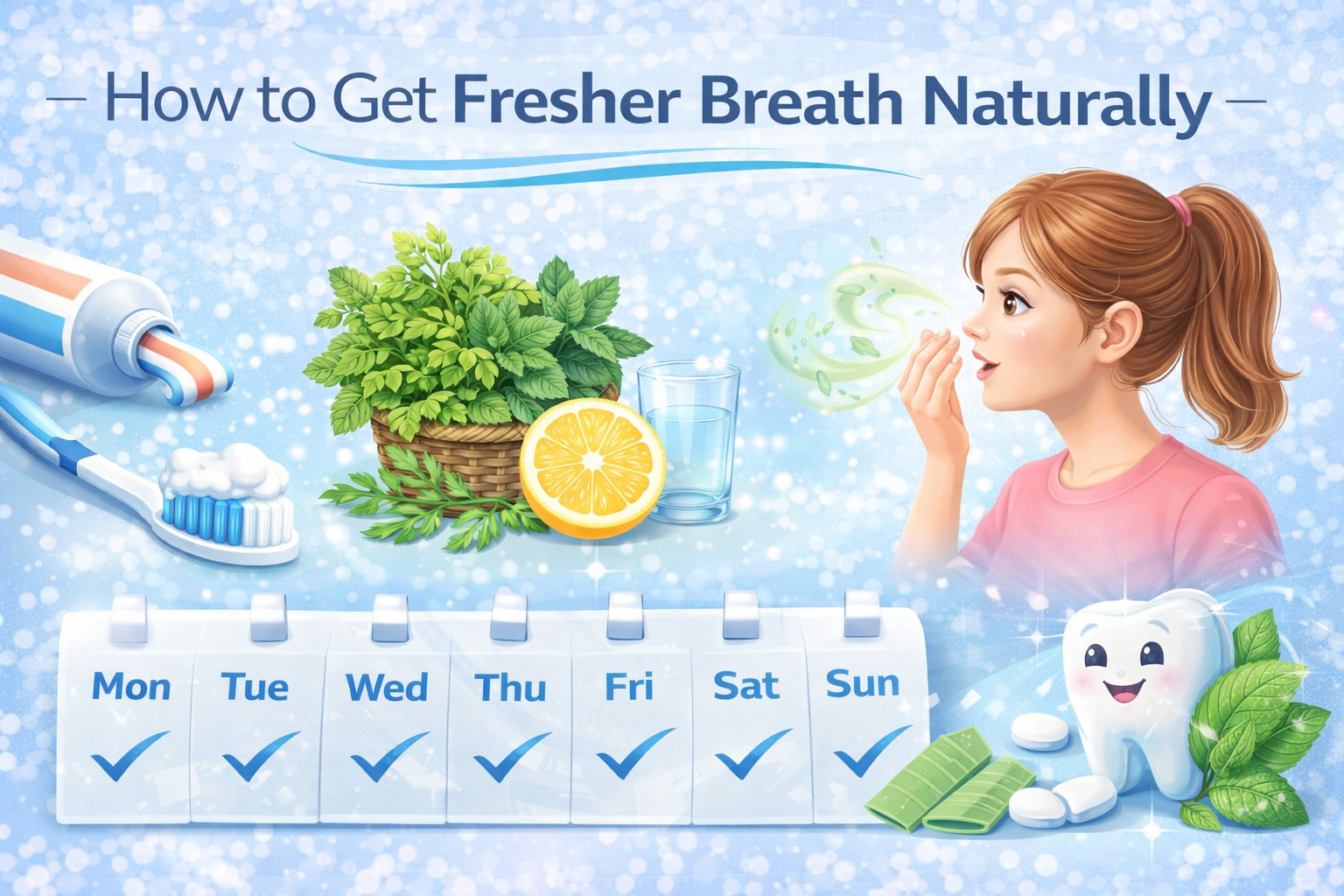
- Drinking enough water
- Eating fresh, whole foods
- Cleaning my tongue
- Reducing excess sugar
- Supporting my gut
- Staying aware of my body
None of these were dramatic on their own. But together, they created a noticeable shift.
The Moment I Knew It Was Working
A few weeks after I started making these changes, I had another moment—similar to the first one, but different.
I was talking to someone, close enough that I would have felt self-conscious before. But this time, there was no hesitation. No second-guessing.
Just a normal conversation.
And that’s when it clicked.
Fresh breath isn’t about masking something. It’s about creating an environment where there’s nothing to hide in the first place.
Final Thoughts
If you’re dealing with bad breath, it’s easy to feel embarrassed or frustrated. But it’s also something your body is trying to tell you.
Not something is “wrong”—just that something needs attention.
Start small. Drink more water. Notice what you eat. Take care of your mouth beyond just brushing.
You don’t need to chase artificial freshness. Real freshness feels different. It’s quieter, more natural, and more lasting.
And once you experience it, you won’t want to go back.