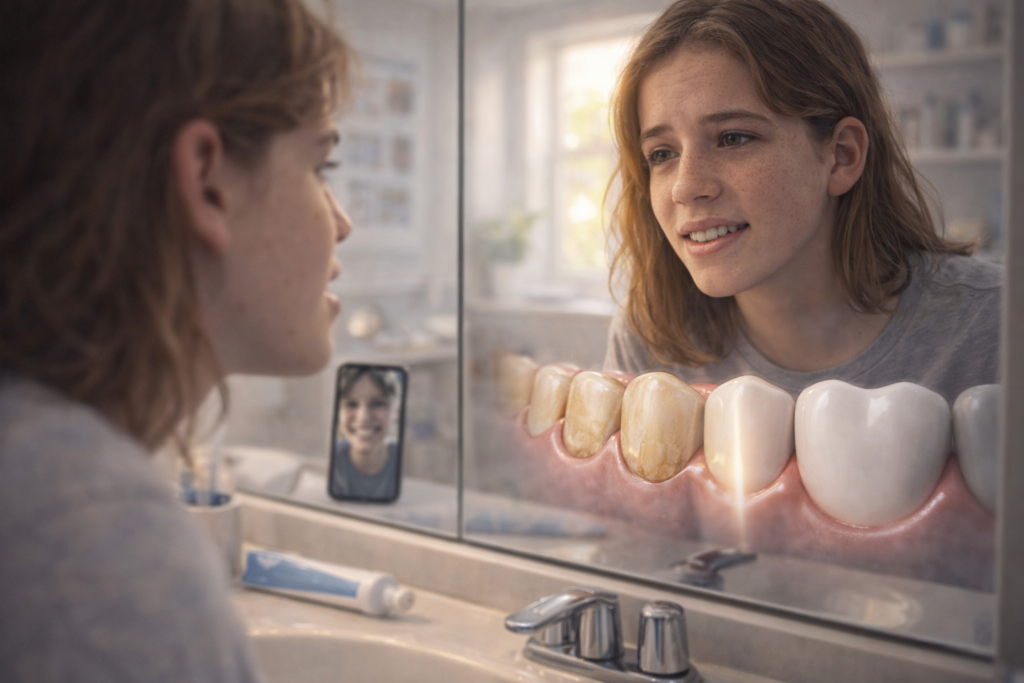
I didn’t notice it at first.
That’s probably the most honest way to begin.
There wasn’t a dramatic moment, no sudden pain that made me stop in my tracks or rush to a dentist. It was quieter than that. Subtle. The kind of change that sneaks in slowly, blending into your daily life until one day, something feels… off.
For me, it started with a photo.
A friend had taken it on a random afternoon—nothing special, just one of those candid shots you don’t think much about. But when I looked at it later, my eyes didn’t go to my outfit or the background.
They went straight to my smile.
It didn’t look the way I thought it did.
The Smile You Think You Have vs. The One You Show
In your mind, your smile is familiar. You’ve seen it in the mirror a thousand times, usually under good lighting, usually for just a few seconds. You adjust it slightly, maybe tilt your head, and move on.
But photos don’t lie—or at least, they don’t adjust for comfort.
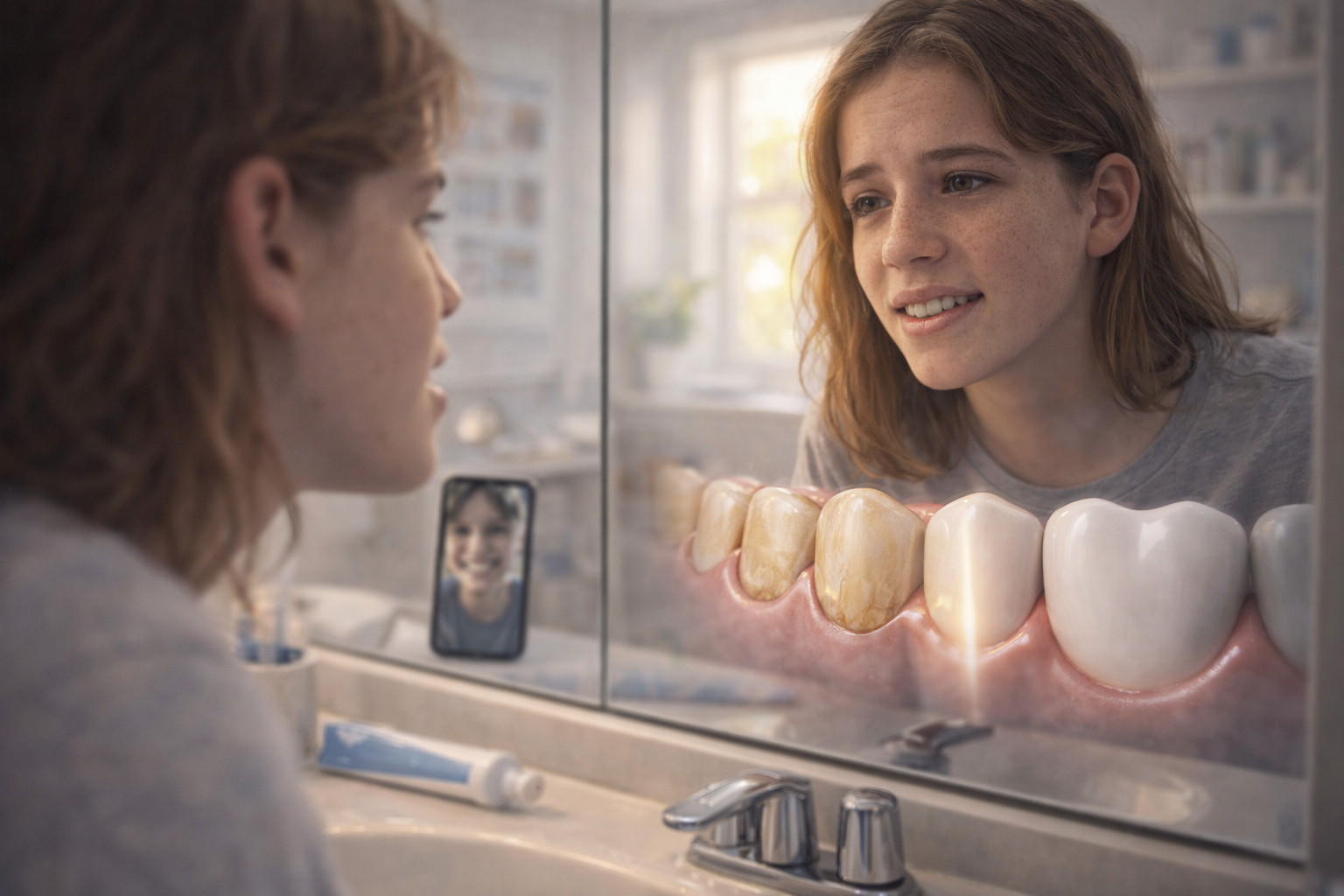
That’s when I noticed it: a slight yellow tint I hadn’t paid attention to before. Nothing extreme, but enough to make my teeth look less bright than I expected. And then there was something else… my gums.
They didn’t look as healthy as I imagined. A little uneven. Slightly darker in some areas.
It wasn’t alarming.
But it was enough to make me wonder: How did it get like this?
The Slow Build-Up You Don’t Feel
The tricky thing about poor brushing habits is that they don’t punish you immediately.
If you skip brushing once, nothing happens. Skip it twice, still fine. Even brushing quickly, carelessly, or with the wrong technique doesn’t cause instant damage.
And that’s exactly why it’s dangerous.
Plaque doesn’t announce itself. It forms quietly—a thin, sticky film of bacteria that builds up on your teeth every day. If it’s not removed properly, it hardens into tartar, which is much harder to get rid of.
At that point, brushing alone isn’t enough.
But most people don’t realize when they’ve crossed that line.
When “Good Enough” Isn’t Actually Enough
For the longest time, I thought I was doing okay.
I brushed twice a day. I used toothpaste. I didn’t ignore my teeth completely. In my mind, that qualified as “taking care of my smile.”
But looking back, I can see the gaps.
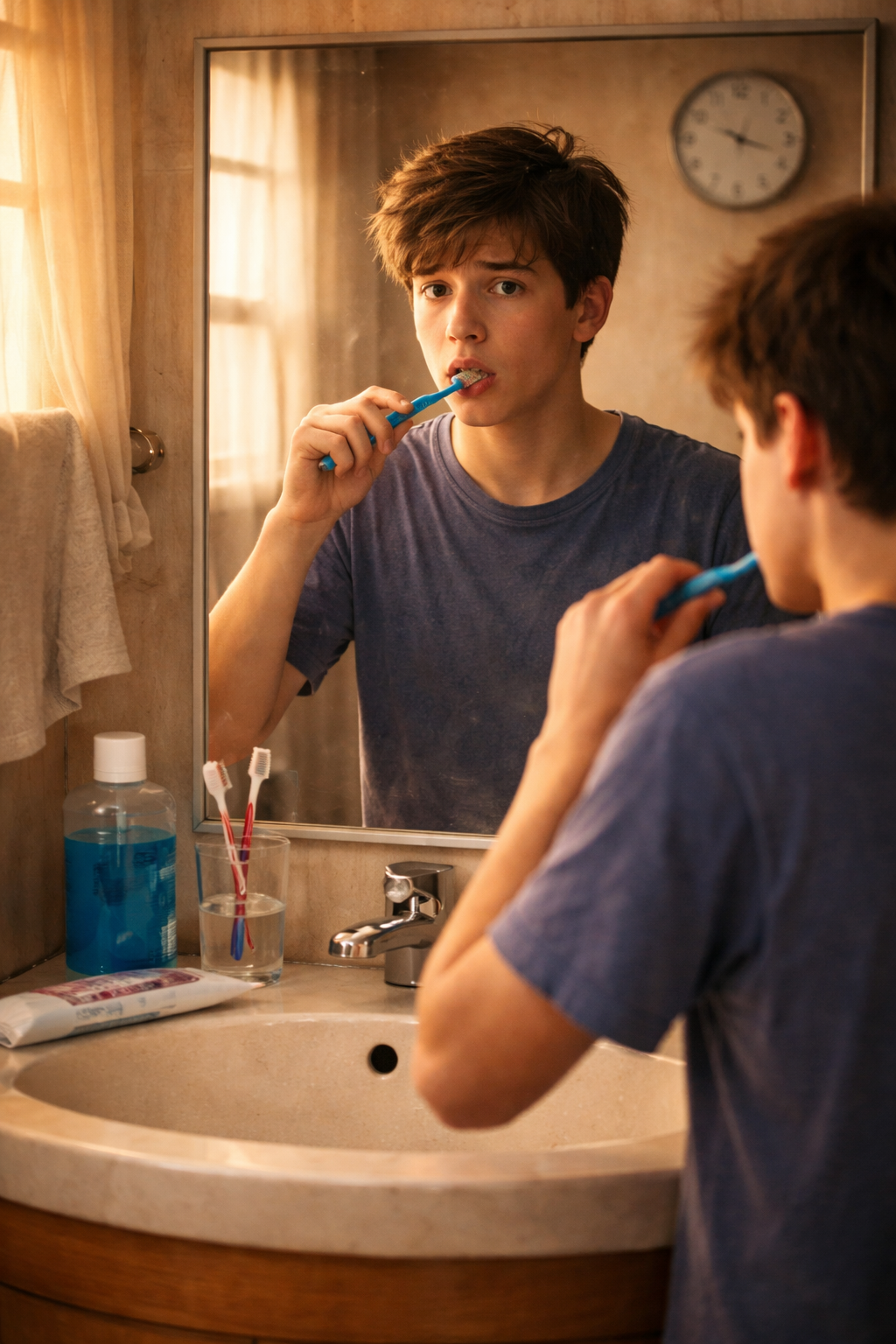
I rushed through brushing, especially at night. I didn’t pay attention to the back teeth. I brushed horizontally, quickly, like I was trying to finish a task rather than actually clean something.
And flossing? That was more of an occasional idea than a habit.
What I didn’t realize then was this: poor brushing isn’t always about not brushing. Sometimes, it’s about brushing without intention.
The Color of Neglect
Teeth aren’t naturally pure white, but they also aren’t supposed to look dull or stained.
When plaque builds up and isn’t properly removed, it creates a surface that attracts stains more easily—from coffee, tea, soda, or even certain foods.
Over time, that slight discoloration becomes more noticeable.
It’s not the kind of change you see overnight. It’s gradual, almost invisible day by day. But compare a photo from a year ago to now, and the difference can be surprisingly clear.
That’s what happened to me.
And the frustrating part? It could have been prevented with better brushing habits.
Your Gums Tell a Story Too
Teeth usually get all the attention, but your gums are just as important.
In fact, they often show the first signs that something isn’t right.
When brushing is inconsistent or too aggressive—or when plaque is left near the gumline—your gums can become irritated. They might look slightly red instead of pink. They might bleed a little when you brush, something many people ignore.
I used to ignore it too.
I thought bleeding meant I needed to brush harder.
In reality, it was the opposite.
Bleeding gums are often a sign of inflammation—your body reacting to bacteria that haven’t been properly removed. Brushing harder only makes it worse, potentially damaging the delicate gum tissue.
That realization changed the way I approached brushing entirely.
The Confidence Factor No One Talks About
Here’s something I didn’t expect: poor brushing habits don’t just affect your teeth—they affect how you feel about yourself.
After noticing those small changes in my smile, I became more aware of it in everyday situations.
When I laughed, I wondered how my teeth looked. When I talked to someone up close, I became slightly self-conscious. Even smiling in photos started to feel a bit different—less natural, more controlled.
It wasn’t a huge insecurity.
But it was there.
And it came from something as simple as not brushing properly.
The Myth of “I’ll Fix It Later”
It’s easy to think of dental care as something you can catch up on.
“I’ll start brushing better next week.”
“I’ll get a cleaning soon.”
“It’s not that bad right now.”
But oral health doesn’t work like a reset button.
The longer plaque and tartar stay on your teeth, the more they affect your enamel and gums. Early stages of gum issues can be reversed with good care, but if ignored for too long, they can progress into more serious conditions.
That’s the part people don’t always see coming.
Small habits, repeated daily, shape long-term outcomes.
Relearning Something So Basic
After that realization, I didn’t make drastic changes overnight.
I didn’t suddenly become perfect.
But I started paying attention.
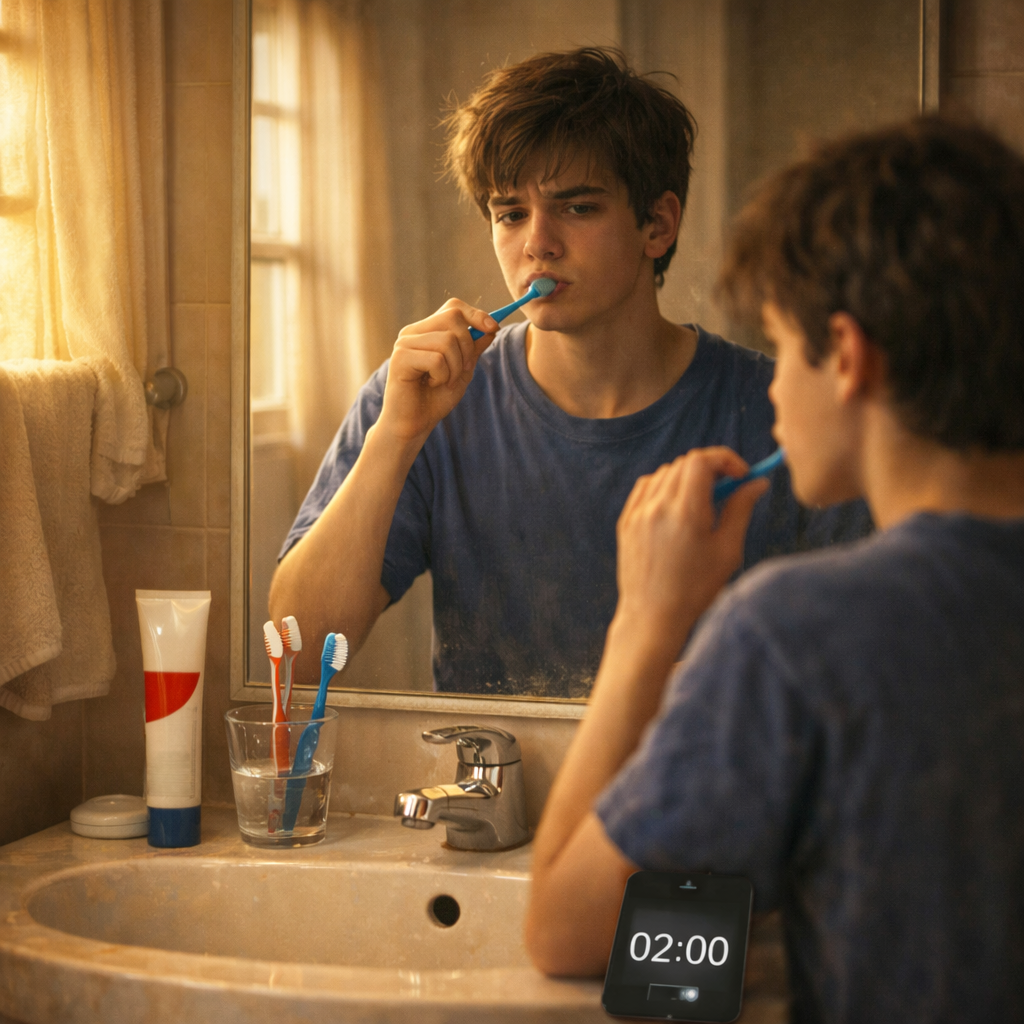
I slowed down when brushing. I made sure to reach every area, especially the ones I used to skip. I adjusted the angle of my toothbrush, focused on the gumline, and stopped pressing so hard.
I started flossing more consistently—not perfectly, but more than before.
And gradually, I noticed changes.
My teeth felt cleaner, not just right after brushing but throughout the day. My gums looked healthier. That slight discoloration didn’t disappear instantly, but it stopped getting worse.
It felt like I was finally taking control of something I had been neglecting without realizing it.
The Quiet Power of Consistency
There’s nothing dramatic about brushing your teeth properly.
No one applauds you for it. There’s no immediate reward. It doesn’t feel exciting or impressive.
But it’s one of those small, consistent actions that quietly shape how you look and feel over time.
A healthy smile isn’t built in a day.
It’s built in minutes—twice a day, every day.
And the difference between “good enough” and “done properly” is bigger than it seems.
Looking Back at That Photo
I still have that photo saved.
Not because I like how I looked in it—but because it reminds me of a turning point.
It’s easy to overlook the small things, especially when they don’t cause immediate problems. But those are often the habits that matter most.
If there’s one thing I’ve learned, it’s this:
Your smile reflects what you do consistently, not occasionally.
And brushing—something so simple, so routine—is either helping your smile or slowly working against it.
There’s no in-between.
Now, when I look in the mirror, I don’t just see my smile.
I see the result of small choices, repeated daily.
And for the first time in a long while, that feels like something I understand.