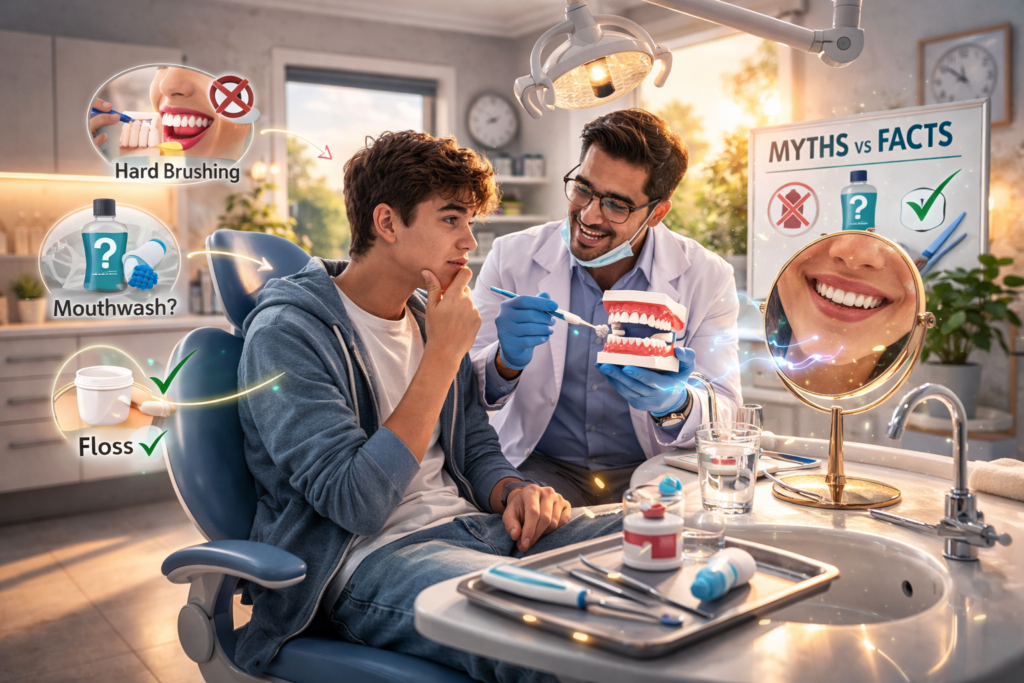
I didn’t realize how many things I believed about oral hygiene were… wrong—until a casual conversation turned into a quiet reality check.
It happened during what I thought would be a routine dental visit. No pain, no obvious problems, just a standard cleaning. I sat there, scrolling on my phone while waiting, feeling oddly confident. I brushed twice a day. Sometimes three. I used mouthwash when I remembered. I even chewed sugar-free gum after meals.
In my mind, I was doing everything right.
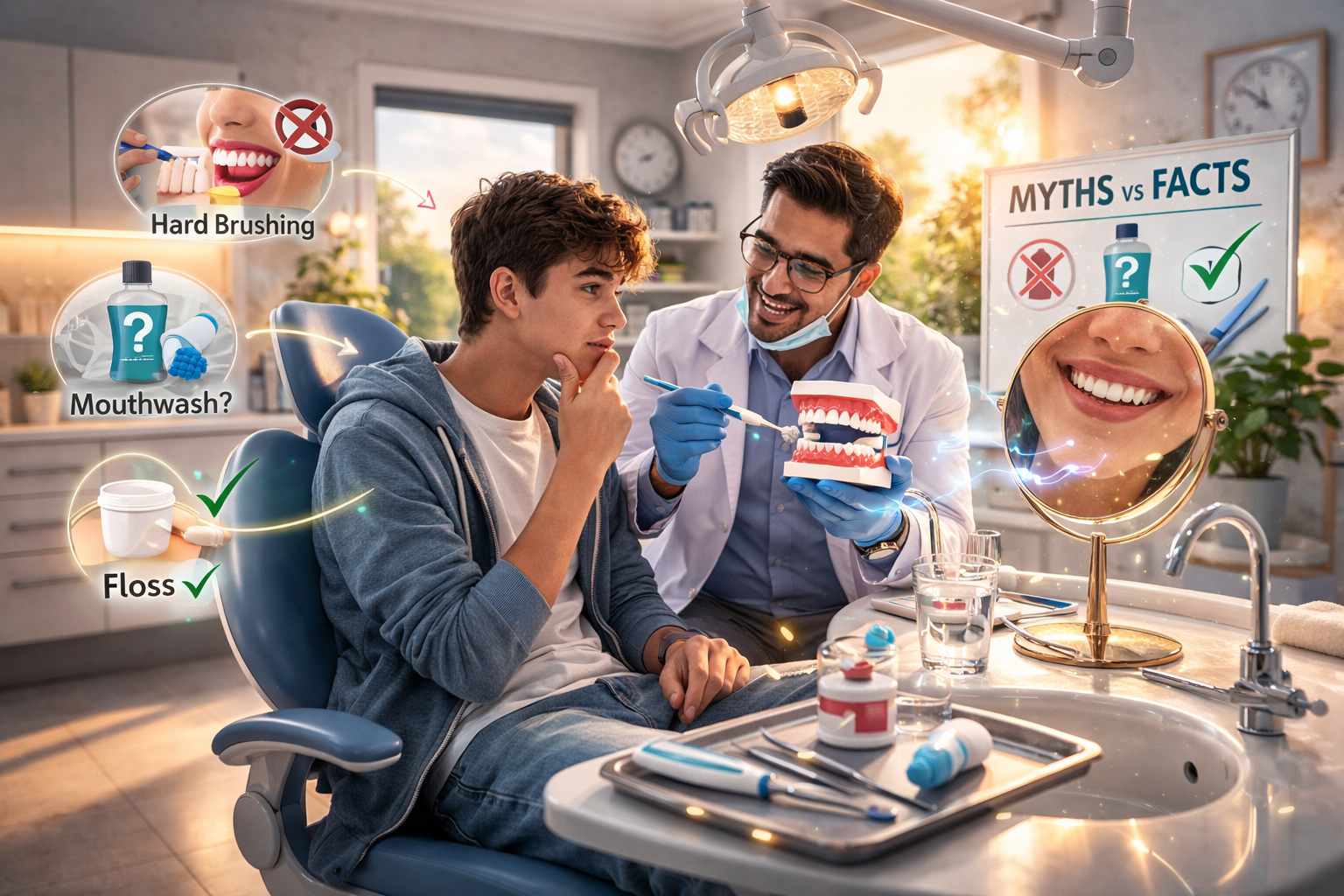
But somewhere between the humming of dental tools and the polite small talk, my dentist said something that stuck with me:
“Most people don’t have bad habits—they just have the wrong information.”
That sentence lingered longer than I expected.
Because the truth is, a lot of what we “know” about oral hygiene doesn’t come from dentists. It comes from ads, social media, random tips from friends, or things we picked up as kids and never questioned again.
And some of those beliefs? They’re not just harmless—they can slowly work against us.
Myth #1: Brushing Harder Means Cleaner Teeth
This was the first myth I had to unlearn.
For years, I thought the more pressure I used, the cleaner my teeth would be. It felt productive—like I was really doing something.
But my dentist gently stopped me mid-demonstration and said, “You’re not cleaning a floor—you’re cleaning something much more delicate.”
That image stuck.
Brushing too hard doesn’t remove more plaque. Instead, it can wear down enamel and irritate your gums. Over time, it may even lead to sensitivity or gum recession.
The irony is almost frustrating: trying harder can actually cause more harm.
What dentists actually recommend is gentle, controlled brushing with the right technique. Think precision, not force.
Myth #2: If Your Teeth Look White, They’re Healthy
I used to associate white teeth with healthy teeth. It seemed logical—white equals clean, right?
Not exactly.
Teeth can appear white and still have underlying issues like cavities, gum disease, or enamel erosion. On the flip side, slightly yellow teeth can be completely healthy.
My dentist explained that natural teeth aren’t meant to be perfectly white. That slightly off-white color? It’s normal.
Whitening products can improve appearance, but they don’t necessarily improve health. Sometimes they can even increase sensitivity if overused.
That’s when I realized I had been focusing more on how my teeth looked than how they actually were.
Myth #3: Mouthwash Can Replace Brushing
There were days—especially late nights—when I’d skip brushing and just use mouthwash, convincing myself it was “good enough.”
It felt refreshing. Clean, even.
But mouthwash is more like a supporting actor, not the main character.
It can help reduce bacteria and freshen breath, but it doesn’t physically remove plaque. Only brushing and flossing can do that.
My dentist compared it to rinsing a dirty plate without scrubbing it. It might look better for a moment, but the residue is still there.
That comparison made it hard to justify shortcuts anymore.
Myth #4: You Only Need to See a Dentist If Something Hurts
This one is incredibly common—and honestly, very tempting to believe.
If nothing hurts, everything must be fine… right?
The problem is, many dental issues don’t cause pain until they’ve already progressed. Cavities, gum disease, and even infections can develop quietly.
By the time you feel something, it might require more complex treatment.
Regular check-ups aren’t just about fixing problems—they’re about catching them early or preventing them entirely.
After hearing that, I started to see dental visits less as a reaction and more as a form of maintenance.
Myth #5: Sugar Is the Only Cause of Cavities
Sugar definitely plays a role—but it’s not the whole story.
What really matters is how long sugars and carbohydrates stay on your teeth and how often you consume them.
Even foods like bread, chips, or crackers can contribute to cavities because they break down into sugars.
And it’s not just what you eat—it’s how often. Snacking throughout the day keeps your teeth constantly exposed to acids.
This was a subtle but important shift in understanding.
It’s not about avoiding sugar completely—it’s about being mindful of habits.
Myth #6: Flossing Isn’t That Important
I used to think flossing was optional. Something you did when you felt like being extra responsible.
But flossing cleans areas your toothbrush simply can’t reach—between your teeth and under the gumline.
Skipping it means leaving behind plaque in places where problems often begin.
When my dentist showed me a diagram of how much of the tooth surface brushing misses, it changed how I saw flossing completely.
It wasn’t an “extra step.” It was half the job.
Myth #7: Bleeding Gums Are Normal
I remember noticing a bit of blood when brushing or flossing and brushing it off—literally and mentally.
I assumed it meant I was just being a bit rough.
But bleeding gums are often a sign of inflammation, usually caused by plaque buildup along the gumline.
In other words, it’s not something to ignore—it’s something to address.
Ironically, the solution isn’t to stop brushing or flossing—it’s to do it more consistently and gently.
That small shift in perspective made a big difference.
Myth #8: Chewing Gum Is Just as Good as Brushing
I used to rely on gum more than I’d like to admit—especially after meals when brushing wasn’t convenient.
And while sugar-free gum can help stimulate saliva and reduce acids, it doesn’t replace brushing.
It’s helpful, yes. But it’s not a substitute.
Think of it as a temporary fix, not a long-term solution.
The Quiet Influence of Misinformation
Looking back, none of these myths seemed ridiculous at the time.
They felt reasonable. Logical, even.
And that’s what makes them powerful.
Misinformation doesn’t usually announce itself. It blends in with what we already believe. It hides in habits we’ve repeated for years without questioning.
It’s not about being careless—it’s about being unaware.
What Changed for Me
After that visit, I didn’t completely overhaul my routine overnight.
There was no dramatic transformation.
But I started paying attention.
I brushed more gently. I flossed more consistently. I stopped relying on shortcuts. I questioned things I had always assumed were true.
And slowly, those small changes added up.
Not in a way that felt forced—but in a way that felt more intentional.
What Dentists Actually Want You to Understand
If there’s one thing I took away from all of this, it’s this:
Good oral hygiene isn’t about doing more—it’s about doing things correctly.
It’s easy to fall into habits that feel right but aren’t actually effective. And it’s just as easy to overlook small details that make a big difference over time.
Dentists aren’t expecting perfection. They’re hoping for awareness.
Because once you understand what actually works—and what doesn’t—taking care of your teeth becomes a lot less confusing.
Sometimes I think back to that moment in the chair, when I felt so sure I had everything figured out.
I wasn’t doing nothing.
But I wasn’t doing everything right, either.
And maybe that’s where most of us are—somewhere in between.
Not careless. Not perfect. Just a little misinformed.
And once you start noticing that, you can’t really unsee it.
But maybe that’s a good thing.