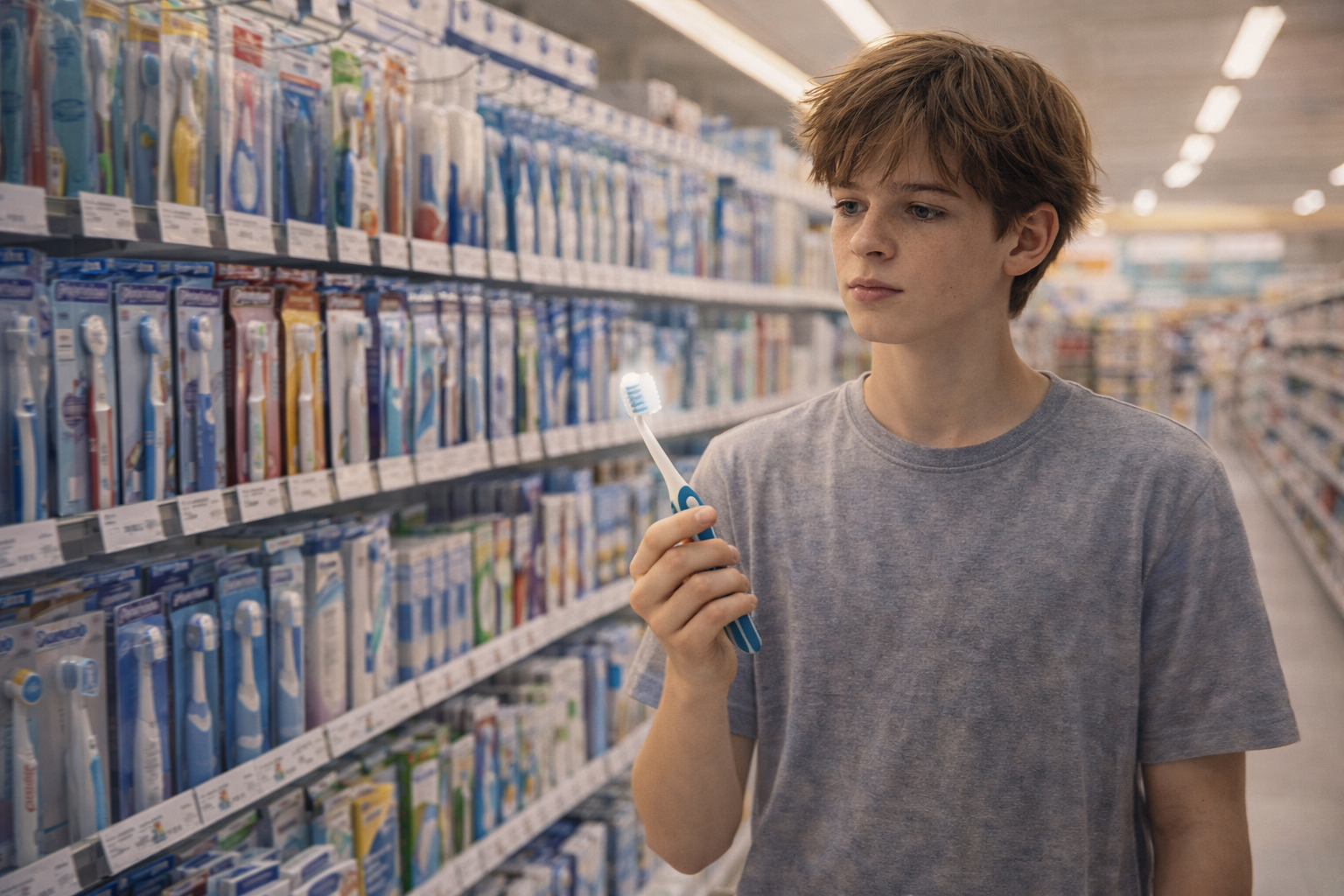

I didn’t think choosing a toothbrush would ever feel like standing in front of a wall of decisions.
But there I was—somewhere between the “extra soft charcoal-infused” section and a row of electric toothbrushes that looked like they belonged in a sci-fi movie—staring, hesitating, and realizing I had no idea what I was actually supposed to pick.
It used to be simple. When I was younger, a toothbrush was just… a toothbrush. Maybe you chose your favorite color, or the one with a cool design on the handle. That was it. Decision made in five seconds.
Now, it felt like every option was trying to tell me something different: Whiter teeth. Healthier gums. Deeper clean. Smarter brushing.
And suddenly, I wasn’t sure if I’d been using the wrong toothbrush all along.
The Illusion of Choice
The first thing I noticed was how easy it is to get overwhelmed.
There were soft bristles, medium bristles, hard bristles. Compact heads, full-size heads. Angled bristles, cross-action bristles, spiral bristles. And that was just the manual section.
Then came the electric ones—rotating, vibrating, sonic, with pressure sensors, timers, Bluetooth apps. It felt less like choosing a toothbrush and more like picking a piece of technology.
For a moment, I thought: Does any of this really matter? Or is it just marketing?
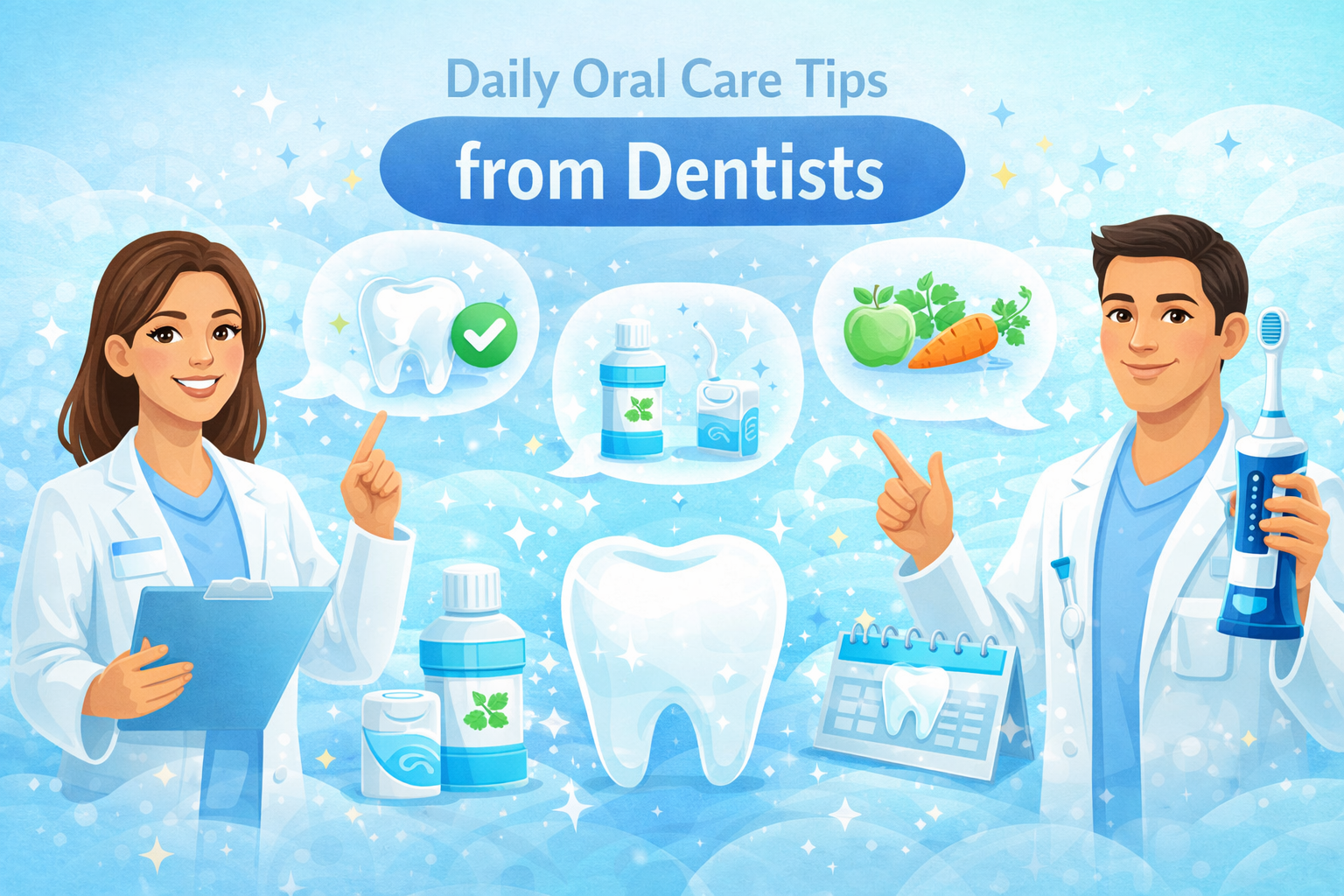
So I did what most people do when they’re unsure—I asked my dentist.
The Answer I Didn’t Expect
I was expecting a complicated explanation, maybe a list of “top features” or brand recommendations.
Instead, my dentist said something surprisingly simple:
“The best toothbrush is the one you’ll use correctly, every day.”
That stuck with me.
Because it shifted the focus away from the product… and back to the habit.
Still, she didn’t leave it there. She walked me through what actually matters—and what doesn’t.
Soft Is Stronger Than You Think
If you’ve ever felt tempted to pick a hard-bristled toothbrush because it seems more “powerful,” you’re not alone. I used to think the same way.
But dentists almost always recommend soft bristles.
At first, it sounds counterintuitive. Wouldn’t firmer bristles clean better?
Not exactly.
Soft bristles are flexible enough to reach under the gumline without damaging it. They remove plaque effectively without wearing down enamel or causing gum irritation.
Hard bristles, on the other hand, can be too aggressive—especially if you already brush with a bit of pressure (which most people do without realizing it).
It turns out, gentle doesn’t mean less effective. In fact, it’s usually the opposite.
Size Matters (More Than You Think)
Another thing I had never paid attention to was the size of the toothbrush head.
I always picked something that “looked normal.” But according to my dentist, a smaller head often does a better job.
Why?
Because it can reach areas that larger brushes struggle with—like the back molars or tight corners in your mouth.
When she said that, I immediately thought about how quickly I tend to brush those hard-to-reach spots. Maybe it wasn’t just me being lazy—maybe my toothbrush wasn’t helping either.
A smaller head gives you more control. And when it comes to brushing, control is everything.
Electric vs. Manual: A Real Difference
I held an electric toothbrush in my hand that day, turning it over like I was considering a big purchase—because, in a way, I was.
“Do I actually need this?” I asked.
My dentist didn’t say yes. She didn’t say no, either.
She said, “It depends on you.”
Electric toothbrushes can be especially helpful if:
- You tend to rush while brushing
- You’re not sure about your technique
- You brush too hard
- Or you just want a more guided experience
Many electric toothbrushes have built-in timers that make sure you brush long enough. Some even pause every 30 seconds to remind you to switch areas. Others have pressure sensors that alert you when you’re pressing too hard.
It’s like having a small coach in your hand.
But here’s the important part: a manual toothbrush can clean just as well—if you use it properly.
So again, it comes back to awareness, not just equipment.
The Hidden Role of Comfort
This was something I didn’t expect to matter—but it does.
The handle, the grip, the way the brush feels in your hand—it all affects how you brush.
If a toothbrush feels awkward or uncomfortable, you’re more likely to rush or apply uneven pressure.
A good toothbrush should feel natural to hold. Not something you have to think about.
It’s a small detail, but over time, it can shape your entire brushing habit.
When “Fancy” Isn’t Necessary
Standing in that aisle, it was easy to assume that the more expensive options were automatically better.
But my dentist made it clear: you don’t need the most advanced toothbrush to have healthy teeth.
Some features are helpful. Others are just… extra.
You don’t need:
- Bluetooth tracking
- App connectivity
- Multiple brushing modes you’ll never use
What you do need is consistency.
A simple toothbrush used correctly every day will always beat an expensive one used carelessly.
The Toothbrush You Forget to Replace
Here’s something I was definitely guilty of:
Using the same toothbrush for way too long.
It’s easy to forget. As long as it “looks okay,” we assume it’s fine.
But over time, bristles wear out. They become less effective at removing plaque and can even become rough on your gums.
Dentists usually recommend replacing your toothbrush (or brush head) every 3 to 4 months—or sooner if the bristles start to fray.
It’s one of the easiest upgrades you can make to your routine, and it doesn’t require any new technique—just attention.
The Moment It All Clicked
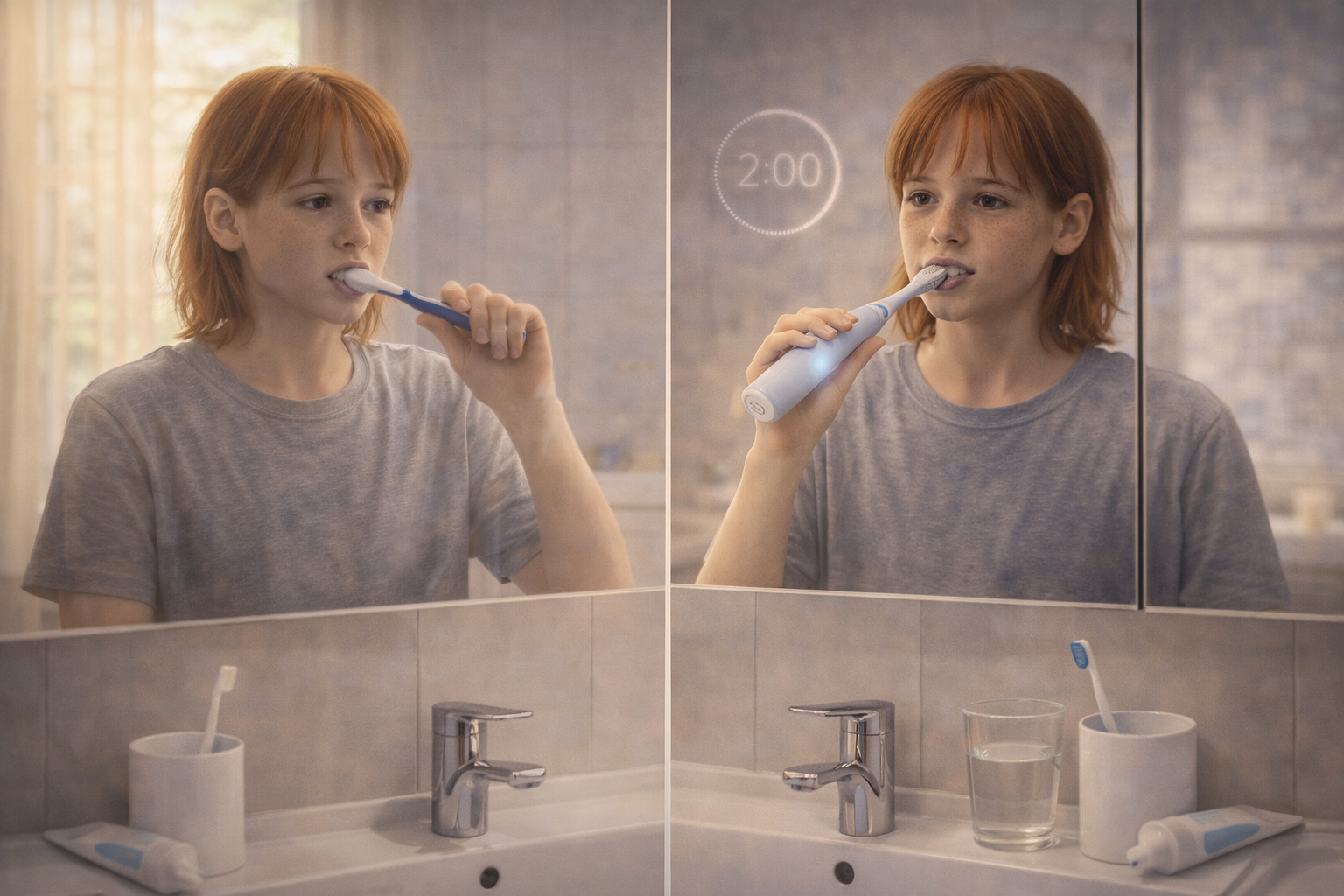
Later that night, I stood in front of the mirror with a new toothbrush—soft bristles, smaller head, nothing fancy.
For the first time, I noticed things I had ignored before.
How I held the brush.
How fast I moved.
Which areas I rushed through.
It felt different—not because the toothbrush was magical, but because I was paying attention.
And that, I realized, was the real point.
Choosing Isn’t the Hard Part
We spend so much time thinking the choice itself is what matters most.
Which brand. Which type. Which feature.
But the truth is, choosing the right toothbrush is only the beginning.
What really matters is what happens after you bring it home.
Do you slow down?
Do you brush gently?
Do you reach every corner?
Do you stay consistent, even on busy days?
Because no toothbrush—no matter how advanced—can replace those habits.
What Dentists Really Want You to Know
If I had to sum up everything I learned from that experience, it would be this:
Choosing the right toothbrush isn’t about finding something perfect.
It’s about finding something that helps you take better care of your teeth—every single day.
Simple. Comfortable. Effective.
That’s it.
Now, every time I walk past that overwhelming aisle, it doesn’t feel confusing anymore.
Because I’m not looking for the “best” toothbrush.
I’m just looking for the right one—for me.