I still remember the evening my little cousin stood on a stool in front of the bathroom sink, gripping her toothbrush like it was a magic wand. Foam gathered at the corners of her mouth, and she looked up at me with wide, curious eyes, asking, “Am I doing it right?” That simple question stuck with me, because brushing teeth—something so routine for adults—can feel like a confusing ritual for kids.
So if you’re a parent, sibling, or caregiver trying to teach a child how to brush their teeth properly, you’re not just teaching a habit—you’re shaping a lifelong skill. Let’s continue this journey together and break it down in a way that feels simple, natural, and even a little fun.
Making Brushing Feel Like an Adventure
For kids, brushing teeth shouldn’t feel like a chore. It should feel like a small adventure they get to go on every day—twice a day, actually. When I helped my cousin learn, we turned the bathroom into a “tooth castle,” and the toothbrush became a “sugar bug fighter.”
Children have vivid imaginations, and when you tap into that, everything changes. Instead of saying, “Go brush your teeth,” try something like, “Let’s chase away the sugar monsters hiding in your teeth.” Suddenly, brushing becomes exciting instead of boring.
The key here is engagement. Kids are far more likely to stick with habits that feel playful rather than forced.
Choosing the Right Tools Matters
One mistake many people make is assuming any toothbrush will do. But for kids, the right tools can make a huge difference.
A child-sized toothbrush with soft bristles is essential. Their gums are sensitive, and using a hard brush can be uncomfortable or even painful. When kids associate brushing with discomfort, they’ll resist it—and that’s the last thing you want.
Toothpaste matters too. For younger kids, a small, pea-sized amount of fluoride toothpaste is enough. For toddlers, even less—a tiny smear—is recommended. Brightly colored or flavored toothpaste can make brushing more appealing, but it’s important to remind kids not to swallow it.
I remember how my cousin refused to brush until we found a strawberry-flavored toothpaste she liked. Sometimes, it’s the little things that make all the difference.
Step-by-Step: How Kids Should Brush Properly
Teaching proper technique doesn’t have to be complicated. In fact, the simpler you keep it, the better.
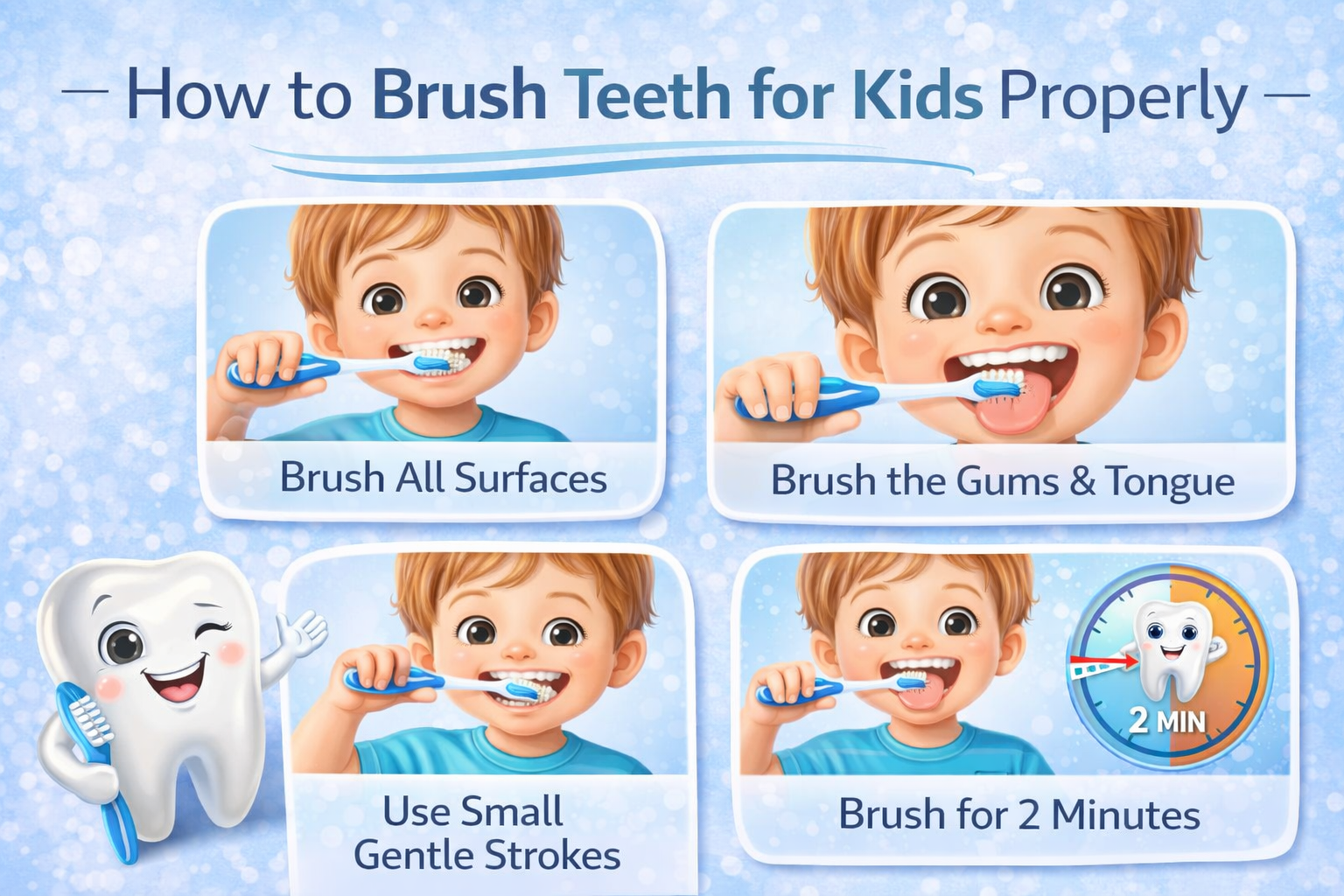
Start by having the child wet their toothbrush. Then, apply a small amount of toothpaste. Guide them to hold the brush at a slight angle toward the gums—not straight on. This helps clean both the teeth and the gum line.
Encourage gentle, circular motions rather than harsh back-and-forth scrubbing. Many kids instinctively scrub too hard, thinking it cleans better, but it can actually harm their gums.
Make sure they brush all surfaces:
- The front of the teeth
- The back of the teeth
- The chewing surfaces
And don’t forget the tongue. Gently brushing the tongue helps remove bacteria and keeps breath fresh.
The entire process should take about two minutes. That might sound long to a child, but you can make it easier by playing a short song or using a timer. When we practiced, we used a two-minute song, and brushing became something to look forward to instead of rushing through.
The Power of Routine
Consistency is everything. Brushing once in a while isn’t enough—it has to become part of a daily rhythm.
Morning brushing helps remove bacteria that build up overnight, while nighttime brushing is even more important. Throughout the day, food particles and sugars stick to teeth, and brushing before bed clears them away.
I noticed that when my cousin brushed at the same times every day—after breakfast and before bedtime—it became automatic. She stopped needing reminders because it was simply “what she does.”
Building that kind of routine early makes a lasting impact.
Leading by Example
Kids are incredible imitators. They watch everything adults do, even when it doesn’t seem like it.
One evening, instead of telling my cousin to brush her teeth, I picked up my own toothbrush and said, “Let’s do it together.” Without hesitation, she joined in. No resistance, no complaints.
Brushing together not only teaches proper technique but also shows that it’s a normal, important part of everyday life. It becomes a shared moment rather than a task being enforced.
Handling Resistance (Because It Happens)
Let’s be honest—there will be days when kids don’t want to brush their teeth. Maybe they’re tired, distracted, or just not in the mood.
When that happens, it’s important to stay calm and patient. Turning it into a battle usually makes things worse.
Instead, try giving them small choices:
“Do you want to use the blue toothbrush or the red one?”
“Do you want to brush first, or should I go first?”
These choices give kids a sense of control, which often reduces resistance.
Another approach is to use positive reinforcement. Praise their effort rather than perfection. Saying something like, “You did a great job brushing all your teeth tonight,” can boost their confidence and encourage them to keep going.
Making It Fun with Small Tricks
Sometimes, a little creativity goes a long way.
You can:
- Use a timer shaped like a cartoon character
- Play a favorite song during brushing
- Create a sticker chart for consistency
- Tell a short story while they brush
We once pretended each tooth had a name, and my cousin had to “visit” each one with her toothbrush. It might sound silly, but it worked. She brushed more thoroughly without even realizing it.
Teaching Independence Gradually
At first, kids will need help. Their motor skills are still developing, so they may not brush effectively on their own.
A good approach is to let them try first, then step in to finish the job. Over time, as they improve, you can gradually give them more independence.
Most children can brush on their own by around age 6 or 7, but supervision is still helpful to make sure they’re doing it properly.
Why It All Matters
It’s easy to think of brushing teeth as a small daily task, but its impact is much bigger.
Good oral hygiene prevents cavities, gum problems, and discomfort. It also builds confidence. A child who feels good about their smile is more likely to express themselves freely.
More importantly, it teaches responsibility. When kids learn to take care of their teeth, they’re also learning to take care of themselves.
A Small Habit, A Big Difference
Looking back at that evening with my cousin, I realize that teaching her to brush her teeth wasn’t just about technique. It was about patience, creativity, and connection.
She doesn’t need reminders anymore. Brushing her teeth is just part of who she is now.
And that’s the goal—not perfection, not strict rules, but a habit that feels natural and lasting.
Because in the end, teaching kids how to brush their teeth properly isn’t just about clean teeth. It’s about giving them a skill they’ll carry for the rest of their lives, one small, foamy moment at a time.