Sonic Toothbrush vs Electric Toothbrush: My Journey to Finding the Right Clean
I never thought I would spend so much time thinking about toothbrushes. For most of my life, brushing my teeth was just another routine—something I did half-awake in the morning and half-asleep at night. A quick scrub, a rinse, and I was done. But everything changed the day my dentist paused mid-checkup, leaned back slightly, and said, “You might want to rethink how you’re brushing.”
That was the beginning of my deep dive into the world of electric and sonic toothbrushes—a world I didn’t even know existed in such detail. At first, it felt overwhelming. Terms like “oscillating-rotating,” “sonic vibrations,” and “plaque disruption technology” sounded more like something from a science lab than a bathroom counter. But curiosity got the better of me, and I decided to explore.
This is the story of what I learned—and how choosing between a sonic toothbrush and an electric toothbrush turned into something surprisingly personal.
The First Upgrade: Electric Toothbrush
My journey started with a standard electric toothbrush. It was the kind with a small, round head that spun and pulsed. I remember the first time I used it—it felt strange, almost like my teeth were being polished by a tiny machine. The vibrations were noticeable but not overwhelming, and I didn’t have to move my hand as much as I used to.
What I quickly appreciated was how easy it made brushing. The brush did most of the work for me. Instead of scrubbing back and forth, I just guided it from tooth to tooth. It felt efficient, almost satisfying. After a few days, my teeth felt smoother than usual, like I had just come back from a dental cleaning.
But there was something else I noticed too. The experience felt mechanical. It was effective, yes—but also a bit… clinical. Like I was following instructions rather than actually engaging in the act of brushing.
Still, I couldn’t deny the benefits.
What I liked about the electric toothbrush:
- The rotating head cleaned each tooth individually
- It was easy to use, especially when I was tired
- It helped reduce plaque buildup more than manual brushing
- Many models had built-in timers, which made me brush longer
But after a few months, curiosity struck again. I started hearing about something called a sonic toothbrush. Supposedly, it was gentler, smarter, and even more effective.
So, of course, I had to try it.
The Switch to Sonic
The first time I turned on a sonic toothbrush, I was caught off guard. Instead of a rotating motion, it produced a high-frequency vibration—so fast that it almost tickled. It didn’t feel like scrubbing at all. It felt… different. Lighter. Softer.
At first, I wasn’t sure it was doing anything.
“Is this even cleaning my teeth?” I remember thinking.
But after a few uses, I began to notice subtle changes. My gums felt less irritated. My mouth felt fresher for longer. And there was this strange sensation—like the toothbrush was cleaning areas it wasn’t even directly touching.
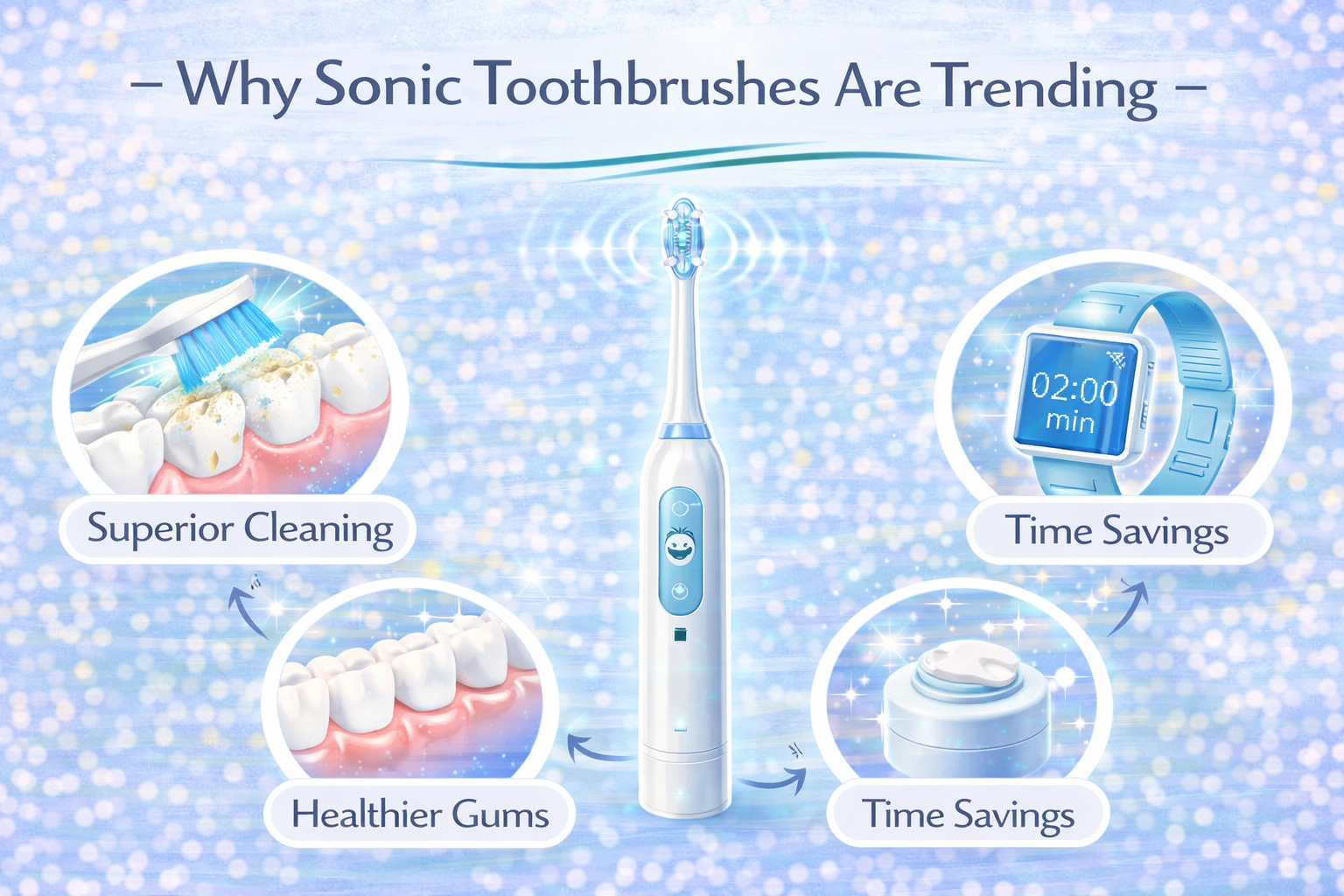
That’s when I learned the key difference: sonic toothbrushes don’t just rely on physical contact. They use rapid vibrations (often tens of thousands of strokes per minute) to create fluid movement in your mouth. This helps dislodge plaque even in hard-to-reach areas.
It was less about scrubbing—and more about guiding.
Understanding the Difference
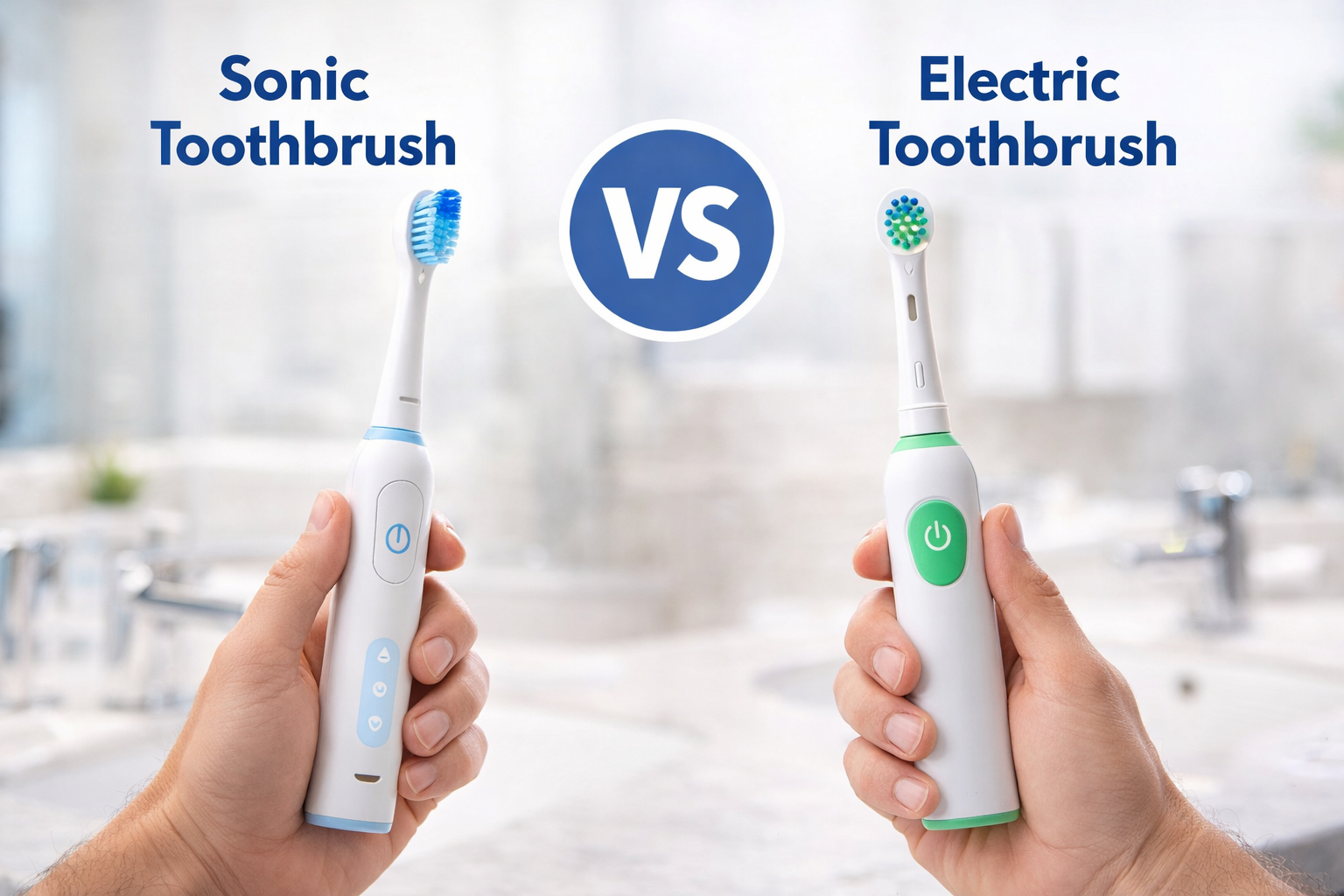
As I spent more time with both types, I realized that comparing a sonic toothbrush to a traditional electric one isn’t just about “which is better.” It’s about how they clean—and how that aligns with your habits and preferences.
Electric Toothbrush (Oscillating-Rotating):
- Uses a small, round head that spins or pulses
- Focuses on cleaning one tooth at a time
- Requires you to move the brush deliberately across each surface
- Often feels more powerful and direct
Sonic Toothbrush:
- Uses high-frequency vibrations (side-to-side motion)
- Cleans multiple teeth at once with fluid dynamics
- Feels gentler and less aggressive
- Encourages a lighter touch and slower movement
At this point, it became less of a technical comparison and more of a personal reflection.
The Emotional Side of Brushing
It sounds strange to say, but the type of toothbrush I used actually affected how I felt about brushing my teeth.
With the electric toothbrush, brushing felt like a task to complete. Efficient. Structured. Almost like checking off a box on a to-do list.
With the sonic toothbrush, it felt more like a ritual. Slower. Calmer. I found myself paying more attention—moving the brush gently, letting it do its thing instead of forcing it.
It made me realize something important: the best toothbrush isn’t just the one with the most advanced technology—it’s the one you’ll actually enjoy using every day.
What About Results?
Of course, feelings aside, results matter.
After using both consistently, I noticed that both types significantly improved my oral hygiene compared to a manual toothbrush. My dentist confirmed it too—less plaque, healthier gums, and better overall cleanliness.
But there were subtle differences:
- The electric toothbrush seemed slightly better at removing stubborn plaque, especially around the gumline.
- The sonic toothbrush was gentler on my gums and left my mouth feeling fresher for longer.
If I had sensitive gums, I would definitely lean toward sonic. If I wanted a more “deep clean” feeling, I might choose electric.
The Learning Curve
One thing I didn’t expect was how much technique mattered.
When I first used an electric toothbrush, I made the mistake of brushing the same way I did with a manual one—scrubbing aggressively. That’s not how it’s meant to be used. The brush is supposed to do the work.
The same goes for sonic toothbrushes. Pressing too hard actually reduces their effectiveness. It took time to unlearn old habits and trust the technology.
This was a humbling experience. Something as simple as brushing my teeth turned out to have layers I had never considered before.
So… Which One Is Better?
After months of switching back and forth, I realized there isn’t a universal answer.
If I had to describe it simply:
- Choose an electric toothbrush if you like a more powerful, targeted clean and don’t mind guiding the brush tooth by tooth.
- Choose a sonic toothbrush if you prefer a gentler, more effortless experience that still delivers excellent results.
But here’s the truth I didn’t expect to discover:
Consistency matters more than the type of toothbrush.
The best toothbrush in the world won’t help if you don’t use it properly—or regularly.
Where I Ended Up
In the end, I chose the sonic toothbrush.
Not because it was objectively better—but because it fit me better. It made brushing feel less like a chore and more like a moment of quiet care in my day. And that, surprisingly, made all the difference.
I still keep my electric toothbrush, though. Sometimes I go back to it when I want that extra polished feeling. It’s like having two different tools for two different moods.
Final Thoughts
If someone had told me a year ago that I’d be writing over a thousand words about toothbrushes, I would have laughed. But this small change taught me something bigger.
Taking care of yourself isn’t always about big decisions. Sometimes, it’s about the small, everyday choices—the ones you barely think about.
Like how you brush your teeth.
And maybe, just maybe, choosing the right toothbrush isn’t just about cleaner teeth.
It’s about finding a routine that feels right—one that you’ll stick with, day after day, without even thinking twice.
Because in the end, that’s what really makes the difference.