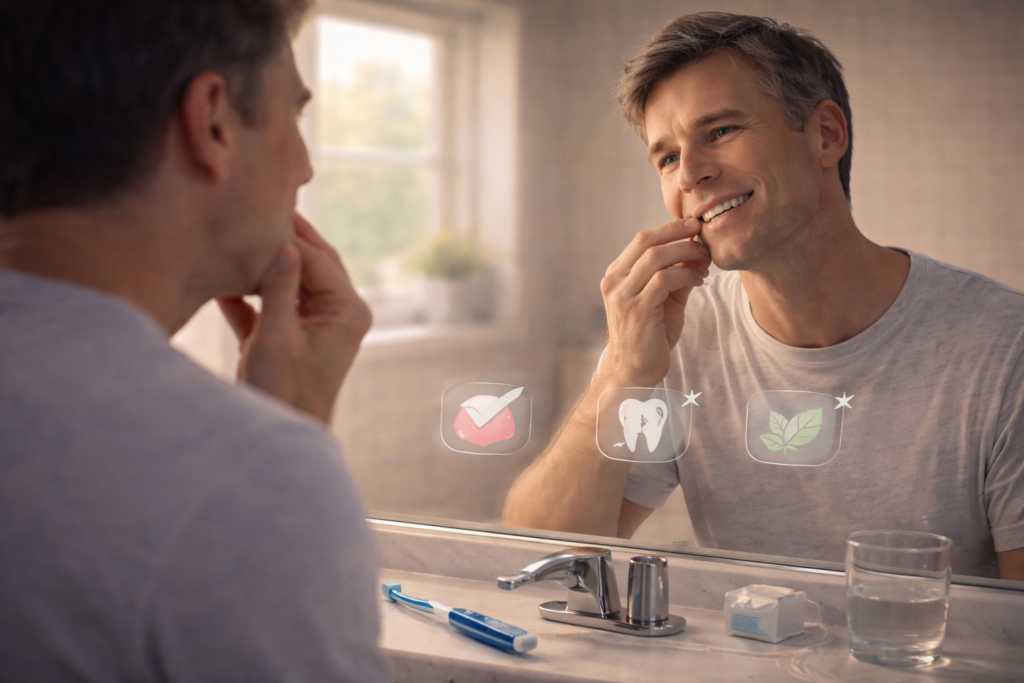
I didn’t always think about my teeth unless something felt wrong.
That sharp, sudden sting when drinking something cold. The dull ache that wouldn’t go away. Or the quiet panic when I realized I hadn’t visited a dentist in longer than I’d like to admit. For the most part, though, my teeth existed in the background of my life—working, unnoticed, taken for granted.
It wasn’t until one routine check-up that I started seeing things differently.
I remember sitting in the chair, staring up at the bright overhead light, trying to read the dentist’s expression as she examined my teeth. There’s always that moment, right? When they go quiet. You start wondering if they’ve found something you haven’t.
But instead of launching into a list of problems, she leaned back slightly and asked me a question I didn’t expect:
“How do you know your teeth are healthy?”
I paused.
Because the truth was—I didn’t really know.
I assumed “no pain” meant “no problem.” And if nothing looked obviously wrong in the mirror, I figured I was doing fine.
She smiled, not unkindly, and said, “That’s what most people think.”
And that’s where the conversation began.
The Quiet Nature of Dental Problems
One of the first things she explained was something that stuck with me:
Dental issues don’t always announce themselves loudly.
Cavities, for example, can start small and painless. Gum disease can develop gradually, with signs so subtle you might not notice them unless you’re paying close attention. By the time discomfort shows up, the problem may already be more advanced than you think.
That realization shifted something in me.
Health, at least when it comes to teeth, isn’t just about the absence of pain. It’s about paying attention to the small signals your body gives you every day.
What Healthy Teeth Actually Look Like
I used to think healthy teeth meant perfectly white, straight, almost “advertisement-level” smiles.
But that’s not necessarily true.
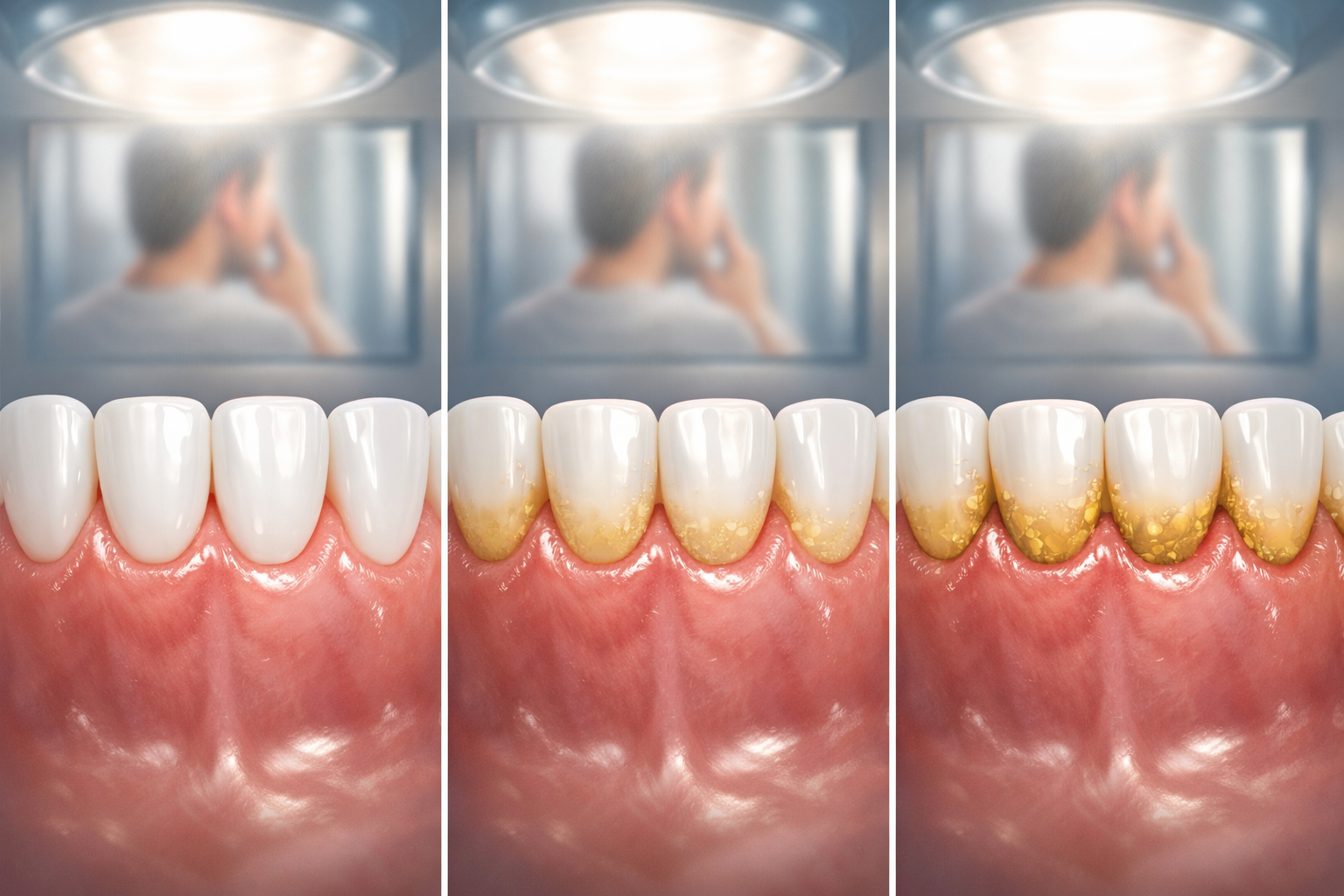
My dentist explained that healthy teeth come in natural shades—often slightly off-white, sometimes even with a hint of yellow. That’s because dentin, the layer beneath enamel, has a naturally yellow tone. So chasing ultra-white teeth isn’t always a sign of health—it can sometimes lead to over-whitening and sensitivity.
Instead, she told me to look for consistency.
Are your teeth free from dark spots or visible holes? Do they feel smooth when you run your tongue across them? Are they free from chips or rough edges that weren’t there before?
Healthy teeth aren’t about perfection. They’re about stability.
Your Gums Tell a Bigger Story
If teeth are the stars of the show, gums are the supporting cast that quietly determine how everything holds together.
And yet, most of us barely look at them.
“Healthy gums don’t bleed easily,” she said. “They shouldn’t feel swollen or tender.”
That made me think about the times I’d seen a bit of pink in the sink after brushing and just shrugged it off.
Apparently, that’s not something to ignore.
Bleeding gums can be an early sign of inflammation, often caused by plaque buildup along the gumline. Left untreated, it can progress into more serious gum disease.
Healthy gums, on the other hand, are usually pale pink (or slightly darker depending on your natural pigmentation), firm, and snug around your teeth.
It’s one of those things you don’t notice—until you start paying attention.
Breath: The Subtle Indicator
This was the part that made me a little self-conscious.
Bad breath isn’t always just about what you ate.
Sometimes, it’s a sign of bacteria buildup in your mouth. Food particles, plaque, and even issues with your gums can all contribute to persistent bad breath.
“Morning breath is normal,” she clarified. “But if it doesn’t go away after brushing, that’s something to look into.”
It’s such a subtle thing, but it can reveal a lot about what’s happening beneath the surface.
Sensitivity Isn’t Always “Normal”
I used to think tooth sensitivity was just one of those things everyone dealt with.
Cold drinks? Slight sting. Sweet foods? A quick jolt. I figured it was harmless.
But my dentist explained that sensitivity can be a sign of worn enamel, exposed dentin, or even early decay.
It doesn’t always mean something serious—but it’s not something to ignore either.
Healthy teeth generally don’t react strongly to everyday foods and drinks. If they do, it might be worth paying closer attention.
The Mirror Test Isn’t Enough
I’ll admit—sometimes I check my teeth in the mirror and try to convince myself everything looks fine.
But there’s only so much you can see.
The spaces between your teeth, the backs of your molars, the early stages of plaque buildup—these aren’t always visible without proper tools or lighting.
That’s why regular dental check-ups matter.
Not because something is necessarily wrong, but because a professional can spot things you simply can’t.
It’s less about reacting to problems and more about staying ahead of them.
Daily Habits Leave Clues
One thing I hadn’t considered before is how much your daily routine can reveal about your dental health.
Do your teeth feel clean after brushing, or is there a slightly fuzzy feeling by midday? Do your gums feel sore after flossing, or have they gotten stronger over time?
Healthy teeth and gums tend to respond well to consistent care.
If something feels off—if brushing suddenly feels uncomfortable, or flossing causes more irritation than usual—it might be your mouth’s way of telling you something has changed.
It’s About Patterns, Not Perfection
One of the most reassuring things my dentist told me was this:
“Don’t look for perfection. Look for patterns.”
That stayed with me.
Because it’s easy to fixate on small imperfections—a slightly uneven tooth, a faint discoloration, a moment of sensitivity—and assume something is wrong.
But dental health isn’t about having flawless teeth every single day. It’s about consistency over time.
Are things getting better, worse, or staying the same?
That’s the question that matters.
Walking Away With Awareness
When I left the clinic that day, I didn’t suddenly have a perfect smile.
But I had something more useful: awareness.
I started noticing things I’d ignored before. The way my gums looked. How my teeth felt after brushing. Whether my breath stayed fresh throughout the day.
It wasn’t obsessive—it was just… mindful.
And over time, that awareness turned into better habits. Not because I was trying to be perfect, but because I understood what “healthy” actually meant.
So… Are Your Teeth Healthy?
If you’re asking that question, you’re already on the right track.
Healthy teeth don’t always shine like they do in commercials. They don’t demand attention or announce themselves.
They work quietly. Comfortably. Consistently.
They don’t hurt when you eat. Your gums don’t bleed when you brush. Your breath feels neutral, not something you have to constantly worry about.
And perhaps most importantly—you feel confident that nothing is being ignored.
The Question Worth Asking Yourself
Now, every once in a while, I catch myself thinking about that question again:
“How do you know your teeth are healthy?”
It’s not something you answer once and forget.
It’s something you check in on, little by little, day by day.
Not out of fear—but out of care.
Because sometimes, the healthiest things in our lives are the ones we almost overlook.