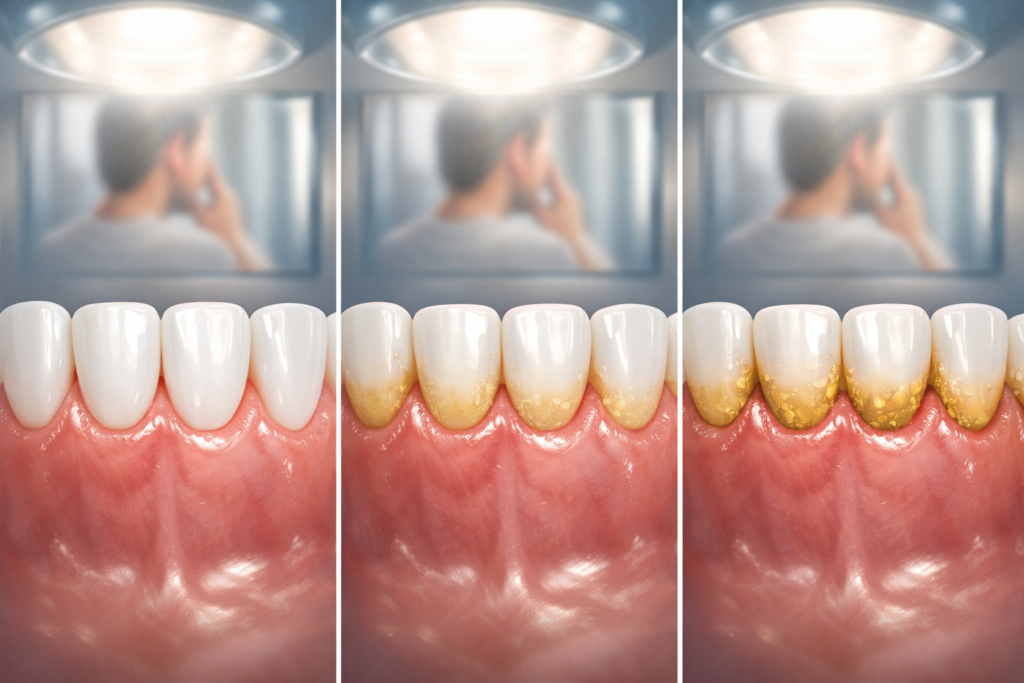
I didn’t really think much about my teeth when I was younger. Brushing twice a day felt like a chore, something I did quickly just to get it over with. Flossing? That was optional—at least, that’s what I told myself. It wasn’t until one quiet afternoon at the dentist’s office, sitting under that bright, unforgiving light, that I truly began to understand what was happening inside my mouth every single day.
The dentist didn’t start with warnings or lectures. Instead, he showed me a mirror.
“Take a look closely,” he said.
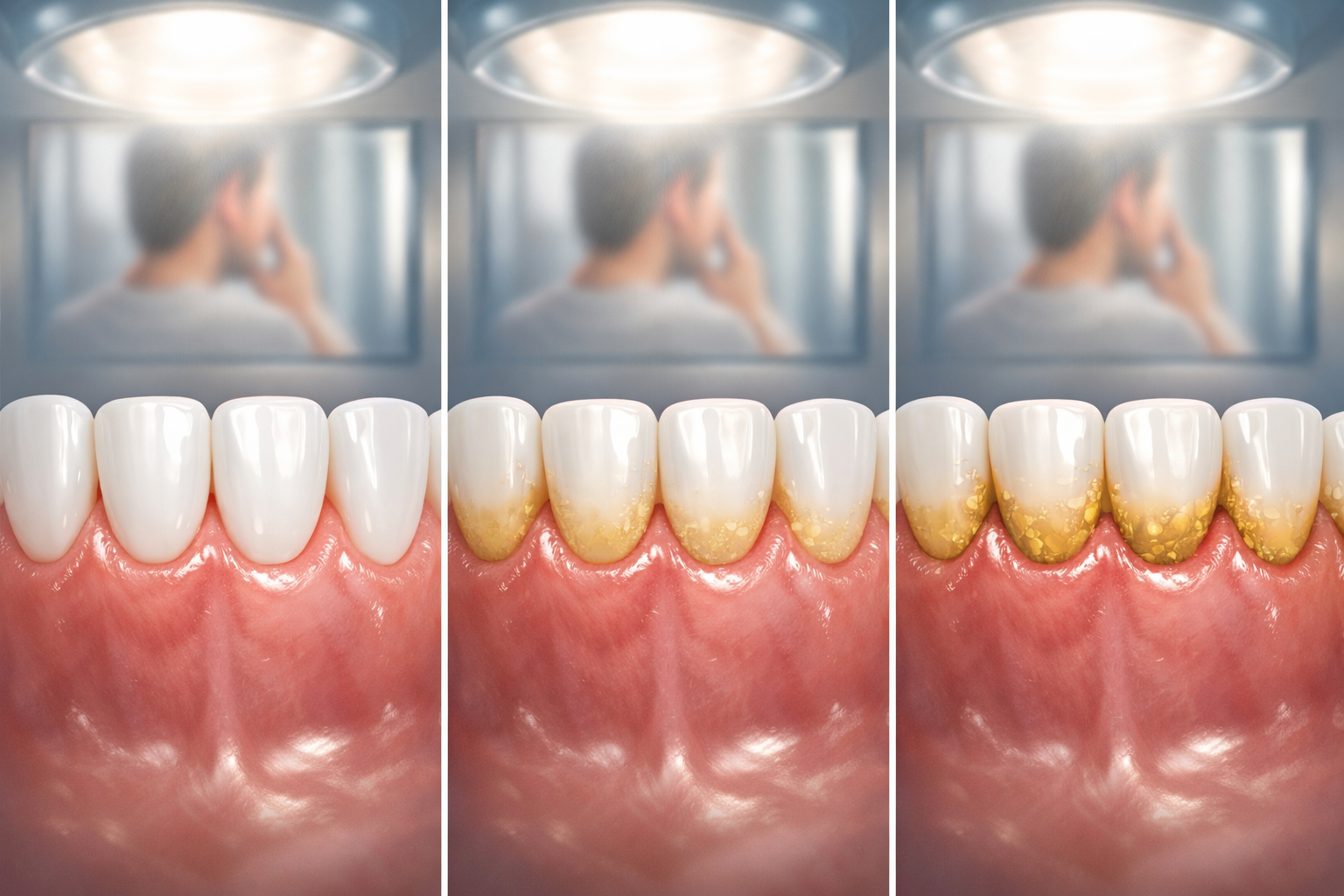
At first, I didn’t notice anything unusual. My teeth looked… fine. But then he pointed to the areas near the gumline—those slightly dull, almost invisible layers clinging to the surface. “That,” he said, “is plaque.”
It surprised me. Plaque wasn’t dramatic. It didn’t hurt. It didn’t announce itself. It just quietly built up, layer by layer, like dust settling in a room you rarely clean.
And that’s how the story of plaque really begins—not with pain, but with silence.
The Invisible Beginning
Every time we eat, especially foods rich in sugars or carbohydrates, we feed not just ourselves, but the millions of bacteria living in our mouths. These bacteria are always there—it’s completely normal. But when they break down food particles, they produce acids as a byproduct.
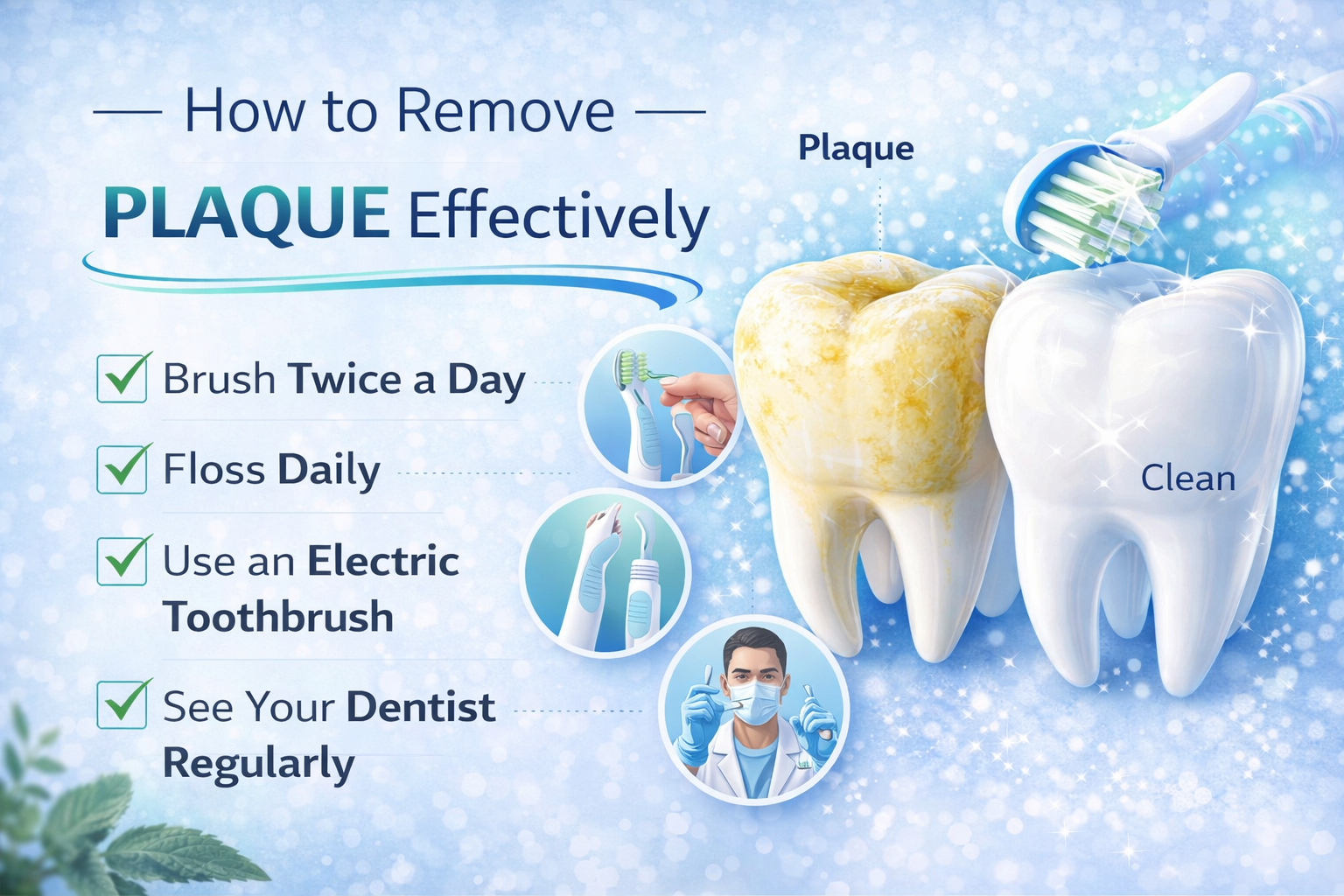
Those acids don’t just disappear. They linger, clinging to the surfaces of your teeth. Over time, bacteria, food debris, and saliva combine to form a sticky, colorless film. That film is plaque.
The strange thing is how quickly it forms. Within just a few hours after brushing, plaque begins to rebuild. It doesn’t wait days or weeks—it starts almost immediately. It’s like a quiet, persistent process that never really stops.
I remember thinking, “So even when I feel clean, something is already forming again?”
Yes. Exactly that.
A Daily Battle You Don’t See
Plaque isn’t dramatic, but it is active. Every moment it stays on your teeth, it continues producing acids. These acids slowly weaken the enamel—the hard, protective outer layer of your teeth.
At first, the damage is microscopic. You won’t feel it. You won’t see it. But beneath the surface, minerals are being pulled away from your enamel in a process called demineralization.
If this continues, tiny weak spots develop. Eventually, those weak spots can turn into cavities.
What struck me most was how ordinary it all is. You don’t need to eat excessive candy or drink soda all day for plaque to do its work. Even everyday meals—bread, rice, fruit—can contribute. It’s not about avoiding food; it’s about understanding what happens after you eat.
When Plaque Hardens: The Turning Point
If plaque is not removed through brushing and flossing, it doesn’t just sit there forever in the same state. It changes.
Over time, minerals from your saliva begin to mix with the plaque, hardening it into something called tartar (or calculus). Unlike plaque, tartar is rough and firmly attached to your teeth. You can’t remove it with a toothbrush.
This is where things start to escalate.
Tartar creates a perfect surface for even more plaque to accumulate. It also tends to form near the gumline, which brings a new problem into the picture: gum irritation.
I remember the dentist gently pressing along my gums and asking, “Does this feel sensitive?”
It did. Slightly.
“That’s how it begins,” he explained.
The Gums Start to Speak
When plaque and tartar build up near the gums, they can cause inflammation. This early stage of gum disease is called gingivitis.
The signs are subtle at first:
- Gums may look a bit redder than usual
- They might bleed slightly when brushing or flossing
- There may be a mild tenderness
It’s easy to ignore. After all, it doesn’t feel serious. But gingivitis is your body’s way of signaling that something isn’t right.
What stayed with me was this: gingivitis is reversible.
At this stage, with proper care—brushing thoroughly, flossing daily, and regular dental cleanings—you can bring your gums back to health.
But if ignored, the story doesn’t stop there.
When Things Go Deeper
If plaque and tartar continue to build, the inflammation can spread below the gumline. This leads to a more serious condition called periodontitis.
Now, the problem isn’t just on the surface. The structures that support your teeth—bone and connective tissue—can begin to break down.
The idea that something so small and invisible could eventually affect the very foundation of your teeth felt almost unreal to me. But that’s exactly how it works: slowly, quietly, and persistently.
Teeth may become loose. Gums may recede. And unlike gingivitis, this stage is not easily reversible.
Why It’s So Easy to Overlook
Looking back, I realized that plaque builds up not because we don’t care, but because it’s easy to underestimate.
There’s no immediate consequence. Skipping one night of brushing doesn’t hurt. Ignoring floss for a week doesn’t seem like a big deal. The effects accumulate gradually, almost invisibly.
It’s like watching a crack form in a wall over time. You don’t notice it day by day, but eventually, it becomes impossible to ignore.
Changing the Routine
After that dentist visit, my routine changed—but not in a dramatic, overwhelming way.
I didn’t suddenly become perfect. Instead, I became more aware.
Brushing wasn’t just a quick task anymore. I started paying attention—reaching the back teeth, brushing along the gumline, taking the full two minutes.
Flossing stopped being optional. At first, it felt inconvenient. But over time, it became part of the rhythm of my day, like washing my face or tying my shoes.
And something interesting happened: once I understood the “why,” the habits became easier to maintain.
The Small Habits That Matter Most
If there’s one thing this journey taught me, it’s that preventing plaque buildup isn’t about doing something extreme. It’s about consistency.
Small actions, repeated daily, make the biggest difference:
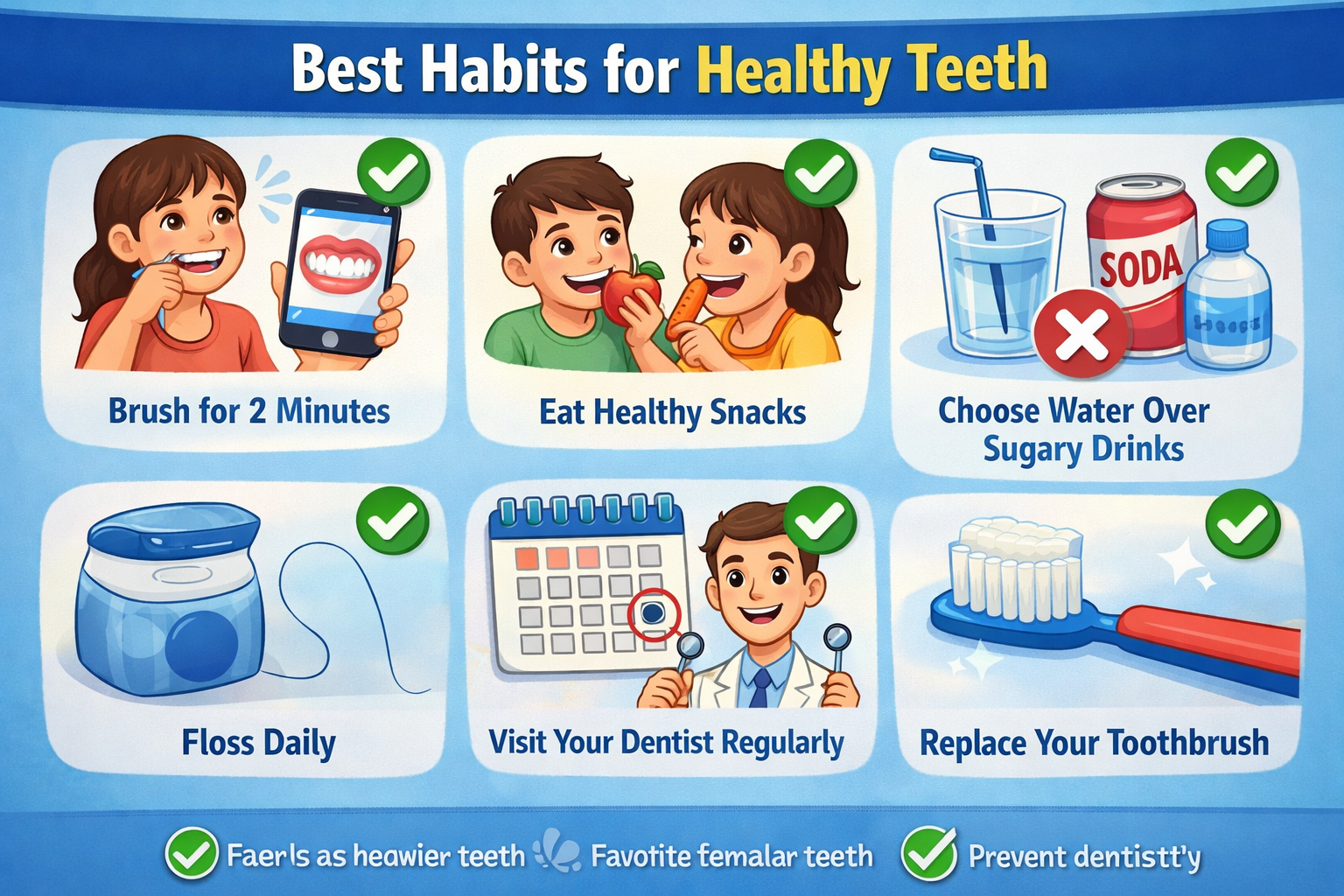
- Brushing twice a day with proper technique
- Flossing to clean areas a toothbrush can’t reach
- Rinsing when appropriate
- Visiting the dentist regularly for professional cleaning
These aren’t complicated steps. But together, they interrupt the cycle of plaque before it can grow into something more serious.
Seeing It Differently
Now, when I think about plaque, I don’t see it as something scary or overwhelming. I see it as part of a natural process—one that I can manage with awareness and care.
It’s not about perfection. It’s about attention.
Every day, plaque forms. Every day, we have a chance to remove it.
That’s the quiet balance we live with.
A Final Thought
If you’re reading this and thinking, “I probably don’t take it as seriously as I should,” you’re not alone. Most of us have been there.
The good news is that it’s never too late to start paying attention.
Plaque may build up silently, but with the right habits, you can stay one step ahead of it—without stress, without fear, just with a bit more care each day.
And maybe, like me, the next time you sit in that dentist’s chair under the bright light, you’ll feel a little more in control of what’s happening inside your own smile.