I didn’t expect something as ordinary as brushing my teeth to feel… personal.
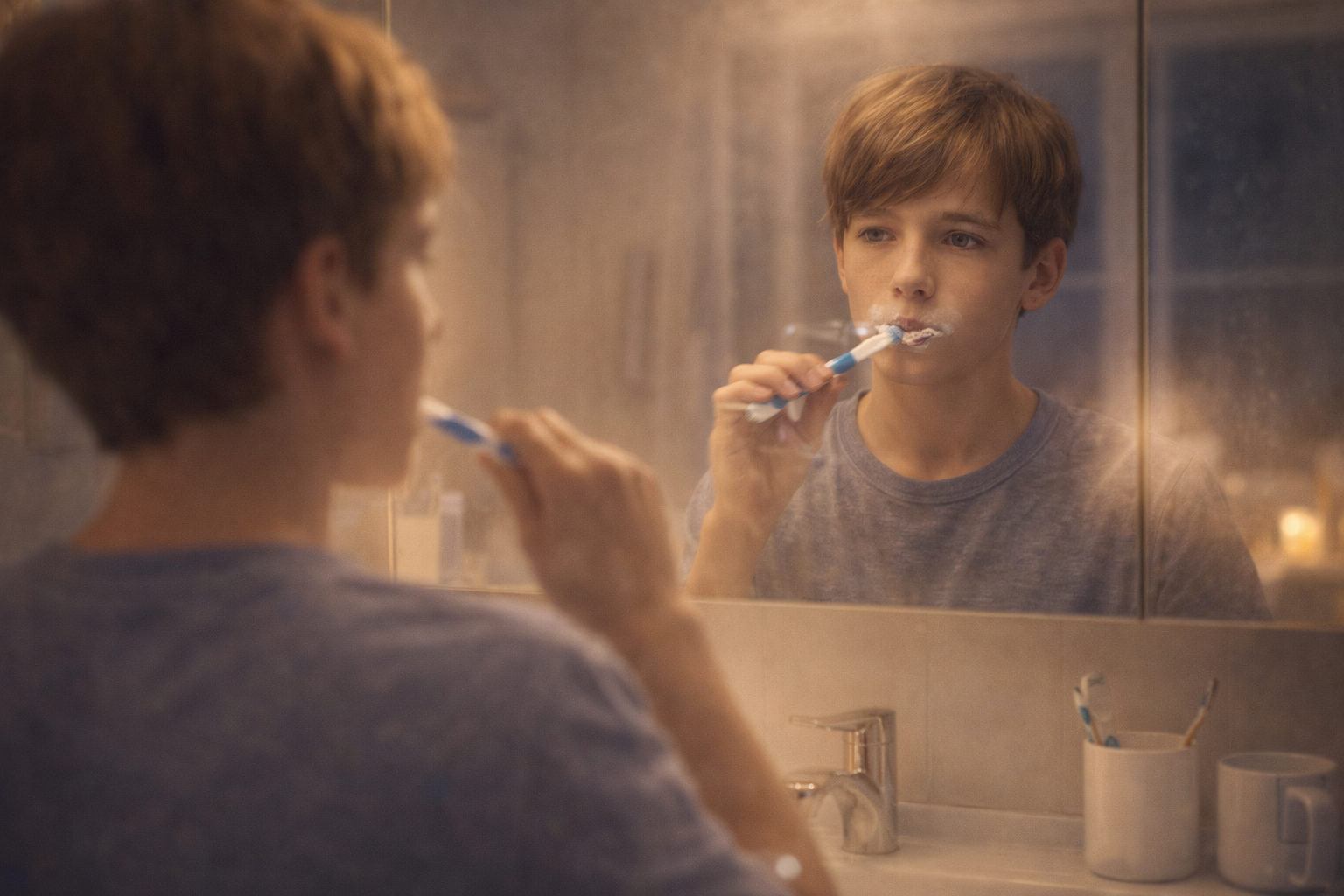
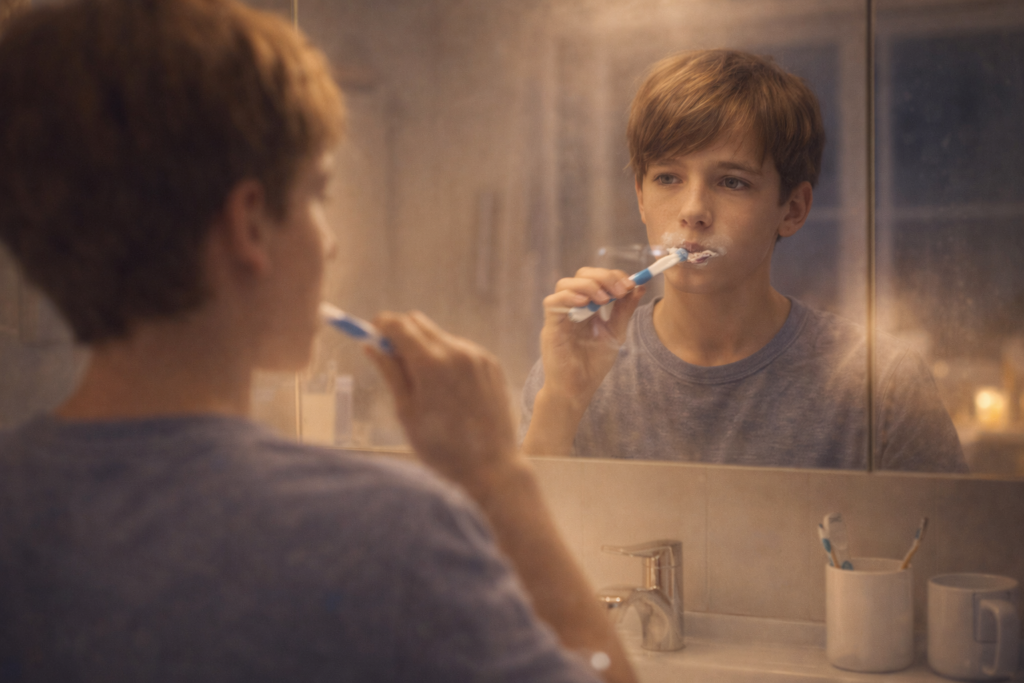
It had always been a background habit, something I did half-awake in the morning and half-distracted at night. There was no thought behind it, no intention—just routine. But that changed one evening when I caught my reflection in the mirror, toothbrush paused mid-air, foam gathering at the corners of my mouth.
For a brief second, I asked myself a question I had never really considered:
Am I even doing this right?
It sounds almost ridiculous. Brushing your teeth is one of those things you assume you’ve mastered by the time you’re seven. No one really revisits it. No one stands in front of a mirror at sixteen or twenty or thirty and thinks, Maybe I need to relearn this.
And yet, that quiet moment of doubt stayed with me.
The Illusion of “Good Enough”
The next morning, I paid closer attention.
I noticed how quickly I moved the brush, how uneven my strokes were, how I instinctively avoided certain areas—especially the back teeth. I realized I was brushing more out of obligation than care.
It reminded me of how we sometimes skim through a page of a book, telling ourselves we’ve read it, when in reality, we’ve only glanced at the words.
That’s what my brushing felt like: a quick skim over something that deserved more attention.
And the strange part? From the outside, everything seemed fine. My teeth looked clean. I didn’t have constant pain. Nothing was obviously wrong.
But “nothing wrong” isn’t the same as “doing it right.”
Slowing Down Changed Everything
That night, I tried something different.
Instead of rushing, I slowed down—intentionally. I treated brushing less like a chore and more like a small ritual. It felt awkward at first, like I was overthinking something that should be simple.
But then I noticed things I had never noticed before.
The texture of the bristles against my teeth. The subtle difference between the smooth front surfaces and the slightly uneven back molars. The way my gums reacted when I pressed too hard.
I realized brushing isn’t just about movement—it’s about awareness.
And once that awareness kicks in, everything starts to shift.
The Gentle Approach I Never Learned
Growing up, I always associated cleaning with force. Scrubbing dishes, washing stains, wiping surfaces—it all involved pressure. So naturally, I carried that same mindset into brushing my teeth.
But teeth aren’t dishes. They’re not meant to be scrubbed aggressively.
The first time I consciously tried brushing gently, it felt almost wrong—like I wasn’t doing enough. But after a few days, something interesting happened: my gums stopped feeling irritated, and my teeth felt cleaner for longer.
It turns out, gentle, controlled movements are far more effective than forceful, rushed ones.
It’s not about how hard you brush. It’s about how well you cover each surface.
The Corners We Forget
There’s a pattern I started noticing once I paid attention.
We all have “blind spots” when brushing—areas we consistently neglect without realizing it.
For me, it was the inside surfaces of my lower teeth and the very back molars. I would brush them, technically, but only for a second or two—never enough to actually clean them properly.
Those hidden corners matter more than we think. They’re where plaque tends to build up quietly, without immediate signs.
I began dividing my mouth into sections, almost like zones. It felt methodical at first, but over time, it became natural.
Front. Sides. Back. Inside. Outside.
Each area got its moment.
And strangely, that small structure made brushing feel less overwhelming and more complete.
The Mirror Became a Teacher
There’s something powerful about watching yourself do something you’ve always done on autopilot.
I started brushing in front of the mirror—not just glancing, but really observing.
At first, it felt unnecessary. But then I noticed how often I missed spots, how inconsistent my movements were, how quickly I drifted into rushing again.
The mirror didn’t judge. It just reflected the truth.
And that was enough.
Over time, I didn’t need to rely on it as much. The awareness stayed with me, even when I wasn’t looking.
Timing Isn’t Just About Minutes
We’re told to brush for two minutes, but time alone doesn’t guarantee quality.
There were days I brushed for two full minutes and still felt like I hadn’t done a good job. And other days, when I was fully focused, those same two minutes felt more than enough.
It made me realize that brushing isn’t just about duration—it’s about presence.
Are you paying attention? Are you covering every surface? Are you being gentle but thorough?
Two minutes of distracted brushing can’t compete with two minutes of intentional care.
The Subtle Role of Routine
What surprised me most wasn’t just the technique—it was how much timing and consistency mattered.
Brushing at the right moments in the day made a difference. Not immediately, but gradually.
Mornings felt fresher when I brushed before rushing into the day. Nights felt more complete when brushing became the final step, a signal that the day was ending.
It wasn’t just hygiene anymore. It became part of a rhythm.
And rhythms, once established, are easier to maintain than forced habits.
The Small Details That Add Up
There were other little things I started noticing along the way.
Like how rinsing too aggressively right after brushing seemed to wash away that clean feeling faster. Or how replacing an old toothbrush made brushing feel more effective instantly.
Even something as simple as holding the toothbrush differently—loosening my grip—helped me avoid pressing too hard.
None of these changes were dramatic on their own.
But together, they created a noticeable shift.
A Different Kind of Confidence
After a few weeks, something subtle changed.
It wasn’t just that my teeth felt cleaner—it was the confidence that came from knowing I was taking care of them properly.
Not perfectly. Not obsessively. Just… correctly.
There’s a quiet kind of reassurance in that.
You stop second-guessing. You stop wondering if you’re missing something.
You just know.
Why “The Right Way” Matters More Than We Think
Brushing your teeth the right way isn’t about perfection. It’s about preventing problems before they start.
Most dental issues don’t appear overnight. They build slowly, often without obvious signs.
And that’s what makes proper brushing so important—it’s a form of prevention that works quietly in the background.
You might not notice the benefits immediately. But over time, they show up in what doesn’t happen.
No sudden pain. No unexpected problems. No regret from neglect.
Coming Back to That Simple Question
Now, every once in a while, I still catch myself in the mirror, toothbrush in hand.
But the question has changed.
It’s no longer “Am I doing this right?”
It’s more like a quiet check-in:
Am I paying attention?
Because in the end, brushing your teeth the right way isn’t about memorizing steps or following strict rules.
It’s about being present in a small, everyday moment—and choosing to do it well.
And maybe that’s what makes it matter more than we realize.