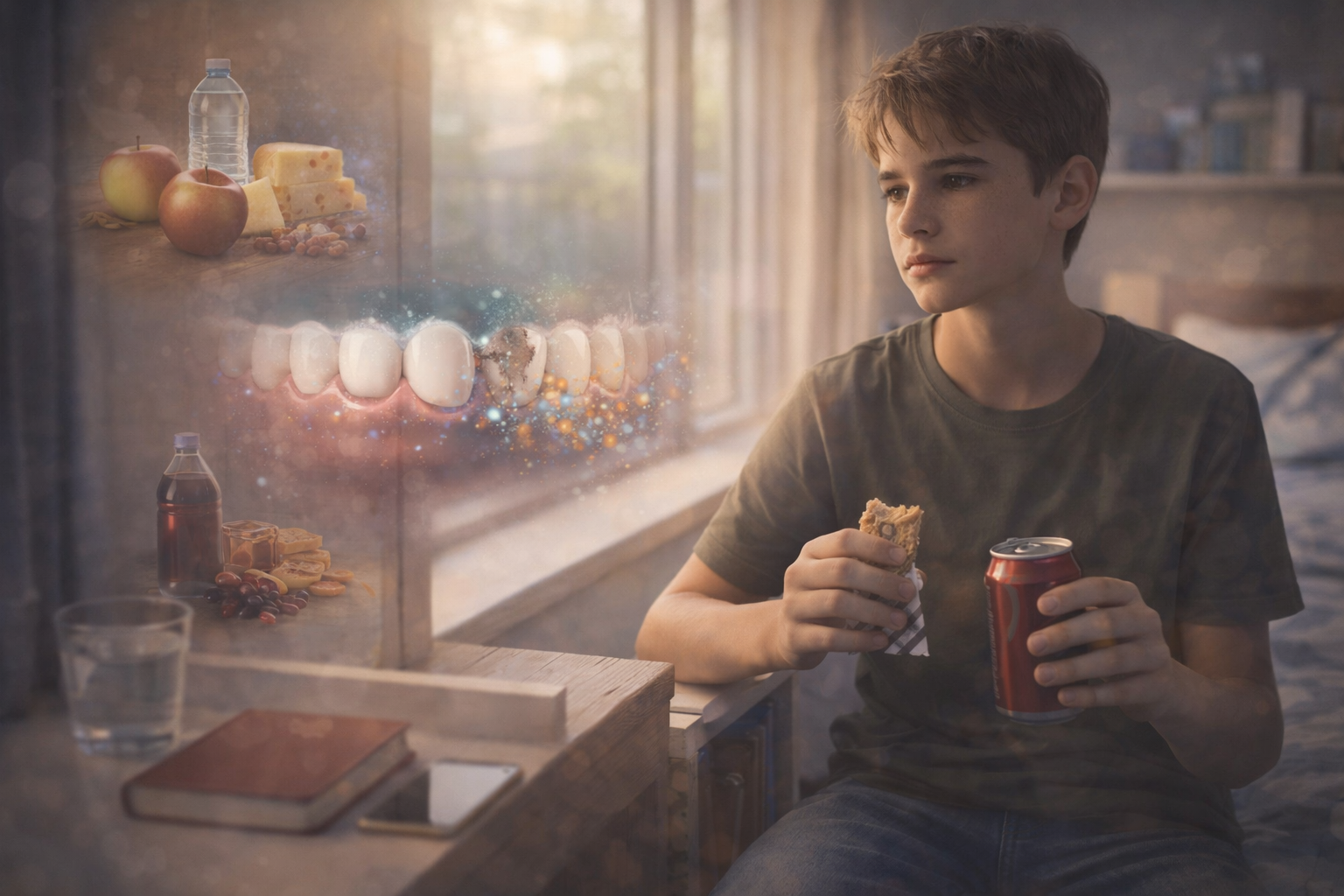
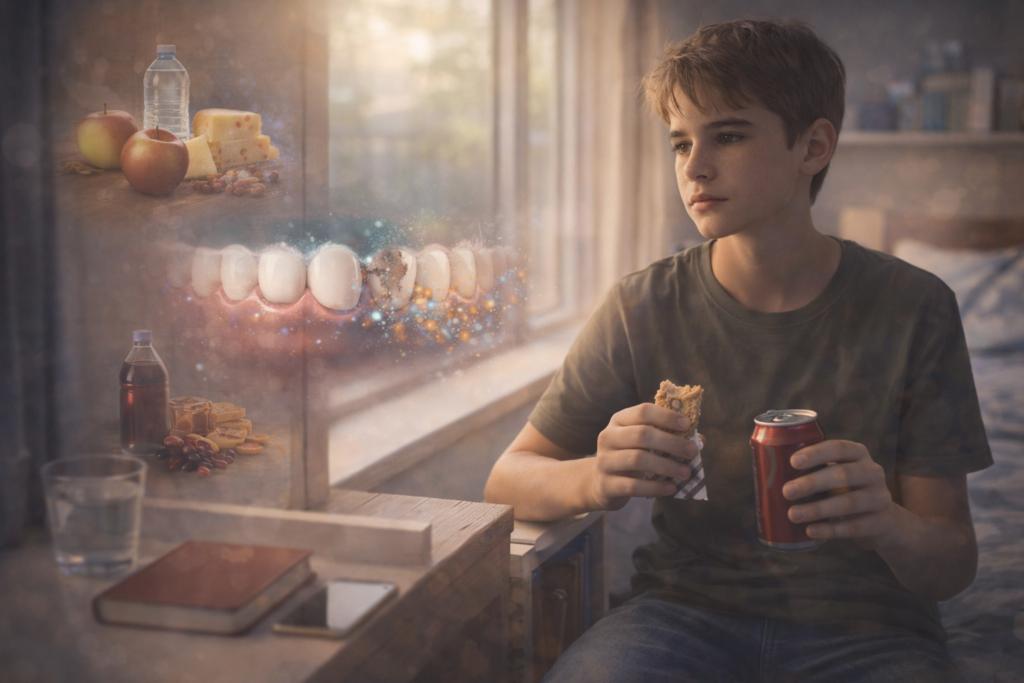
I didn’t really think about my teeth when I reached for a snack.
It was always about taste, convenience, or maybe just habit. A bag of chips during a late-night study session. A sugary drink to stay awake. Something sweet after a long day because, honestly, it felt like I deserved it.
My teeth? They were just… there. Quiet. Not complaining. Easy to forget.
Until one day, they didn’t stay quiet anymore.
The Day It Clicked
It started with a dull sensitivity. Nothing dramatic—just a slight discomfort when I drank something cold. I ignored it at first. Maybe it was nothing. Maybe it would go away.
But it didn’t.
At my next dental visit, I mentioned it casually, expecting a quick fix. Instead, my dentist asked me a question I hadn’t expected:
“What does a typical day of eating look like for you?”
I paused.
No one had ever asked me that in a dental context before.
I started listing things—coffee, maybe something sweet in the afternoon, snacks here and there, soda sometimes. As I spoke, I could see a pattern forming in her expression.
Not judgment. Just understanding.
And then she said something that stuck with me:
“Your teeth don’t just care about what you eat. They care about how often you eat it.”
It’s Not Just Sugar—It’s Frequency
Like most people, I thought sugar was the main villain. Eat too much sugar, get cavities. Simple.
But the reality is more nuanced.
Every time you eat or drink something sugary or acidic, the bacteria in your mouth produce acid. That acid attacks your enamel—the protective layer of your teeth.
Here’s the part I didn’t know: that attack lasts for about 20–30 minutes after you eat.
So if you’re constantly snacking or sipping on something sweet throughout the day, your teeth are under near-constant attack.
It’s not just the amount of sugar. It’s how often your teeth are exposed to it.
That realization changed everything for me.
The “Healthy” Foods That Aren’t So Friendly
I used to feel pretty good about some of my choices.
Fruit juice instead of soda. Dried fruit instead of candy. Granola bars instead of chocolate.
Healthier, right?
Well… not exactly.
My dentist explained that many of these “healthy” options can still be tough on your teeth.
Fruit juice, for example, is high in natural sugars and often acidic. Without the fiber of whole fruit, it hits your teeth more directly.
Dried fruit? Sticky. It clings to your teeth, sitting there longer than you’d expect, feeding bacteria.
Granola bars? Some of them are basically disguised sweets, packed with sugar and designed to stick.
It wasn’t that these foods were “bad.” It was that I didn’t understand how they interacted with my teeth.
The Role of Saliva—Something You Never Think About
Before that appointment, I had never once thought about saliva.
But apparently, it plays a huge role in protecting your teeth.
Saliva helps wash away food particles, neutralize acids, and repair early damage to enamel. It’s like your mouth’s natural defense system.
But here’s the catch: it needs time to do its job.
If you’re constantly eating, your mouth doesn’t get a break. Saliva can’t fully neutralize the acids before the next wave hits.
That’s why spacing out meals—and giving your mouth time to recover—matters more than most people realize.
Drinks Are Sneakier Than Food
If I’m being honest, I used to think drinks didn’t really “count.”
A soda here, a sports drink there, maybe some iced tea. It felt less significant than eating something sugary.
But drinks can be even more damaging.
Why? Because we tend to sip them slowly.
Instead of a quick exposure, your teeth are bathed in sugar and acid over an extended period. It’s like stretching that 20-minute acid attack into hours.
And some drinks—like soda or energy drinks—are both sugary and acidic. That’s a double hit to your enamel.
Even “sugar-free” drinks can be acidic enough to wear down your teeth over time.
That was a tough one to accept.
Small Changes That Actually Matter
I didn’t overhaul my entire diet overnight. That would’ve been unrealistic.
Instead, I started making small, manageable changes.
I stopped sipping sugary drinks for long periods. If I had one, I drank it in a shorter time and followed it with water.
I became more aware of how often I snacked. Not cutting snacks completely—but being intentional about them.
I swapped out sticky snacks for ones that were easier on my teeth, like nuts or cheese.
And maybe most importantly, I started paying attention.
Because once you understand what’s happening, it’s hard to ignore.
Foods That Help Your Teeth
Not everything is about avoiding harm. Some foods actually support your dental health.
Crunchy fruits and vegetables—like apples and carrots—can help clean your teeth as you eat them. They also stimulate saliva production.
Dairy products like cheese and yogurt are rich in calcium and can help strengthen enamel.
Water, especially fluoridated water, helps rinse your mouth and protect your teeth.
These aren’t magic solutions. But they tip the balance in your favor.
The Late-Night Habit
This one hit close to home.
Late-night snacking was something I didn’t think twice about. Watching something, scrolling on my phone, grabbing something to eat—it felt normal.
But at night, your mouth produces less saliva. That means less natural protection.
So when you eat late and then go to bed without brushing, you’re leaving your teeth exposed for hours.
It’s like giving bacteria a head start while your defenses are down.
I didn’t completely eliminate late-night snacks. But I became more mindful—and more consistent about brushing afterward.
It’s Not About Perfection
If there’s one thing I’ve learned, it’s this:
You don’t need a perfect diet to have healthy teeth.
Dentists aren’t expecting you to give up every sweet treat or never drink soda again.
What matters is balance.
Understanding how your choices affect your teeth—and making small adjustments where you can—goes a long way.
It’s about reducing constant exposure, giving your mouth time to recover, and building habits that support your overall health.
Looking at Food Differently
Now, when I reach for something to eat or drink, I still think about taste.
But I also think about timing. Frequency. Impact.
Not in a stressful way—just with awareness.
Because once you understand the connection between diet and your teeth, it changes how you see everyday choices.
It’s no longer just about hunger or cravings. It’s about care.
What Dentists Really Want You to Understand
If I had to sum up everything I learned, it would be this:
Your teeth are constantly responding to your environment.
Every bite, every sip, every habit—it all adds up.
And the good news?
Small changes matter.
You don’t need to be perfect. You just need to be a little more intentional than you were yesterday.
I still enjoy my favorite foods. I still have days where I snack more than I should.
But now, I understand what’s happening behind the scenes.
And that awareness—that quiet shift in perspective—has made all the difference.
Because taking care of your teeth isn’t about restriction.
It’s about understanding.
And once you do, you start making better choices—not because you have to, but because you want to.