I didn’t plan to start buying dental equipment in bulk.
At first, it was just one chair. Then a scaler. Then a few handpieces. Each purchase felt manageable, almost routine. But somewhere along the way—between rising costs, delayed shipments, and the constant need to reorder supplies—I realized something wasn’t working.
I wasn’t just buying equipment.
I was reacting to problems.
And that’s when the idea of bulk purchasing first crossed my mind. Not as a strategy, but as a question:
What if I stopped buying piece by piece—and started thinking bigger?
That question changed everything.
The Turning Point: When Small Orders Stop Making Sense
There’s a moment every clinic reaches, whether it’s expanding, stabilizing, or simply trying to operate more efficiently, when small, frequent orders start to feel… inefficient.
For me, it showed up in subtle ways:
- Paying shipping fees over and over again
- Running out of essential tools at the worst possible times
- Spending hours reordering the same items
It wasn’t dramatic. It was just… constant.
And that’s the thing about inefficiency—it doesn’t always hit you all at once. It builds quietly until you finally decide to do something about it.
Bulk buying wasn’t just about saving money. It was about regaining control.
What “Bulk Buying” Really Means (And What It Doesn’t)
When I first considered bulk purchasing, I imagined pallets of equipment, overflowing storage rooms, and huge upfront costs.
But that’s not what it has to be.
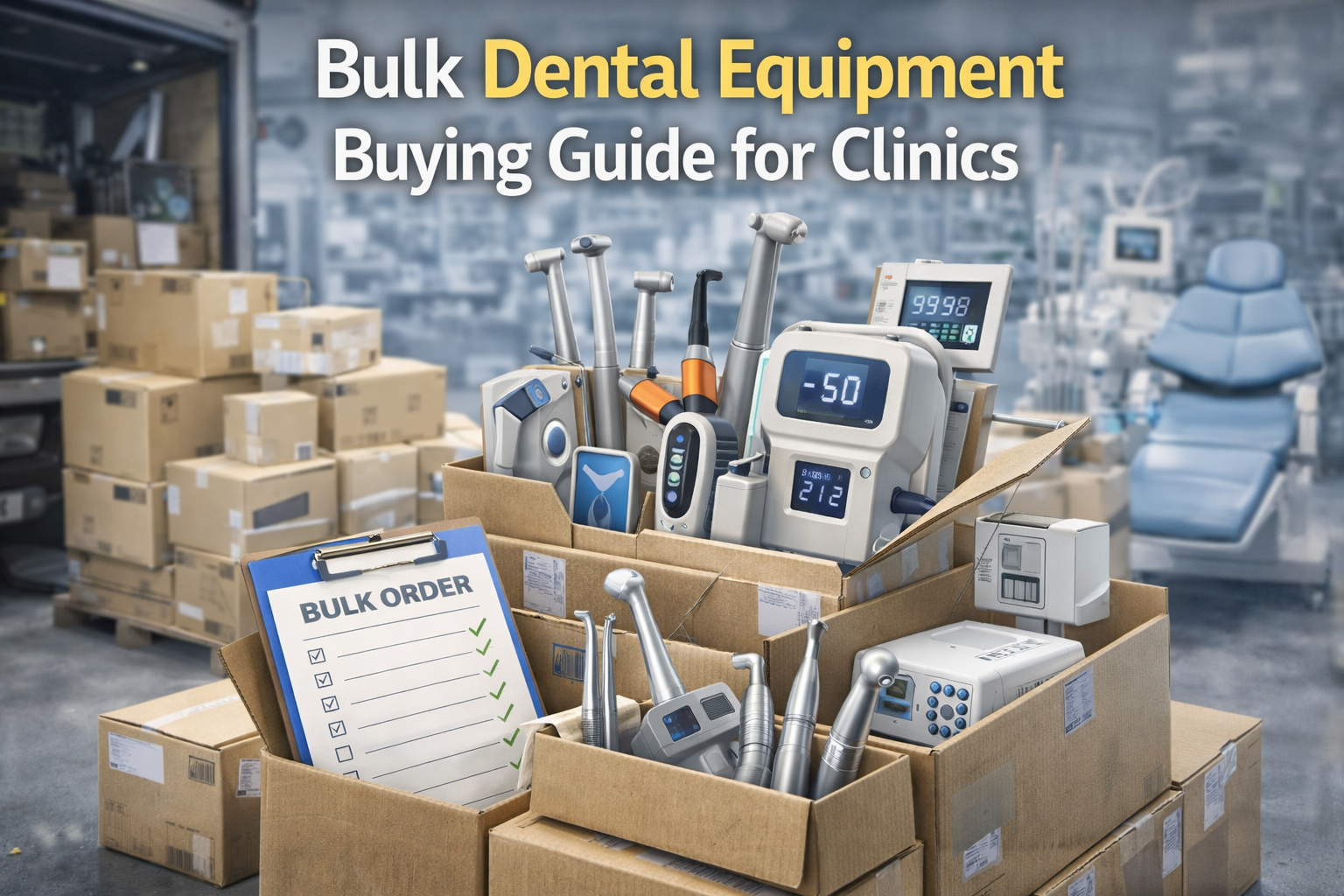
Bulk buying, at its core, simply means:
Planning your needs in advance and purchasing in larger quantities to reduce cost and friction.
It doesn’t mean overbuying.
It doesn’t mean unnecessary risk.
And it definitely doesn’t mean filling your clinic with equipment you won’t use.
In fact, the most successful bulk purchases I’ve made were the most carefully planned ones.
The First Bulk Order: Equal Parts Excitement and Doubt
I still remember my first real bulk order.
It wasn’t massive—just a combination of consumables and a few essential tools. But it felt significant.
There was a moment right before confirming the payment where I hesitated.
What if I’m overcommitting?
What if something goes wrong?
That hesitation wasn’t irrational. Bulk buying involves higher upfront investment, and that naturally comes with pressure.
But when the order arrived—on time, complete, and exactly as expected—it felt like a shift had happened.
For the first time, I wasn’t scrambling to keep up.
I was ahead.
Where Bulk Buying Actually Makes Sense
Not everything should be purchased in bulk. That’s one of the first lessons I learned.
Consumables: The Obvious Choice
Items you use daily—gloves, masks, syringes, disposable tools—are perfect for bulk purchasing.
They don’t change often. They don’t become obsolete. And you already know how quickly they run out.
Standard Equipment
Things like handpieces, basic instruments, and accessories can also be good candidates—especially if your clinic uses multiple units.
Expansion Planning
If you’re opening a new clinic or adding more chairs, bulk buying becomes almost unavoidable—and incredibly beneficial.
But there are also things I avoid buying in bulk:
- Highly specialized equipment
- Technology that evolves quickly
- Items I haven’t tested before
Because bulk buying amplifies both good decisions and bad ones.
The Power of Supplier Negotiation
This was something I completely underestimated at the beginning.
When you place small orders, prices are fixed. There’s little room for discussion.
But when you start talking about bulk quantities, something changes.
Suppliers become more flexible.
I remember reaching out to a supplier with a larger order than usual. Instead of simply confirming the price, they offered:
- A discount tier
- Reduced shipping costs
- Extended warranty options
That was the moment I realized:
Bulk buying isn’t just about quantity—it’s about leverage.
And the more you understand that, the better your deals become.
Storage: The Practical Side No One Talks About
There’s a less glamorous side to bulk buying—storage.
At first, I didn’t think much about it. But after my second bulk order, I quickly realized that space matters.
You need:
- Clean, organized storage areas
- Proper conditions (especially for sensitive items)
- A system to track inventory
Without this, bulk buying can turn into chaos.
I once misplaced a box of supplies simply because I didn’t have a proper system in place. Not a costly mistake—but a frustrating one.
Now, I treat storage as part of the strategy, not an afterthought.
Managing Cash Flow Without Stress
One of the biggest concerns with bulk buying is the upfront cost.
And it’s a valid concern.
Spending a large amount at once can feel risky—especially if you’re used to smaller, more frequent purchases.
What helped me was shifting my perspective.
Instead of asking:
“How much am I spending today?”
I started asking:
“How much am I saving over time?”
In many cases, the answer justified the investment.
Still, balance is key. Bulk buying should support your clinic—not strain it.
Start small. Scale gradually. Learn as you go.
Mistakes That Taught Me the Most
Not every bulk purchase I made was a success.
There were times when:
- I overestimated usage and ordered too much
- I trusted a new supplier too quickly
- I didn’t fully check compatibility between products
Each mistake came with a cost—but also a lesson.
If I had to summarize those lessons, they would be:
- Test before scaling
- Verify suppliers thoroughly
- Plan based on real data, not assumptions
Because in bulk buying, small miscalculations become big ones.
Building a System That Works
Over time, bulk buying stopped feeling like a risk—and started feeling like a system.
Now, I:
- Track usage patterns regularly
- Plan purchases in cycles
- Maintain relationships with trusted suppliers
- Review inventory before every order
It’s not complicated. But it’s consistent.
And that consistency makes everything smoother.
The Unexpected Benefits
What surprised me most about bulk buying wasn’t just the cost savings.
It was the peace of mind.
No more last-minute orders.
No more worrying about running out of essentials.
No more constant decision fatigue.
There’s something incredibly reassuring about knowing you’re prepared.
And in a clinical environment, that kind of stability matters more than you might expect.
When Bulk Buying Isn’t the Right Move
Despite all its advantages, bulk buying isn’t always the answer.
There are times when flexibility matters more than savings.
If you’re:
- Testing new equipment
- Exploring different brands
- Unsure about future needs
…it’s better to stay cautious.
Because committing too early can limit your options later.
Final Thoughts
Bulk buying dental equipment isn’t just a purchasing strategy—it’s a shift in mindset.
It’s about moving from reactive decisions to proactive planning.
From short-term fixes to long-term efficiency.
It won’t be perfect from the start. You’ll make adjustments. You’ll learn what works for your clinic and what doesn’t.
But once you find your rhythm, something changes.
You stop chasing supplies.
You stop dealing with constant interruptions.
You start operating with intention.
And in a field where precision and reliability matter every single day, that kind of control is more valuable than any discount you’ll ever find.