I didn’t always think oral care was a big deal when I was younger.
To me, brushing my teeth felt like one of those things adults forced you to do—like going to bed early or eating vegetables you didn’t like. I remember standing in the bathroom, half-asleep, moving the toothbrush around quickly just so I could say, “I did it.” Flossing was even worse. It felt unnecessary, uncomfortable, and honestly, easy to skip.
And for a while, nothing bad seemed to happen.
That’s probably the most misleading part about oral hygiene for kids—it doesn’t punish you immediately. You can get away with poor habits for weeks, even months, and everything still feels fine. No pain, no obvious problems, nothing to worry about.
But just because you don’t see the damage doesn’t mean it isn’t happening.
The Habits Start Early—And They Stick
Looking back, I realize that oral care isn’t just about teeth. It’s about habits.
The way kids learn to take care of their teeth often stays with them for years, sometimes even for life. If brushing feels like a chore to rush through, it becomes a rushed habit. If flossing is ignored early on, it’s likely to stay ignored later.
I remember how my parents used to remind me constantly:
“Brush properly.”
“Don’t forget to floss.”
“Take your time.”
At the time, it felt repetitive and annoying. But now, I understand what they were trying to do—they weren’t just protecting my teeth at that moment. They were trying to build a routine that would protect me long-term.
Because once bad habits settle in, they’re surprisingly hard to change.
Sugar, Snacks, and Silent Damage
Childhood is full of small joys—candy after school, sweet drinks at parties, late-night snacks during weekends.
I had all of those.
What I didn’t understand was how often I was feeding the bacteria in my mouth. Every sugary snack became fuel for plaque buildup. And because I wasn’t brushing thoroughly—or sometimes not at all before bed—that sugar stayed on my teeth longer than it should have.
The damage was quiet.
Tiny areas of decay started forming, too small to notice. No pain, no warning signs. Just slow, steady changes happening beneath the surface.
It wasn’t until a dental visit that everything caught up with me.
The First Wake-Up Call
I still remember sitting in the dentist’s chair, staring at the bright light above me, trying not to feel nervous.
The dentist was calm, but the words stuck with me:
“You have a few cavities.”
A few.
That word felt heavier than I expected.
I hadn’t felt any pain, so I assumed everything was fine. But there it was—proof that my daily habits, or lack of them, had consequences.
The treatment wasn’t terrible, but it wasn’t pleasant either. And more than anything, it made me realize something important:
Just because something doesn’t hurt doesn’t mean it’s healthy.
Confidence Starts With a Smile
For kids, confidence can be fragile.
Sometimes, it’s tied to things that seem small—like how your smile looks or how your breath smells. I didn’t think about it much until I became more aware of how I interacted with others.
There were moments when I hesitated to smile fully in photos. Times when I wondered if my breath was okay after eating something strong. Small doubts that slowly built up.
Oral health plays a bigger role in self-confidence than most people realize.
Clean, healthy teeth make it easier to smile without thinking twice. And for kids growing up, that kind of confidence matters more than we often admit.
It’s Not Just About Teeth
One thing I learned later is that oral health is connected to overall health—even for kids.
When oral hygiene is poor, bacteria can build up and cause infections in the gums. These infections don’t always stay in one place. They can affect other parts of the body, especially if they’re left untreated.
While serious complications are less common in kids, the foundation is still being set.
Healthy habits early on don’t just protect teeth—they support a healthier body overall.
Why Kids Often Don’t Take It Seriously
If I’m being honest, the reason I didn’t care much about oral hygiene as a kid was simple: it didn’t feel urgent.
There were no immediate consequences. No visible damage. No strong motivation to do better.
And when something doesn’t feel urgent, it’s easy to ignore.
Kids live in the present. Thinking about future problems—like gum disease or tooth loss—doesn’t feel real to them. That’s why building habits early is so important. It removes the need for constant motivation.
You don’t brush your teeth because you feel like it.
You brush your teeth because it’s just what you do.
The Role of Parents and Guidance
I didn’t fully appreciate it at the time, but guidance makes a huge difference.
Kids don’t automatically know how to brush properly or why flossing matters. They learn by watching, by being reminded, and sometimes by being corrected.
It’s not about strict rules—it’s about consistency.
Simple things, like brushing together as a family or setting a routine before bed, can turn oral care into something normal instead of something forced.
And over time, that normal becomes automatic.
Small Changes, Big Results
The good news is that improving oral care habits doesn’t require anything complicated.
When I started taking it more seriously, I didn’t make huge changes all at once. I just focused on doing the basics better.
I brushed more carefully instead of rushing. I flossed more regularly, even though I didn’t enjoy it at first. I paid attention to what I ate, especially before going to bed.
And gradually, things improved.
Dental visits became less stressful. My teeth felt cleaner. And most importantly, I stopped worrying about problems I couldn’t see.
A Message Worth Remembering
If there’s one thing I would tell any kid—or even my younger self—it’s this:
Taking care of your teeth isn’t just about avoiding the dentist.
It’s about building a habit that protects you every single day.
The effects of poor oral hygiene don’t always show up right away, but they do show up eventually. And when they do, they’re often harder to fix than to prevent.
Looking Back
Now, when I think about those rushed brushing sessions and skipped flossing nights, I see them differently.
They weren’t just small mistakes—they were missed opportunities to take care of myself.
But the good thing about habits is that they can change.
It doesn’t matter if you didn’t do it perfectly before. What matters is what you do next.
Ending on a Simple Note
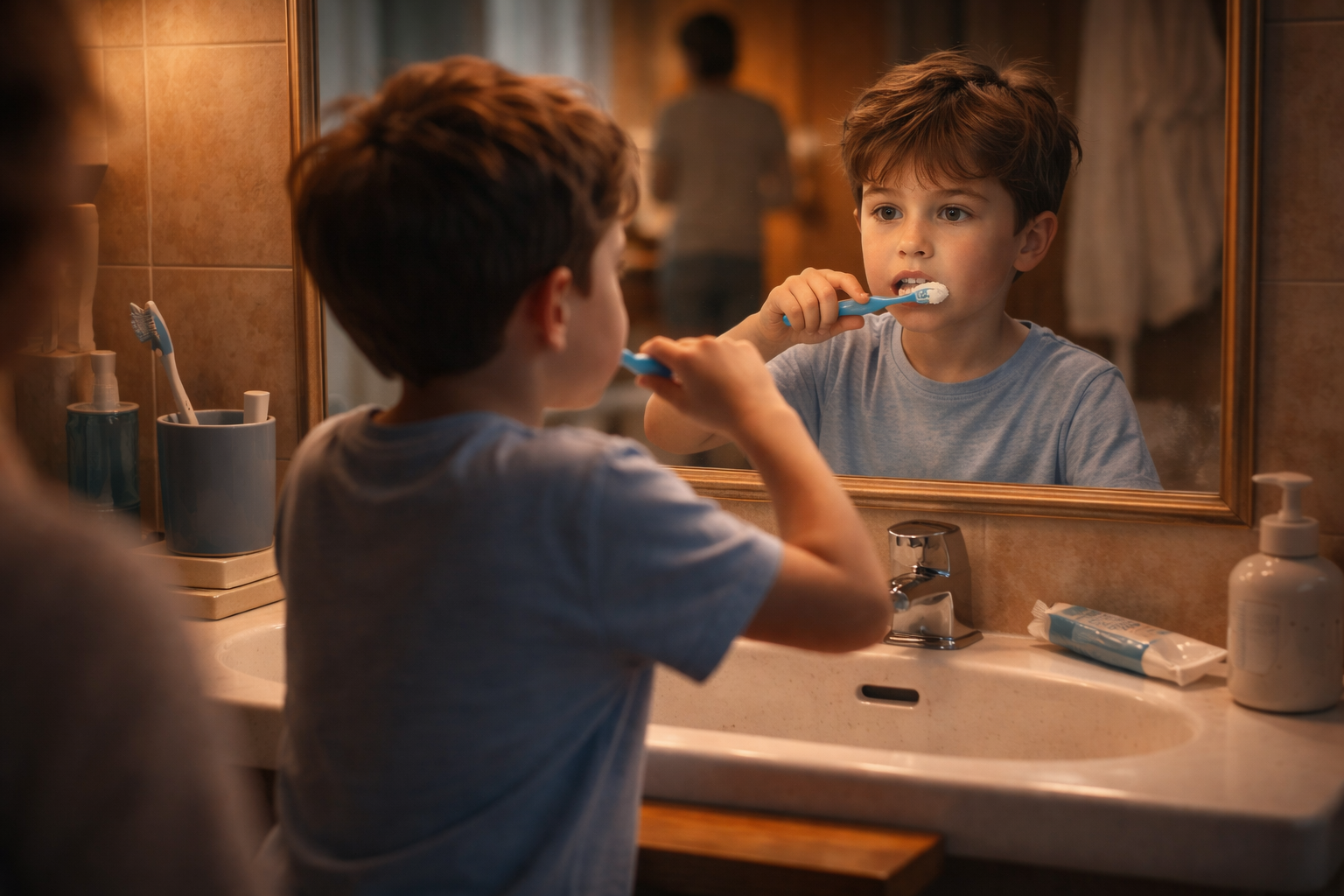
So tonight, when the day is winding down and you’re standing in front of the mirror, toothbrush in hand, take an extra minute.
Not because someone told you to.
But because you understand why it matters.
Because good oral care isn’t just about today.
It’s about every tomorrow that comes after.