I didn’t really think much about the color of my teeth—until I saw a photo of myself that someone else took.
It wasn’t posed. No filters, no careful lighting. Just a random snapshot taken on a regular afternoon. Everyone else looked… normal. But when my eyes landed on my own smile, something felt off.
My teeth weren’t terrible. They weren’t dramatically stained or unhealthy-looking. But they weren’t as bright as I thought they were either. They looked a little dull, slightly yellowed in a way I had never noticed in the mirror.
That moment stuck with me longer than I expected.
Not because I suddenly wanted a “perfect” smile, but because I realized how easy it is to overlook the small, everyday habits that slowly change things over time.
And just like brushing, keeping your teeth white isn’t about one big fix. It’s about the little choices you make without thinking.
It Starts With What You Don’t Notice
When I asked my dentist about whitening, I expected a quick answer—maybe a product recommendation or a treatment option.
Instead, she asked me what I usually drink during the day.
Coffee, mostly. Sometimes tea. Occasionally soda if I’m out with friends.
She nodded, like she had already guessed.
“Most stains don’t come from one thing,” she said. “They build up quietly.”
That’s what surprised me. It wasn’t about avoiding one “bad” habit. It was about understanding how small exposures—day after day—slowly change the color of your teeth.
Coffee, tea, and soda are some of the biggest contributors, not because they’re extreme, but because they’re consistent.
The Slow Fade of Brightness
Teeth aren’t naturally paper-white. They have a natural shade, slightly off-white, sometimes with a hint of warmth.
But over time, that brightness can fade.
Certain foods and drinks leave behind pigments that stick to the enamel. Think of it like a white shirt you wear often—it doesn’t suddenly become dirty, but after a while, it’s not as bright as it used to be.
That’s how staining works.
And once I understood that, I stopped thinking of whitening as a one-time solution. It became more about preservation.
The Habit That Changed Everything: Rinsing
One of the simplest tips I got turned out to be one of the most effective.
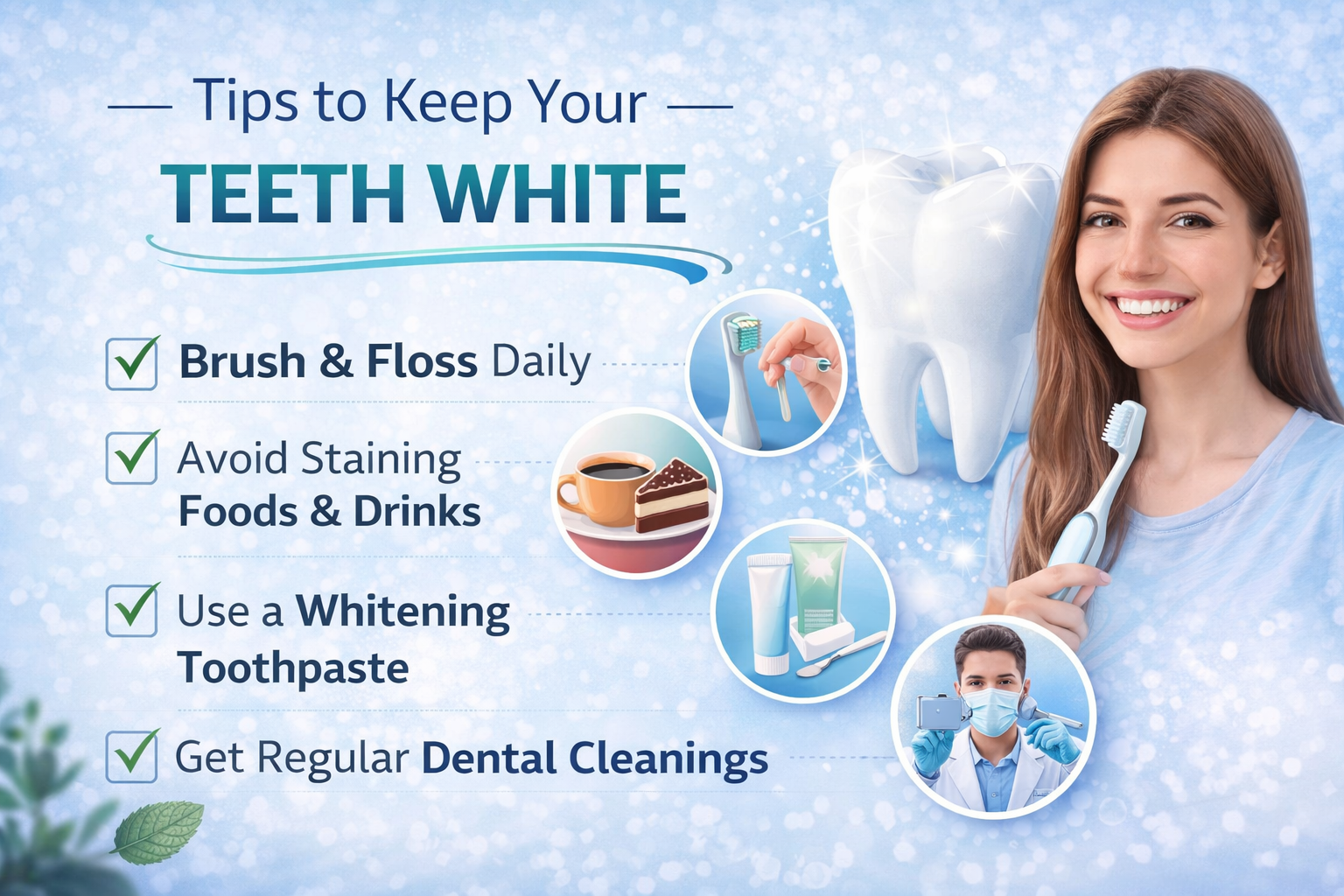
Rinse your mouth with water after consuming staining foods or drinks.
That’s it.
No complicated products, no extra steps that take forever. Just a quick rinse.
At first, it felt almost too simple to matter. But over time, I realized it made a difference. It reduces how long pigments sit on your teeth, giving them less chance to stick.
It’s not perfect, but it’s powerful in its consistency.
Brushing—But Not the Way You Think
You might assume that brushing immediately after drinking coffee would help prevent stains.
But remember what we talked about earlier—timing matters.
After acidic drinks, your enamel is slightly softened. Brushing right away can actually do more harm than good.
So instead of rushing to brush, it’s better to wait a bit, rinse with water, and then brush later.
That small shift in timing protects your enamel while still helping maintain a brighter smile.
The Role of Toothpaste (And Realistic Expectations)
Whitening toothpaste is everywhere. Promises of “brighter smiles in days” are hard to ignore.
But here’s what my dentist made clear: most whitening toothpastes don’t actually change the natural color of your teeth.
They help remove surface stains.
That means they can make your teeth look cleaner and slightly brighter, but they won’t dramatically transform your smile.
Understanding that helped me set realistic expectations. Instead of chasing instant results, I started focusing on steady improvement.
The Straw Trick (That Felt Weird at First)
This was one of those tips that sounded a little odd when I first heard it.
“Use a straw when you drink staining beverages.”
At first, I resisted. It felt unnecessary—maybe even a bit awkward.
But the logic made sense. A straw reduces direct contact between the liquid and your front teeth, which are the most visible when you smile.
Over time, I got used to it. And while it didn’t eliminate staining completely, it definitely helped reduce it.
Sometimes, the small, slightly inconvenient habits are the ones that make the biggest difference.
Foods That Help More Than You Expect
Not all foods work against you.
Some actually help keep your teeth cleaner.
Crunchy fruits and vegetables—like apples, carrots, and celery—act almost like natural brushes. They stimulate saliva and gently help remove debris from your teeth.
Cheese and dairy products can also support enamel health because they contain calcium and help balance acidity in your mouth.
It’s not about eating these foods for the sole purpose of whitening your teeth—but knowing they help makes you appreciate them a little more.
The Truth About Professional Whitening
At some point, I did consider professional whitening.
It’s faster, more noticeable, and supervised by a dentist. For some people, it’s a great option—especially if staining is more advanced.
But it’s not a permanent solution.
That’s the part people don’t always talk about.
Even after whitening, your daily habits still matter. Without good maintenance, stains can come back over time.
So instead of seeing whitening as a “fix,” it’s better to think of it as a reset—something that works best when paired with consistent habits.
The Confidence Factor
What I didn’t expect was how much this would affect my confidence.
Not in a dramatic, life-changing way. But in small, quiet moments.
Smiling in photos felt easier. Talking to people felt a little more relaxed. I wasn’t overthinking how my teeth looked.
It wasn’t about having a perfect smile. It was about feeling comfortable with it.
And that came more from knowing I was taking care of it than from any single visible change.
The Bigger Picture
Teeth whitening is often treated like a cosmetic goal.
But the more I learned, the more I realized it’s connected to overall oral health.
Healthy enamel reflects light better. Clean teeth naturally look brighter. Strong habits support both appearance and function.
It’s all connected.
And once you see it that way, the goal shifts slightly. It’s not just about looking better—it’s about maintaining something important.
Small Habits, Lasting Results
If there’s one thing I’ve learned, it’s this:
You don’t need a complicated routine to keep your teeth white.
You just need awareness.
Rinse when you can. Brush gently and consistently. Be mindful of what you drink. Make small adjustments that feel manageable.
None of these habits are difficult on their own. But together, they create a noticeable difference over time.
Looking Back at That Photo
I still think about that photo sometimes.
Not because I didn’t like how I looked—but because it made me pay attention.
It reminded me that the things we do every day, without thinking, shape the results we see later.
Now, when I smile, I don’t expect perfection.
But I do notice the difference.
And more importantly, I know where it comes from.
Not from a single product or a quick fix—but from the quiet, consistent choices that add up over time.
And maybe that’s what keeping your teeth white is really about.
Not chasing brightness—but maintaining it.