I still remember the first time my little cousin refused to brush his teeth. He clamped his mouth shut, shook his head dramatically, and declared that “toothbrushes are evil.” At the time, I laughed—but it also made me realize something important: teaching kids good oral hygiene isn’t just about giving instructions. It’s about understanding their world, their fears, and their tiny, growing sense of independence.
As adults, we often see brushing and flossing as simple, routine tasks. But for kids, these habits are unfamiliar, sometimes uncomfortable, and often boring. So the real challenge isn’t just teaching what to do—it’s teaching why it matters in a way that sticks.
Turning Routine into Storytime
One of the most effective ways I’ve seen kids learn is through storytelling. Children connect deeply with stories because they make abstract ideas feel real. Instead of saying, “You need to brush your teeth to prevent cavities,” try turning it into an adventure.
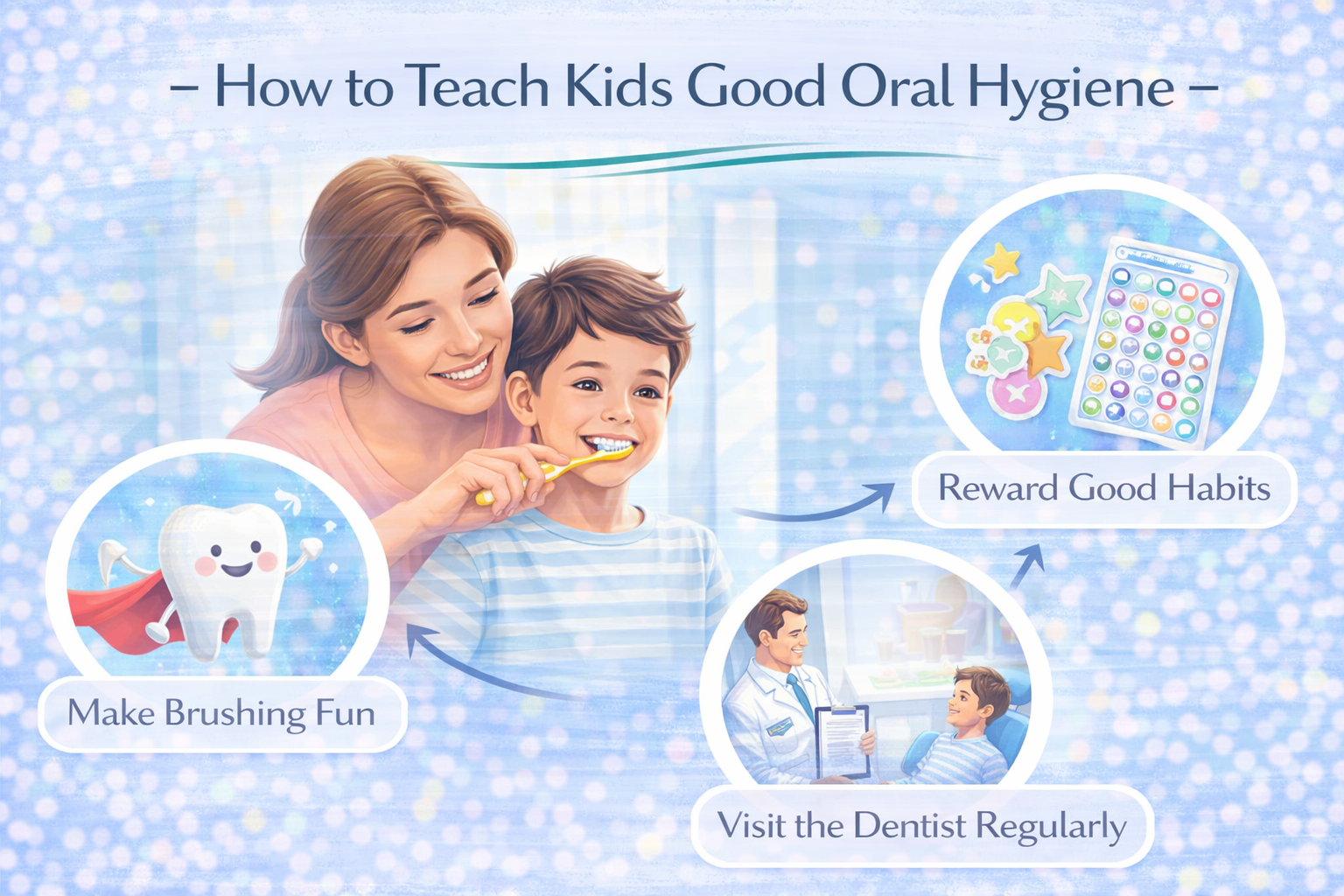
For example, you can tell them about “Sugar Bugs”—tiny invisible creatures that love to throw parties on their teeth after meals. These bugs build “houses” (plaque), and if they stay too long, they start causing trouble. The toothbrush then becomes a superhero, sweeping in to chase the bugs away.
When I tried this approach with my cousin, something shifted. Brushing his teeth was no longer a chore—it became a mission. He would rush to the bathroom, eager to “defeat the sugar bugs” before bedtime.
Leading by Example
Kids are incredible observers. They notice more than we think, and they often copy what they see rather than what they’re told. If they see parents or older siblings brushing regularly, they’re more likely to follow along.
One evening, I made brushing a shared activity. We stood side by side in front of the mirror, making funny faces with foam-covered mouths. It turned into a moment of connection rather than instruction. Without realizing it, he began mimicking my brushing technique—small circles, reaching the back teeth, rinsing properly.
This simple act of modeling behavior can be more powerful than any lecture.
Making It Fun, Not Forced
Let’s be honest—if something feels like a strict rule, kids will often resist it. But if it feels like play, they’ll lean in.
There are countless ways to make oral hygiene fun:
- Let them choose their own toothbrush (colors, characters, or even ones that light up)
- Use flavored toothpaste they actually enjoy
- Play a two-minute song while brushing
- Turn brushing into a game or challenge
I once set a timer and told my cousin, “Let’s see if you can brush until the music ends.” He took it seriously, focusing on every tooth just to “win.” Over time, that two-minute brushing habit became natural.
Building a Routine That Feels Safe
Children thrive on consistency. A predictable routine gives them a sense of control and comfort. Brushing teeth should become as natural as bedtime stories or putting on pajamas.
Start with simple steps:
- Brush in the morning after breakfast
- Brush at night before bed
- Rinse after sugary snacks when possible
At first, you may need to guide them closely. But gradually, they’ll begin to take ownership.
I noticed that once brushing became part of my cousin’s nightly routine, he stopped resisting. It was no longer a question of “Do I have to?” but simply “What’s next?”
Teaching the “Why” in Simple Terms
Kids are curious. They don’t just want instructions—they want reasons.
Instead of overwhelming them with technical explanations, keep it simple:
- “Brushing keeps your teeth strong.”
- “Clean teeth help you smile confidently.”
- “Healthy teeth mean fewer visits to the dentist for fixing problems.”
You can even show them pictures or short videos (age-appropriate, of course) to help them visualize what happens when teeth aren’t cared for. The goal isn’t to scare them, but to help them understand cause and effect.
Gentle Guidance, Not Pressure
It’s important to remember that kids are still learning. They’ll forget, they’ll rush, and sometimes they’ll refuse. That’s part of the process.
Instead of reacting with frustration, try gentle reminders:
“Hey, I think your teeth might still have some sugar bugs hiding—want to check again?”
This approach keeps the tone supportive rather than critical. Over time, it builds confidence instead of resistance.
Introducing Flossing Without Fear
Flossing can be tricky, even for adults. So when it comes to kids, patience is key.
Start small. You don’t need to introduce flossing as a strict daily requirement right away. Begin by showing them how it works and explaining why it’s important—“your toothbrush can’t reach between your teeth, but floss can.”
Using kid-friendly floss picks can make a big difference. They’re easier to handle and feel less intimidating.
The first time I showed flossing to my cousin, he was hesitant. But after a few tries—and a lot of encouragement—he began to see it as just another step in the routine.
Celebrating Small Wins
Progress deserves recognition. When kids feel proud of their efforts, they’re more likely to keep going.
You don’t need big rewards. Simple praise works wonders:
- “You did a great job brushing tonight!”
- “Your teeth look super clean!”
- “I’m proud of how responsible you’re being.”
Sometimes, we even created a sticker chart. Each successful brushing session earned a sticker, and after a week, he got to choose a small reward like picking a movie or dessert.
These little celebrations made the habit feel meaningful.
Visiting the Dentist: Turning Fear into Familiarity
For many kids, the dentist can feel scary. Strange tools, unfamiliar sounds—it’s easy to understand why.
Preparation helps. Talk about what to expect in a calm, positive way:
“The dentist is just going to count your teeth and make sure they’re healthy.”
You can also role-play at home. Pretend to be the dentist and let them be the patient (and then switch roles). This playful practice can reduce anxiety significantly.
When my cousin had his first dental visit, we had already “played dentist” multiple times. Instead of fear, he walked in with curiosity.
Patience Is the Real Secret
If there’s one thing I’ve learned, it’s that teaching kids good oral hygiene isn’t about perfection—it’s about consistency and patience.
There will be days when they resist, days when they forget, and days when you feel like you’re repeating yourself endlessly. But every small effort adds up.
One night, after months of encouragement, my cousin surprised me. Without being asked, he walked into the bathroom, picked up his toothbrush, and started brushing.
I stood there quietly, realizing something powerful: the habit had finally become his own.
Final Thoughts
Teaching kids good oral hygiene is less about rules and more about relationships. It’s about creating positive experiences, building trust, and guiding them gently toward lifelong habits.
When you approach it with creativity, patience, and empathy, something beautiful happens. What starts as a daily struggle transforms into a shared routine—and eventually, into a habit they carry with them for life.
And maybe, just maybe, they’ll grow up remembering not just the importance of brushing their teeth—but the laughter, stories, and small moments that made it all worthwhile.