I didn’t always think about my gums.
To be honest, for the longest time, they were just… there. Quiet, unnoticed, doing their job in the background while I focused on what I thought mattered more—white teeth, fresh breath, that clean feeling after brushing.
It wasn’t until one morning, standing in front of the sink, that something small caught my attention.
A faint line of pink in the foam as I rinsed.
I paused.
At first, I brushed it off—no pun intended. Maybe I had brushed too hard. Maybe it was nothing. But over the next few days, it kept happening. Not dramatic, not painful, just enough to make me uneasy.
That was the moment I realized something most people don’t think about until they have to:
Healthy gums don’t ask for attention—but unhealthy ones do.
The Silent Foundation of Your Smile
When people think about oral health, they almost always think about teeth. Straightness, whiteness, cavities—those are the visible concerns.
But gums? They’re the foundation holding everything together.
My dentist explained it in a way that stuck with me: “Your teeth are like buildings. Your gums are the ground they stand on.”
You can have the most perfect-looking teeth in the world, but if the foundation is weak, everything becomes unstable.
And the tricky part? Gum problems don’t always hurt at first.
They start quietly—with small signs that are easy to ignore.
The Signs We Overlook
Looking back, I realized the signs had been there long before I noticed them.
A bit of bleeding when flossing. Slight sensitivity along the gumline. Maybe even a little puffiness I hadn’t paid attention to.
None of it felt urgent.
That’s the danger.
Gum issues often begin as gingivitis—a mild inflammation caused by plaque buildup. At this stage, it’s reversible. With better care, your gums can return to normal.
But if ignored, it can progress into more serious conditions that affect not just your gums, but the bone supporting your teeth.
And the transition? It’s gradual. Quiet. Easy to miss.
It’s Not Just About Brushing
I used to think brushing well was enough.
Twice a day, two minutes, minty toothpaste—that should cover it, right?
Not quite.
Brushing cleans the surfaces of your teeth, but it doesn’t fully reach the tight spaces between them or just under the gumline, where plaque tends to hide.
That’s where flossing comes in.
I’ll admit, I used to skip it more often than I should have. It felt optional, like an “extra credit” step.
But according to my dentist, flossing isn’t extra—it’s essential.
“If you don’t floss,” she said, “you’re missing nearly half of your tooth surfaces.”
That line stayed with me.
Learning to Slow Down
One of the biggest changes I made wasn’t buying new products or following a complicated routine.
It was simply slowing down.
Instead of rushing through brushing like it was a chore to finish, I started paying attention. The angle of the brush. The way it moved along the gumline. The areas I usually ignored.
I noticed how often I used too much pressure, especially near my gums. I thought I was cleaning better, but in reality, I was irritating the very tissue I was trying to protect.
Gentleness, it turns out, matters more than force.
Healthy gums don’t respond well to aggression. They respond to consistency and care.
The Role of Routine
There’s something almost comforting about a routine that works.
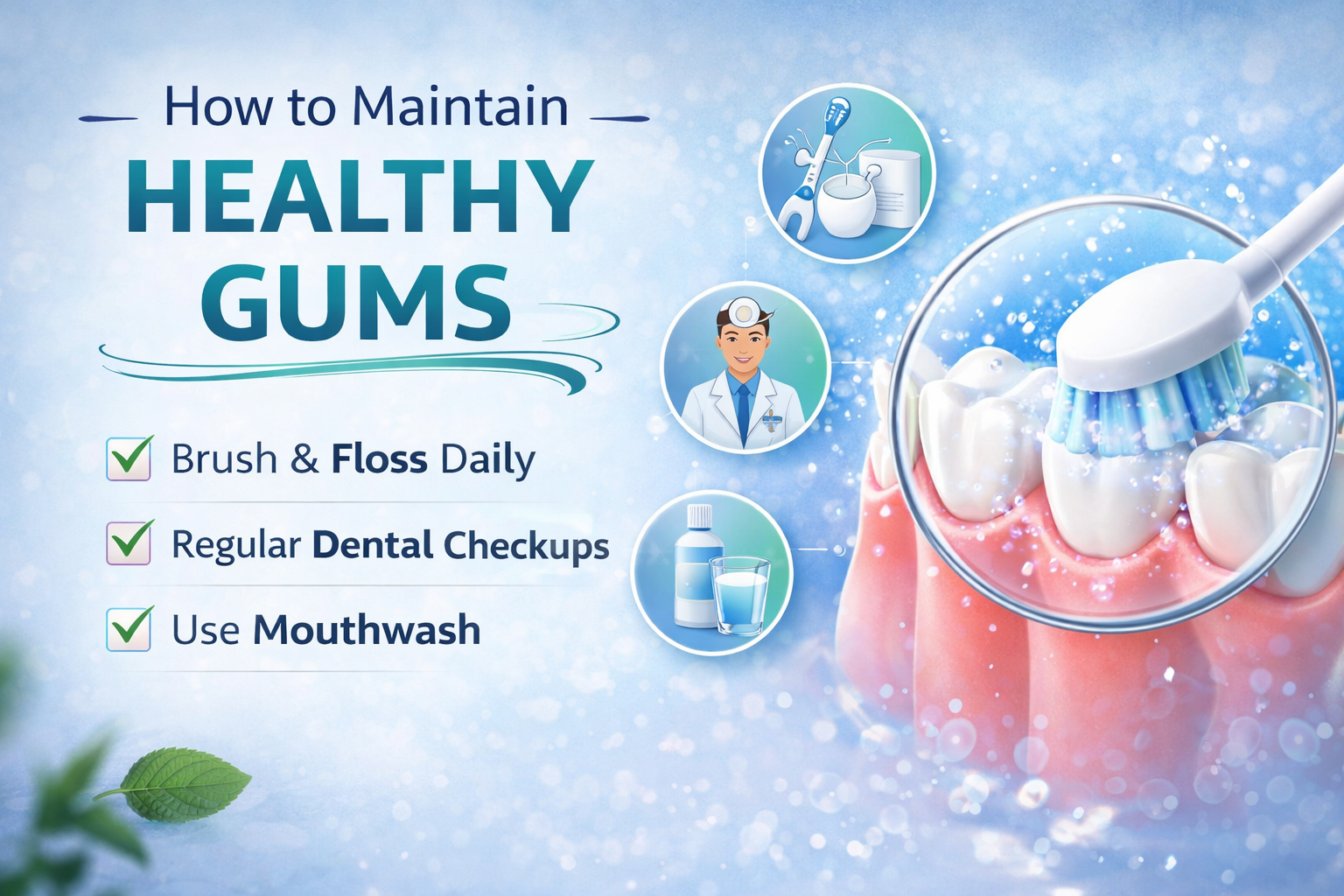
Morning and night, the same sequence: brush, floss, rinse. It doesn’t take long, but over time, it builds something important—stability.
Gums thrive on consistency.
Skipping a day here and there might not seem like a big deal, but plaque builds up quickly. Within a day, it can begin to harden into tartar, which can’t be removed by brushing alone.
That’s when professional cleaning becomes necessary.
It made me realize that maintaining healthy gums isn’t about occasional effort—it’s about daily habits repeated over time.
Food, Stress, and Everything In Between
What surprised me most was how much gum health is connected to things outside the bathroom.
Diet, for example.
Sugary snacks and drinks don’t just affect your teeth—they also contribute to plaque buildup along the gumline. On the other hand, crunchy fruits and vegetables, like apples and carrots, can help clean your teeth naturally and stimulate your gums.
Then there’s stress.
I hadn’t expected that one. But stress can affect your immune system, making it harder for your body to fight off inflammation, including in your gums.
There were times when I noticed my gums felt more sensitive during particularly busy or stressful weeks. It wasn’t a coincidence.
Sleep, hydration, overall health—they all play a role.
Your mouth isn’t separate from your body. It reflects what’s happening inside it.
Regular Check-Ups Matter More Than You Think
I used to see dental visits as something to get through. Necessary, but not particularly meaningful.
Now, I see them differently.
Dentists and hygienists can spot early signs of gum issues long before they become serious. They measure gum pockets, check for inflammation, and remove buildup that you simply can’t handle at home.
It’s not just about fixing problems—it’s about preventing them.
And prevention is always easier than treatment.
Small Changes, Real Impact
The interesting thing is, none of the changes I made were dramatic.
I didn’t overhaul my life or invest in complicated tools.
I just became more aware.
I flossed more consistently. I brushed more gently. I paid attention to small signs instead of ignoring them.
And slowly, those signs disappeared.
No more bleeding. Less sensitivity. Healthier-looking gums.
It wasn’t immediate, but it was noticeable.
And more importantly, it felt sustainable.
What Healthy Gums Actually Feel Like
This might sound obvious, but before all of this, I didn’t really know what “healthy gums” were supposed to feel like.
Now I do.
They don’t bleed when you brush or floss. They’re firm, not swollen. They don’t feel tender or irritated.
And perhaps most importantly—you don’t think about them.
Healthy gums are quiet. They do their job without drawing attention to themselves.
A Different Kind of Awareness
These days, when I stand in front of the mirror brushing my teeth, I notice things I never used to.
The color of my gums. The way the toothbrush moves along the edges. The small details that used to escape my attention.
It’s not about being overly cautious or obsessive.
It’s about being aware.
Because the truth is, gum health isn’t something you fix overnight. It’s something you maintain, little by little, every day.
What Dentists Really Want You to Understand
If there’s one thing I’ve taken away from all of this, it’s this:
Taking care of your gums isn’t complicated—but it does require intention.
It’s easy to focus on what we can see—white teeth, bright smiles—but the real work often happens beneath the surface.
Your gums support everything.
And when you take care of them, they take care of you in return.
I still remember that moment at the sink, noticing something small and almost ignoring it.
It would have been easy to continue as I was, to assume everything was fine.
But sometimes, it’s those small moments that shift your perspective.
Now, I don’t see gum care as an extra step.
I see it as part of the foundation—quiet, steady, and worth paying attention to every single day.