Every morning, almost without thinking, I reach for my toothbrush.
It’s a simple routine that most of us have followed since childhood. We brush our teeth, rinse the brush, place it back in its holder, and go on with the day. It feels like one of the cleanest habits we have.
After all, a toothbrush is meant to clean your mouth, right?
But one evening, while standing in the bathroom and looking at my toothbrush sitting quietly in its holder, a strange question crossed my mind:
Is my toothbrush actually clean?
At first, the thought seemed silly. I use toothpaste. I rinse it thoroughly. It looks clean.
But curiosity got the better of me, so I started researching what dentists and microbiologists say about toothbrush hygiene.
What I discovered was surprising.
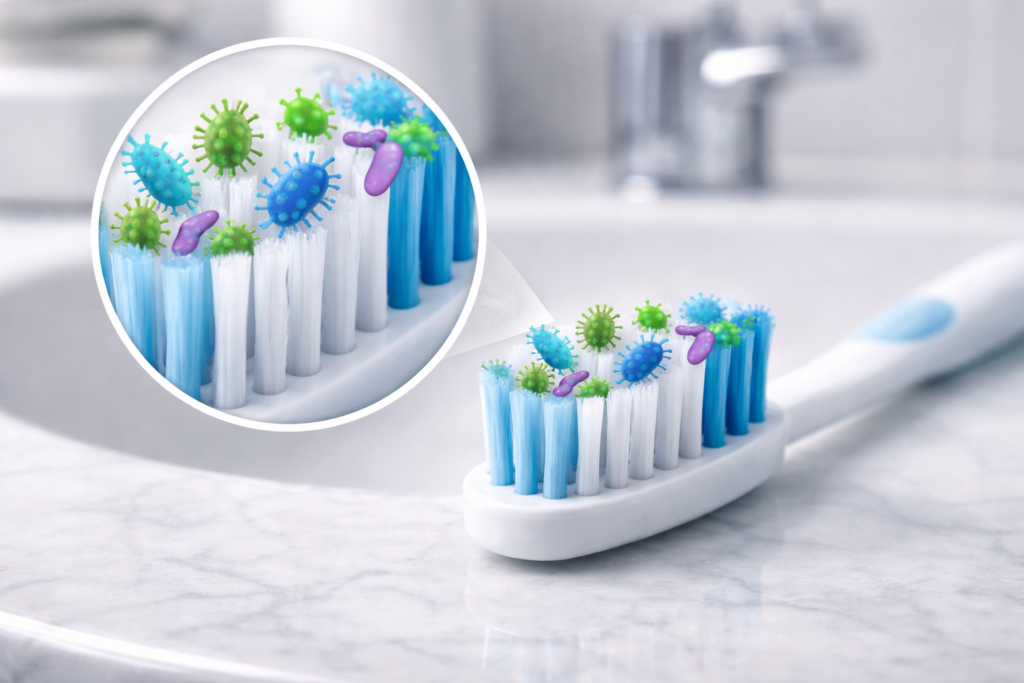
Yes—bacteria can live on your toothbrush. And in some cases, there can be quite a lot of them.
Before you rush to throw your toothbrush away, though, it’s important to understand why this happens and what dentists recommend for keeping your toothbrush safe to use.
The Truth About Bacteria in Your Mouth
To understand why bacteria can live on your toothbrush, we first need to talk about the environment inside your mouth.
The human mouth is home to hundreds of different species of bacteria. Scientists estimate there may be more than 700 types living in the oral cavity.
Most of these bacteria are harmless. Some even help maintain a healthy balance in your mouth.
However, others are responsible for common dental problems such as:
- Tooth decay
- Plaque buildup
- Gum disease
- Bad breath
When you brush your teeth, your toothbrush comes into contact with all of these microorganisms.
That means your toothbrush naturally collects some of the same bacteria that live in your mouth.
Dentists often explain it simply:
Your toothbrush cleans your teeth, but it also becomes exposed to the bacteria in your mouth.
What Studies Say About Toothbrush Bacteria
Researchers have studied toothbrush hygiene for many years, and the results show that toothbrushes can indeed carry microorganisms.
Scientists have found that toothbrush bristles may contain bacteria such as:
- Streptococcus mutans – associated with cavities
- Lactobacillus – linked to tooth decay
- Staphylococcus bacteria
- Various environmental microorganisms
This doesn’t mean your toothbrush is dangerous. In fact, most of these bacteria come from your own mouth.
However, if toothbrushes are stored improperly or not replaced regularly, bacterial growth can increase over time.
Why Toothbrushes Attract Bacteria
When I first learned about this, I wondered why bacteria would stay on a toothbrush after rinsing it with water.
The answer lies in how toothbrushes are designed.
1. Moist Bristles
Toothbrush bristles often stay damp after brushing. Moisture creates an environment where bacteria can survive longer.
Bathrooms are also humid spaces, which can slow down the drying process.
2. Dense Bristle Clusters
If you look closely at your toothbrush, you’ll notice that the bristles are grouped tightly together.
These clusters can trap:
- Toothpaste residue
- Tiny food particles
- Bacteria from saliva
Even when rinsed, small amounts can remain between the bristles.
3. Bathroom Environment
Another surprising factor is the environment of the bathroom itself.
Studies have shown that microscopic particles can spread in the air when toilets are flushed, especially if the lid is left open.
These particles may settle on nearby surfaces, including toothbrushes.
This phenomenon is sometimes called “toilet plume.”
While it sounds alarming, the risk can be reduced with simple hygiene habits.
Signs Your Toothbrush Might Need Replacing
Most people don’t pay much attention to their toothbrush until the bristles start looking worn.
But dentists say there are several signs that it’s time for a new one.
Here are a few indicators:
Frayed Bristles
When the bristles start bending outward, the toothbrush becomes less effective at cleaning teeth.
Discoloration
Stains or unusual discoloration may suggest buildup from toothpaste, minerals, or bacteria.
Unpleasant Odor
If a toothbrush develops an unusual smell, it may be holding onto bacteria or residue.
After Illness
Many dentists recommend replacing your toothbrush after recovering from a cold or flu to avoid reintroducing germs.
What Dentists Recommend for Toothbrush Hygiene
Fortunately, keeping your toothbrush clean doesn’t require complicated tools or special equipment.
Dentists usually recommend a few simple habits.
Rinse It Thoroughly
After brushing, rinse the toothbrush under running water to remove toothpaste and debris.
Make sure to rinse between the bristles, not just the surface.
Let It Air Dry
One of the best ways to reduce bacterial growth is to allow the toothbrush to dry completely between uses.
Avoid covering the toothbrush head immediately after use, since trapped moisture encourages bacterial growth.
Store It Upright
Keeping the toothbrush upright helps water drain away from the bristles.
This allows air circulation and faster drying.
Avoid Sharing Toothbrushes
Sharing toothbrushes can transfer bacteria from one person to another.
Dentists strongly advise against sharing toothbrushes, even among family members.
Keep It Away from the Toilet
If possible, store your toothbrush at least a few feet away from the toilet.
Closing the toilet lid before flushing can also reduce airborne particles.
How Often Should You Replace Your Toothbrush?
This was something I hadn’t thought about much before researching toothbrush hygiene.
Dentists generally recommend replacing your toothbrush every three to four months.
However, there are exceptions.
You should replace it sooner if:
- The bristles become frayed
- You’ve recently been sick
- The toothbrush shows signs of wear
- It develops an unusual smell
Electric toothbrush heads follow the same guideline.
Are Toothbrush Sanitizers Necessary?
While researching this topic, I also came across toothbrush sanitizers—small devices designed to kill bacteria using UV light.
Some people find them helpful, but dentists often say they’re not essential.
Simple habits like rinsing, drying, and regular replacement are usually enough to maintain good hygiene.
In other words, you don’t necessarily need special gadgets to keep your toothbrush safe.
A Small Tool With a Big Job
When you think about it, a toothbrush works incredibly hard.
Twice a day, it scrubs away plaque, food particles, and bacteria from your teeth and gums.
It’s a small tool, but it plays a major role in maintaining oral health.
Learning that bacteria can live on toothbrushes might sound unsettling at first.
But in reality, it’s simply part of how the oral environment works.
With proper care and regular replacement, a toothbrush remains a safe and effective tool for keeping your teeth clean.
The Bottom Line
So, are there bacteria living on your toothbrush?
Yes—there can be. After all, your toothbrush comes into contact with the bacteria naturally present in your mouth.
However, this doesn’t mean your toothbrush is unsafe to use.
By following a few simple habits—rinsing thoroughly, allowing it to air dry, storing it properly, and replacing it every few months—you can keep your toothbrush clean and effective.
Sometimes the smallest routines in our daily lives, like brushing our teeth, carry more science behind them than we realize.
And the next time you reach for your toothbrush in the morning, you might pause for a moment—just like I did—and appreciate the tiny tool that helps keep your smile healthy every single day. 🪥😁