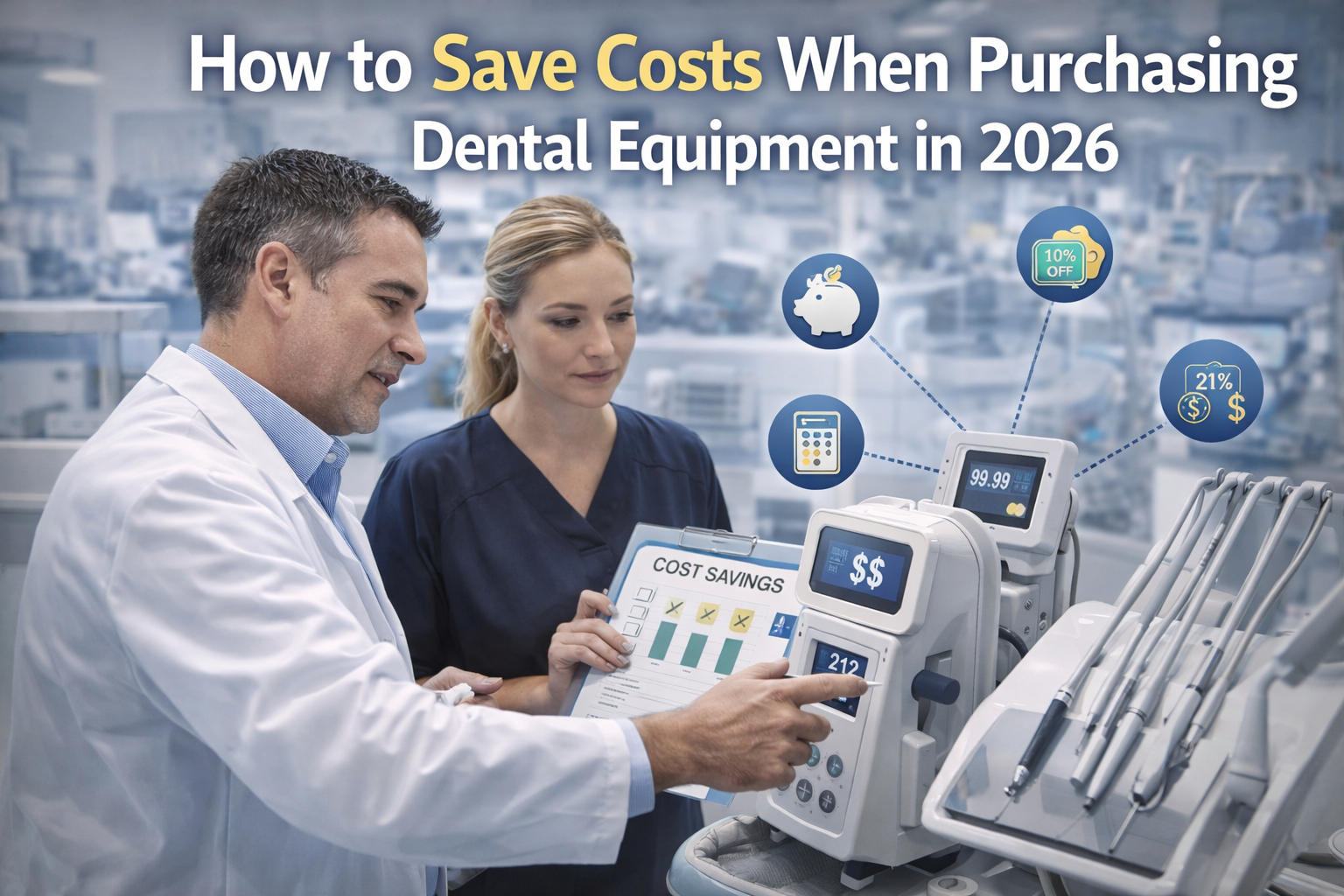
I used to think saving money on dental equipment was all about finding discounts.
That was my entire strategy.
Wait for a sale. Look for a coupon. Compare a few prices. Click “buy.” Done.
For a while, it felt like I was doing things right. I even told myself I was being smart—careful, strategic, disciplined. But over time, something didn’t add up. Despite all the “savings,” my overall expenses kept creeping higher. Repairs, replacements, delays, unexpected costs—they were always there, quietly canceling out whatever I thought I had saved.
It took me longer than I’d like to admit to realize the truth:
Saving money isn’t about paying less—it’s about spending wisely.
And once that idea settled in, everything about how I approached dental equipment purchasing began to change.
The Illusion of the Cheapest Option
The turning point came with a dental compressor.
I found one at a price that seemed unbeatable. Compared to other options, it was significantly cheaper, and the specifications looked close enough. I convinced myself that the difference didn’t matter.
For the first few weeks, everything worked fine.
Then the noise started.
Then the inconsistency.
Then, eventually, the failure.
What followed wasn’t just the cost of replacing the compressor—it was downtime, frustration, and a ripple effect that impacted daily operations.
That experience forced me to rethink everything.
Because what I thought was a cost-saving decision turned out to be one of the most expensive mistakes I’d made.
Thinking Beyond the Price Tag
After that, I stopped asking:
“How much does this cost?”
And started asking:
“What will this cost me over time?”
This shift—from price to value—became the foundation of every decision I made.
I began to consider:
- Durability
- Maintenance requirements
- Availability of spare parts
- Energy efficiency
- Warranty and support
And interestingly, the “cheapest” option rarely performed well under this kind of scrutiny.
Planning Instead of Reacting
One of the biggest sources of unnecessary cost is urgency.
When something breaks and you need a replacement immediately, you lose your advantage. You don’t have time to compare, negotiate, or wait for better deals.
You just need a solution—fast.
And fast solutions are rarely cheap.
So I started planning ahead.
I created a simple system:
- Track equipment lifespan
- Monitor performance
- Anticipate replacements before failure
It wasn’t complicated. But it gave me something I didn’t have before: time.
And time, in this context, is one of the most powerful cost-saving tools you can have.
Building Relationships That Save Money
At first, I treated suppliers like vending machines. I’d place an order, receive the product, and move on.
But over time, I realized that approach was limiting.
When you build relationships with suppliers, things change.
You get:
- Better pricing
- Honest recommendations
- Flexible payment options
- Priority support
I once reached out to a supplier I had worked with multiple times. Instead of simply processing my order, they suggested an alternative product that was more cost-effective and better suited to my needs.
That kind of insight doesn’t come from a one-time transaction. It comes from trust.
The Quiet Power of Bulk Purchasing
I used to hesitate when it came to bulk buying. The upfront cost felt intimidating.
But once I started analyzing my recurring expenses, the pattern was clear.
Small, frequent purchases were costing me more:
- Repeated shipping fees
- Missed discount tiers
- Time spent reordering
When I shifted to bulk purchasing—especially for consumables—the savings became obvious.
Not dramatic at first. But consistent.
And consistency is what makes the biggest difference over time.
Refurbished Equipment: A Lesson in Letting Go of Bias
There was a time when I avoided refurbished equipment completely.
It felt risky. Uncertain. Not worth it.
But curiosity eventually got the better of me.
I tried one.
Then another.
And what I discovered was surprising:
When sourced from reputable suppliers, refurbished equipment can offer exceptional value.
Lower cost. Reliable performance. Often with warranty included.
It wasn’t about settling for less—it was about being open to alternatives.
Avoiding Hidden Costs
If there’s one thing that consistently disrupts a budget, it’s hidden costs.
They show up in ways you don’t expect:
- Shipping fees that double the final price
- Import taxes that weren’t clearly stated
- Maintenance requirements that weren’t obvious upfront
I learned to slow down and look deeper.
Now, before making any purchase, I break down the total cost:
- Product price
- Shipping
- Taxes
- Installation
- Maintenance
Because a “good deal” that hides extra costs isn’t a good deal at all.
Timing Purchases Strategically
There’s a rhythm to pricing—one I didn’t notice at first.
But once I started paying attention, patterns emerged:
- End-of-year clearance sales
- New model releases pushing older versions into discount
- Quarterly promotions from suppliers
Instead of buying when I needed something, I began buying when the timing was right.
Not always possible—but when it is, the savings can be significant.
Learning When Not to Save
This might sound counterintuitive, but some of the best cost-saving decisions I’ve made involved not choosing the cheaper option.
There are areas where cutting costs creates bigger problems:
- Critical equipment that affects daily operations
- Tools that require precision and reliability
- Items with high usage frequency
In these cases, investing in quality isn’t an expense—it’s protection.
Because failure in these areas costs far more than the initial savings.
Creating a System That Sustains Savings
Over time, saving money stopped being about individual decisions—and became a system.
Now, I:
- Track spending patterns
- Review supplier performance
- Plan purchases in advance
- Evaluate equipment regularly
It’s not perfect. It doesn’t eliminate every mistake.
But it creates structure. And structure reduces waste.
The Emotional Side of Spending
One thing I didn’t expect was how much emotion plays a role in purchasing decisions.
Urgency. Fear of missing out. The satisfaction of getting a “deal.”
These feelings can quietly influence choices in ways that aren’t always rational.
Recognizing that helped me pause more often.
To step back.
To ask better questions.
And that pause—brief as it may be—has saved me more money than any discount ever could.
What Saving Really Looks Like in 2026
In 2026, access to dental equipment is easier than ever. There are more suppliers, more platforms, more options.
But that abundance comes with a challenge:
Too many choices can lead to poor decisions.
Saving money today isn’t about finding the lowest price in a crowded market.
It’s about:
- Filtering out noise
- Recognizing value
- Acting with intention
Final Thoughts
If I could go back and give myself one piece of advice, it wouldn’t be about discounts or deals.
It would be this:
Slow down. Think long-term.
Because real savings don’t come from quick decisions.
They come from thoughtful ones.
You don’t need to chase every offer.
You don’t need to buy the cheapest option.
You just need to understand what you’re paying for—and why.
And once you do, something shifts.
You stop feeling like you’re trying to save money.
And start realizing… you already are.