I still remember the first time I stood in the toothpaste aisle, staring at what felt like a hundred different toothbrush options. Bright packaging, bold claims, and confusing terms like “sonic technology” and “ultra-plaque removal” filled the shelves. For most of my life, I had used a regular manual toothbrush without giving it much thought. Brush twice a day, rinse, done. Simple, right?
But then one day, after a routine dental check-up, my dentist gently suggested I consider switching to a sonic toothbrush. Not because my teeth were terrible, but because, in his words, “you could be doing better.” That sentence stuck with me. Could something as simple as a toothbrush really make a difference?
That question led me down a surprisingly interesting path—one that completely changed how I think about oral care. So, if you’ve ever wondered whether a sonic toothbrush is actually worth it compared to a regular one, let me walk you through what I’ve learned, not just from research, but from real-life experience.
The Familiar Comfort of a Regular Toothbrush
Let’s start with what most of us know: the regular toothbrush.
There’s something comforting about it. It’s simple, affordable, and requires no instructions. You pick it up, apply toothpaste, and start brushing. No batteries, no charging cables, no settings to adjust. It’s the kind of tool that has been around forever, and for good reason—it works.
Growing up, my brushing routine was straightforward. Two minutes, twice a day (well, most days), with a basic manual toothbrush. And honestly, it did a decent job. My teeth looked clean, and I didn’t think much about technique beyond brushing all sides.
But here’s the thing I didn’t realize back then: a regular toothbrush depends entirely on you. Your hand movements, your consistency, your pressure—everything is controlled manually. If you rush, miss spots, or brush too hard, the toothbrush won’t correct you.
Looking back, I can admit I wasn’t always as thorough as I thought. There were mornings I brushed half-asleep, barely paying attention. Nights when I rushed through the routine just to get to bed. And over time, those small habits started to show in subtle ways—slightly sensitive gums, occasional plaque buildup, and that “not quite clean” feeling.
The First Encounter with a Sonic Toothbrush
When I finally decided to try a sonic toothbrush, I wasn’t expecting much. I thought it would be just a slightly fancier version of what I already had. I couldn’t have been more wrong.
The first time I turned it on, it felt… intense. The brush head vibrated at a speed I wasn’t used to, creating a buzzing sensation that tickled more than anything else. I remember laughing a little because it felt so different.
But after that first brushing session, something stood out immediately—my teeth felt different. Not just clean, but polished. Like I had just come back from a professional dental cleaning.
That was the moment I realized there might be more to this than just marketing hype.
How Sonic Toothbrushes Actually Work
To understand the difference, it helps to know what’s happening behind the scenes.
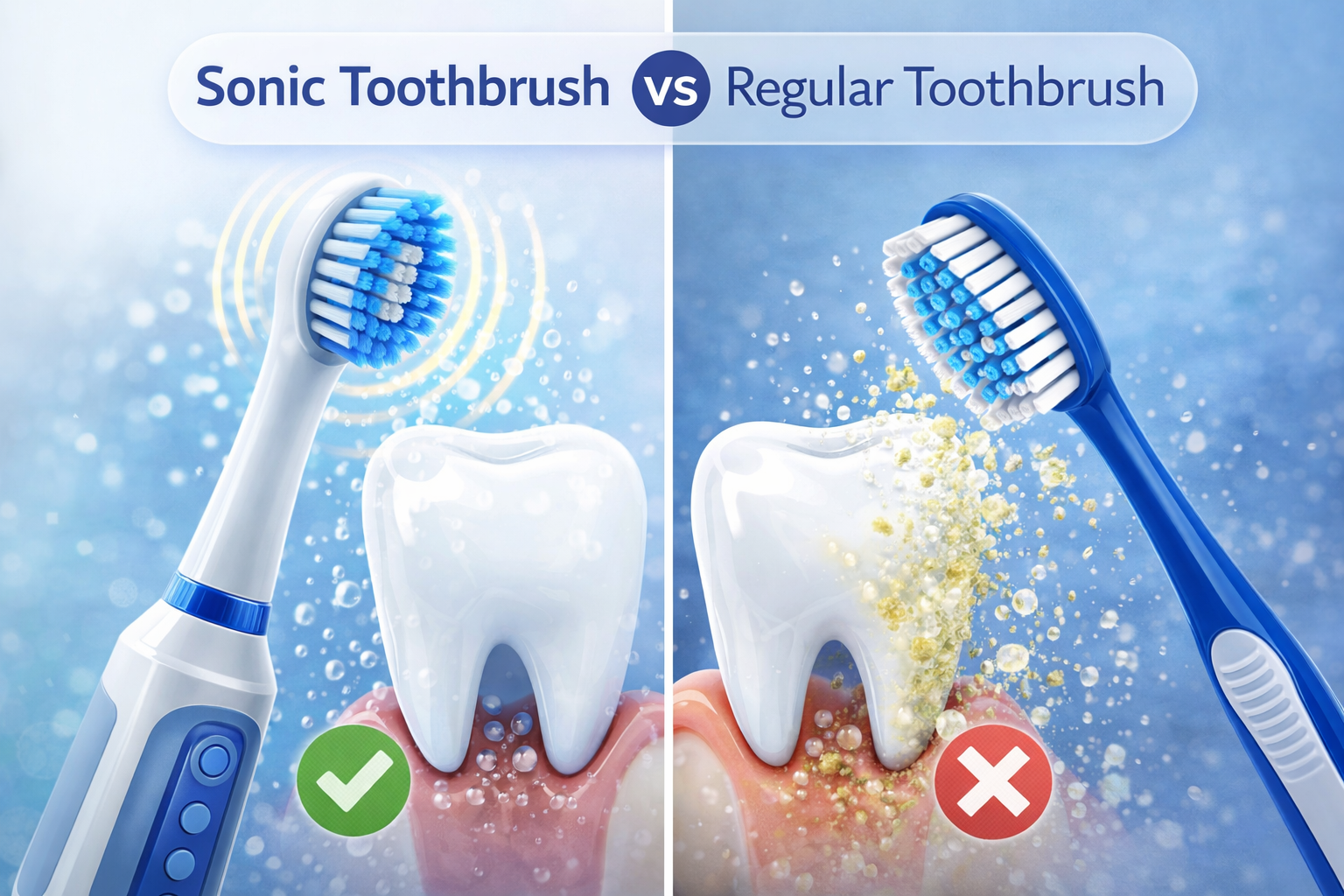
A regular toothbrush relies on physical scrubbing. You move the brush back and forth, up and down, making direct contact with your teeth to remove plaque and debris.
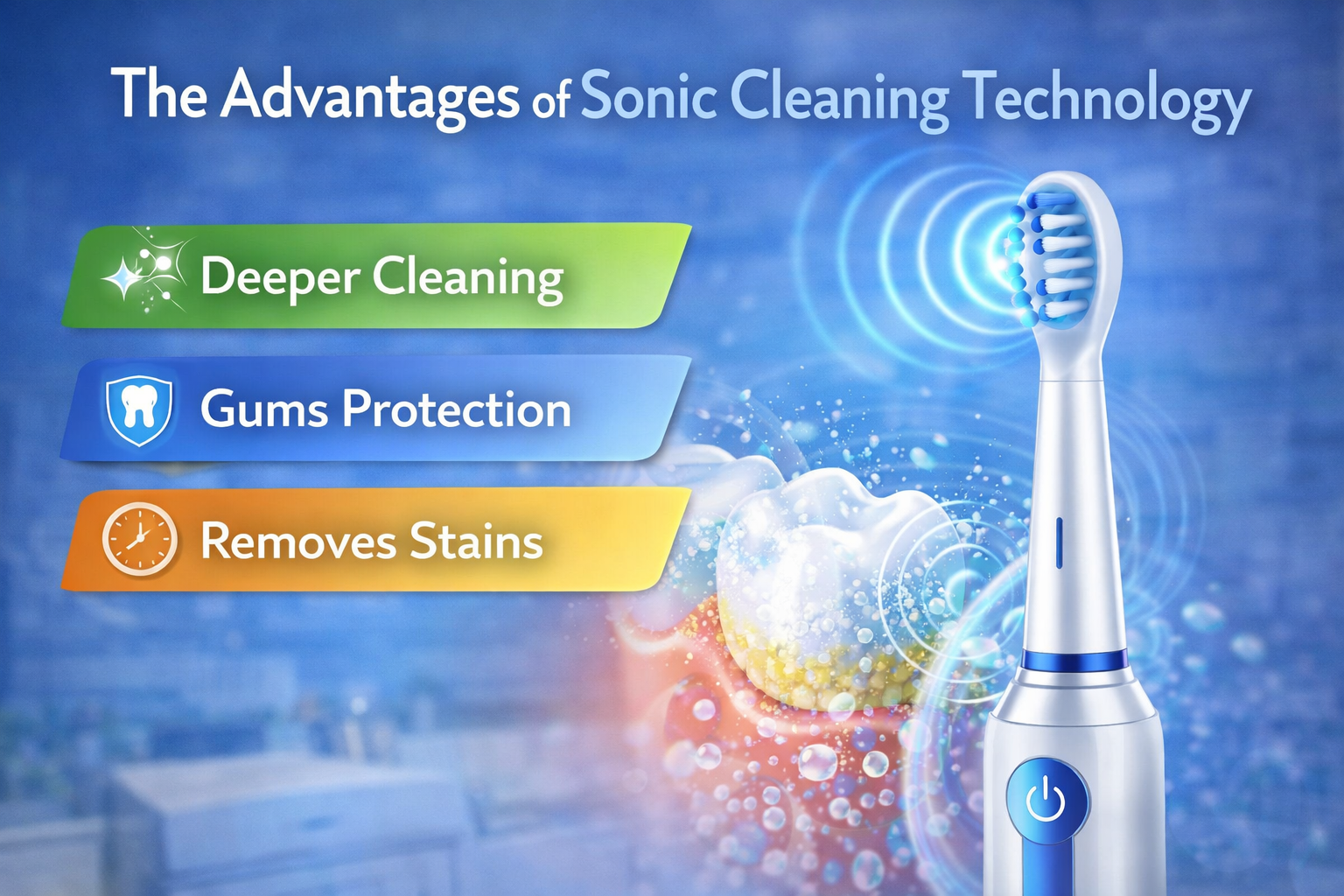
A sonic toothbrush, on the other hand, uses high-frequency vibrations—often tens of thousands of brush strokes per minute. But it’s not just about speed. These vibrations create tiny fluid movements that can reach areas your brush bristles don’t directly touch, like between teeth and along the gumline.
At first, that sounded a bit too good to be true. But after using it consistently, I started to notice real differences.
The Subtle Changes That Add Up
The biggest surprise wasn’t something dramatic like suddenly having perfect teeth. It was the small, gradual improvements.
For one, my brushing became more consistent. Most sonic toothbrushes come with built-in timers, often dividing your brushing time into 30-second intervals for each quadrant of your mouth. This simple feature changed everything. Instead of guessing how long I had brushed, I knew.
Then there was the pressure sensor. I didn’t even realize I had been brushing too hard until the toothbrush gently signaled me to ease up. Over time, my gums felt less irritated, and brushing became more comfortable.
And perhaps the most noticeable change? That clean feeling lasted longer throughout the day. It wasn’t just a morning freshness—it stayed with me.
The Downsides No One Talks About Enough
Now, I won’t pretend that sonic toothbrushes are perfect. They come with their own set of drawbacks, and it’s important to be honest about them.
First, there’s the cost. A good sonic toothbrush is significantly more expensive than a regular one. And it’s not just the initial price—you also have to replace the brush heads regularly, which adds to the long-term expense.
Then there’s the adjustment period. That buzzing sensation I mentioned earlier? It takes some getting used to. The first few days felt strange, almost uncomfortable. If you’re someone who doesn’t like new sensations, this might be a challenge.
Charging is another factor. Unlike a regular toothbrush, you need to remember to keep it powered. It’s not a big deal, but it’s one more thing to think about.
So, Which One Is Actually Better?
After months of using both, I’ve come to a simple conclusion: it depends on the person.
If you’re someone who already has excellent brushing habits—consistent timing, proper technique, and gentle pressure—a regular toothbrush can absolutely do the job. It’s reliable, accessible, and effective when used correctly.
But if you’re like most people (including me), where brushing can sometimes feel rushed or inconsistent, a sonic toothbrush offers helpful support. It doesn’t just clean your teeth—it guides you toward better habits.
In a way, it’s less about replacing your effort and more about improving it.
A Shift in Perspective
What surprised me most about this whole experience wasn’t just the difference between two types of toothbrushes. It was how something so small could influence a daily routine.
Brushing your teeth is one of those habits you barely think about. It’s automatic, almost invisible. But when you start paying attention—when you upgrade your tools and refine your technique—it becomes something more intentional.
For me, switching to a sonic toothbrush wasn’t just about cleaner teeth. It was about becoming more aware of a routine I had taken for granted for years.
Final Thoughts
If you’re standing in that toothpaste aisle, wondering whether to stick with a regular toothbrush or try a sonic one, here’s my honest advice:
Don’t feel pressured to switch just because it’s trendy. A regular toothbrush is still a solid choice if you use it well.
But if you’re curious, or if you feel like your current routine could use a boost, trying a sonic toothbrush might be worth it. Not because it’s a miracle solution, but because it can help you build better habits over time.
At the end of the day, the best toothbrush isn’t necessarily the most advanced one—it’s the one you’ll use consistently and correctly.
Still, I have to admit… ever since I made the switch, going back to a regular toothbrush just doesn’t feel the same anymore.