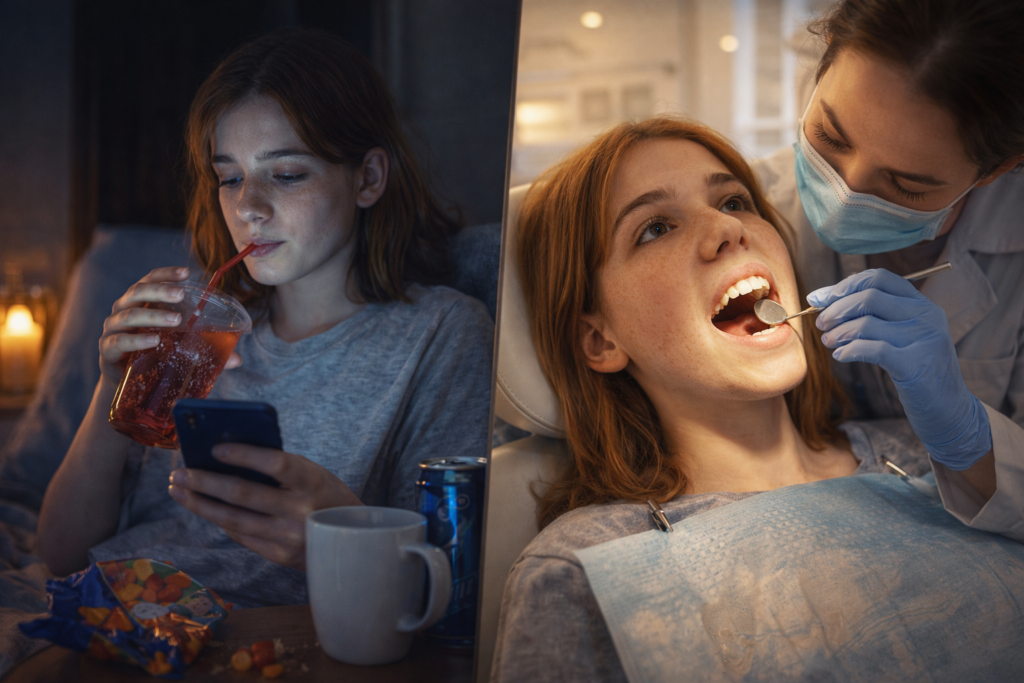
I didn’t always think of my daily routine as something that could quietly damage my teeth.
Like most people, I assumed dental problems came from obvious things—eating too much candy, forgetting to brush, or skipping dentist visits. Simple cause and effect. If you were “responsible,” you’d be fine.
But one afternoon, sitting in yet another dental chair, I heard something that shifted my perspective completely.
“It’s not just what you eat,” my dentist said, adjusting the light above me. “It’s how you live.”
At first, that sounded a bit dramatic. But as she walked me through what she meant, I started to notice something unsettling: almost everything about modern life—things we barely question—can slowly wear down our teeth.
And the most surprising part? Most of us are doing these things every single day without realizing it.
The Hidden Damage in “Healthy” Habits
I used to feel pretty good about my diet.
I drank fruit juice instead of soda. I snacked on dried fruits. I chose smoothies over sugary desserts. It all felt like the “healthier” choice.
But my dentist gave me a look that suggested things weren’t so simple.
“Healthy doesn’t always mean tooth-friendly,” she said.
Fruit juices, for example, are highly acidic. Even without added sugar, they can soften enamel over time. Smoothies—especially the ones packed with citrus or berries—coat your teeth in acid and natural sugars. And dried fruits? They stick to your teeth far longer than fresh ones, giving bacteria more time to do their work.
It wasn’t that these foods were bad. It was that I had never thought about how often I was exposing my teeth to them.
That’s when I learned something important: frequency matters just as much as quantity.
The Constant Snacking Culture
Modern life runs on convenience.
We snack while working, studying, scrolling, watching, commuting. There’s always something within reach—a granola bar, a handful of nuts, a sip of coffee.
It feels harmless. Sometimes even productive.
But every time we eat, our mouth enters a kind of “acid phase.” Bacteria break down sugars and release acids that attack enamel. Normally, saliva helps neutralize this over time.
But if you’re constantly snacking, your teeth never get a break.
It’s like your enamel is under a slow, continuous attack throughout the day.
I realized I wasn’t just eating meals—I was grazing. And my teeth were paying the price.
Coffee: The Daily Ritual With a Cost
I remember the first time I noticed my teeth looking slightly… dull.
Not yellow exactly, but not as bright as before.
At the time, I blamed lighting. Or maybe just my imagination.
But then I thought about my daily routine: coffee in the morning, sometimes another in the afternoon. Occasionally iced coffee in between.
Coffee isn’t just about stains—though that’s part of it. It’s also slightly acidic, and when sipped slowly over long periods, it keeps your teeth exposed to that acidity again and again.
Add a bit of sugar or flavored syrup, and it becomes even more damaging.
My dentist didn’t tell me to quit coffee. That would’ve been unrealistic.
Instead, she said something simple: “Drink it. Don’t drag it out.”
That small shift—finishing it in one sitting instead of sipping for hours—made more sense than I expected.
Stress Shows Up in Your Mouth
This was the part I didn’t see coming.
“What’s your stress level like lately?” she asked.
I shrugged. “Normal, I guess.”
But apparently, my teeth told a different story.
Stress doesn’t just live in your mind—it shows up physically. For many people, that means clenching or grinding their teeth, often without even noticing.
Sometimes it happens during the day, especially when you’re focused. But most often, it happens at night.
Over time, this can wear down enamel, cause sensitivity, and even lead to small cracks.
I started paying attention and realized I did clench my jaw—especially when I was stressed or concentrating.
It wasn’t dramatic. It was subtle. Quiet. Constant.
Just like most of the damage modern habits cause.
The Blue Light Effect Nobody Talks About
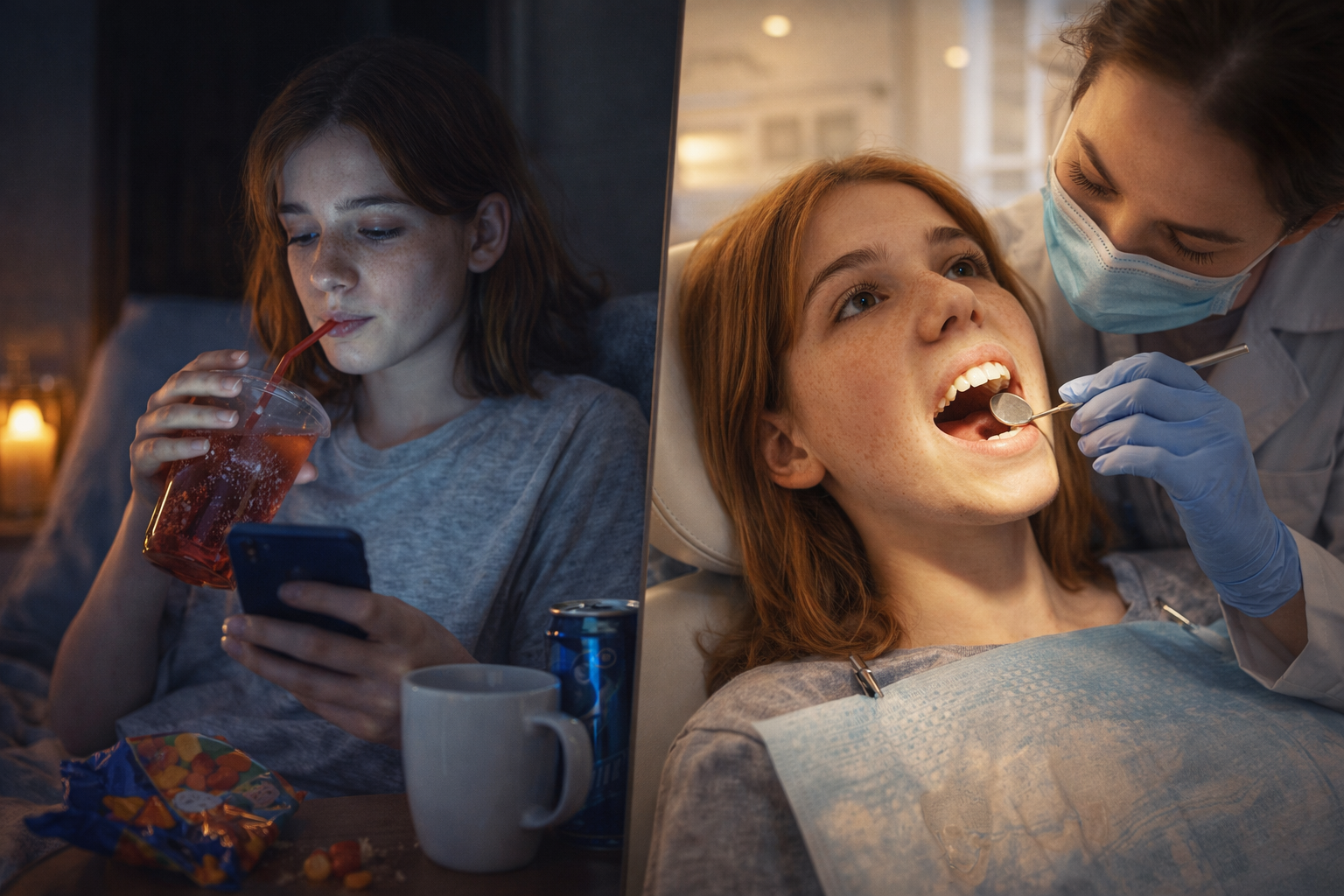
Late nights had become normal for me.
Scrolling through my phone, watching videos, replying to messages—it was how I relaxed.
But those late nights often came with a cost: I’d feel too tired to brush properly. Sometimes I rushed. Sometimes I skipped flossing. Occasionally, I even fell asleep without brushing at all.
Not often—but often enough.
Modern technology doesn’t directly damage your teeth. But it changes your routines in ways that do.
Sleep gets pushed later. Habits get rushed. Small steps get skipped.
And those small lapses, repeated over time, quietly add up.
Sports Drinks and “Energy” Culture
There was a time when I thought sports drinks were basically a healthier version of soda.
After all, they’re associated with fitness, performance, hydration.
But what I didn’t realize is that many of them are both sugary and acidic—a combination that’s particularly tough on enamel.
Even worse, they’re often consumed during workouts, when your mouth is already dry. Less saliva means less natural protection.
Energy drinks are even harsher. Some are so acidic that dentists compare their effects to prolonged soda exposure.
It’s not that you can never have them. It’s that most people underestimate how strong their impact can be.
Mouth Breathing and Dry Mouth
This one felt surprisingly personal.
My dentist asked, “Do you ever wake up with a dry mouth?”
I nodded.
That dryness isn’t just uncomfortable—it matters. Saliva plays a huge role in protecting your teeth. It helps wash away food particles, neutralize acids, and maintain a healthy balance in your mouth.
Mouth breathing, whether from allergies, sleep habits, or just congestion, reduces saliva flow.
And a dry mouth creates the perfect environment for bacteria to thrive.
It’s one of those quiet factors that doesn’t seem serious… until it is.
Whitening Trends and Overcorrection
At some point, I became more aware of how my teeth looked.
Not because anything was wrong—but because everywhere I looked, people had incredibly white, almost perfect smiles.
Social media, ads, influencers—it creates a certain standard.
So I considered whitening products. Strips, gels, special toothpastes.
My dentist didn’t say they were bad. But she did caution against overusing them.
Too much whitening can increase sensitivity and, in some cases, weaken enamel.
It’s ironic, really—trying to improve your smile can sometimes lead to new problems if you’re not careful.
The Big Realization
As I sat there, listening to all of this, one thought kept coming back:
None of these habits felt extreme.
I wasn’t doing anything reckless. I wasn’t ignoring my health. I was just living… normally.
Drinking coffee. Eating snacks. Staying up late. Managing stress. Choosing foods I thought were healthy.
And yet, all of it—combined—was shaping the condition of my teeth.
That’s what makes modern lifestyle so tricky. The damage isn’t obvious. It doesn’t happen overnight.
It builds slowly, quietly, in the background of everyday life.
Walking Away With Awareness
When I left the clinic that day, I didn’t feel guilty.
I felt aware.
I didn’t quit coffee. I didn’t stop eating fruit. I didn’t suddenly become perfect with my routine.
But I started making small adjustments.
I gave my teeth more breaks between snacks. I paid attention to how long I sipped drinks. I became more consistent at night, even when I felt tired. I noticed when I was clenching my jaw.
None of it felt overwhelming.
But it felt intentional.
What Modern Life Teaches Us—If We Pay Attention
If there’s one thing I’ve learned, it’s this:
Modern life isn’t designed with your teeth in mind.
It’s fast, convenient, stimulating, and often constant. And your teeth—quiet, strong, easy to ignore—just adapt to whatever you do.
Until they can’t.
Dentists don’t expect perfection. They understand how people live.
What they really wish is that more people understood the connection between everyday habits and long-term health.
Because once you see it, you can’t unsee it.
And sometimes, that awareness is enough to change everything—one small habit at a time.