I didn’t think much of it at first—the way my younger cousin would sneak a piece of candy after dinner, or how she’d proudly brush her teeth for exactly ten seconds before running off to play. It felt like a normal part of childhood. Sweet treats, quick routines, and a general sense that teeth were… well, temporary anyway.
“They’re just baby teeth,” I remember someone saying once, almost casually.
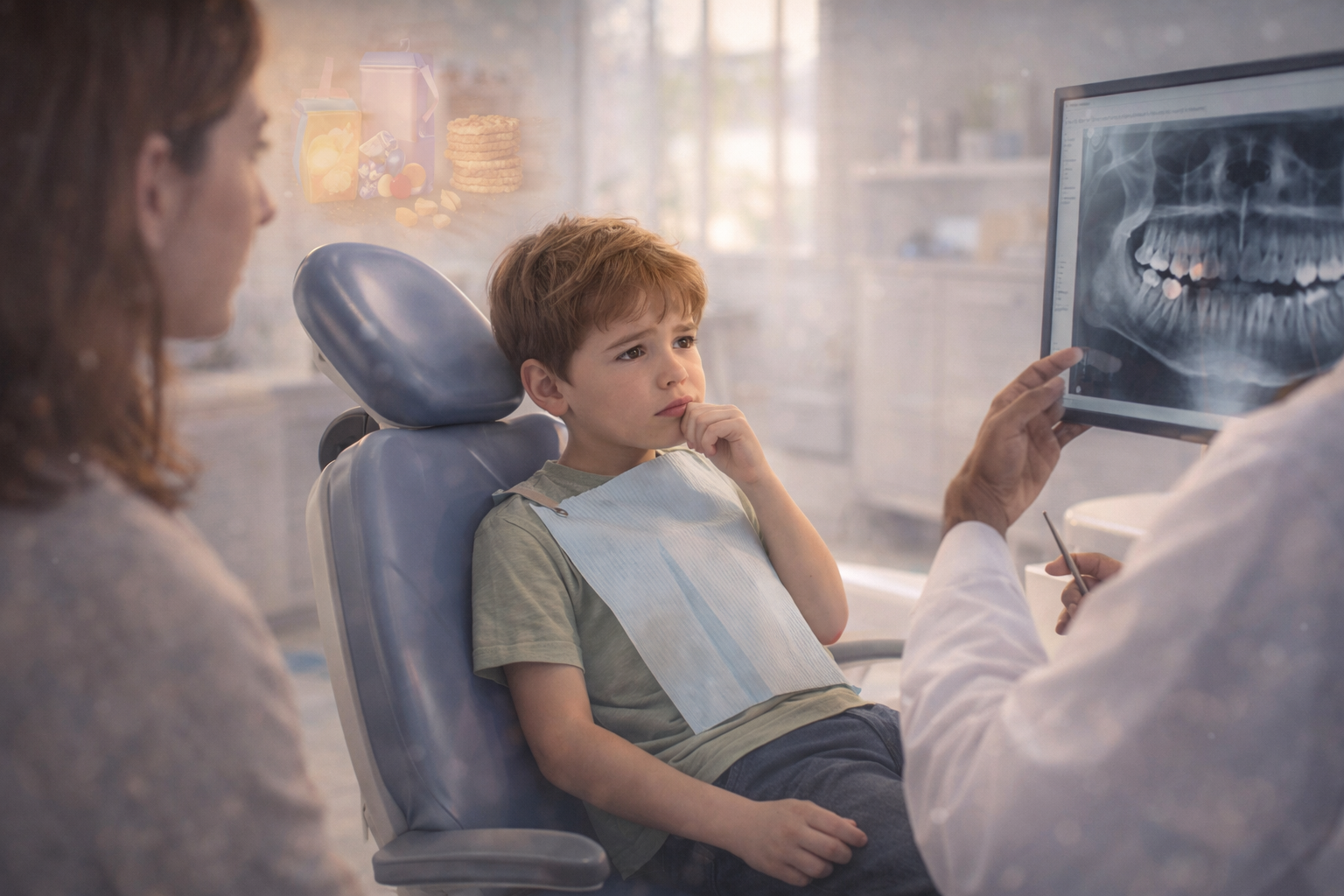
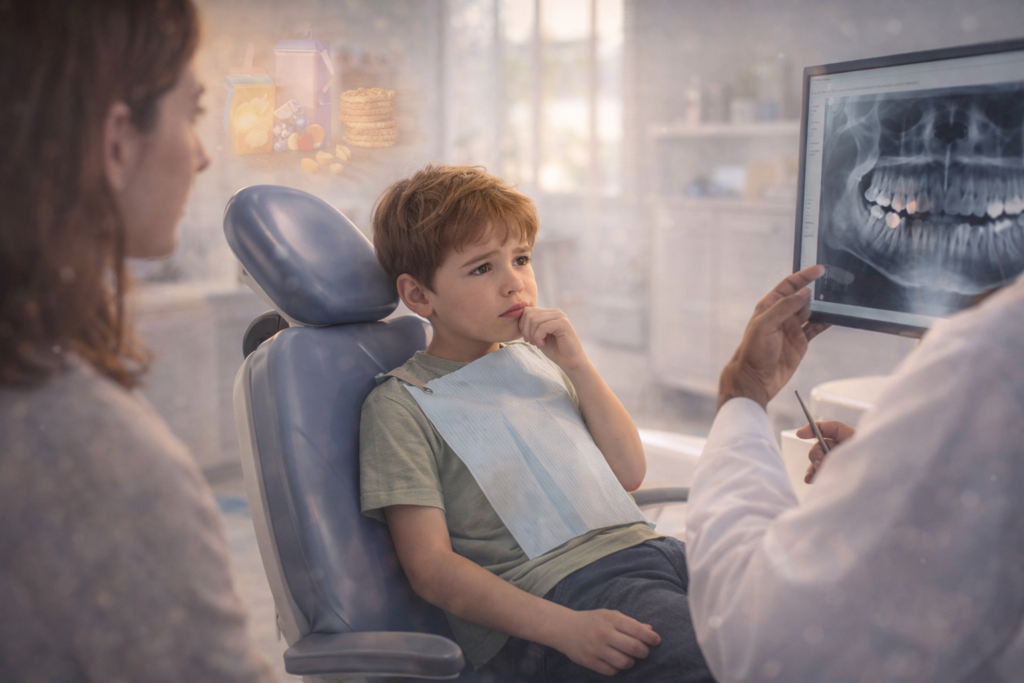
But everything changed the day we sat in a pediatric dentist’s office, watching her swing her legs nervously from the chair, waiting for the verdict.
The dentist was kind, gentle even. But when she pointed at the X-ray, there it was—tiny dark spots where there shouldn’t have been any.
Cavities.
And suddenly, something that had always felt small didn’t feel so small anymore.
It Starts So Quietly
What surprised me most was how invisible the whole process had been.
There were no obvious signs. No dramatic complaints of pain. No sleepless nights or emergency visits. Just small habits, repeated daily, slowly adding up.
The dentist explained it in a way that stuck with me: cavities don’t just “happen.” They build.
Every time a child eats something sugary, the bacteria in their mouth feed on it and produce acid. That acid slowly weakens the enamel, the protective layer of the teeth. Over time, if nothing interrupts that cycle, it creates tiny openings—cavities.
The key word here is over time.
That’s what makes it tricky. It’s not one candy bar or one missed brushing session. It’s the pattern.
Why Children Are More Vulnerable
At first, I wondered—why children specifically? Adults eat sugar too. Adults forget to floss. So what makes kids more prone to cavities?
The answer, it turns out, isn’t just one thing. It’s a mix of biology, behavior, and a bit of human nature.
Children’s enamel is thinner than that of adults. That means it doesn’t take as long for decay to break through. Their teeth are also newer, still developing, and sometimes not as mineralized or strong as fully matured adult teeth.
But biology is only part of the story.
The bigger factor? Habits.
The “Snack All Day” Problem
If you watch a child’s eating pattern closely, you’ll notice something interesting—it’s rarely structured like an adult’s.
Instead of three meals, it’s more like a constant stream of snacks.
A handful of crackers here. A juice box there. A cookie after that. Maybe something else an hour later.
Each time they eat, especially something with sugar or starch, it triggers that acid attack in the mouth. And here’s the catch: the mouth needs time to recover.
Frequent snacking means the teeth are under near-constant attack, with very little time to repair.
It’s like trying to dry off in the rain—you never really get the chance.
Juice Isn’t as Innocent as It Looks
I remember thinking juice was the “healthy” option. It’s fruit, after all. Vitamins, natural sugars—it sounds harmless.
But the dentist gently corrected that assumption.
Juice, even when labeled “100% natural,” contains sugar. And when children sip it slowly over time—especially from bottles or sippy cups—it keeps sugar in constant contact with their teeth.
Some parents even let their kids fall asleep with a bottle of milk or juice. It seems comforting, almost nurturing. But overnight, when saliva production drops, those sugars sit on the teeth for hours.
That’s one of the fastest ways cavities can form.
They even have a name for it: early childhood caries.
Hearing that made me realize—some of the most common, well-meaning habits can have unintended consequences.
Brushing… But Not Really Brushing
If you’ve ever watched a child brush their teeth, you know it’s often more performance than practice.
A few quick swipes. Maybe some foam. Then done.
Technically, they brushed. But effectively? Not quite.
Young children don’t yet have the coordination or patience to clean thoroughly. They might miss entire sections of their mouth, especially the back teeth where cavities often start.
That’s why dentists recommend parental supervision—or even assistance—well beyond the age most people expect.
It’s not about control. It’s about making sure the job is actually getting done.
The Hidden Spots Cavities Love
The dentist showed us something I hadn’t noticed before: the grooves on the surface of molars.
They’re not smooth. They have tiny pits and fissures where food can easily get stuck.
For children, these grooves are even more vulnerable because they’re harder to clean and their enamel is softer.
Even with regular brushing, those areas can be missed.
That’s why some dentists recommend sealants—a protective coating that covers those grooves and makes it harder for bacteria to settle in.
It’s a small preventive step, but one that can make a big difference.
Fear, Avoidance, and the Snowball Effect
Another piece of the puzzle isn’t physical at all—it’s emotional.
Some children are afraid of the dentist. The sounds, the unfamiliar environment, the idea of someone examining their teeth—it can feel overwhelming.
So visits get delayed.
And small problems, left unchecked, become bigger ones.
The irony is that early dental visits are usually quick, simple, and painless. It’s when issues are ignored that they become more complicated—and more intimidating.
Breaking that cycle early can change a child’s entire relationship with dental care.
What I Didn’t Understand Before
Sitting in that clinic, listening to the dentist explain all of this, I realized how easy it is to underestimate something as routine as dental care.
We tend to think of cavities as random or inevitable—something that just happens to kids.
But they’re not random.
They’re predictable. Preventable. Built from small, repeated choices.
And that’s not meant to assign blame. It’s just reality.
Most parents are doing their best. Most kids aren’t intentionally neglecting their teeth. It’s just that the risks aren’t always obvious.
Small Changes That Matter
After that visit, a few things changed—not dramatically, but intentionally.
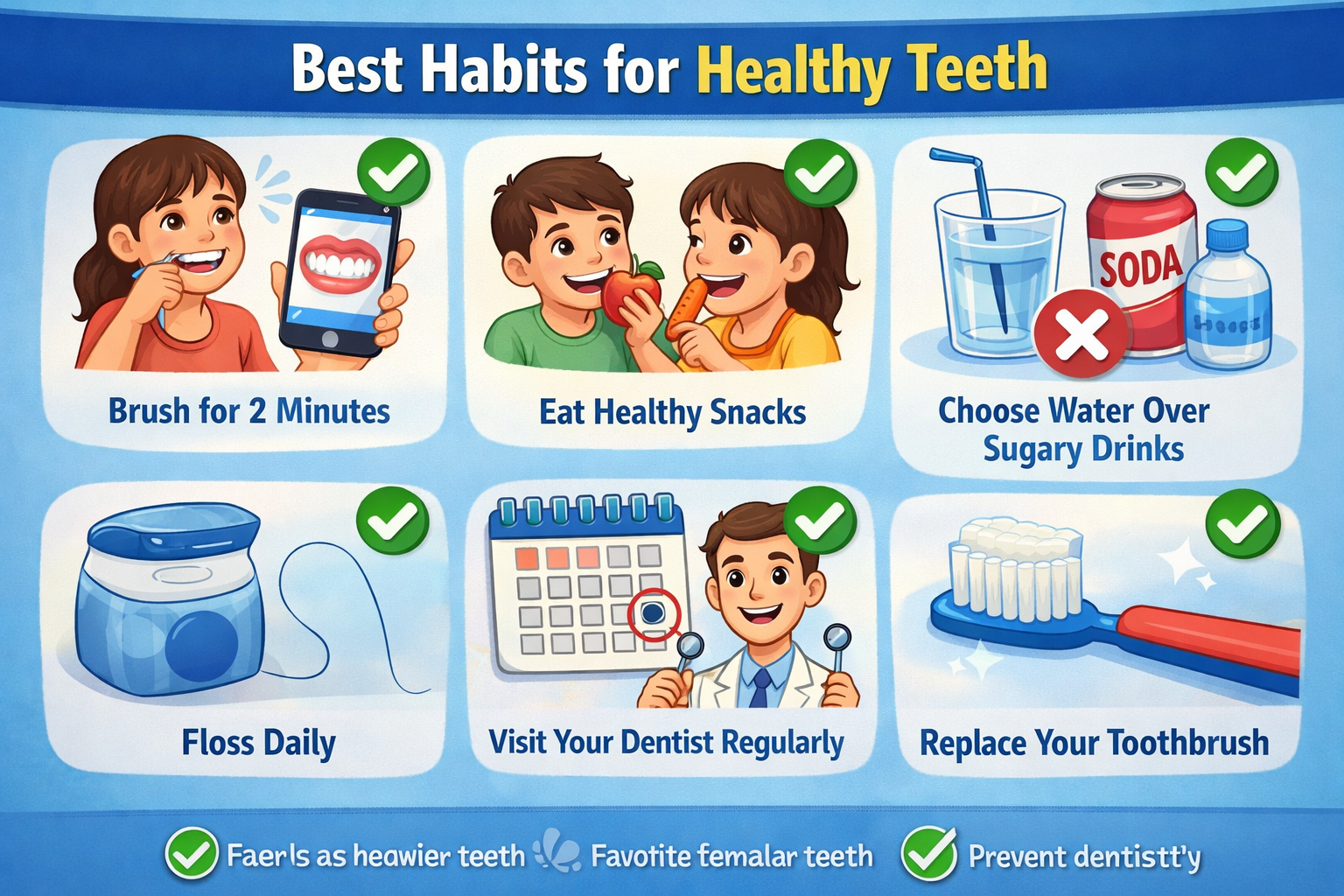
Snacks became more structured. Water replaced juice more often. Brushing became a shared activity instead of a rushed chore.
It wasn’t perfect. There were still treats, still lazy nights, still moments of “we’ll do better tomorrow.”
But overall, there was more awareness.
And that awareness made all the difference.
It’s About More Than Teeth
What stayed with me the most wasn’t just the science—it was the perspective.
Taking care of a child’s teeth isn’t just about avoiding cavities. It’s about teaching habits. Building routines. Helping them understand that small actions, repeated daily, have long-term effects.
It’s one of the first ways children learn responsibility for their own health.
And maybe that’s why it matters so much.
Looking Back
I think about that day sometimes—the quiet room, the X-ray on the screen, the dentist explaining things in a calm, patient voice.
Nothing dramatic happened. No emergencies. No tears.
Just a moment of realization.
Cavities don’t appear overnight. And neither do healthy habits.
Both are built slowly, one small choice at a time.
And if there’s one thing dentists wish more people understood, it’s probably this:
Prevention isn’t complicated—but it does require attention.
Because the smallest routines often shape the biggest outcomes.