
The first time I noticed it, I told myself it was nothing.
A faint pink swirl in the sink. That was it. Barely noticeable, easy to ignore. I rinsed, looked at my reflection for a second longer than usual, then walked away like it hadn’t happened.
The next morning, it happened again.
This time, I paused.
There’s something about seeing blood—no matter how little—that makes you question things you usually take for granted. Brushing your teeth isn’t supposed to feel like a warning sign. It’s supposed to be routine. Safe. Boring, even.
So why was my body trying to tell me otherwise?
The Lie We Tell Ourselves
For a while, I convinced myself it was normal.
“Maybe I brushed too hard.”
“Maybe my gums are just sensitive.”
“Maybe it’ll go away on its own.”
And to be fair, a lot of people think the same way.
Bleeding gums are one of those things people tend to brush off—ironically, while brushing. It doesn’t hurt much. It doesn’t stop you from eating or talking. It’s easy to ignore because it doesn’t immediately disrupt your life.
But here’s the truth dentists wish more people understood:
Healthy gums don’t bleed.
Not when you brush. Not when you floss. Not even when you poke at them a little (which, admittedly, I had tried more than once out of curiosity).
Bleeding is a signal. Not a dramatic one—but a clear one.
What’s Really Going On Under the Surface
When my dentist finally explained it, it felt both obvious and unsettling.
“That bleeding?” she said. “It’s inflammation.”
Inflammation. The same word you hear when talking about injuries or infections elsewhere in the body.
It turns out your gums can become inflamed when plaque—a sticky film of bacteria—builds up along the gumline. If it’s not removed properly, your body starts reacting to it.
That reaction? Redness. Swelling. And yes… bleeding.
The condition has a name: gingivitis.
It sounds serious, but here’s the part most people don’t realize—it’s also reversible.
That word stuck with me.
Reversible.
Not permanent damage. Not something to panic about. But also not something to ignore.
The Mistake That Makes It Worse
Here’s where things get a little counterintuitive.
When your gums bleed, your first instinct might be to avoid brushing those areas.
That’s exactly what I did.
I’d brush more gently—or skip certain spots altogether—thinking I was giving my gums time to “heal.”
But according to my dentist, that’s the worst thing you can do.
“Bleeding doesn’t mean stop,” she told me. “It means clean better.”
The bleeding is caused by plaque buildup. If you avoid brushing the area, the plaque stays—and the inflammation gets worse.
It’s like ignoring a warning light on your dashboard and hoping the car fixes itself.
Learning to Brush Differently
So I had to relearn something I thought I’d mastered years ago.
Instead of brushing quickly and moving on, I slowed down.
I paid attention to the gumline—the place where teeth and gums meet. That’s where plaque likes to hide, and where bleeding usually starts.
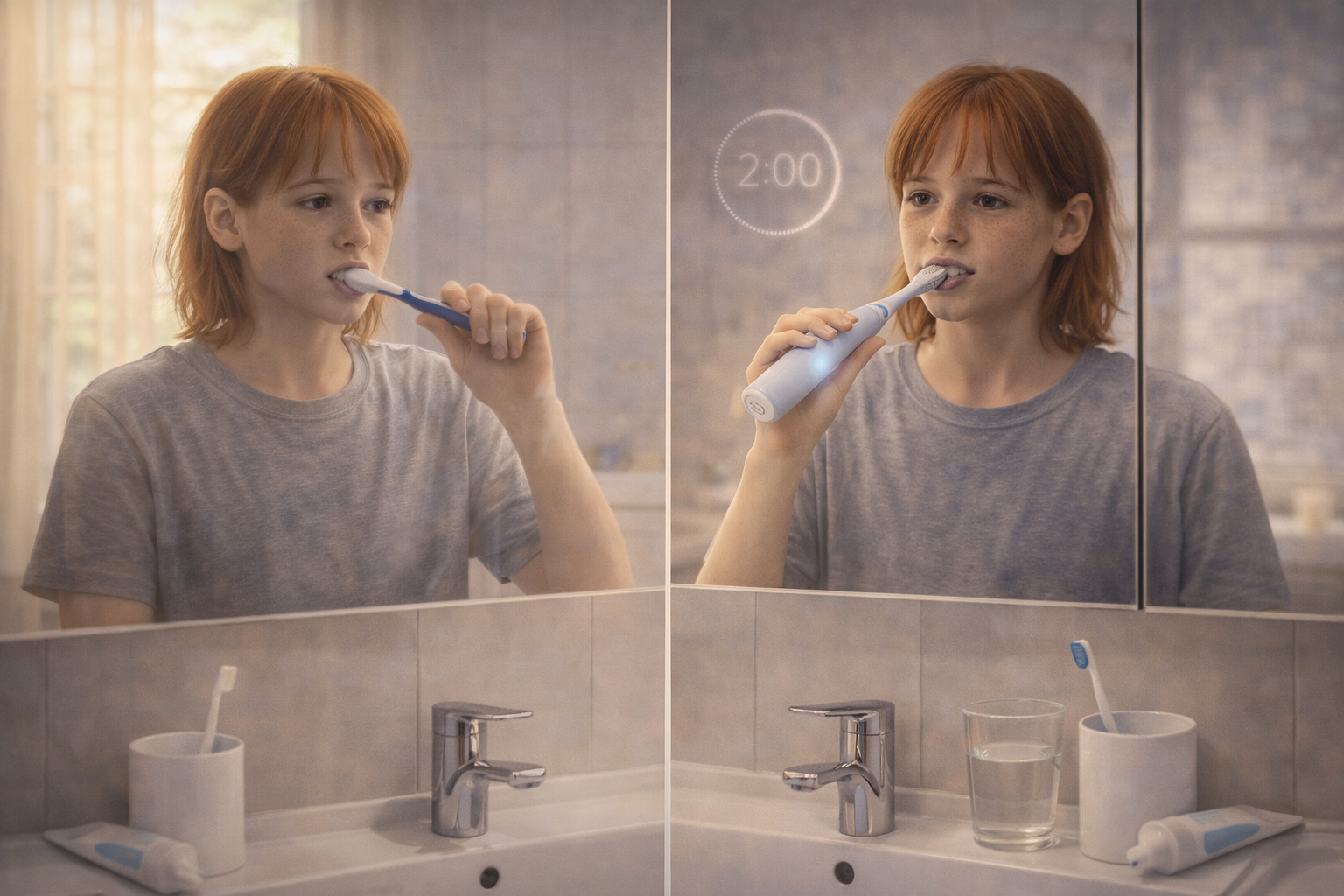
I adjusted the angle of my toothbrush, just like my dentist showed me. Not straight on, but tilted slightly toward the gums.
And most importantly, I stopped brushing like I was scrubbing a stain out of a shirt.
Gentle. Controlled. Intentional.
At first, the bleeding didn’t stop right away. In fact, it happened every time I brushed for the next few days.
That was discouraging.
But then, gradually, something changed.
Less pink in the sink. Less sensitivity. Less hesitation when I brushed.
It didn’t disappear overnight—but it did improve.
Flossing: The Step I Used to Skip
If I’m being honest, flossing was never really part of my routine.
I knew I was supposed to do it. Everyone does. But it always felt optional—like a bonus level in a game you don’t really need to complete.
Turns out, it’s not optional.
Your toothbrush can’t reach between your teeth the way floss can. And those tight spaces are exactly where plaque builds up unnoticed.
When I started flossing consistently, my gums bled even more at first.
That almost made me quit.
But again, my dentist explained: if your gums bleed when you floss, it’s usually because they need flossing the most.
After about a week of sticking with it, the bleeding started to decrease.
That was the moment it clicked for me—bleeding wasn’t a sign to stop. It was a sign to improve.
Other Causes You Might Not Expect
Not all bleeding gums come from brushing habits alone.
My dentist asked me a few questions I hadn’t expected:
“Have you been stressed lately?”
“Any changes in your diet?”
“Are you sleeping well?”
At first, I didn’t see the connection.
But your oral health is more connected to your overall health than you might think.
Stress, for example, can weaken your immune response, making it harder for your body to fight off the bacteria causing gum inflammation.
A lack of certain nutrients—like vitamin C—can also affect gum health.
Even dehydration can play a role, since saliva helps wash away bacteria.
It made me realize something important: brushing is just one piece of a bigger picture.
When It’s More Than Just Gingivitis
Most cases of bleeding gums are linked to gingivitis—but if left untreated, it can progress into something more serious: periodontitis.
That’s when the inflammation starts affecting the structures that support your teeth.
This isn’t meant to scare you—but it is meant to be taken seriously.
The good news? If you catch it early, you can prevent it from getting to that point.
That’s why dentists emphasize regular check-ups. They can spot issues before you feel them.
The Small Changes That Made a Difference
Looking back, the changes I made weren’t dramatic.
I didn’t overhaul my entire routine overnight. I just adjusted a few key habits:
- Brushing more gently, but more thoroughly
- Paying attention to the gumline
- Flossing daily, even when I didn’t feel like it
- Being consistent, not just “good when I remembered”
And slowly, things improved.
No more hesitation when I brushed. No more checking the sink every time. No more wondering if something was wrong.
The Part Nobody Talks About
What surprised me most wasn’t the bleeding itself—it was how easy it was to ignore.
There’s no alarm. No immediate consequence. Just a small sign that something isn’t quite right.
And in a busy life, small signs are easy to overlook.
But your body has a quiet way of asking for attention.
Bleeding gums are one of those whispers.
What Your Gums Are Trying to Tell You
If I could go back to that first moment—the faint pink swirl in the sink—I wouldn’t ignore it.
I wouldn’t panic either.
I’d just pay attention.
Because that’s really what this comes down to.
Not fear. Not perfection. Just awareness.
Healthy gums don’t bleed. But if yours do, it’s not the end of the world.
It’s a message.
And the sooner you listen, the easier it is to respond.
Now, every time I brush my teeth, I don’t just go through the motions.
I notice.
And sometimes, that’s the difference between a habit… and actually taking care of yourself.