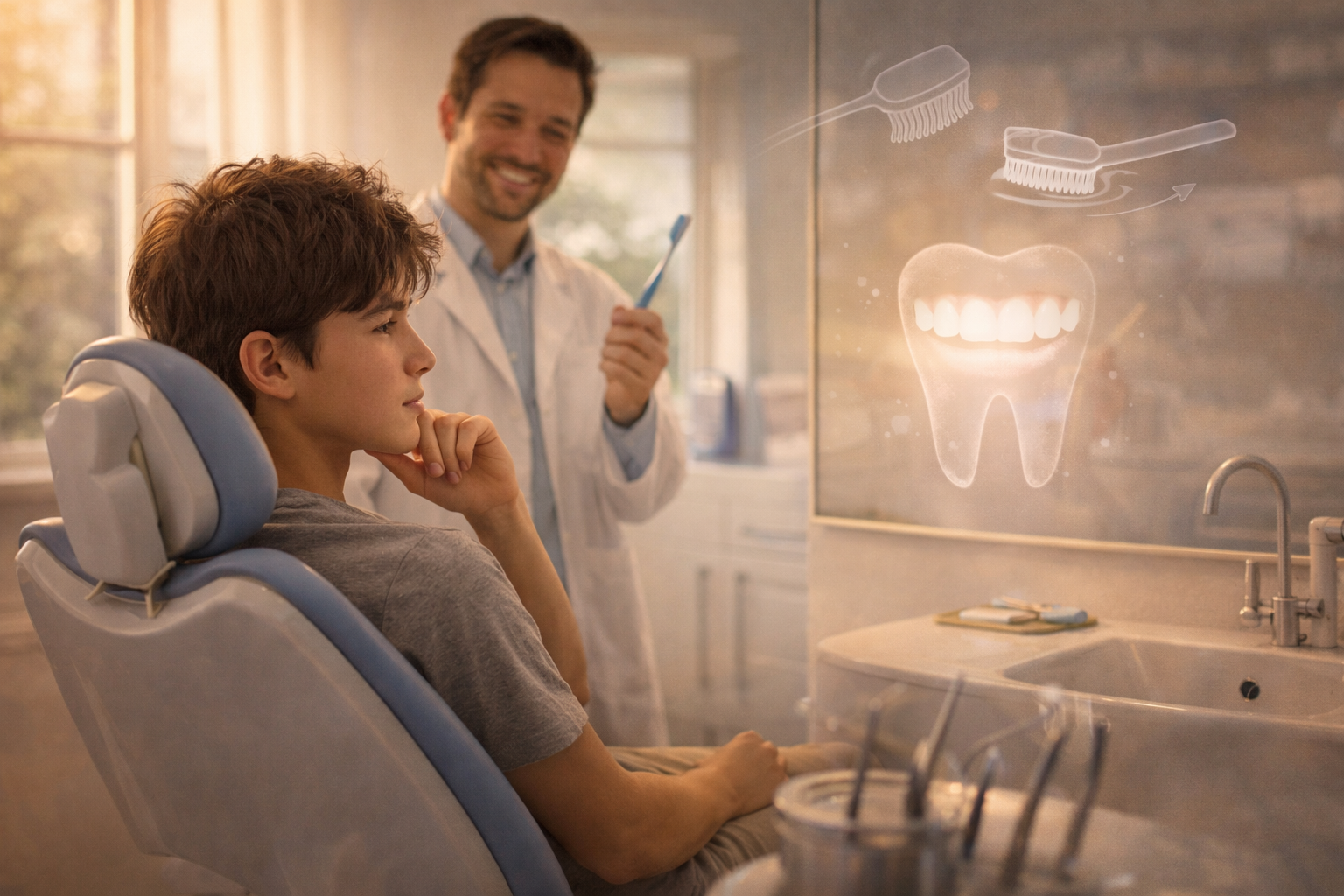
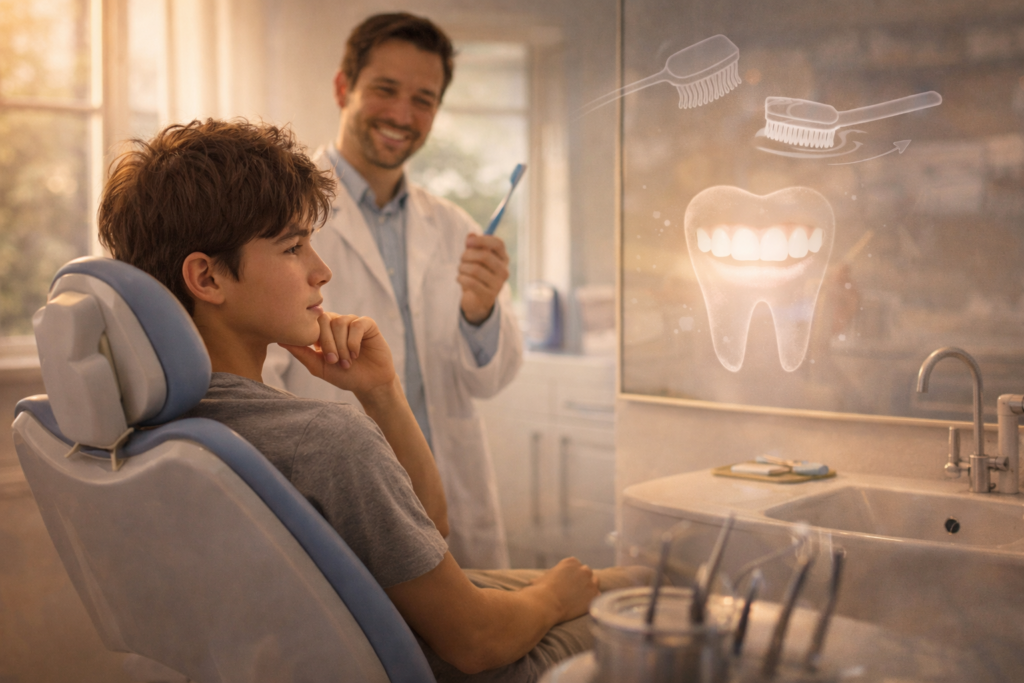
I still remember the faint smell of mint in the air, mixed with that oddly comforting “clean clinic” scent, as I sat in the dentist’s chair, legs slightly tense, fingers gripping the armrest. It wasn’t fear exactly—more like anticipation. You never quite know what they’re going to say when they lean back, glance at your teeth, and go quiet for just a second too long.
That day, my dentist didn’t start with cavities or flossing guilt. Instead, she asked a simple question:
“So… how do you brush your teeth?”
I laughed a little, thinking it was a trick question. “You know… toothpaste, toothbrush, two minutes. Like everyone else?”
She smiled—but not in a way that confirmed I was right. More like she’d heard that answer a thousand times before.
And that’s when I realized something surprising: most of us brush our teeth every day… but very few of us actually know how to do it properly.
The Habit We Think We’ve Mastered
Brushing is one of the first habits we learn as kids. It’s automatic now. Wake up, brush. Before bed, brush. Sometimes after meals—if we’re feeling responsible.
But habits, especially ones we repeat without thinking, can quietly drift into “good enough” territory.
My dentist explained it like this: brushing isn’t just about cleaning your teeth—it’s about protecting everything around them. Your gums, your enamel, even your overall health are affected by how you brush.
And that’s where most people get it wrong.
Brushing Harder Doesn’t Mean Brushing Better
I used to think brushing harder meant cleaning better. It made sense in my head: more pressure = more plaque removed.
But apparently, that’s one of the biggest mistakes people make.
“Your teeth aren’t dishes,” she said. “You’re not scrubbing off burnt food.”
Brushing too hard can actually wear down your enamel—the protective outer layer of your teeth. Once that’s gone, it doesn’t grow back. It can also irritate your gums, causing them to recede over time.
That was the first moment I realized: I wasn’t just brushing wrong—I might have been slowly damaging my teeth while trying to take care of them.
The 2-Minute Myth (Sort Of)
We’ve all heard it: brush for two minutes.
But here’s what most people don’t realize—those two minutes only matter if you’re using them correctly.
Think about it. If you rush through one side of your mouth and completely ignore the back teeth, you’re not really brushing for two minutes—you’re just moving a toothbrush around for two minutes.
Dentists actually recommend dividing your mouth into sections. Spend time on each area—front, back, top, bottom. Don’t forget the inside surfaces either, the ones your tongue rests against. Those spots are easy to ignore but tend to collect plaque quickly.
It’s not just about time. It’s about attention.
The Angle Nobody Talks About
This was probably the most unexpected tip I got.
Apparently, it’s not just where you brush—it’s how you angle the brush.
Most people brush straight across their teeth, like they’re polishing a flat surface. But dentists recommend angling your toothbrush at about 45 degrees toward the gumline.
Why? Because that’s where plaque loves to hide.
That tiny space between your teeth and gums is like a safe zone for bacteria. If you’re not brushing at the right angle, you’re missing one of the most important areas.
Once I tried it, it felt different—slower, more intentional. Less like scrubbing, more like carefully cleaning something delicate.
Electric vs. Manual: Does It Really Matter?
I used to think electric toothbrushes were just a fancy upgrade. Something you buy when you’re trying to be “extra” about your dental routine.
But according to my dentist, they can actually make a big difference—especially if you struggle with technique.
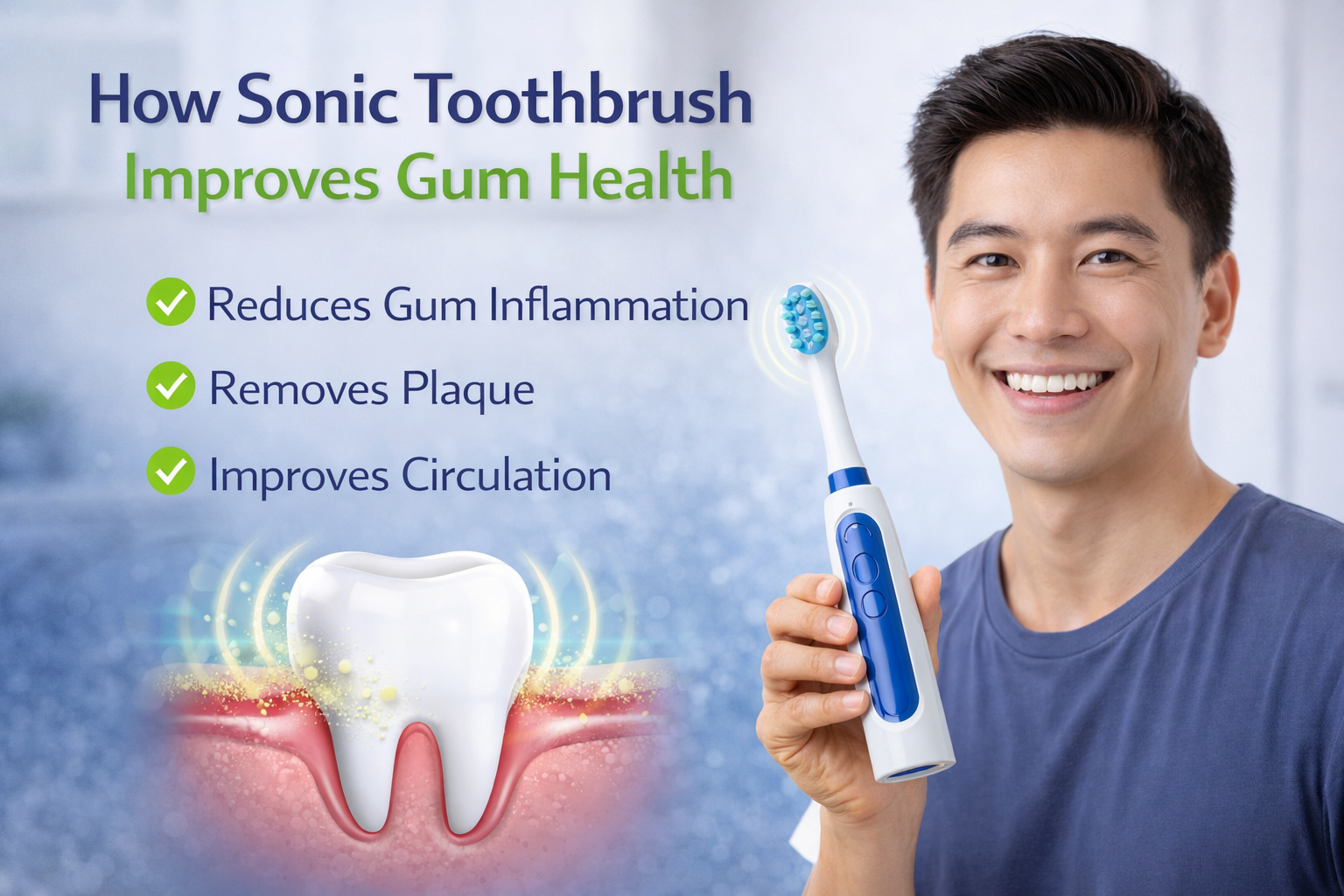
Electric toothbrushes do a lot of the work for you. They maintain consistent motion, and many have timers built in, so you’re less likely to rush. Some even alert you if you’re pressing too hard.
That said, manual toothbrushes can still be just as effective—if you use them properly.
The key takeaway? It’s not about the tool. It’s about how you use it.
The Timing Mistake Almost Everyone Makes
Here’s something I had never thought about before:
Brushing right after eating might not always be a good idea.
That surprised me. Isn’t brushing after meals supposed to be healthy?
Well, yes—but there’s a catch.
After you eat, especially acidic foods like fruit, soda, or anything citrusy, your enamel temporarily softens. If you brush immediately, you might actually be brushing away tiny layers of that softened enamel.
Dentists recommend waiting about 30 minutes before brushing after eating. That gives your saliva time to neutralize the acids and re-harden your enamel.
It’s a small change, but one that can make a big difference over time.
Toothpaste Isn’t Just About Fresh Breath
I used to pick toothpaste based on flavor. Minty, extra minty, or “icy blast” mint.
But toothpaste isn’t just about feeling fresh—it’s about protection.
Fluoride, for example, plays a huge role in strengthening enamel and preventing decay. Some people avoid it because of things they’ve read online, but dentists consistently emphasize its importance when used in normal amounts.
There are also toothpastes for sensitivity, gum health, and whitening—but not all of them work the same way.
The key is choosing one that fits your needs, not just your taste.
The Forgotten Step: Your Tongue
This might sound a bit gross, but it’s important.
Your tongue holds a lot of bacteria. If you brush your teeth but ignore your tongue, you’re leaving behind one of the main sources of bad breath.
You don’t need anything fancy—a quick, gentle brush or a tongue scraper can make a noticeable difference.
It’s one of those small habits that takes just a few seconds but improves your overall oral health more than you’d expect.
It’s Not Just About Teeth
What surprised me most during that visit wasn’t just how much I’d been brushing wrong—it was how much brushing connects to the rest of your body.
Dentists see things we don’t notice. Early signs of issues, patterns in gum health, even clues about stress or diet.
Good brushing habits don’t just prevent cavities. They reduce inflammation, protect your gums, and contribute to your overall health in ways that are easy to overlook.
Walking Out With a Different Perspective
When I left the clinic that day, nothing about my routine had technically changed. I still brushed twice a day. I still used toothpaste. I still rinsed and went on with my life.
But at the same time, everything felt different.
Brushing wasn’t just a box to check anymore—it was something I paid attention to.
I slowed down. I noticed angles. I stopped pressing so hard. I waited after meals. I even started brushing my tongue regularly.
None of it felt like a huge effort. But together, those small changes made brushing feel more intentional—like I was actually taking care of something important, not just going through the motions.
What Dentists Really Wish You Knew
If I had to sum it all up, I think dentists wish people understood this:
Brushing your teeth isn’t complicated—but doing it well requires awareness.
It’s not about buying the most expensive toothbrush or using the strongest toothpaste. It’s about consistency, technique, and a bit of patience.
Most dental problems don’t happen overnight. They build up slowly, quietly, over time.
And the same is true for good habits.
Now when I brush my teeth, I sometimes think back to that question:
“So… how do you brush your teeth?”
It’s such a simple thing. But the answer says more than we realize.
And maybe that’s the point.