
I didn’t always care about brushing my teeth before bed.
Growing up, I treated it like an optional task—something I could skip if I was too tired, too distracted, or too comfortable under the blanket. I told myself that brushing in the morning was enough. After all, that’s when I was about to face the world, right? Nighttime felt… private. Invisible. Easy to ignore.
But over time, I began to notice small things. A strange taste in the morning. Gums that felt a little more sensitive than before. Occasional bad breath that no amount of mint gum could fully hide. These weren’t dramatic problems, but they were persistent enough to make me pause.
That’s when I started paying attention—not just to whether I brushed my teeth, but when and why it mattered so much.
The Night Is When Everything Changes
During the day, your mouth is constantly active. You talk, eat, drink, and your saliva keeps everything moving and balanced. Saliva is like an invisible protector—it helps wash away food particles and neutralize acids produced by bacteria.
But at night, things slow down.
When you fall asleep, saliva production decreases significantly. Your mouth becomes dry, and that protective system weakens. What’s left behind from your last meal—tiny food particles, sugars, acids—sits there for hours. Bacteria feed on those leftovers, producing acids that slowly attack your enamel.
It’s not dramatic. It’s quiet. Gradual.
And that’s exactly what makes it dangerous.
I remember learning this and thinking: So my mouth is basically hosting a bacteria party every night if I don’t brush? That image stuck with me. It made nighttime brushing feel less like a chore and more like shutting down something that shouldn’t be happening.
A Story of Small Neglect
A friend of mine once told me he had never taken nighttime brushing seriously either. He wasn’t careless—he brushed in the morning, avoided too many sweets, and thought that was enough.
Until one day, he went to the dentist and heard something he didn’t expect: multiple early-stage cavities.
He was confused. “I take care of my teeth,” he insisted.
But when the dentist asked about his nighttime routine, the answer became clear.
Skipping that one habit—just a few minutes each night—had quietly allowed bacteria to do their work over months and years. No pain at first. No warning signs strong enough to alarm him. Just slow damage building up.
That conversation stayed with me. It made me realize how easy it is to underestimate the power of small habits.
Nighttime Oral Care Is More Than Just Brushing
When people hear “nighttime oral care,” they often think it just means brushing their teeth quickly before bed. But it’s more than that—it’s a short routine that protects your mouth during its most vulnerable hours.
For me, it eventually became a kind of ritual.
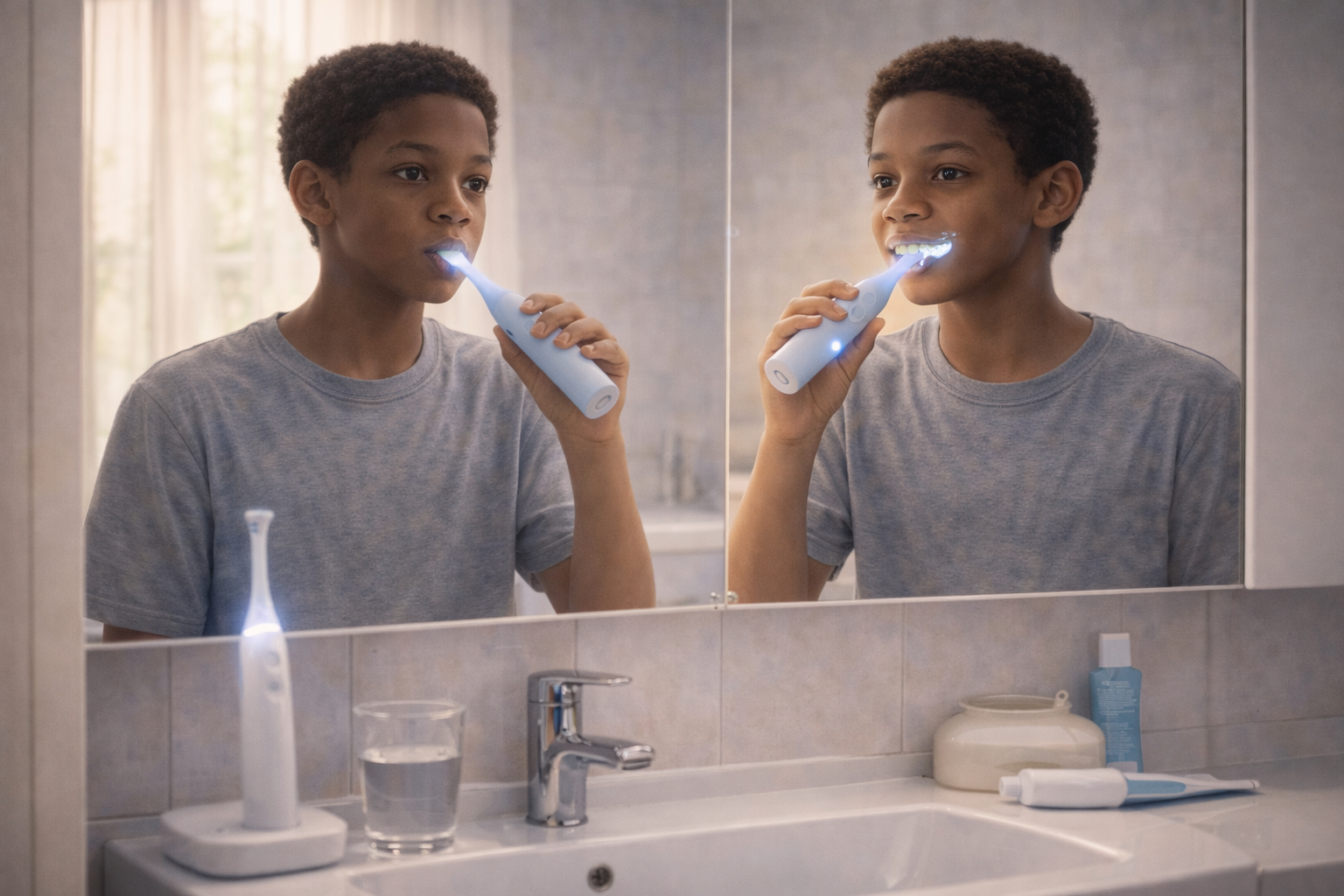
First, brushing—slowly and thoroughly, not rushed. Making sure to reach every corner, every surface. It’s not about scrubbing hard, but about being consistent and careful.
Then flossing. This was something I used to skip the most. It felt unnecessary at the time, but I later realized that brushing alone can’t reach between your teeth. Those tight spaces are exactly where food gets trapped and bacteria thrive overnight.
Flossing, in a way, feels like finishing the job properly. Like not leaving anything behind.
Sometimes, I also use mouthwash—not always, but enough to notice the difference. It leaves a clean feeling that makes it easier to go to bed knowing everything is taken care of.
The Psychological Side of the Habit
There’s something interesting about nighttime routines in general. They often reflect how much care we’re willing to give ourselves when no one is watching.
Brushing your teeth at night isn’t something that gets noticed by others. There’s no immediate reward, no visible recognition. It’s quiet, personal, and repetitive.
And maybe that’s why it’s so easy to skip.
But I’ve come to see it differently. It’s a small act of self-respect. A way of saying, Even when I’m tired, I still take care of myself.
There were nights when I almost skipped it—when the bed felt too comfortable, when my eyes were already half-closed. But those were the moments when doing it mattered the most.
Not because missing one night would ruin everything—but because habits are built in those small decisions.
The Long-Term Impact You Don’t See Right Away
One of the hardest things about oral health is that the consequences aren’t always immediate.
If you skip brushing once, nothing happens.
If you skip it for a week, you might not notice much.
But over months and years, the effects begin to show—cavities, gum problems, sensitivity, even more serious dental issues.
It’s like planting seeds, except in reverse.
Good habits plant protection. Neglect plants problems.
And the tricky part is that you don’t always know which one you’re growing until much later.
That realization changed how I approached nighttime care. It stopped being about the present moment and started being about the future version of myself.
Creating a Routine That Actually Sticks
If there’s one thing I’ve learned, it’s that knowing something is important doesn’t automatically make it easy to do.
There were times I tried to build the “perfect” routine—adding too many steps, expecting consistency overnight. It didn’t work. I’d fall off track after a few days.
What helped instead was simplicity.
I focused on just one non-negotiable: brushing before bed, no matter what.
Everything else—flossing, mouthwash—came later, gradually becoming part of the routine without feeling overwhelming.
Another thing that helped was timing. Instead of waiting until I was already exhausted, I started brushing earlier in the evening, right after my last meal or snack. That way, it didn’t feel like a final chore when I was half asleep.
Small adjustments made a big difference.
The Quiet Confidence of Good Habits
There’s a certain kind of confidence that comes from knowing you’ve taken care of yourself properly—even in small ways.
Waking up with a clean mouth feels different. It’s subtle, but noticeable. There’s no discomfort, no strange taste, no need to immediately fix something that was neglected the night before.
It sets a tone for the day.
And over time, that consistency builds something deeper than just clean teeth. It builds trust in yourself. The kind of trust that says, I follow through on what I know is good for me.
Looking Back
When I think about how casually I used to treat nighttime oral care, it feels strange now. Not because it was a huge mistake, but because it was such an easy thing to improve.
That’s the thing about habits like this—they don’t require dramatic effort. Just a few minutes each night. But those minutes add up in ways we often underestimate.
If someone had told me earlier that this small routine could prevent so many problems, I might have taken it more seriously sooner.
But maybe that’s part of the process—learning through experience, noticing the small signs, and slowly adjusting.
A Simple Reminder
If there’s one thought I carry with me now, it’s this:
Nighttime is when your teeth need you the most.
Not when you’re heading out into the world, but when you’re about to rest. When everything slows down, and your body becomes more vulnerable.
Taking care of your teeth before bed isn’t just about avoiding cavities or bad breath. It’s about protecting something that quietly supports you every day—your ability to eat, speak, smile, and feel confident.
And all it takes is a few mindful minutes before you close your eyes.
That’s it.
Nothing complicated. Nothing dramatic.
Just a small habit, done consistently, that makes a bigger difference than you might expect.