I remember the exact moment it first happened.
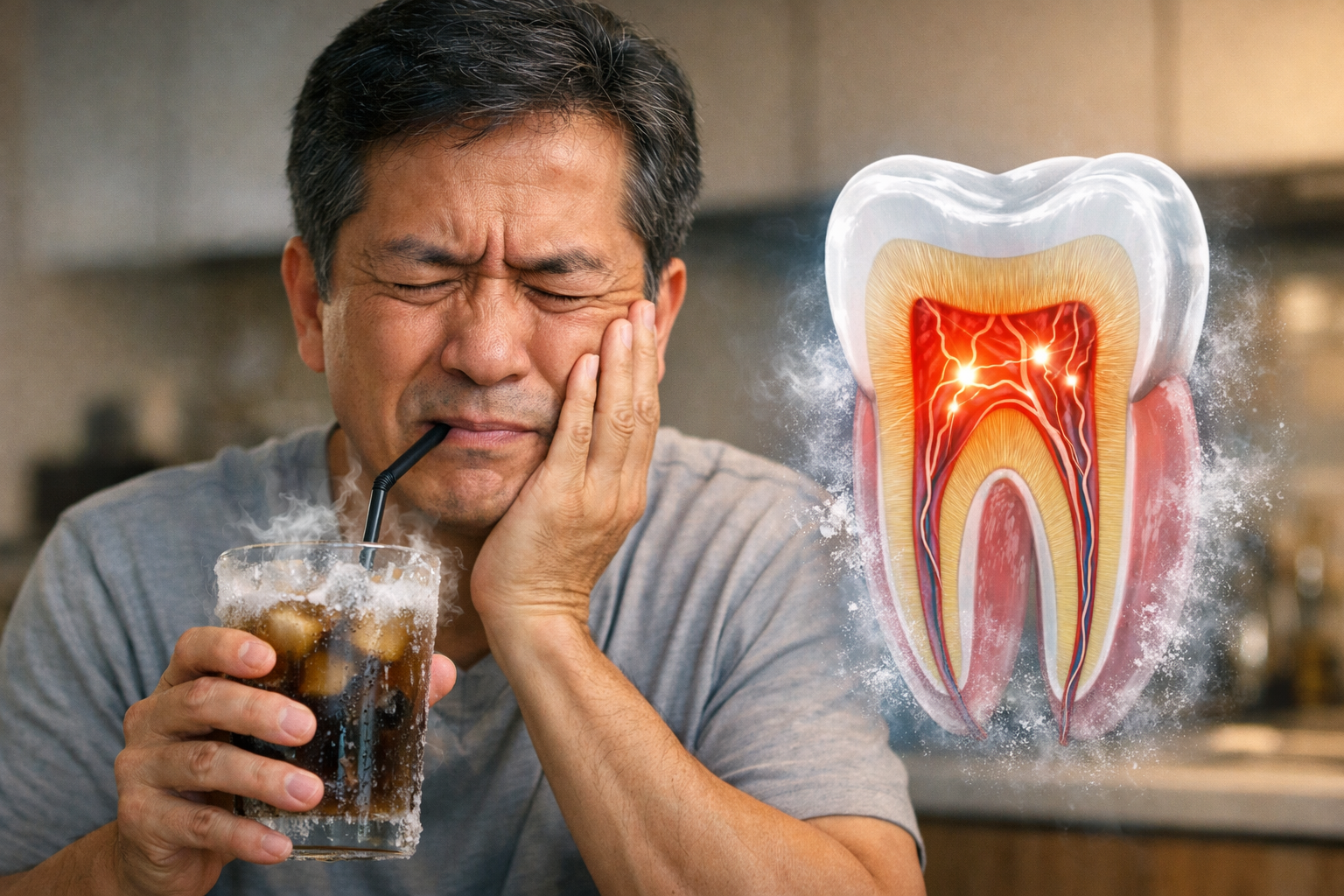
It was a normal afternoon, nothing special. I grabbed a cold drink, took a sip, and then—out of nowhere—a sharp, electric jolt shot through one of my teeth. It was quick, almost gone before I could react, but strong enough to make me freeze.
At first, I brushed it off. Maybe the drink was too cold. Maybe I just imagined it.
But then it happened again. And again.
Soon, it wasn’t just cold drinks. Hot tea, sweet snacks, even a breath of cold air on a windy day—each one carried the risk of that sudden, uncomfortable shock. It felt unpredictable, like my own teeth had turned against me.
That’s when I realized: tooth sensitivity isn’t random. There’s a reason behind it. A very specific, very scientific reason.
What’s Really Happening Inside Your Tooth
For a long time, I thought teeth were just… solid. Like tiny white rocks in your mouth. Strong, unchanging, simple.
But they’re anything but simple.
Each tooth has layers. The outermost layer is enamel, the hardest substance in the human body. It’s your first line of defense, protecting everything underneath. Beneath that is dentin—a softer, porous layer filled with microscopic tubules. And at the center lies the pulp, where nerves and blood vessels live.
Under normal conditions, enamel shields the dentin from the outside world.
But when that protection weakens, things change.
Dentin isn’t meant to be exposed. Those tiny tubules act like channels, connecting the surface of your tooth directly to the nerve inside. So when something hot, cold, sweet, or acidic touches exposed dentin, it sends signals straight to the nerve.
That sharp pain? It’s your nerve reacting in real time.
The Moment Protection Starts to Fade
Looking back, I started to notice small habits that didn’t seem harmful at the time.
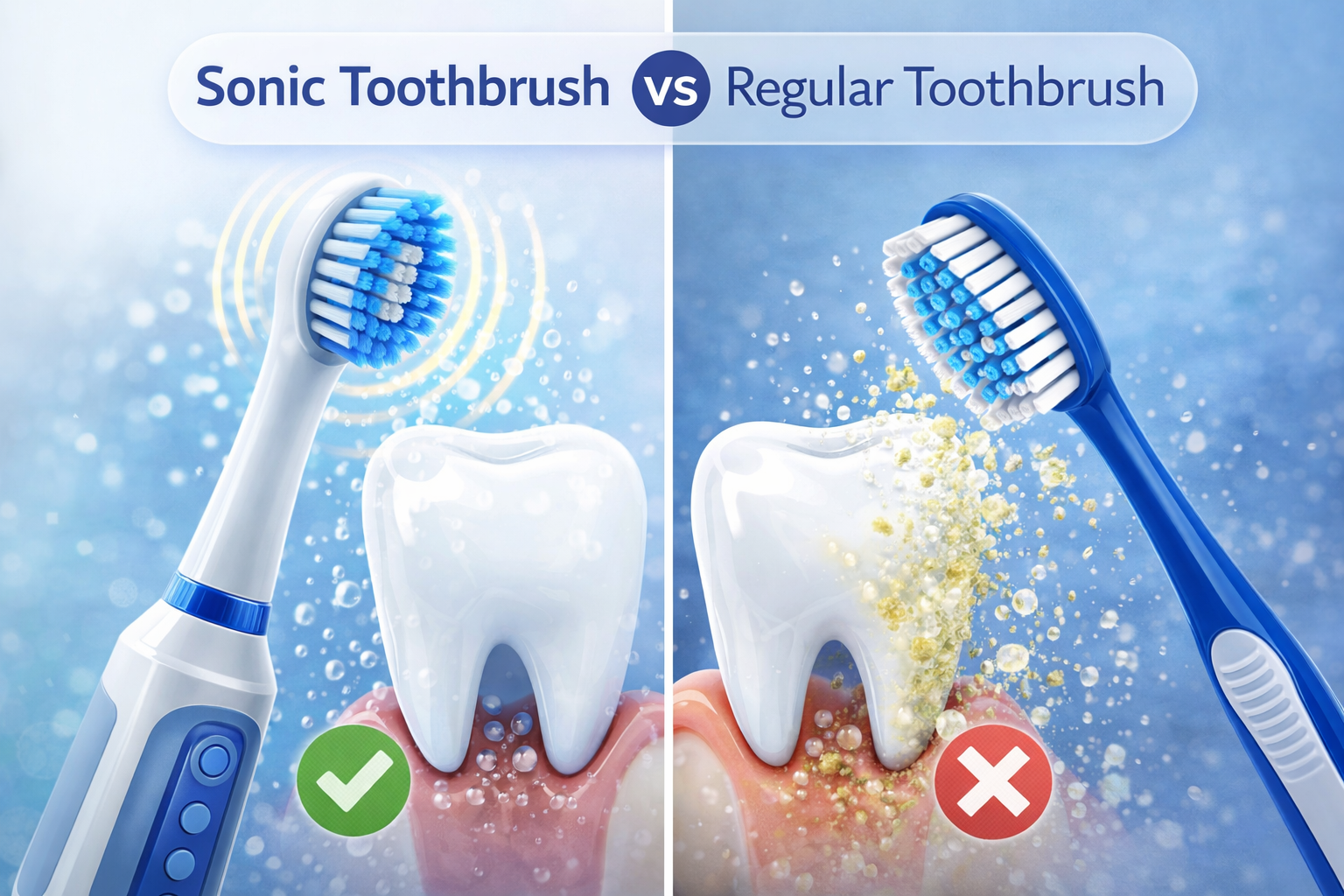
Brushing too hard, for one. I used to think that the harder I brushed, the cleaner my teeth would be. It felt productive, like I was really doing something.
But aggressive brushing can wear down enamel over time. It can also cause your gums to recede, exposing the roots of your teeth—areas that don’t have the same protective enamel layer.
Then there were the snacks. Sugary drinks, acidic foods, things I didn’t think twice about. Acid slowly erodes enamel, making it thinner and weaker.
None of these habits caused immediate damage. That’s what made them easy to ignore.
But over time, they added up.
Sensitivity Has Many Faces
One thing I didn’t expect was how varied tooth sensitivity can feel.
Sometimes it’s a quick, sharp pain that disappears instantly. Other times, it lingers for a few seconds, making you hesitate before taking another bite or sip.
It can affect just one tooth or several. It might come and go, or gradually become more frequent.
And because it’s inconsistent, it’s easy to delay doing anything about it.
I told myself, “It’s not that bad.”
“I can deal with it.”
“It’ll probably go away.”
But sensitivity is often a signal—not just a temporary annoyance.
The Common Causes We Overlook
As I started paying more attention, I realized that tooth sensitivity isn’t caused by just one thing. It’s usually a combination of factors.
Enamel erosion is a big one. Acidic foods and drinks—like soda, citrus fruits, and sports drinks—can slowly dissolve enamel over time.
Gum recession is another. When gums pull back, they expose the root surface, which is much more sensitive.
Tooth decay can also play a role. Even a small cavity can create a pathway to the inner layers of the tooth.
And then there’s teeth grinding—something many people do without even realizing it, especially at night. The constant pressure can wear down enamel and increase sensitivity.
In my case, it wasn’t just one cause. It was a mix of habits I hadn’t thought twice about.
The Science of That Sudden Pain
I became curious—why does the pain feel so sudden and sharp?
It turns out there’s a theory called the hydrodynamic theory.
It sounds complicated, but the idea is surprisingly simple.
Inside the dentin’s tiny tubules, there’s fluid. When something cold, hot, or sweet touches exposed dentin, it causes that fluid to move rapidly.
That movement triggers nerve endings inside the tooth, sending a signal to your brain.
And your brain interprets it as pain.
It’s not the cold itself causing the pain—it’s the movement happening inside your tooth.
Once I understood that, the sensation made more sense. It wasn’t random. It was a direct reaction, almost like a reflex.
The Emotional Side of Sensitivity
What surprised me most wasn’t just the physical discomfort—it was how it changed my behavior.
I started avoiding certain foods. Ice cream? Not worth the risk. Cold drinks? Only in small sips. Even brushing became something I approached carefully, almost cautiously.
Eating stopped being completely enjoyable. There was always that small moment of hesitation.
And over time, that hesitation turned into habit.
It’s strange how something so small can affect your daily life in subtle ways.
When It’s More Than Just Sensitivity
There’s also an important line to recognize.
Not all tooth pain is simple sensitivity.
If the pain becomes constant, severe, or happens without any obvious trigger, it could be something more serious—like a deep cavity, a cracked tooth, or an infection.
That’s something I had to learn the hard way.
Ignoring symptoms doesn’t make them disappear. It just gives them time to grow.
Finding a Way Forward
Eventually, I decided to stop guessing and actually do something about it.
I started with small changes.
I switched to a softer toothbrush and paid attention to how I brushed—gentle, not aggressive. I chose toothpaste designed for sensitive teeth, which helps block those tiny tubules over time.
I also became more aware of what I ate and drank. Not cutting everything out, but being more balanced.
And most importantly, I stopped avoiding the dentist.
It wasn’t as bad as I had imagined. In fact, it was reassuring to understand what was happening and how to manage it properly.
What I Wish I Knew Earlier
If I could go back, I’d tell myself that tooth sensitivity isn’t something to ignore or “just deal with.”
It’s information.
It’s your body telling you that something needs attention—whether it’s your brushing habits, your diet, or your overall oral care routine.
And the earlier you listen, the easier it is to fix.
A Different Perspective
Now, when I feel that slight twinge of sensitivity, I don’t just react—I understand it.
I know what’s happening beneath the surface. I know why it feels the way it does. And most importantly, I know what I can do about it.
That knowledge changes everything.
Because once you understand the science behind something, it stops feeling random—and starts feeling manageable.
Tooth sensitivity may seem like a small issue, but it carries a bigger message.
Sometimes, the smallest signals are the ones worth paying attention to.
And sometimes, understanding what’s happening inside your own body is the first step toward taking better care of it.