When I first picked up a sonic toothbrush, I’ll be honest—I didn’t expect much. It looked sleeker than my old manual brush, sure, and maybe a bit more “high-tech,” but I figured brushing was brushing. Teeth are teeth. How different could it really be?
That assumption didn’t last long.
The first time I turned it on, the gentle hum caught me off guard. It wasn’t aggressive or loud like I had imagined. Instead, it felt… precise. Controlled. Almost like the toothbrush knew exactly what it was doing, even if I didn’t fully understand it yet. And that curiosity is what led me down a rabbit hole into the science behind sonic dental technology—a world where physics, biology, and engineering quietly work together every time we brush.
A Different Kind of Movement
Traditional brushing relies on something simple: mechanical friction. You move the brush back and forth, up and down, trying to physically scrub away plaque and debris. It works, of course—but it also depends heavily on your technique, your patience, and sometimes even your mood.
Sonic technology, however, approaches the problem differently.
Instead of relying solely on your hand movements, sonic toothbrushes generate thousands of brush strokes per minute—often in the range of 20,000 to 40,000 strokes. But here’s the interesting part: it’s not just about speed. If it were, we could just brush faster manually (though that would be impractical and probably uncomfortable).
What really matters is how those vibrations interact with fluids—like saliva, water, and toothpaste—inside your mouth.
The Power of Fluid Dynamics
I remember reading about this for the first time and thinking it sounded almost too scientific for something as routine as brushing your teeth. But the more I learned, the more it made sense.
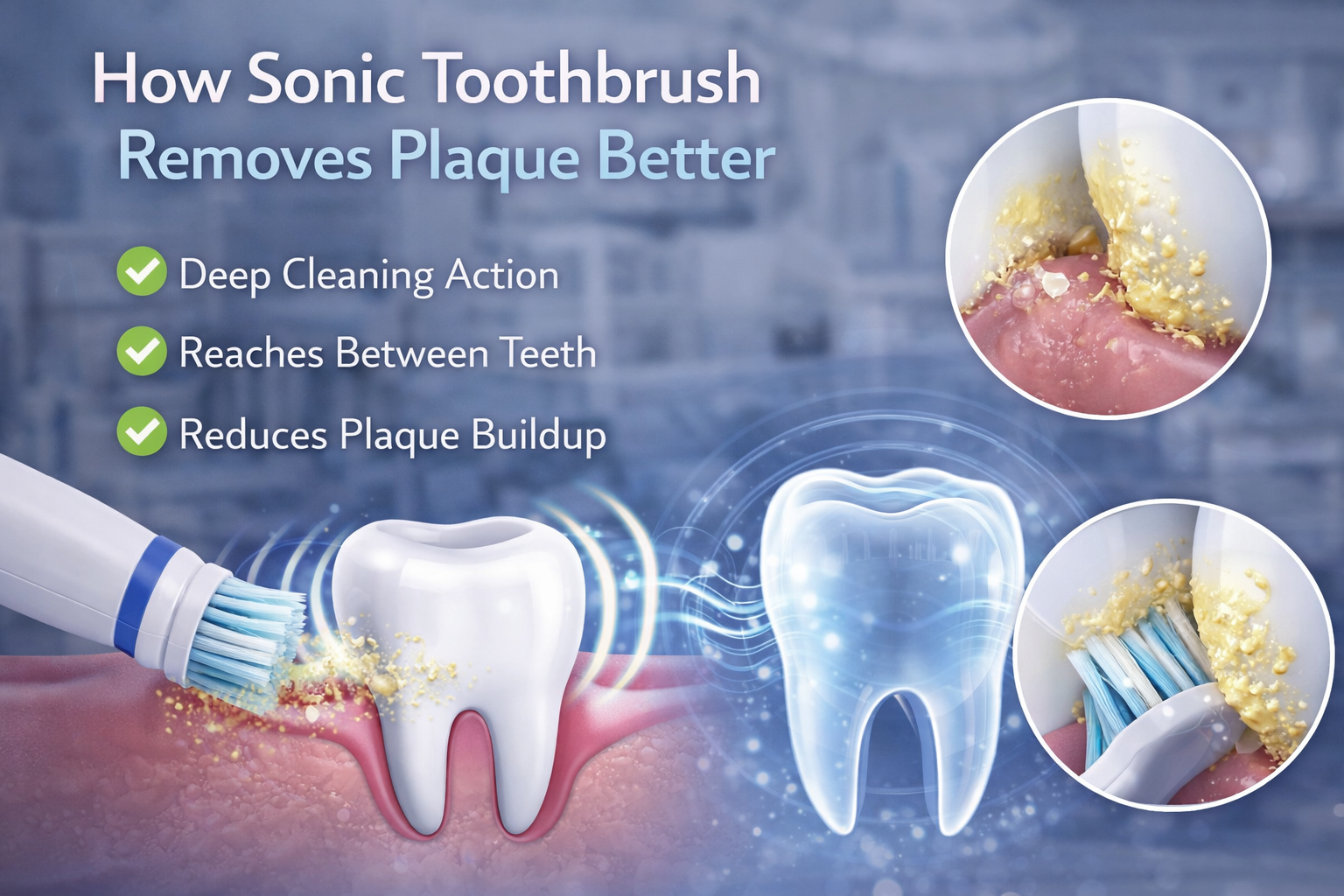
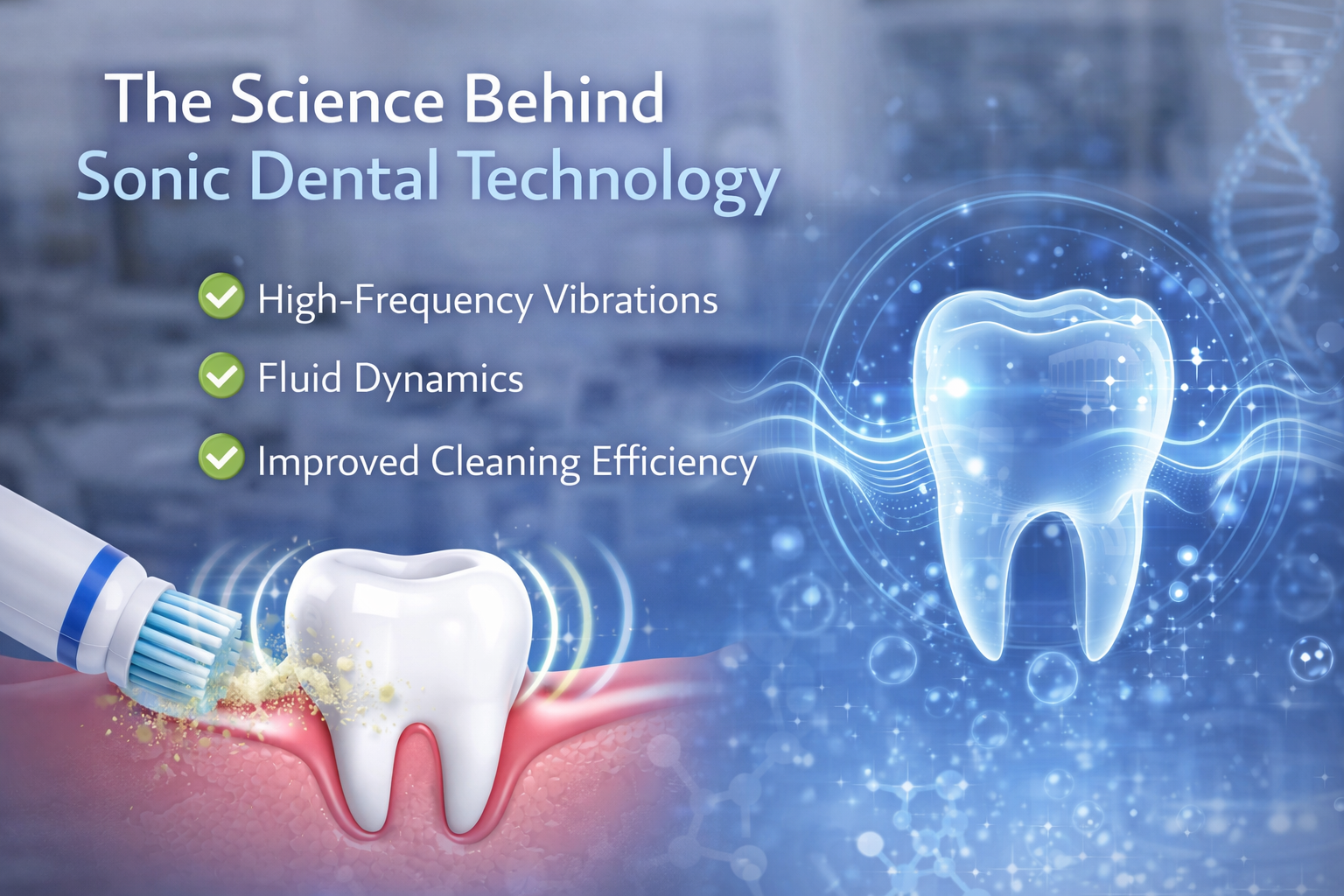
When a sonic toothbrush vibrates at high frequencies, it creates something called fluid dynamics effects. In simpler terms, those rapid vibrations agitate the liquid around your teeth, creating tiny waves and currents.
These currents can reach areas that the bristles don’t physically touch—like between teeth or slightly below the gumline.
Think about it like this: imagine dropping a pebble into a still pond. The ripples spread outward, affecting areas far beyond the point of impact. Sonic toothbrushes work in a similar way. Even if the bristles aren’t directly scrubbing every surface, the energy they generate travels through the fluid, helping to dislodge plaque and bacteria.
That realization changed how I brushed. I stopped pressing harder, stopped trying to “scrub” aggressively, and instead let the brush do its job.
Gentle, But Effective
One of the biggest misconceptions I had was that more pressure equals better cleaning. It felt logical at the time—if you scrub harder, you remove more, right?
But sonic technology challenges that idea.
Because the cleaning power comes from vibration and fluid movement rather than brute force, applying too much pressure can actually reduce effectiveness. It dampens the vibrations and limits the brush’s ability to create those helpful fluid currents.
More importantly, brushing too hard can irritate your gums and wear down enamel over time.
Sonic toothbrushes, in a way, teach you to be gentler. Some even include pressure sensors that alert you when you’re pushing too hard—a feature I didn’t think I needed until I realized how often I triggered it.
It’s a subtle shift, but it changes your entire relationship with brushing. It becomes less about force and more about technique.
The Role of Frequency
Another detail that fascinated me was the importance of frequency. Not all vibrations are created equal.
Sonic toothbrushes operate within a specific frequency range that’s been found to be effective for disrupting plaque without causing discomfort. Too low, and you lose the benefits of fluid dynamics. Too high, and it could become unpleasant or even unsafe.
This balance is what makes sonic technology feel both powerful and comfortable at the same time.
It’s also why the sensation can feel a bit strange at first. I remember the slight tickling feeling along my gums, almost like the brush was doing more than I could see. After a few uses, though, it became familiar—almost reassuring.
Beyond Just Cleaning
As I kept using a sonic toothbrush, I started noticing changes that weren’t immediately obvious at first.
My teeth felt smoother for longer. That “just cleaned” feeling didn’t disappear as quickly throughout the day. My gums seemed less sensitive, especially along areas that used to bleed occasionally when I brushed too aggressively.
These experiences aren’t just anecdotal—they’re supported by research. Studies have shown that sonic toothbrushes can be effective in reducing plaque and improving gum health when used consistently and correctly.
But what stood out to me wasn’t just the results. It was the consistency.
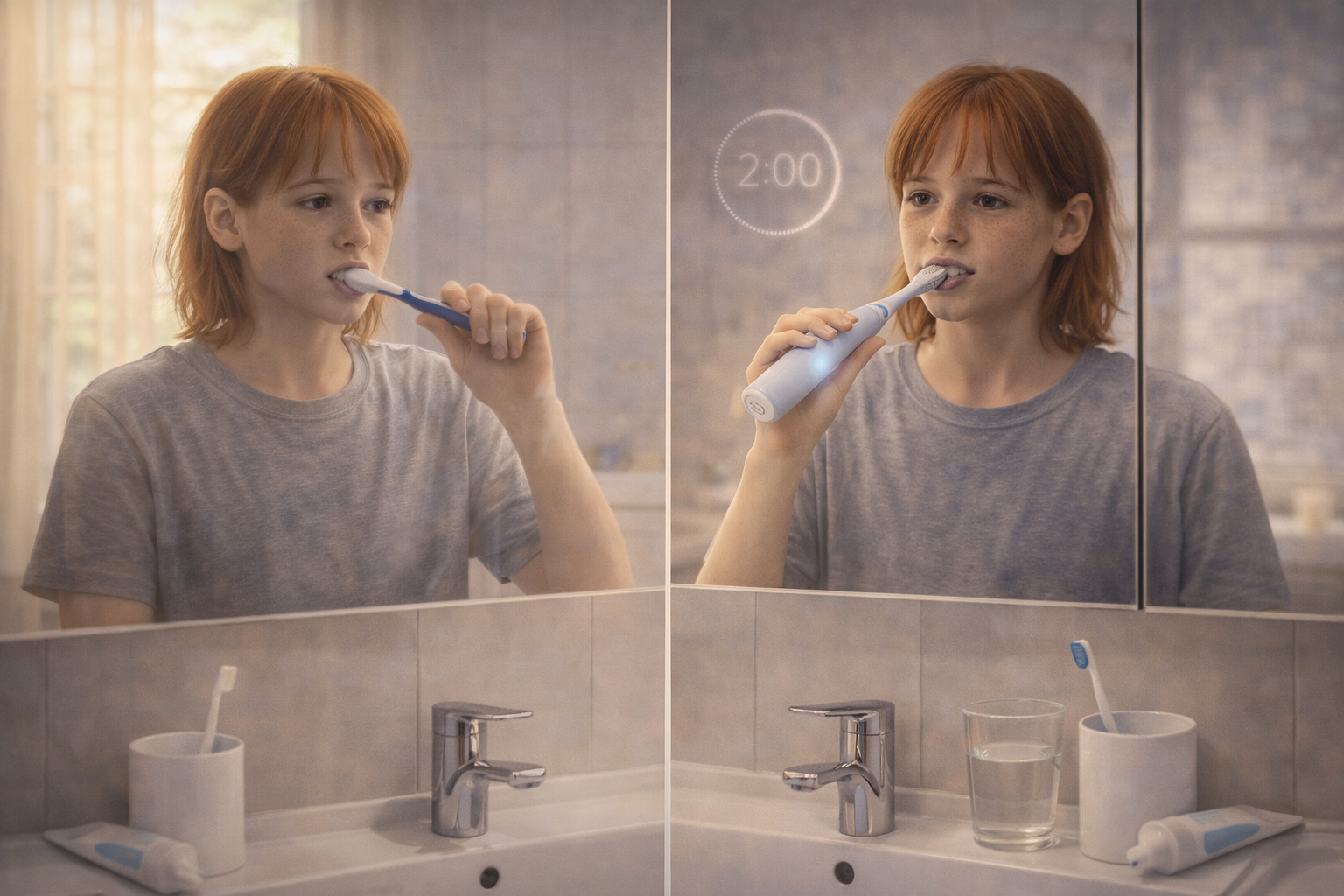
Manual brushing can vary from day to day. Sometimes you rush. Sometimes you miss spots. Sonic toothbrushes, especially those with built-in timers, create a more structured routine. They guide you—often dividing your brushing time into intervals so you spend equal attention on each part of your mouth.
It turns brushing from a quick chore into a more mindful process.
Technology Meets Habit
One thing I didn’t expect was how much technology would influence my habits.
Many modern sonic toothbrushes connect to apps, track your brushing patterns, and even provide feedback. At first, I thought it was excessive—do I really need an app to brush my teeth?
But over time, I realized it wasn’t about necessity. It was about awareness.
Seeing data about how long I brushed, which areas I missed, or how often I applied too much pressure made me more conscious of what I was doing. It added a layer of accountability that I didn’t have before.
And strangely enough, that made brushing feel less like an obligation and more like a small act of self-care.
A Shift in Perspective
Looking back, what surprised me most wasn’t the technology itself—it was how something so small could change the way I think about a daily routine.
Brushing my teeth used to be automatic. Something I did without much thought, twice a day, just to check a box.
Now, it feels different.
I pay attention to how the brush moves, how the vibrations feel, how I position it along the gumline. I’m more aware of my own habits—when I rush, when I slow down, when I actually take the full two minutes.
It’s a subtle shift, but it adds up.
The Future of Sonic Dental Care
As technology continues to evolve, it’s interesting to think about where sonic dental care might go next.
We’re already seeing brushes that adapt to your brushing style in real time, adjusting intensity based on your needs. Some use artificial intelligence to map your mouth and provide personalized recommendations.
It might sound futuristic, but in a way, it’s just an extension of what sonic technology has always aimed to do: make oral care more effective, more intuitive, and more aligned with how our bodies actually work.
Final Thoughts
If you had told me a year ago that I’d be this interested in toothbrush technology, I probably would have laughed. It’s not exactly the most exciting topic at first glance.
But sometimes, the most ordinary things hide the most interesting science.
Sonic dental technology isn’t just about faster brushing or fancy features. It’s about understanding how motion, frequency, and fluid dynamics can work together to improve something we do every single day.
And maybe that’s what makes it so compelling.
Because in the end, it’s not just about cleaner teeth.
It’s about realizing that even the simplest routines can be transformed when we take a closer look at how they really work.