I still remember the first time I turned on a sonic toothbrush. There was this quiet hesitation before pressing the power button—like standing at the edge of something unfamiliar but oddly promising. When it finally buzzed to life, the sensation caught me off guard. It wasn’t harsh or uncomfortable, just… different. A gentle hum, a soft vibration, like holding a tiny engine designed for something surprisingly delicate: your smile.
If you’re just starting out with a sonic toothbrush, you might be feeling that same mix of curiosity and uncertainty. It’s completely normal. After all, most of us grew up with manual toothbrushes—simple, predictable, and, let’s be honest, easy to use without thinking twice. Switching to something that claims to clean your teeth using thousands of vibrations per minute sounds almost too futuristic for a daily routine we barely question.
But here’s the thing: once you get past that first moment, it starts to make sense. And more importantly, it starts to feel like an upgrade you didn’t realize you needed.
The First Week: Getting Used to the Change
The first few days with a sonic toothbrush can feel a little strange. You might notice the vibration tickling your gums or the sound echoing slightly in your head. It’s not unpleasant—it’s just new.
What helped me was slowing down.
Instead of brushing the way I used to—quick, back-and-forth scrubbing—I had to unlearn that habit. Sonic toothbrushes do most of the work for you. You don’t need to press hard or move aggressively. In fact, doing that can reduce their effectiveness.
So I started treating brushing like a guided process.
I’d gently place the brush head against each tooth, letting it linger for a few seconds before moving on. It felt almost like the toothbrush was leading, and I was just following along. Some models even have built-in timers that pause every 30 seconds, reminding you to switch sections of your mouth. At first, it seemed unnecessary. But after a while, I realized how uneven my brushing used to be.
There’s something oddly satisfying about knowing each part of your mouth is getting equal attention.
The Subtle Differences You Begin to Notice
By the end of the first week, I noticed something small but meaningful. My teeth felt… smoother. Not just right after brushing, but throughout the day.
It’s hard to describe unless you’ve experienced it. With a manual toothbrush, that clean feeling fades relatively quickly. But with a sonic toothbrush, it lingers. Running your tongue across your teeth feels different—almost like they’ve been polished rather than just cleaned.
Another thing I noticed was how gentle it felt on my gums. I used to think that brushing harder meant cleaning better. But in reality, it often led to irritation. The sonic toothbrush changed that. It cleaned thoroughly without that harsh, scraping sensation.
If you’ve ever had sensitive gums, this can be a quiet but important shift.
Understanding the Technology (Without Overthinking It)
At some point, you might find yourself wondering: How does this actually work?
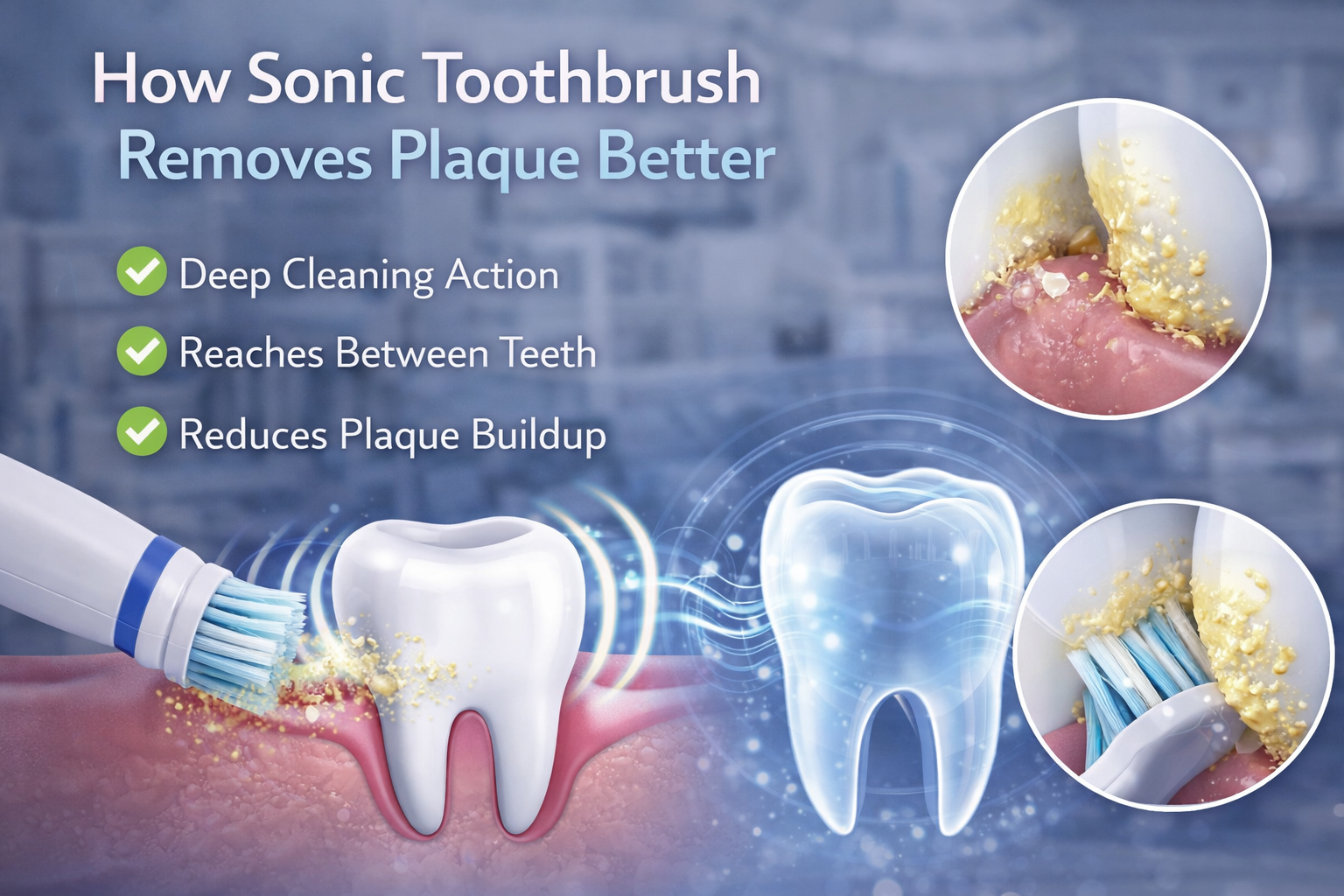
The idea behind a sonic toothbrush is surprisingly simple. Instead of relying on your hand to create motion, it uses high-frequency vibrations—often tens of thousands of strokes per minute. These vibrations create tiny fluid movements in your mouth that help dislodge plaque, even slightly beyond where the bristles touch.
But you don’t need to get too technical about it.
Think of it like this: instead of scrubbing your teeth clean, you’re letting a system do the work more efficiently and more consistently than you could by hand.
And once you accept that, the whole experience becomes easier.
Common Mistakes Beginners Make
If I could go back and give myself advice before starting, I’d keep it simple:
Don’t rush.
It’s tempting to treat brushing like a task to finish quickly. But with a sonic toothbrush, slowing down actually improves the results.
Don’t press too hard.
More pressure doesn’t mean more cleaning. In fact, many sonic toothbrushes have pressure sensors that alert you if you’re brushing too hard.
Don’t skip sections.
Because the brushing feels different, it’s easy to miss areas. Using the timer (if your brush has one) can help build a balanced routine.
Don’t expect instant transformation.
The benefits build over time. It’s not about dramatic overnight changes—it’s about consistent improvement.
Building a Routine That Feels Natural
One of the most unexpected parts of switching to a sonic toothbrush is how it can change your mindset about brushing altogether.
It stops being something you rush through and starts becoming a small, intentional moment in your day.
For me, mornings became less about checking a box and more about starting fresh. The gentle hum of the toothbrush, the rhythm of moving from one section to another—it created a sense of routine that felt almost calming.
At night, it became a way to slow down. A signal that the day was ending.
It might sound like a small thing, but these little shifts add up.
Choosing the Right Brush (Without Overcomplicating It)
If you’re still deciding which sonic toothbrush to get, it’s easy to feel overwhelmed by options. There are so many models, features, and price points that it can feel like you need to do hours of research just to make a choice.
But honestly, you don’t need the most advanced model to get started.
Look for something that includes:
- A built-in timer
- Multiple cleaning modes (even just two is enough)
- A comfortable brush head size
- Good battery life
That’s it.
Everything else—Bluetooth connectivity, apps, extra settings—is nice to have but not essential. The core experience remains the same.
The Long-Term Perspective
After a few weeks, something interesting happens: you stop thinking about the toothbrush as “new.”
It just becomes part of your routine.
And when you occasionally go back to a manual toothbrush—maybe while traveling or in a hurry—you notice the difference immediately. It feels less effective, less precise. Not bad, just… not quite the same.
That’s when you realize the change has settled in.
A Small Habit with a Bigger Impact
At the end of the day, switching to a sonic toothbrush isn’t about chasing perfection. It’s about making a small improvement in something you already do every day.
You’re not adding extra time or effort. You’re just doing the same thing in a smarter way.
And that’s what makes it sustainable.
Because the best habits aren’t the ones that feel like a burden—they’re the ones that quietly fit into your life and make it a little better over time.
Final Thoughts
If you’re just starting your journey with a sonic toothbrush, don’t overthink it.
Expect a short adjustment period. Be patient with yourself. Let the technology do its job.
And most importantly, pay attention to how it feels—not just in your teeth, but in your routine.
Because sometimes, the smallest upgrades are the ones that stick with you the longest.
And who knew something as simple as brushing your teeth could feel like that?