I didn’t always think much about my teeth.
For a long time, they were just… there. Something I brushed twice a day, sometimes rushed, sometimes half-asleep, standing in front of the mirror with my mind already somewhere else. I thought that was enough. No cavities meant no problems, right?
That belief lasted until the day a dull, persistent sensitivity started creeping in whenever I drank something cold. At first, I ignored it. Then I adjusted—sipping more carefully, avoiding ice, pretending it wasn’t a big deal.
But deep down, I knew something had shifted.
When I finally sat in the dentist’s chair again, that same quiet pause returned—the one where they look closely, then lean back just slightly.
“You’re not in bad shape,” she said. “But this is where things usually begin.”
Not with pain. Not with emergencies. But with small, almost invisible habits that slowly tip the balance.
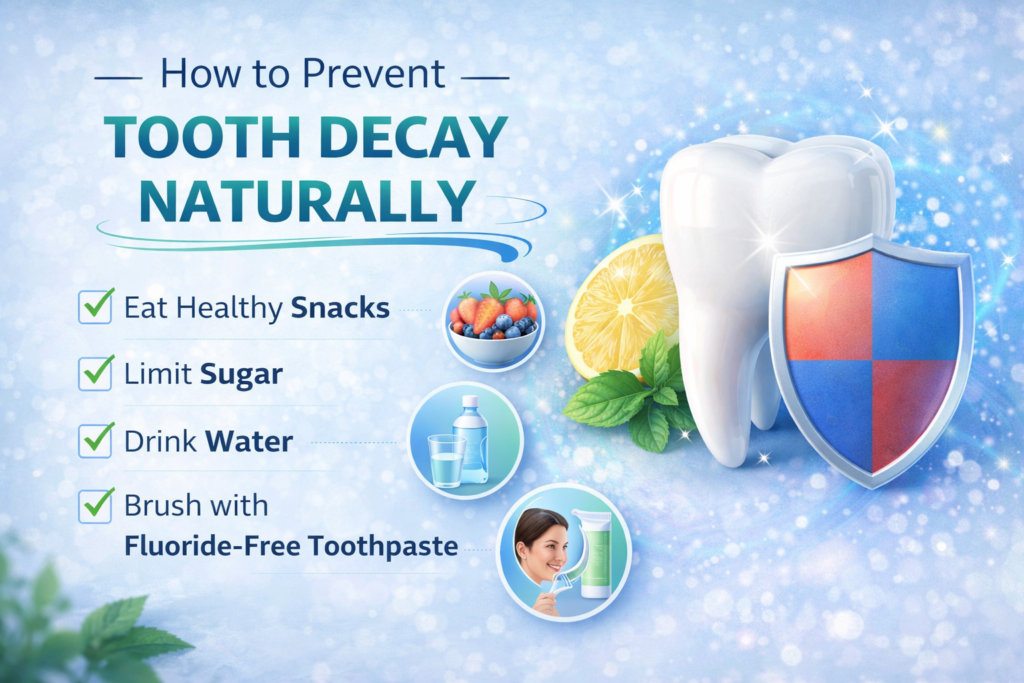
That was the moment I started paying attention—not just to brushing, but to everything around it. And what I learned surprised me: preventing tooth decay naturally isn’t about doing one big thing. It’s about a series of small choices that quietly protect you over time.
It Starts With What You Don’t Notice
Tooth decay doesn’t announce itself loudly at first. It builds in silence.
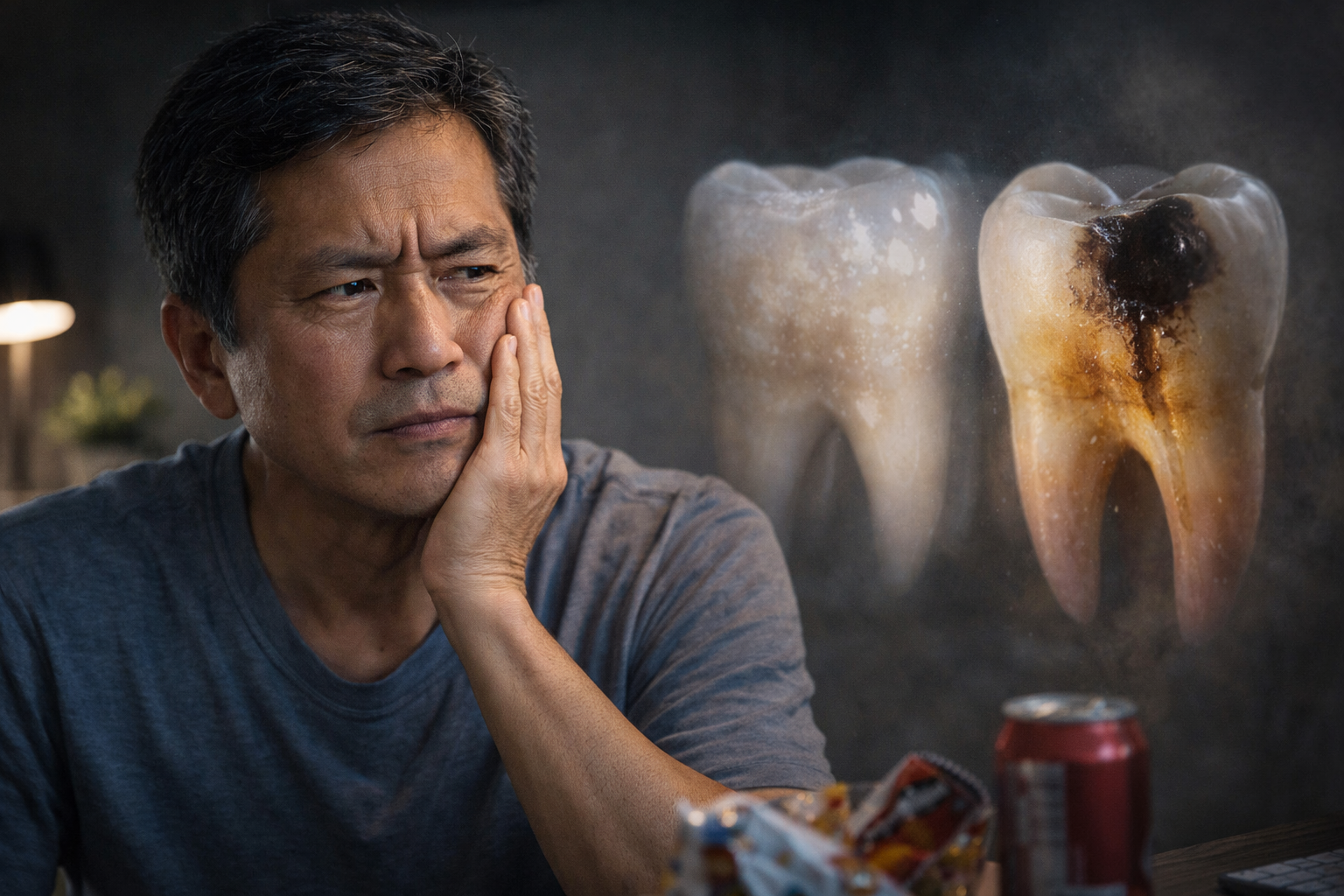
Every time you eat, especially sugars or refined carbs, the bacteria in your mouth feed on those particles and produce acids. Those acids slowly weaken your enamel. Not all at once—but little by little, day after day.
What I didn’t realize before is that it’s not just what you eat—it’s how often you eat.
Snacking constantly, even on things that seem harmless, keeps your mouth in a prolonged acidic state. Your teeth don’t get a chance to recover.
My dentist explained it in a way that stuck with me: “Your teeth need breaks too.”
That changed how I saw my daily habits. It wasn’t just about avoiding candy—it was about giving my mouth time to reset.
Water: The Simplest, Most Overlooked Protector
I used to underestimate water.
It felt too simple to matter. But it turns out, water plays a bigger role in preventing tooth decay than most people realize.
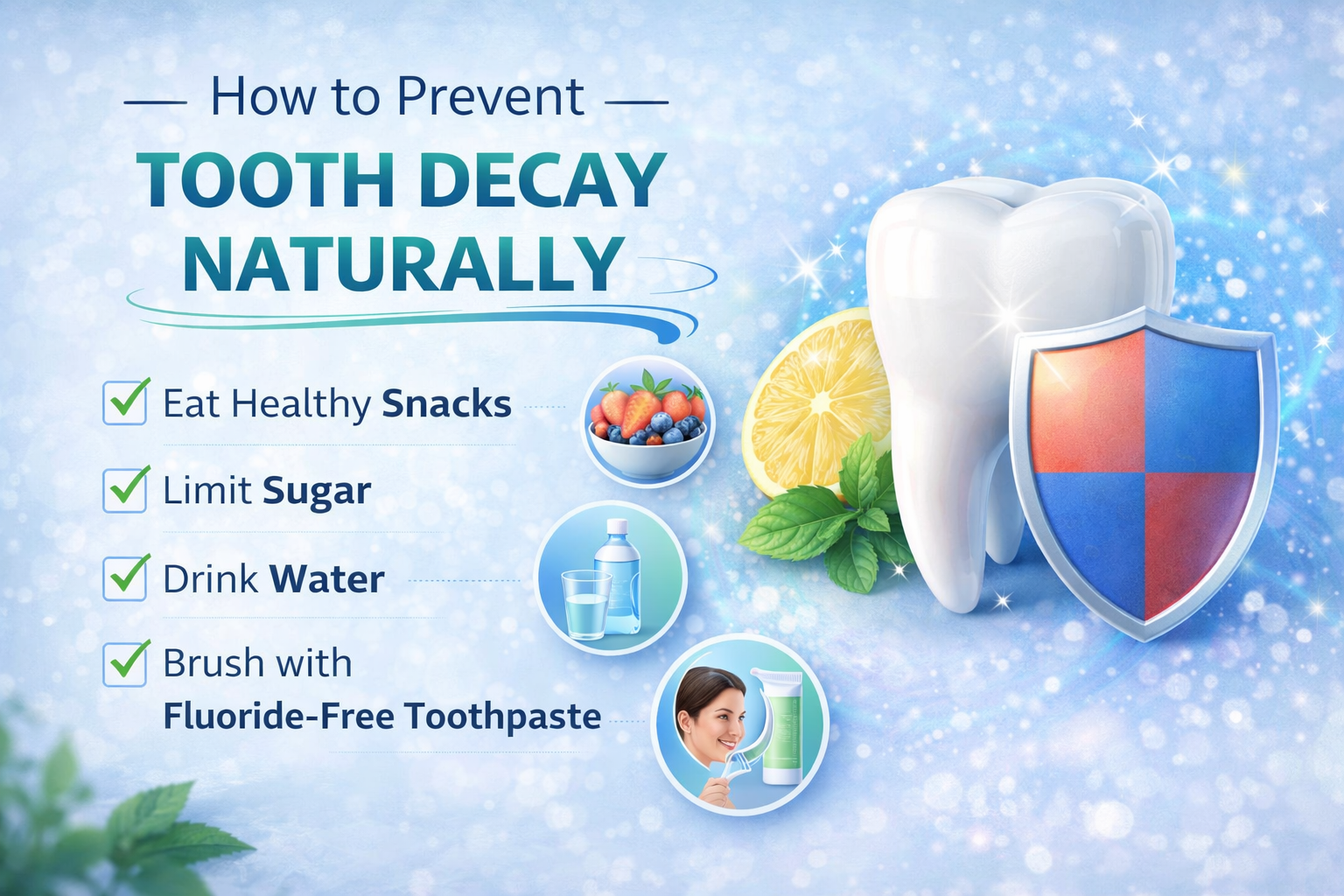
Drinking water helps wash away food particles and neutralize acids. It also supports saliva production—and saliva is one of your body’s best natural defenses.
Saliva isn’t just there to keep your mouth from feeling dry. It actually helps repair early damage to your enamel by providing essential minerals.
Since learning that, I started doing something small but consistent: after every meal, I’d drink a glass of water. Not in a rushed way, but intentionally.
It’s such a simple habit, but over time, it adds up.
Sugar Isn’t the Only Problem
For a long time, I thought avoiding sugar was enough.
No candy, fewer desserts—that should solve everything, right?
But tooth decay doesn’t only come from obvious sugars. Foods like white bread, chips, and even some cereals break down into sugars in your mouth.
And then there are “hidden sugars” in drinks—sodas, juices, flavored coffees—that linger on your teeth longer than you think.
The real issue isn’t just sugar itself—it’s how long it stays on your teeth.
Sticky foods, slow sips, constant snacking… these create the perfect environment for decay.
That realization made me more mindful—not restrictive, just aware.
The Role of Natural Remineralization
One of the most fascinating things I learned is that your teeth are not completely helpless.
In the early stages of decay, your body can actually repair minor damage through a process called remineralization.
Minerals like calcium and phosphate—found in your saliva and certain foods—help rebuild weakened enamel.
That means prevention isn’t just about stopping damage. It’s also about supporting repair.
Foods rich in these minerals—like dairy products, leafy greens, nuts, and seeds—play a role in keeping your teeth strong.
It’s not about perfection. It’s about balance.
Oil Pulling, Herbal Remedies, and Reality
At some point, I fell down a rabbit hole of “natural dental care” online.
Oil pulling, charcoal toothpaste, herbal rinses… there’s a lot out there.
Some of these practices can support oral hygiene in small ways. For example, oil pulling may help reduce bacteria in the mouth, and certain herbal rinses can feel soothing.
But here’s the honest truth I learned: they are not replacements for basic care.
They can be additions—not substitutes.
Brushing, flossing, and regular checkups still matter. Natural methods work best when they complement—not replace—the fundamentals.
Your Night Routine Matters More Than You Think
If there’s one habit that made the biggest difference for me, it was taking my nighttime routine more seriously.
During the day, your mouth has more protection—more saliva, more movement, more natural cleaning.
At night, everything slows down.
If you go to bed without properly cleaning your teeth, bacteria have hours to sit undisturbed.
That’s when decay quietly accelerates.
Now, I treat brushing at night as non-negotiable. Even on the most tiring days.
It’s not about being perfect. It’s about being consistent when it matters most.
The Quiet Influence of Stress
This was something I didn’t expect at all.
Stress doesn’t just affect your mind—it shows up in your body, including your mouth.
Some people grind their teeth without realizing it. Others experience dry mouth, which reduces saliva and increases the risk of decay.
I started noticing patterns. During stressful periods, my habits slipped. I’d snack more, drink less water, rush my brushing.
Preventing tooth decay naturally isn’t just about products or techniques—it’s also about lifestyle.
Taking care of yourself overall reflects in small, physical ways.
Small Habits, Big Impact
Looking back, nothing I changed was dramatic.
I didn’t completely overhaul my diet. I didn’t buy expensive products or follow complicated routines.
I just became more aware.
I drank more water. I paid attention to how often I snacked. I slowed down when brushing. I stopped ignoring small signs like sensitivity.
And over time, those small shifts created a noticeable difference.
What “Natural Prevention” Really Means
At first, I thought preventing tooth decay naturally meant avoiding dentists, avoiding chemicals, doing everything the “organic” way.
But now, I see it differently.
Natural prevention isn’t about rejecting modern care—it’s about supporting your body’s natural defenses.
It’s about working with your body, not against it.
Your mouth already has systems in place to protect and repair itself. Your job is to support those systems, not overwhelm them.
Walking Forward Differently
Now, when I think about my teeth, I don’t just think about avoiding cavities.
I think about balance.
About giving my body the time and support it needs to maintain itself. About paying attention before problems become visible.
It’s a quieter approach. Less reactive, more intentional.
And in a strange way, it’s not really about teeth anymore.
It’s about learning to notice the small things—because they’re usually the ones that matter most.