I still remember the first night I got my retainer. After months of braces, my orthodontist handed me a small plastic case and said, “This little device will protect all the hard work we just did.” At that moment, I didn’t realize that keeping a retainer clean would become a small but important daily ritual in my life.
Like many people, I assumed cleaning a retainer would be simple. Just rinse it under water, maybe brush it occasionally, and that would be enough. But over time, I began to notice something. Retainers can collect plaque, bacteria, and even develop unpleasant odors if they are not cleaned properly. That realization led me down a surprisingly interesting path: finding the best retainer cleaning device.
If you’re on the same journey, wondering which cleaning device is right for you, let me share what I’ve learned along the way.
Why Cleaning Your Retainer Matters More Than You Think
At first glance, a retainer seems harmless. It’s just a small piece of plastic or metal that sits in your mouth. But think about it: it spends hours inside your mouth every single day. That means it’s constantly exposed to saliva, bacteria, food particles, and plaque.
Without proper cleaning, retainers can quickly become a breeding ground for bacteria. This can lead to bad breath, stains, and even oral health issues.
I remember once skipping proper cleaning for a few days during a busy week. When I finally took a closer look at my retainer, I noticed a cloudy film on the surface. That moment convinced me that rinsing alone wasn’t enough.
That’s when I started researching retainer cleaning devices.
What Is a Retainer Cleaning Device?
A retainer cleaning device is a specialized tool designed to clean dental appliances like retainers, aligners, night guards, and dentures more effectively than manual brushing alone.
These devices typically use one of the following technologies:
- Ultrasonic cleaning
- UV light sterilization
- Cleaning tablets with soaking containers
- Combination systems
Each method has its own advantages, and choosing the right one depends on your lifestyle, budget, and cleaning preferences.
My First Experience with a Retainer Cleaner
The first cleaning device I ever tried was a simple soaking container with cleaning tablets. It was affordable and easy to use.
All I had to do was:
- Fill the container with warm water
- Drop in a cleaning tablet
- Place the retainer inside
- Wait about 15 minutes
The bubbles from the tablet did most of the work. It felt satisfying watching the water turn slightly cloudy as the cleaning process removed buildup.
However, over time I realized that while tablets were helpful, they didn’t always remove deeper stains or bacteria completely. That’s when I discovered ultrasonic cleaners.
Ultrasonic Cleaners: The Game Changer
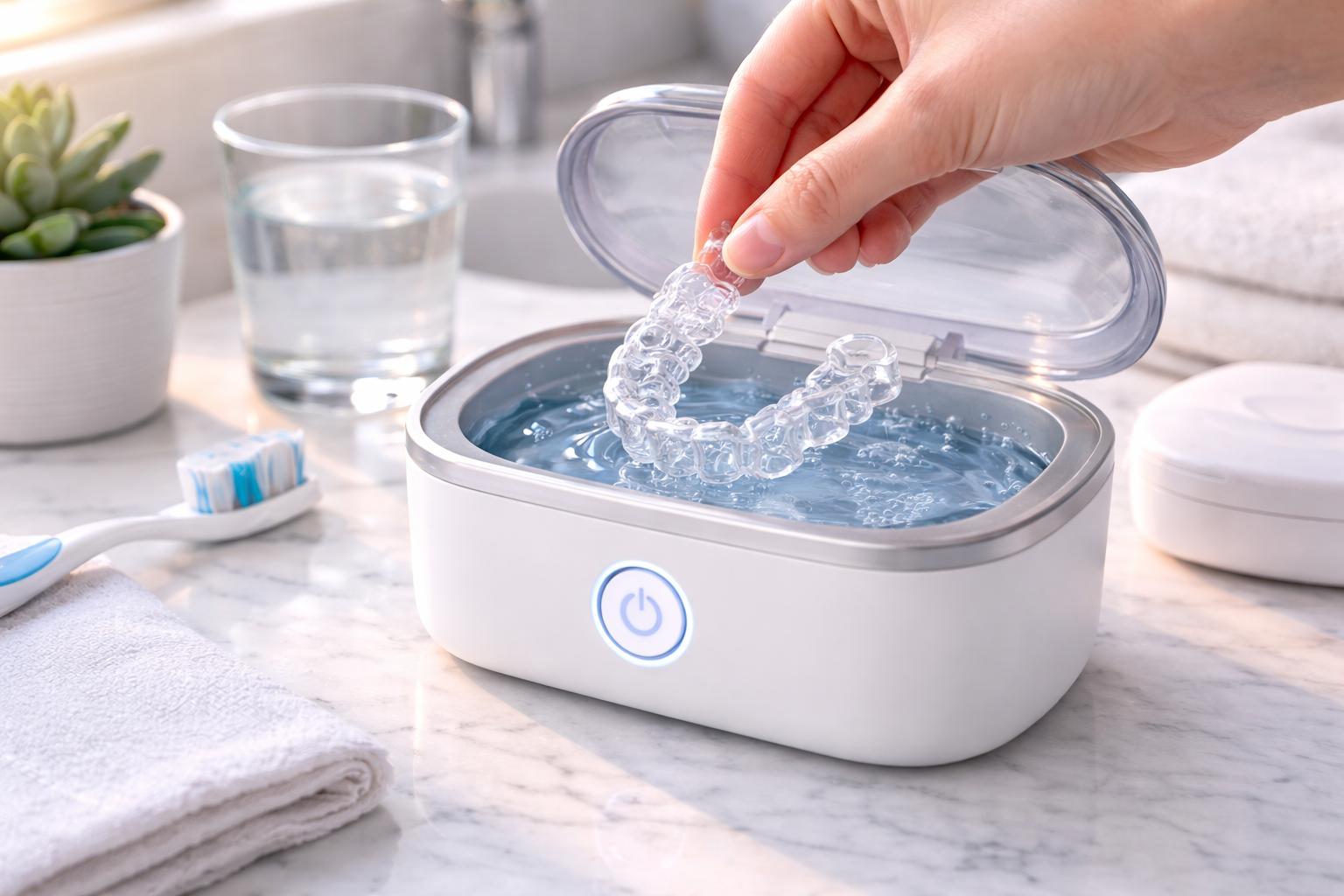
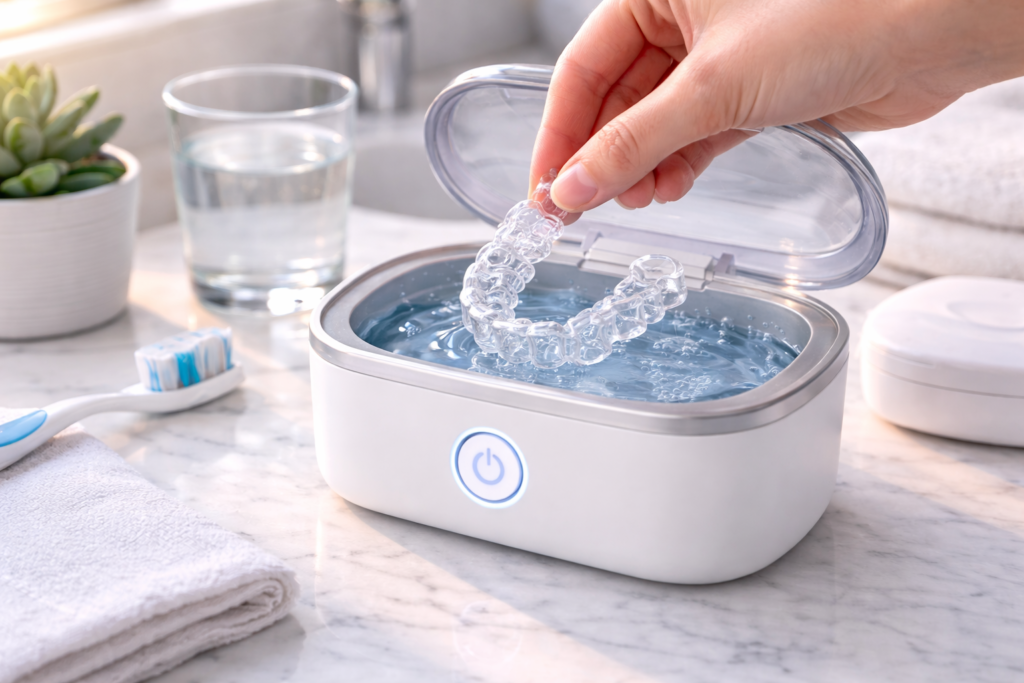
Ultrasonic cleaners use high-frequency sound waves to create tiny bubbles in water. These bubbles collapse rapidly, producing microscopic cleaning action that removes debris from even the smallest crevices.
When I first used one, I was honestly surprised.
You simply place the retainer inside the device, add water (sometimes with a cleaning solution), and press a button. Within a few minutes, the ultrasonic waves gently shake loose plaque, bacteria, and residue.
The biggest advantage? You don’t have to scrub or risk damaging your retainer.
For someone like me who prefers convenience, this was a huge improvement.
UV Retainer Cleaners: High-Tech Hygiene
Another type of device I came across was the UV retainer cleaner.
These devices use ultraviolet light to kill bacteria and microorganisms. The process usually takes only a few minutes and doesn’t require water or cleaning solutions.
The first time I saw one, it reminded me of a small futuristic box. You place your retainer inside, close the lid, and the UV light sterilizes it.
While UV cleaners are excellent for killing bacteria, they usually work best when combined with physical cleaning methods like rinsing or ultrasonic cleaning.
So, many people use UV devices as a final sanitizing step.
Key Factors to Consider When Choosing a Retainer Cleaning Device
Choosing the best retainer cleaning device isn’t just about picking the most expensive or advanced option. It’s about finding the one that fits your routine.
Here are the factors that helped me decide.
1. Cleaning Effectiveness
The main purpose of the device is to remove plaque, bacteria, and buildup.
Ultrasonic cleaners tend to be the most effective for deep cleaning because they reach tiny crevices that brushing can miss.
If hygiene is your top priority, this technology is worth considering.
2. Ease of Use
Let’s be honest: if a cleaning routine feels complicated, we’re less likely to stick with it.
Look for a device that requires minimal steps. Ideally, it should take only a few minutes each day.
Simple operation can make a big difference in maintaining a consistent cleaning habit.
3. Portability
If you travel frequently or spend nights away from home, portability becomes important.
Some cleaning devices are compact enough to fit in a backpack or suitcase. Others are designed mainly for home use.
Personally, I prefer a small device that I can take with me during trips.
4. Noise Level
Ultrasonic devices sometimes produce a buzzing sound during operation.
While most are relatively quiet, it’s still something to consider if you plan to use the cleaner early in the morning or late at night.
A quieter device can make the experience more comfortable.
5. Durability and Build Quality
Retainer cleaning devices are small appliances, so build quality matters.
A well-built device will last longer and perform consistently. Look for models with good reviews and reliable materials.
This can save money in the long run.
6. Price and Long-Term Costs
Prices for retainer cleaning devices vary widely.
- Basic soaking systems are inexpensive
- Ultrasonic cleaners fall in the mid-range
- UV sterilizing devices can be more expensive
You should also consider ongoing costs, such as cleaning tablets or replacement parts.
Sometimes a slightly more expensive device can be more cost-effective over time.
My Daily Retainer Cleaning Routine
After experimenting with different methods, I eventually settled on a routine that works well for me.
Each morning, I rinse my retainer under lukewarm water and place it in an ultrasonic cleaner for a few minutes. Occasionally, I add a cleaning tablet for extra freshness.
At night, I simply rinse it again before wearing it.
This routine takes less than five minutes a day but keeps my retainer looking clear and clean.
More importantly, it gives me peace of mind knowing that I’m protecting my oral health.
Common Mistakes to Avoid
During my journey, I also learned about several mistakes people often make when cleaning their retainers.
One common mistake is using hot water. High temperatures can warp the plastic and ruin the retainer.
Another mistake is using toothpaste. Many toothpastes contain abrasive ingredients that can scratch the surface, creating tiny spaces where bacteria can accumulate.
Finally, some people forget to clean the retainer case. Even if the retainer is clean, placing it in a dirty case defeats the purpose.
Keeping both the retainer and its case clean is essential.
Finding the Right Device for You
Everyone’s routine is different. Some people prefer simple soaking solutions, while others enjoy the efficiency of ultrasonic technology.
The best retainer cleaning device is the one that fits naturally into your daily life.
If you value convenience and deep cleaning, an ultrasonic cleaner may be ideal.
If you want quick sanitization, a UV device might be the right choice.
And if you prefer simplicity and affordability, cleaning tablets with a soaking container can still do a good job.
Final Thoughts
Looking back, I never expected that something as small as a retainer would teach me so much about daily habits and self-care.
Taking a few minutes each day to clean it properly protects the results of months or even years of orthodontic treatment.
Choosing the right retainer cleaning device can make that process easier, faster, and more effective.
In the end, it’s not just about keeping a piece of plastic clean. It’s about maintaining the smile you worked so hard to achieve. And sometimes, the smallest routines are the ones that make the biggest difference. 😄