I still remember the first morning I woke up with a retainer. It sat on my bedside table inside a small plastic case, looking harmless enough, yet somehow important. My orthodontist had been very clear: “Wear it every night, and keep it clean.”
At the time, I didn’t think much about the cleaning part. I assumed a quick rinse under the sink would be enough. But after a few weeks, I noticed something unpleasant—my retainer didn’t smell very fresh anymore. It had that faint plastic odor mixed with something else that was harder to describe. That was when I realized keeping a retainer clean wasn’t just a suggestion; it was necessary.
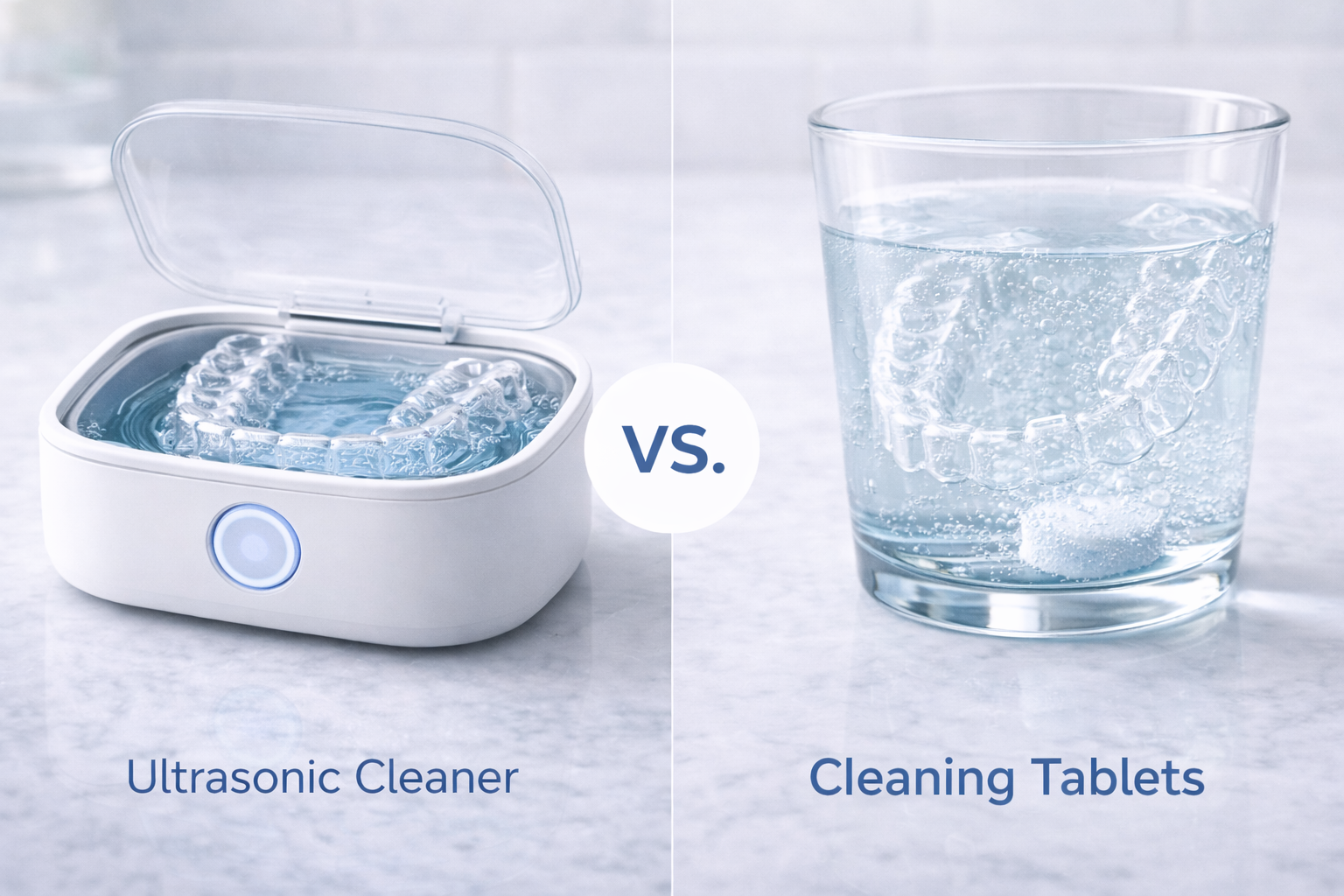
Like many people, I started looking for better ways to clean it. Two options kept appearing everywhere: ultrasonic cleaners and retainer cleaning tablets. Both promised a deeper clean than simple brushing or rinsing. But which one actually works better?
Over time, after experimenting with both methods and hearing other people’s experiences, I began to see the strengths and weaknesses of each. This blog is not just a technical comparison—it’s also a story about discovering what works in real life.
The Moment You Realize Retainers Need Real Cleaning
Retainers might look simple, but they go through a lot. Every night they sit in your mouth for hours. They come into contact with saliva, bacteria, food particles, and sometimes even plaque.
If they’re not cleaned properly, several things can happen:
- A buildup of bacteria
- Bad smells
- Cloudy or stained plastic
- Reduced lifespan of the retainer
When I first realized this, I tried brushing my retainer with a toothbrush and toothpaste. It seemed logical. After all, that’s how we clean teeth.
But many orthodontists actually warn against that. Toothpaste can be abrasive, leaving tiny scratches on the retainer. Those scratches can trap even more bacteria over time.
That’s when I began looking at the two popular alternatives: retainer cleaning tablets and ultrasonic cleaners.
Retainer Cleaning Tablets: The Classic Solution
Cleaning tablets are probably the most familiar method. If you’ve ever seen someone clean dentures, you already know how they work.
You simply drop a tablet into a cup of water, place the retainer inside, and wait.
Within seconds, the tablet begins fizzing. Tiny bubbles appear everywhere, almost like a science experiment happening in your kitchen.
How They Work
Retainer cleaning tablets usually contain ingredients that:
- Break down bacteria
- Remove odors
- Dissolve plaque buildup
- Lift stains from plastic
The bubbling action helps loosen debris stuck on the retainer.
Most tablets recommend soaking for 10–15 minutes, although some people leave them longer.
My First Experience With Tablets
The first time I used one, I was surprised by how easy it was.
Drop tablet.
Add water.
Wait.
When I took my retainer out afterward, it smelled much cleaner. The cloudy look had faded slightly too.
It felt like a small victory.
But after several months, I began noticing something: while the tablets cleaned the surface well, they didn’t always remove everything from tiny grooves or tight corners.
That led me to the second option.
Ultrasonic Cleaners: The High-Tech Approach
The first time I saw an ultrasonic cleaner, it reminded me of a tiny washing machine.
Dentists and jewelers often use them to clean delicate items. Recently, they’ve become popular for cleaning retainers, aligners, and mouthguards.
How Ultrasonic Cleaning Works
An ultrasonic cleaner uses high-frequency sound waves to create microscopic bubbles in water.
This process is called cavitation.
These bubbles rapidly collapse, producing tiny bursts of energy that dislodge dirt, bacteria, and plaque—even from places that brushes can’t reach.
The entire process usually takes 3–5 minutes.
It sounds futuristic, but it’s actually been used in professional cleaning for decades.
The First Time I Tried an Ultrasonic Cleaner
I remember pressing the start button and hearing a faint buzzing sound.
Nothing dramatic happened. The water didn’t splash or bubble dramatically. It just vibrated quietly.
But when the cycle ended and I removed my retainer, something was noticeably different.
It looked clearer.
The plastic felt smoother.
Even the areas around the wire—which were always hard to clean—looked spotless.
It felt like the difference between rinsing a dish and actually washing it.
Comparing the Two: What Really Matters?
After months of using both methods, I started noticing clear differences.
Let’s break them down.
1. Cleaning Power
Retainer Tablets
Tablets are very good at removing odors and basic buildup. The chemical reaction helps break down bacteria and plaque.
However, they rely on soaking rather than physical movement. That means stubborn debris may still remain in tight areas.
Ultrasonic Cleaners
Ultrasonic cleaners physically shake particles loose using microscopic vibrations. This allows them to clean places you can’t reach with a brush.
In terms of pure cleaning power, ultrasonic cleaners usually win.
2. Convenience
Tablets
Tablets are extremely simple. You don’t need a device or electricity.
Just water and a cup.
But you do need to buy refills regularly, and the soaking time can be longer.
Ultrasonic Cleaner
Once you own the device, you can clean retainers anytime with just water.
The cleaning cycle is usually quick, often just a few minutes.
However, it does require counter space and power.
3. Long-Term Cost
At first glance, tablets seem cheaper.
A box might cost around $10–$20.
But if you use them daily, you’ll need new boxes regularly.
Over a year, the cost can add up.
Ultrasonic cleaners cost more upfront—usually $40–$100—but after that, there are no required refills.
In the long run, ultrasonic cleaning may actually be more cost-effective.
4. Deep Cleaning Ability
This is where ultrasonic cleaners truly stand out.
Retainers often have:
- Small grooves
- Wire connections
- Tight crevices
Tablets clean surfaces well, but ultrasonic vibrations penetrate deeper.
Think of it like washing clothes:
- Tablets are like soaking laundry.
- Ultrasonic cleaning is like running a washing machine.
Both work—but one is more thorough.
5. Versatility
Another advantage of ultrasonic cleaners is that they can clean more than retainers.
Many people use them for:
- Jewelry
- Glasses
- Aligners
- Toothbrush heads
- Dental appliances
Cleaning tablets, on the other hand, are usually limited to dental devices.
When Tablets Might Still Be the Better Choice
Even though ultrasonic cleaners are powerful, tablets still have their place.
For example:
Travel
Tablets are easy to pack and use anywhere.
Budget
If someone doesn’t want to buy a device, tablets are a simple solution.
Occasional Use
If a retainer only needs occasional deep cleaning, tablets might be enough.
In many cases, people actually use both methods together.
The Best Routine I Discovered
After experimenting for a while, I settled on a routine that worked best for me.
It’s simple:
- Rinse the retainer every morning
- Use an ultrasonic cleaner several times a week
- Occasionally use a cleaning tablet for extra freshness
This combination keeps the retainer clear, odor-free, and looking almost new.
The biggest lesson I learned was this:
Cleaning retainers regularly is much easier than fixing a dirty one later.
Final Thoughts: Which Is Better?
So, which is better—ultrasonic cleaners or retainer cleaning tablets?
The honest answer is: it depends on what you need.
If you want the most powerful and thorough cleaning, an ultrasonic cleaner is usually the better choice.
If you prefer simplicity and portability, cleaning tablets are still very effective.
For many people, the ideal solution is using both together.
What matters most is consistency. A retainer that’s cleaned regularly will last longer, smell better, and keep your smile healthy.
And if there’s one thing I’ve learned since that first morning staring at my retainer on the bedside table, it’s this:
Taking care of something small—like cleaning a retainer—can make a surprisingly big difference over time.
Your future smile will thank you for it. 😄