Sonic Toothbrush vs Traditional Cleaning Methods: A Personal Journey Toward a Healthier Smile
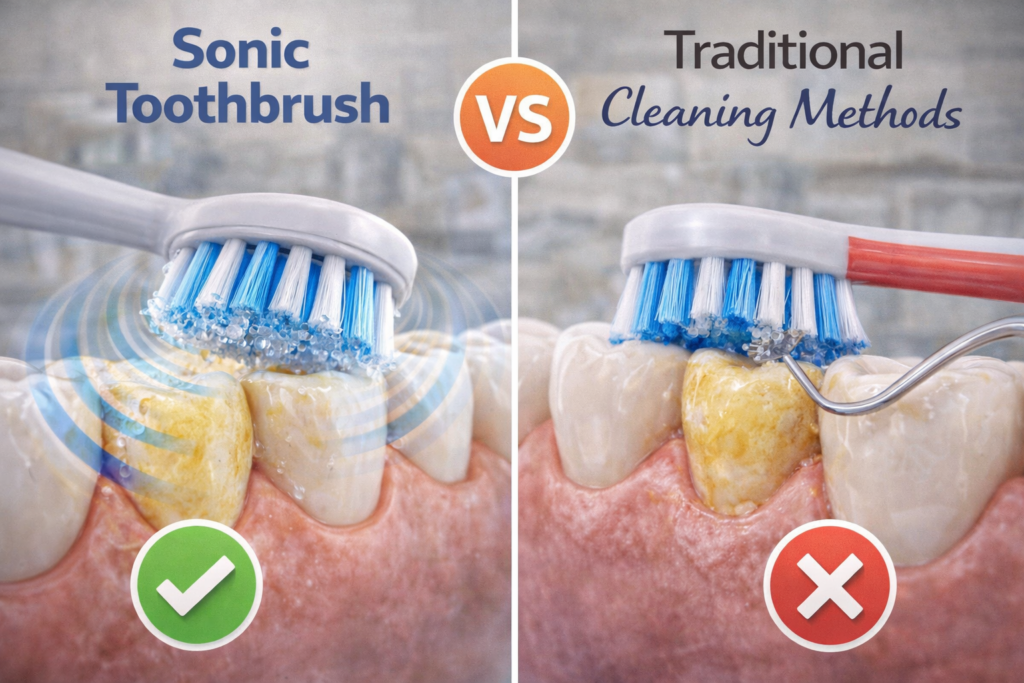
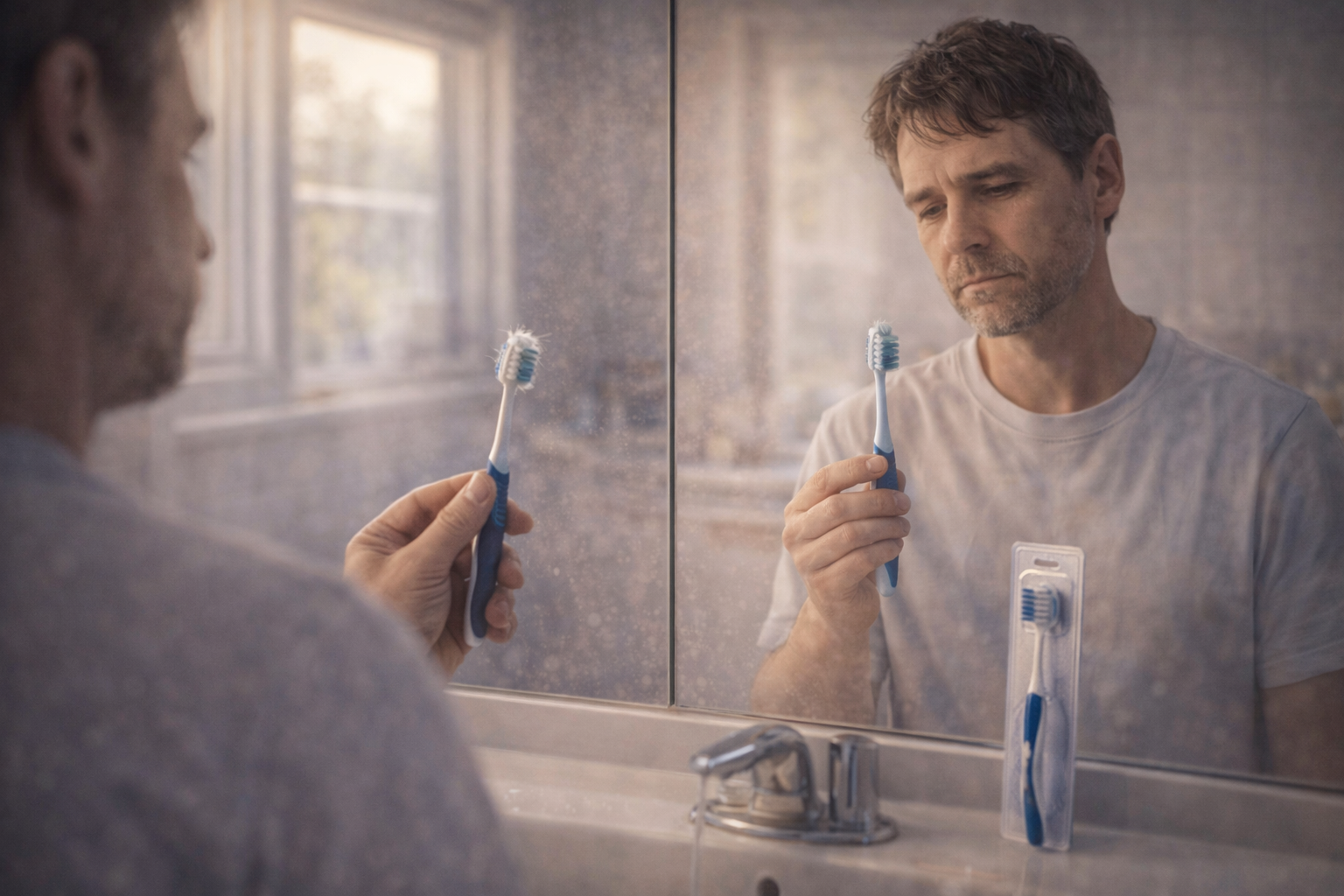
I still remember the first time I stood in front of the bathroom mirror, toothbrush in hand, half-awake and rushing through what felt like just another mundane task. Brushing my teeth was never something I questioned—it was simply something I had been taught to do since childhood. A basic toothbrush, a dab of toothpaste, two minutes (or at least what I thought was two minutes), and I was done. It felt sufficient. Familiar. Reliable.
But over time, I began to wonder: Was it really enough?
That question didn’t come out of nowhere. It started during a routine dental checkup. My dentist, calm and observant, pointed out areas I had consistently missed. “You’re brushing,” she said, “but you’re not cleaning as effectively as you could be.” That distinction stuck with me—brushing versus cleaning. It made me rethink something I had always taken for granted.
That was the moment I first heard about sonic toothbrushes.
The Comfort of Tradition
Traditional toothbrushes have been around for centuries in one form or another. There’s something comforting about their simplicity. No batteries, no charging, no technology—just a handle and bristles doing their job.
Growing up, my family used manual toothbrushes without question. We chose them based on color, firmness, or sometimes just whatever was on sale. The technique, as far as I understood, was straightforward: move the brush back and forth, maybe in circles if you remembered your dentist’s advice, and rinse.
There’s a certain discipline involved in using a traditional toothbrush effectively. You are entirely responsible for every movement—every angle, every stroke, every second spent brushing. Done correctly, it can absolutely maintain oral health. But therein lies the challenge: consistency and technique.
As I later realized, not everyone brushes as well as they think they do. I certainly didn’t.
The First Encounter with a Sonic Toothbrush
I was skeptical when I first held a sonic toothbrush. It felt oddly futuristic compared to the simple plastic brush I had always used. Sleek design, a charging base, multiple settings—it almost felt excessive for something as basic as brushing teeth.
When I turned it on for the first time, the vibration surprised me. It wasn’t aggressive, but it was powerful in a way I hadn’t experienced before. The brush head moved rapidly—far faster than any manual motion I could replicate.
That first brushing session felt different. I wasn’t scrubbing the way I used to. Instead, I was guiding the brush slowly along my teeth, letting it do most of the work. It felt… efficient. Almost effortless.
And yet, I wasn’t fully convinced. Could something so simple really make a meaningful difference?
Understanding the Difference
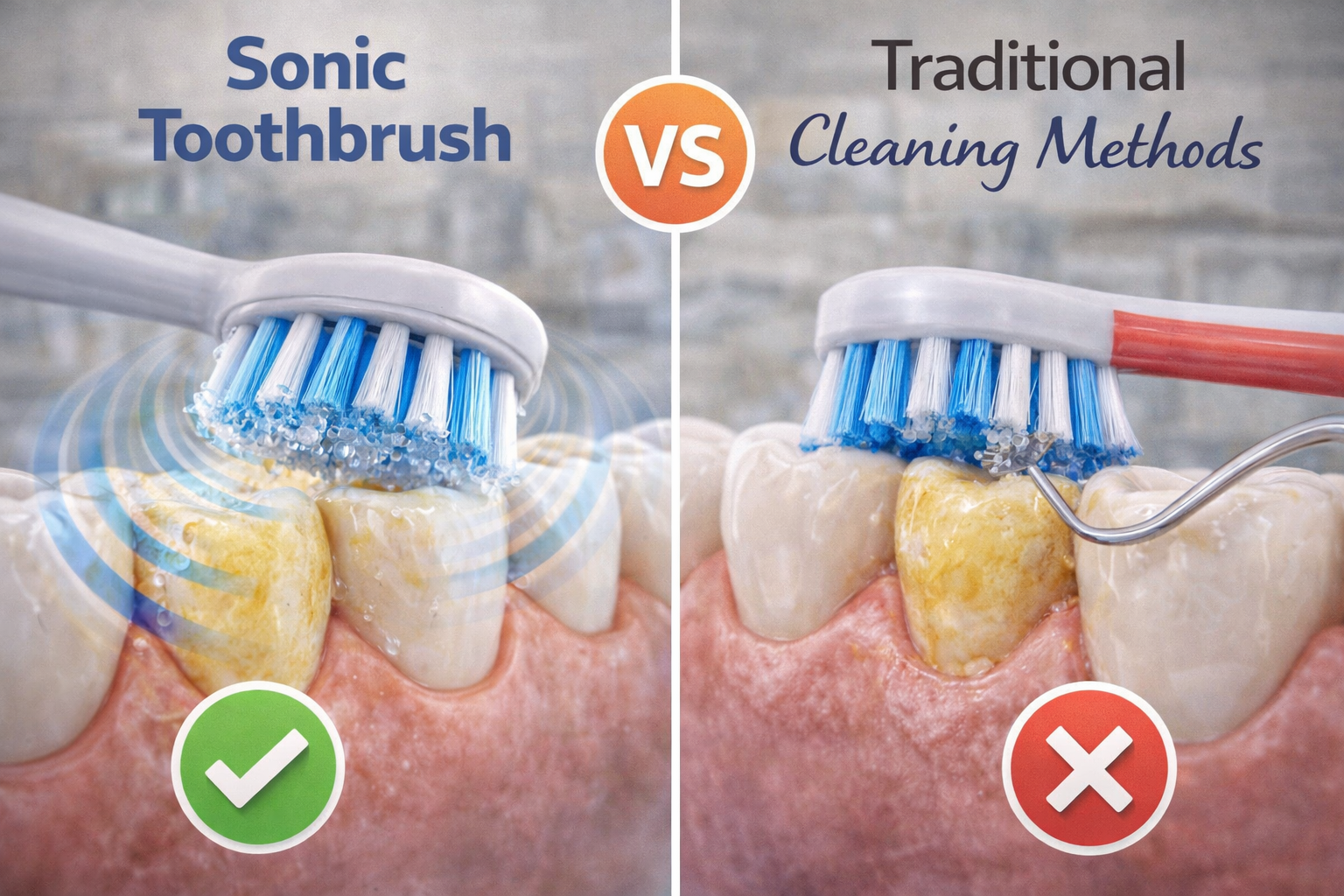
As I continued using the sonic toothbrush, I began to notice subtle changes. My teeth felt smoother, almost as if I had just come back from a professional cleaning. Areas that were previously hard to reach—especially along the gumline—seemed cleaner.
Curiosity led me to learn more about how sonic toothbrushes actually work.
Unlike traditional brushing, which relies entirely on manual motion, sonic toothbrushes use high-frequency vibrations—often tens of thousands of brush strokes per minute. These vibrations create a dynamic fluid action, meaning they can move toothpaste and water into spaces between teeth and along the gums, even without direct contact.
That idea fascinated me. It wasn’t just brushing the surface anymore; it was enhancing the entire cleaning process.
Effort vs Effectiveness
One of the most noticeable differences between the two methods is the level of effort required.
With a traditional toothbrush, everything depends on you—your energy, your focus, your technique. On days when you’re tired or distracted, your brushing often suffers. You might rush. You might miss spots. You might not brush long enough.
I started noticing how often I had been doing exactly that.
With a sonic toothbrush, the effort shifts. Instead of actively scrubbing, you guide the brush and let the technology handle the motion. Many models even include timers, ensuring you brush for the recommended two minutes, and alerts to help you divide your attention evenly across your mouth.
It felt like having a quiet coach guiding me through something I had previously done on autopilot.
Gum Health and Sensitivity
Another unexpected benefit I experienced was related to my gums. I had always been slightly aggressive with brushing—pressing too hard, thinking it would make my teeth cleaner. In reality, it was doing more harm than good.
After switching to a sonic toothbrush, I became more aware of pressure. Many devices are designed to reduce intensity if you press too hard, which helped me develop a gentler approach.
Over time, my gums felt healthier. Less irritation, less sensitivity. It was a subtle but meaningful change.
The Learning Curve
That said, switching to a sonic toothbrush wasn’t entirely seamless.
At first, the sensation took some getting used to. The vibrations tickled in a strange way, especially along the gums. There was also a bit of a mental adjustment—resisting the urge to scrub and instead letting the brush do its job.
It required patience. A shift in habit. But once I adapted, it became second nature.
Cost and Accessibility
Of course, one of the biggest differences between sonic and traditional toothbrushes is cost.
A manual toothbrush is inexpensive and widely accessible. You can replace it frequently without much thought. It’s simple, practical, and effective when used properly.
Sonic toothbrushes, on the other hand, come with a higher upfront cost. Replacement heads, charging, and maintenance add to the investment.
For some people, that difference matters. And it’s important to acknowledge that good oral hygiene doesn’t require expensive tools—it requires consistency and proper technique.
Still, I began to see the sonic toothbrush not just as a product, but as an investment in better habits.
A Shift in Perspective
What surprised me most about this journey wasn’t just the difference between two types of toothbrushes. It was how something so small could change the way I approached self-care.
Brushing my teeth was no longer a rushed obligation. It became a moment of pause—two minutes dedicated to doing something properly, intentionally.
The sonic toothbrush didn’t just clean my teeth differently; it changed my awareness. It made me more mindful of a routine I had long overlooked.
So, Which Is Better?
That question doesn’t have a one-size-fits-all answer.
Traditional toothbrushes are reliable, affordable, and effective when used correctly. For many people, they are more than enough.
Sonic toothbrushes, however, offer an enhanced experience—one that combines technology with technique to make cleaning more efficient and, in some cases, more thorough.
For me, the difference came down to consistency and ease. The sonic toothbrush helped me brush better without requiring perfect technique every time. It supported me in building a habit that felt both simple and effective.
Final Thoughts
Looking back, I never expected something as ordinary as a toothbrush to lead to such a meaningful change. It started with a simple question—Am I really cleaning my teeth as well as I could be?—and turned into a small but impactful shift in my daily routine.
Whether you choose a traditional toothbrush or a sonic one, the most important thing is not the tool itself, but how you use it. Awareness, consistency, and care matter far more than any feature or technology.
Still, if you ever find yourself standing in front of the mirror, wondering whether your routine could be better, it might be worth exploring something new.
Sometimes, even the smallest changes can leave the biggest impressions—quietly, gradually, and one brush at a time.