I didn’t always care about how I brushed my teeth. For the longest time, brushing felt like a chore I rushed through every morning before school and every night before bed. Two minutes felt like forever, and I was convinced that as long as I moved the brush around my mouth, I was doing enough. That belief stayed with me until one routine dental checkup quietly changed the way I thought about oral care.
The dentist didn’t say anything alarming, but there was a subtle shift in her tone when she mentioned plaque buildup along my gumline. “You’re brushing,” she said, “but you’re not really removing everything.” That sentence stuck with me longer than I expected. If I was brushing every day, how could there still be plaque left behind?
That question led me down a path of curiosity, and eventually, to my first sonic toothbrush.
The First Time I Noticed the Difference
I remember the first time I used a sonic toothbrush. It felt… strange. The vibrations were unlike anything I had experienced with a manual brush. At first, I wasn’t even sure if I was using it correctly. It didn’t require the same scrubbing motion I was used to. Instead, I simply guided it along my teeth, letting it do the work.
After just one use, I noticed something different. My teeth didn’t just feel clean—they felt smoother, almost polished. It was the kind of clean that lasted longer throughout the day. I found myself running my tongue across my teeth, surprised by how different they felt.
That small moment was the beginning of a bigger realization: not all brushing methods are created equal.
Understanding Plaque: The Invisible Problem
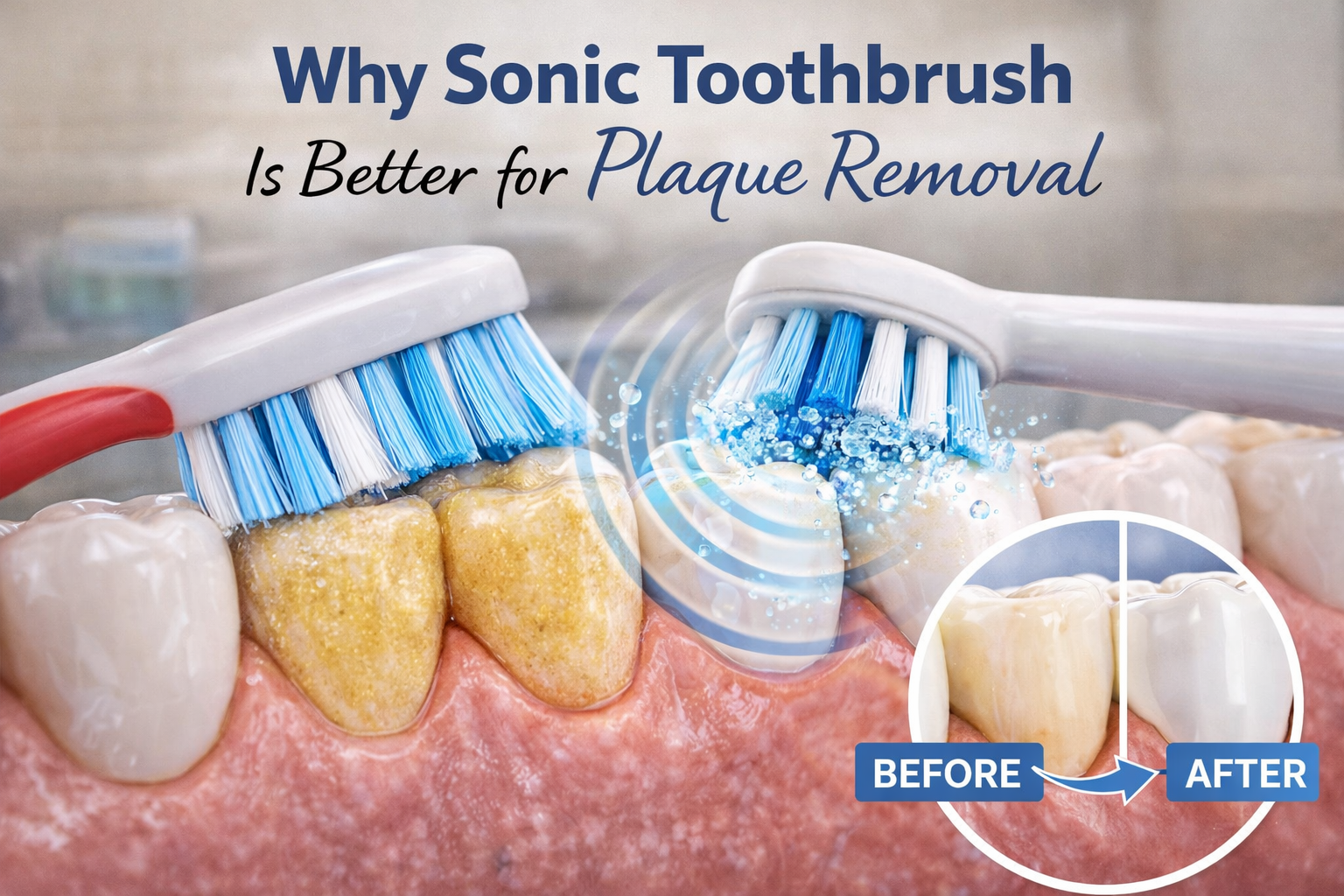
Before I go further, it’s important to understand what plaque actually is. Plaque is a soft, sticky film of bacteria that constantly forms on your teeth. It’s not something you can always see, but it’s always there. If not removed properly, it hardens into tartar and can lead to cavities, gum inflammation, and more serious dental issues.
When I used a manual toothbrush, I thought I was removing plaque effectively. But in reality, I was only removing part of it. The areas along the gumline and between teeth were often missed, no matter how carefully I brushed.
That’s where sonic toothbrushes truly shine.
How Sonic Toothbrushes Work (And Why It Matters)
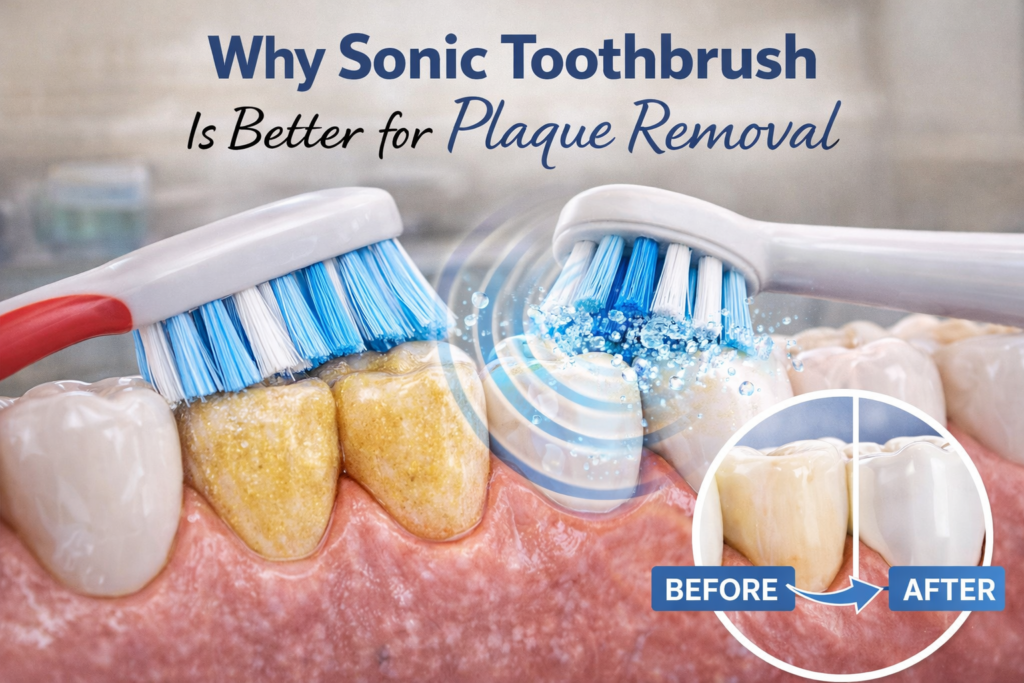
Unlike manual toothbrushes, sonic toothbrushes use high-frequency vibrations—often tens of thousands of brush strokes per minute. At first, that number sounded like marketing exaggeration to me. But once I experienced it firsthand, it made sense.
These rapid vibrations create something called “fluid dynamics.” Even though the bristles are physically touching the surface of your teeth, the movement also agitates the fluids (like saliva and toothpaste) in your mouth. This creates tiny currents that can reach areas the bristles don’t directly touch.
In simpler terms, a sonic toothbrush doesn’t just clean where it touches—it helps clean beyond where it touches.
That was a game-changer for me.
The Gumline: Where the Real Battle Happens
One of the biggest differences I noticed after switching to a sonic toothbrush was along my gumline. This area is where plaque tends to accumulate the most, and it’s also one of the hardest places to clean properly.
With a manual toothbrush, I had to angle the bristles just right and apply the correct pressure. Too hard, and I risked irritating my gums. Too soft, and I wouldn’t remove enough plaque.
With a sonic toothbrush, the process felt more forgiving. The vibrations did most of the work, allowing me to gently guide the brush without worrying about applying too much pressure. Over time, I noticed that my gums looked healthier and less irritated.
At my next dental visit, the difference was noticeable—not just to me, but to my dentist as well.
Consistency Without Effort
Another thing I didn’t expect was how much a sonic toothbrush would improve my consistency. Manual brushing depends heavily on technique, and honestly, most of us don’t maintain perfect technique every single day.
Sometimes we’re tired. Sometimes we’re in a hurry. And sometimes we just don’t pay attention.
A sonic toothbrush reduces that variability. Many models come with built-in timers that ensure you brush for the recommended two minutes. Some even pause briefly every 30 seconds to remind you to switch areas of your mouth.
At first, I thought these features were unnecessary. But over time, I realized they helped me build better habits without even thinking about it.
Less Pressure, Better Results
One mistake I used to make with manual brushing was applying too much pressure. I thought brushing harder meant cleaning better. In reality, it was doing more harm than good.
Brushing too hard can wear down enamel and irritate gums, leading to sensitivity over time. Sonic toothbrushes changed that for me. Because the brush does most of the work through vibrations, there’s no need to press hard.
Some sonic toothbrushes even include pressure sensors that alert you if you’re brushing too aggressively. This small feature can make a big difference in protecting your teeth and gums over the long term.
A Subtle but Lasting Confidence Boost
This might sound small, but it mattered more than I expected: my confidence improved.
When your teeth feel truly clean, you notice it. You smile more easily. You don’t second-guess whether your breath is fresh. It’s one of those quiet improvements that doesn’t demand attention but subtly enhances your daily life.
I didn’t switch to a sonic toothbrush for confidence—I switched because I was told I needed to remove plaque better. But that added benefit made the change feel even more worthwhile.
Is It Perfect? Not Exactly.
Of course, no toothbrush is perfect. A sonic toothbrush doesn’t replace flossing, and it doesn’t mean you can ignore other aspects of oral care. You still need to clean between your teeth and maintain regular dental checkups.
It also takes a little time to get used to the sensation. The vibrations can feel unusual at first, and there’s a short adjustment period. But once you get past that, it quickly becomes second nature.
And yes, sonic toothbrushes are generally more expensive than manual ones. That was something I hesitated about initially. But when I considered the long-term benefits—fewer dental issues, better gum health, and more effective plaque removal—it felt like a worthwhile investment.
Looking Back
If I think about my old brushing habits now, I realize how much I was missing. I wasn’t doing anything “wrong” in an obvious way, but I also wasn’t doing enough.
Switching to a sonic toothbrush didn’t just change how I brushed—it changed how I understood oral care. It made me realize that small improvements in daily habits can have a big impact over time.
Plaque is persistent. It forms every day, quietly and consistently. Fighting it requires the same kind of consistency—and the right tools.
Final Thoughts
If you’re wondering whether a sonic toothbrush is worth it for plaque removal, my experience says yes. Not because it’s trendy or high-tech, but because it genuinely improves how effectively you clean your teeth.
It reaches places manual brushing often misses. It reduces the effort needed to maintain good technique. And it helps build habits that are easier to stick with over time.
In the end, it’s not about brushing harder—it’s about brushing smarter.
And sometimes, that small shift makes all the difference.