I still remember the first time I held a sonic toothbrush in my hand. It felt strangely light, almost too simple to be as powerful as people claimed. Up until that point, brushing my teeth had always been a routine I rushed through—two minutes, sometimes less, with a manual toothbrush that had seen better days. It wasn’t that I didn’t care about dental health. I just didn’t think much about it. Like many people, I assumed brushing was brushing. As long as I did it twice a day, I was doing enough.
But that assumption quietly changed the day my dentist paused mid-exam and said, “You’re brushing, but you’re not cleaning effectively.” That sentence stuck with me. It wasn’t about effort—it was about technique and tools. That was when I first heard about sonic toothbrushes.
At first, I was skeptical. How different could it really be? It’s still a toothbrush, right? But curiosity got the better of me, and I decided to try one. What followed was a small but meaningful shift in how I understood oral care.
The First Experience: More Than Just Vibration
The first time I turned on a sonic toothbrush, I was caught off guard. It didn’t just buzz—it hummed with a kind of energy that felt precise and intentional. The movement was fast, almost invisible, yet I could feel it working in a way my manual brushing never had.
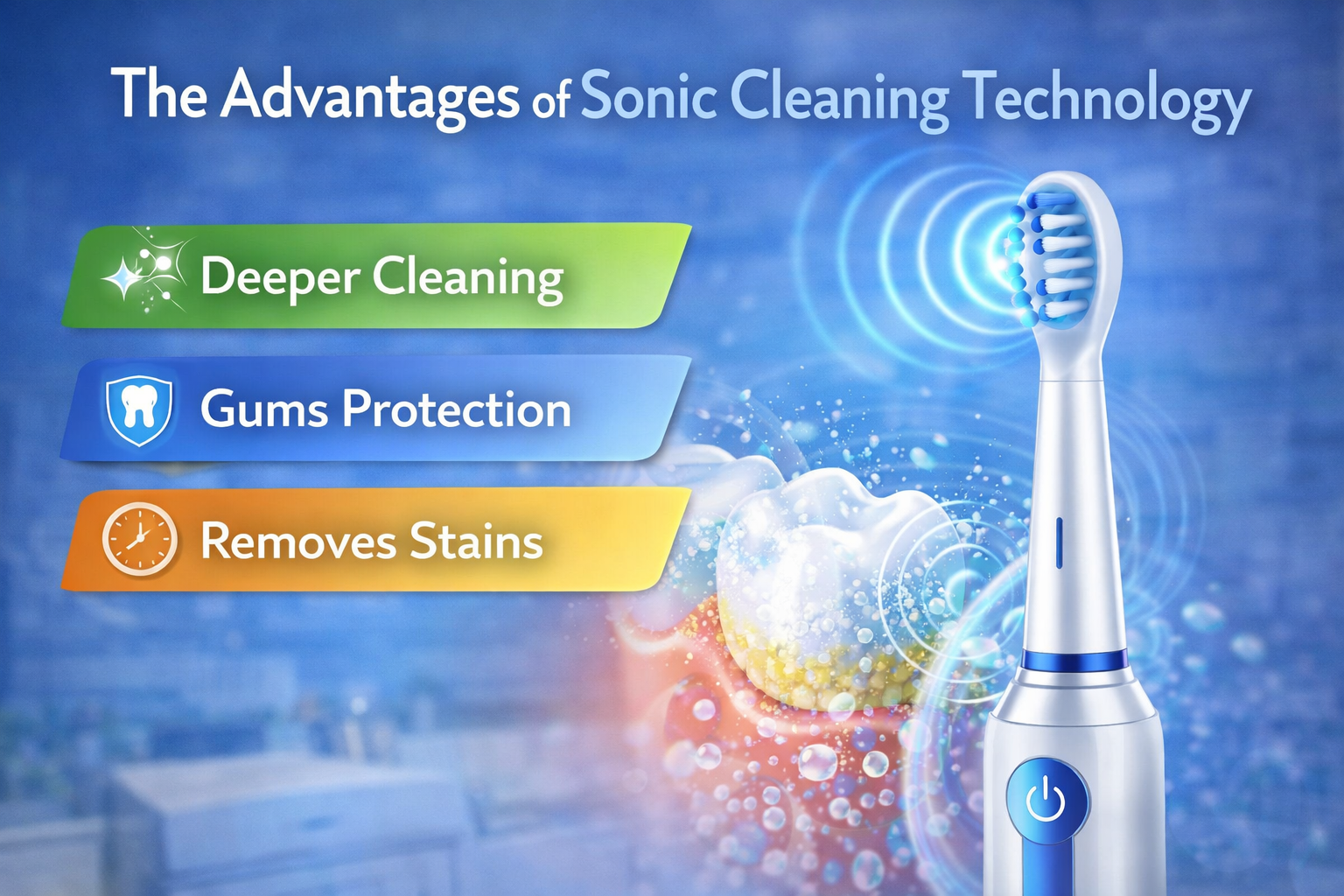
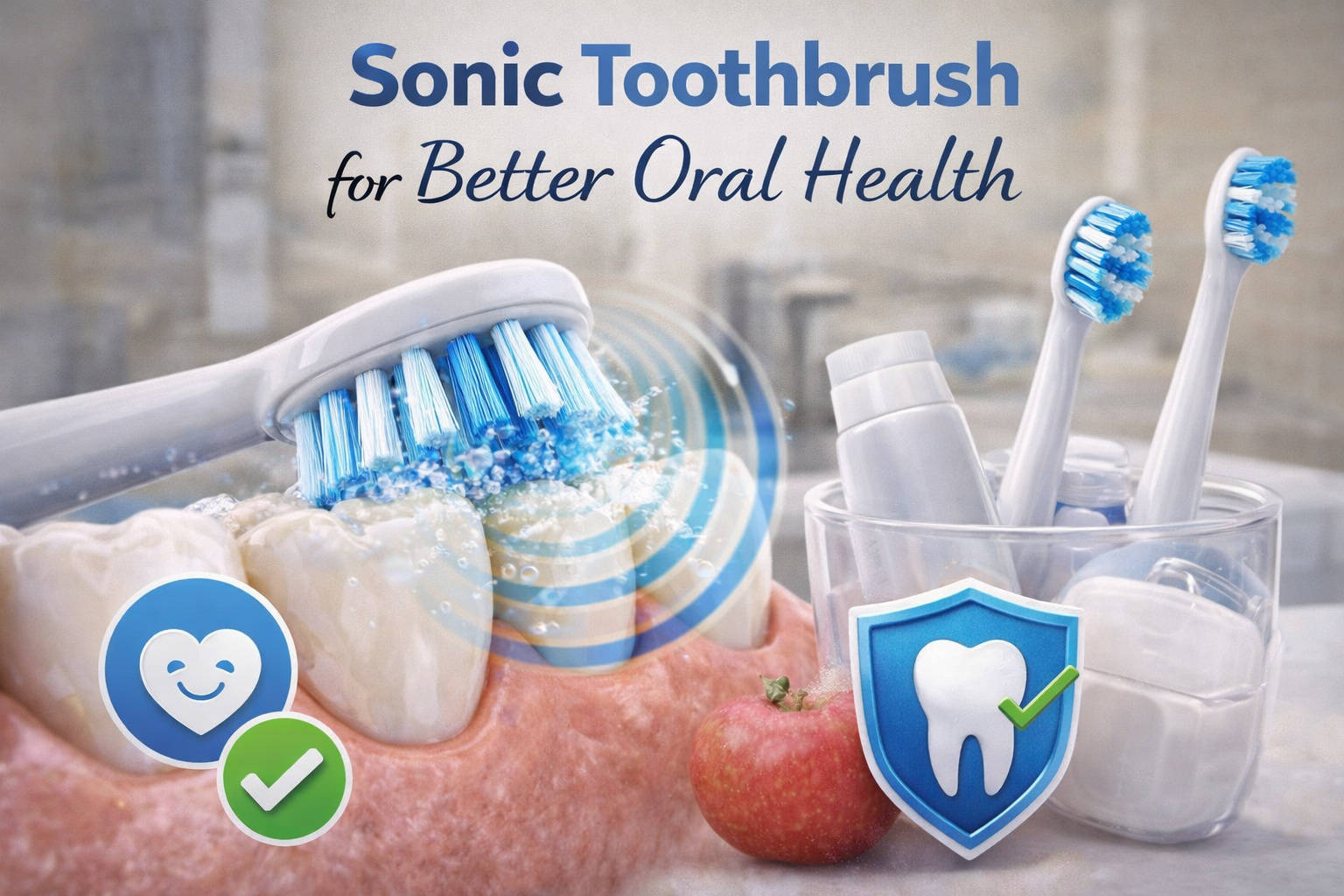
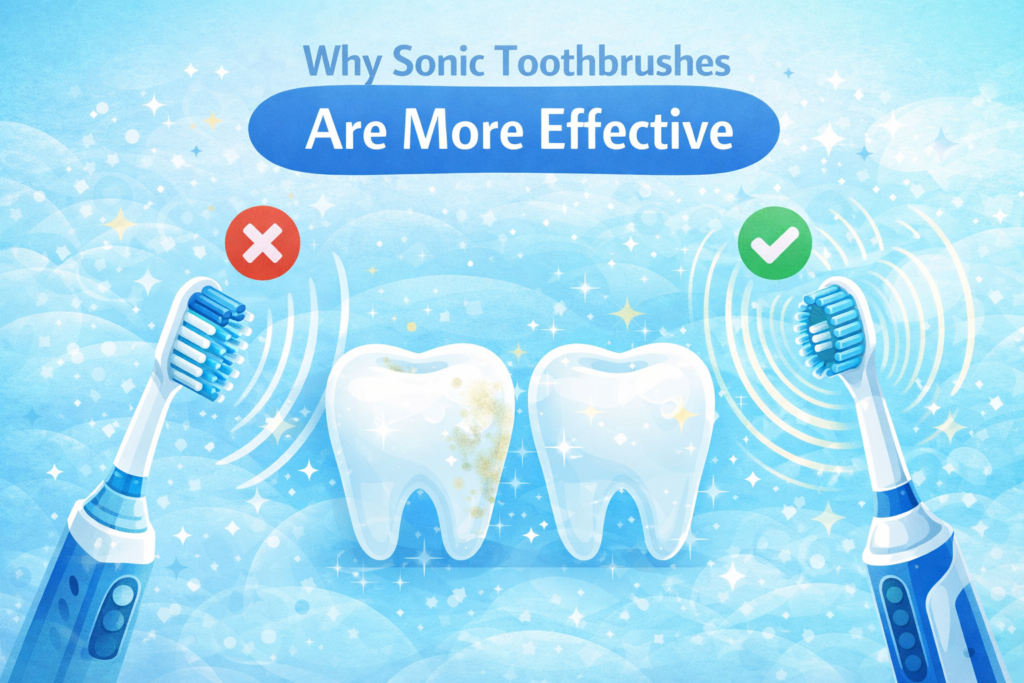
Unlike traditional electric toothbrushes that rely on rotating heads, sonic toothbrushes use high-frequency vibrations—often tens of thousands of strokes per minute. But what surprised me most wasn’t just the speed. It was how the brush seemed to clean beyond where the bristles physically touched.
There’s something called fluid dynamics at play here. The rapid vibrations create tiny waves in the mixture of toothpaste, saliva, and water. These waves can reach between teeth and along the gumline—areas that are often missed with manual brushing. It felt like the toothbrush was doing more than just scrubbing; it was actively flushing out debris.
And for the first time, my teeth actually felt… polished.
A Shift in Awareness
Over the next few weeks, brushing became less of a chore and more of a ritual. I found myself paying attention—moving the brush slowly, letting it do the work instead of aggressively scrubbing like I used to.
That’s one of the most underrated benefits of sonic toothbrushes: they change your behavior.
With a manual toothbrush, it’s easy to think that more pressure equals better cleaning. In reality, brushing too hard can damage enamel and irritate gums. Sonic toothbrushes, on the other hand, encourage a gentler approach. Many models even have pressure sensors that alert you if you’re brushing too hard.
It’s a subtle shift, but an important one. Instead of forcing the process, you learn to trust it.
Consistency Makes the Difference
Another thing I didn’t expect was how much more consistent my brushing became. Sonic toothbrushes often come with built-in timers, usually set to the dentist-recommended two minutes. Some even divide your mouth into quadrants, guiding you to spend equal time on each section.
Before, I would guess. Now, I knew.
That consistency adds up. It’s not just about brushing longer—it’s about brushing evenly and thoroughly. Over time, I noticed my gums looked healthier, less inflamed. Even my dental checkups became smoother, with fewer reminders about missed spots.
It wasn’t magic. It was just better habits, supported by better tools.
The Science Behind the Clean
What makes sonic toothbrushes truly effective isn’t just convenience—it’s the combination of speed, motion, and design.
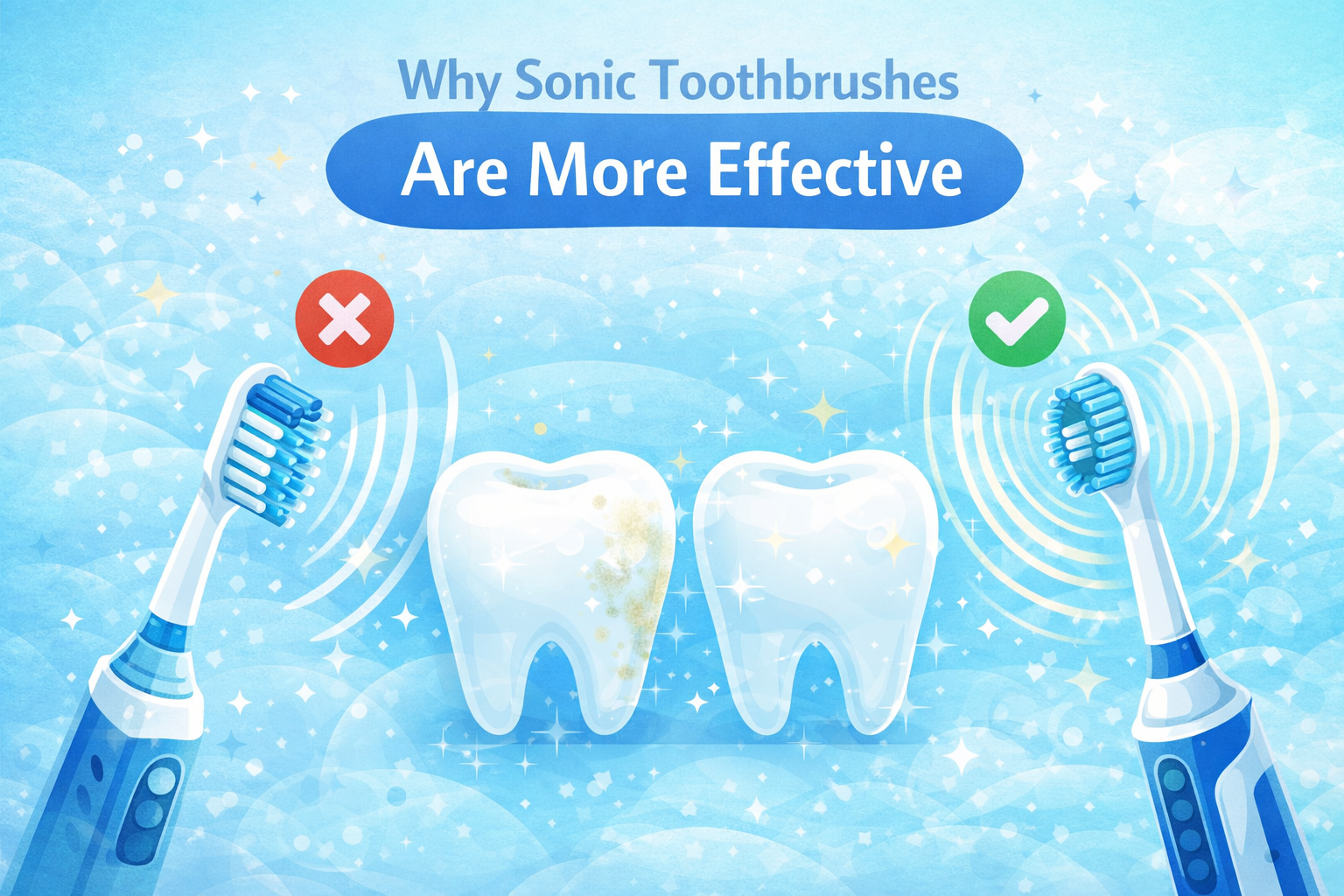
The high-frequency vibrations—often around 30,000 to 60,000 strokes per minute—break up plaque more efficiently than manual brushing. Plaque, after all, is sticky and stubborn. It doesn’t just come off with a quick swipe. It needs consistent disruption.
But beyond that, the sonic action helps disrupt bacterial colonies even in areas the bristles don’t directly touch. This is particularly important along the gumline and between teeth—places where cavities and gum disease often begin.
It’s a bit like the difference between rinsing something under still water versus running water. Movement matters.
A Gentler Approach to Gum Health
One of the biggest surprises for me was how much better my gums felt.
I used to experience occasional bleeding when brushing, especially if I hadn’t been as consistent as I should have been. I thought it was normal. But over time, with the sonic toothbrush, that changed.
Because sonic toothbrushes don’t rely on aggressive scrubbing, they’re generally gentler on gums. The vibrations do the cleaning, allowing you to guide the brush lightly along your teeth and gumline.
Healthier gums don’t just look better—they’re essential for overall oral health. Gum disease can develop quietly, without obvious pain at first. Using a tool that supports gentle but effective cleaning can make a big difference over time.
It’s Not Just About Technology
What I realized after a few months is that the effectiveness of a sonic toothbrush isn’t just about the technology itself. It’s about how that technology reshapes your habits.
It encourages you to slow down.
It teaches you to use less pressure.
It helps you stay consistent.
In a way, it becomes less about brushing your teeth and more about taking care of yourself in a small, daily moment.
Addressing the Skepticism
Of course, not everyone is immediately convinced. I’ve had friends say, “Is it really worth the price?” And it’s a fair question.
Sonic toothbrushes are more expensive than manual ones. But when you think about the potential benefits—fewer dental issues, healthier gums, and a more effective cleaning routine—it starts to feel less like a luxury and more like an investment.
That said, a toothbrush alone won’t solve everything. Technique still matters. So does consistency. Flossing, diet, and regular dental visits all play a role.
A sonic toothbrush isn’t a shortcut—it’s a support system.
The Small Changes That Add Up
Looking back, switching to a sonic toothbrush didn’t feel like a big life change at the time. It was just a small upgrade, a simple decision.
But over time, those small changes added up.
I became more mindful.
My dental checkups improved.
And perhaps most importantly, I started to see oral care not as an obligation, but as a form of self-respect.
Final Thoughts
If you had asked me a year ago whether a toothbrush could make a meaningful difference, I probably would have shrugged. Now, I see it differently.
Sonic toothbrushes are more effective not just because they’re faster or more advanced, but because they align with how our habits actually work. They guide us, support us, and quietly improve the way we care for ourselves.
And sometimes, that’s all it takes—a small shift, a better tool, and a willingness to try something new.
Because in the end, effectiveness isn’t just about power. It’s about consistency, awareness, and the little choices we make every day.