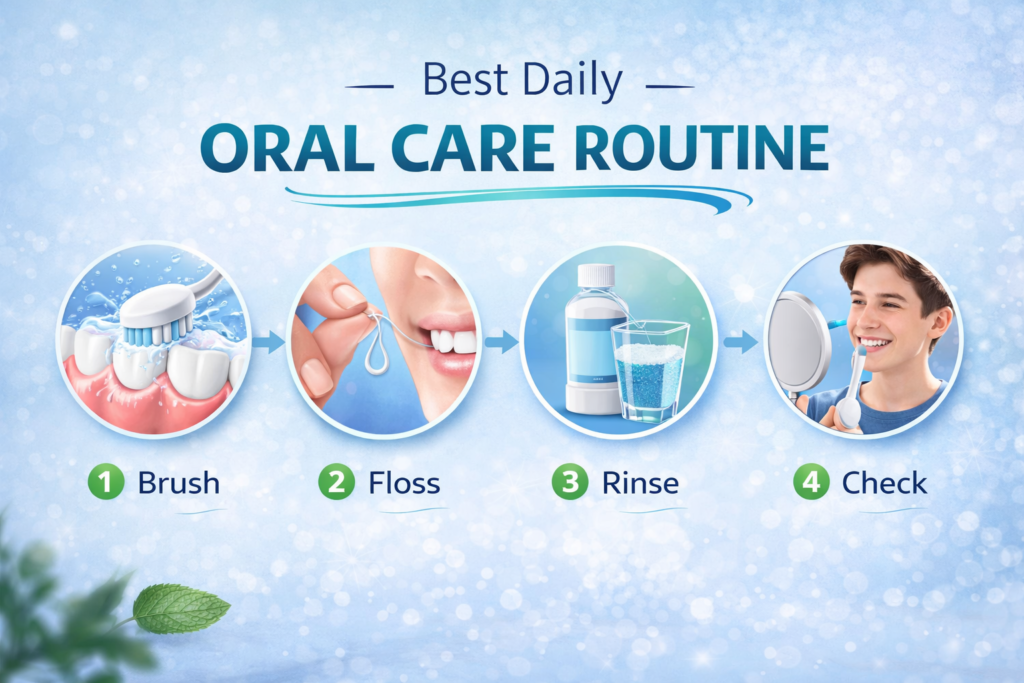
I didn’t always think much about my oral care routine.
For the longest time, it was just something squeezed between waking up late and rushing out the door, or the last thing I did before collapsing into bed with my phone still glowing in my hand. Brush, rinse, done. It felt like a task, not a ritual. Something automatic, almost forgettable.
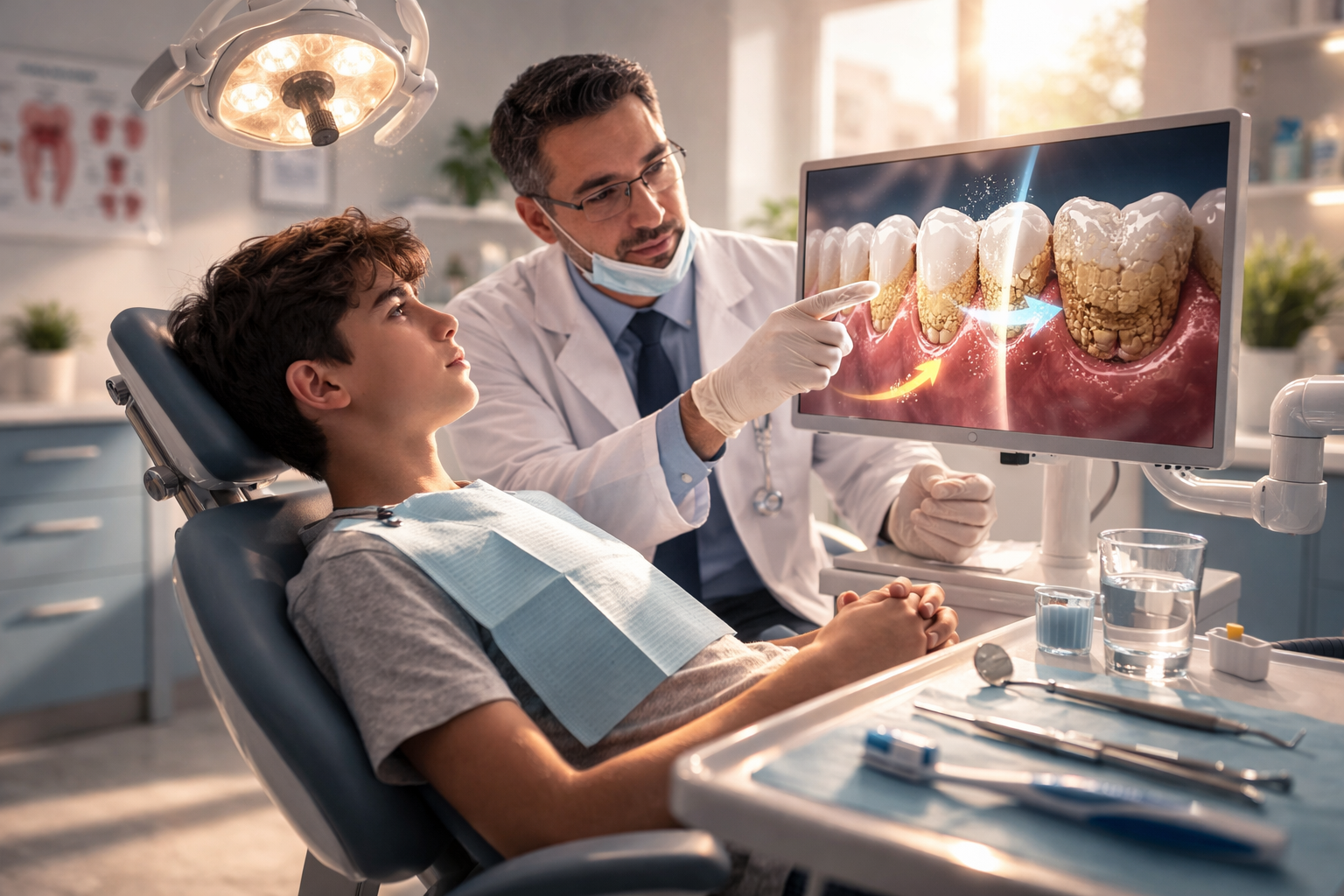
That changed the day my dentist asked me—not what I use, but how I go through my day.
It caught me off guard.
She didn’t start with teeth. She started with mornings.
Mornings Begin Before the Toothbrush
“Do you drink water when you wake up?” she asked.
I paused. Sometimes. Not always.
She nodded, as if that answer was more important than anything I could say about toothpaste or floss.
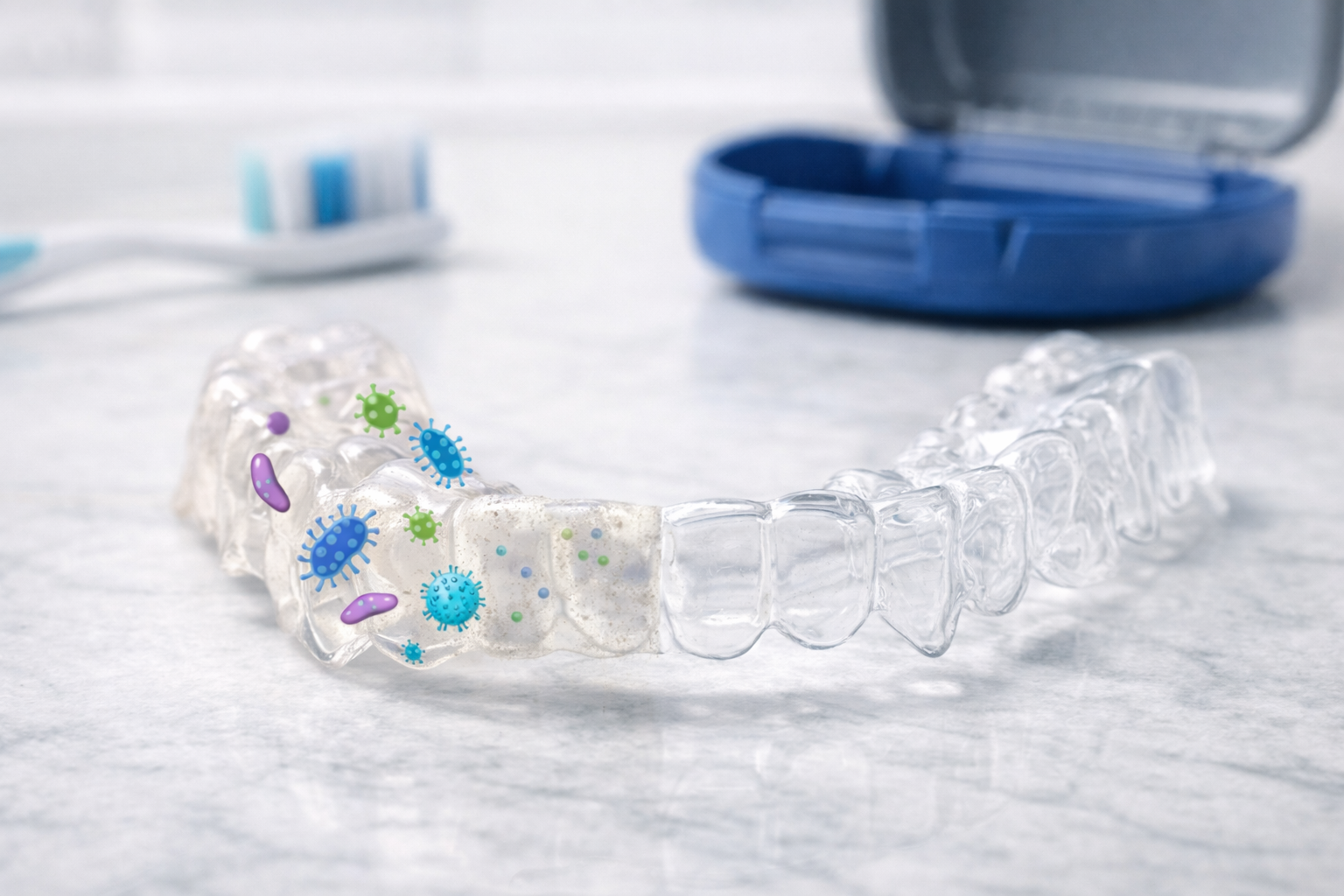
Overnight, your mouth becomes a quiet space for bacteria to grow. Saliva production slows down while you sleep, which means your mouth loses one of its natural defenses. That’s why your breath doesn’t feel fresh in the morning—it’s not just about smell; it’s about imbalance.
Drinking water first thing in the morning helps reset that balance. It wakes up your system, rinses away some of that buildup, and prepares your mouth for the day.
It sounded simple. Almost too simple. But that was the pattern I started noticing—good oral care isn’t complicated, it’s just often overlooked.
Brushing Before or After Breakfast?
This was one of those questions I’d never seriously considered.
I always brushed after breakfast. It just felt logical—clean your teeth after eating.
But my dentist gave me a different perspective.
If you brush before breakfast, you’re removing the bacteria that built up overnight. You’re also creating a protective layer (thanks to fluoride in toothpaste) that can help shield your enamel from acids in your food.
If you brush after breakfast, especially right away, you might actually be brushing when your enamel is slightly weakened—especially if your meal includes acidic foods like fruit or juice.
So what’s the better option?
Either brush before breakfast, or wait about 30 minutes after eating before brushing.
That one shift made my mornings feel more intentional. Less rushed, more thought-through.
The Quiet Importance of Flossing
I used to treat flossing like an optional bonus—something you do when you’re feeling extra responsible.
Apparently, that mindset is incredibly common.
“Brushing cleans about 60% of your tooth surfaces,” my dentist explained. “Flossing takes care of the rest.”
That number stuck with me.
It meant that every time I skipped flossing, I was leaving nearly half the job unfinished.
Flossing isn’t just about removing food stuck between your teeth. It disrupts plaque in areas your toothbrush simply can’t reach. And if plaque stays there long enough, it hardens into tartar—which can’t be removed at home.
At first, flossing felt awkward and time-consuming. But like most habits, it became easier once it became routine.
Now, it feels strange to skip it—like leaving the house without your phone. You can do it, but something feels off.
Midday Moments You Don’t Think About
Most of us don’t brush our teeth in the middle of the day. And that’s okay.
But that doesn’t mean oral care stops between morning and night.
I started noticing small habits that made a difference:
- Rinsing my mouth with water after meals
- Avoiding constant snacking, which keeps acids active in the mouth
- Being mindful of sugary drinks that linger longer than we realize
It wasn’t about being perfect. It was about being aware.
Even chewing sugar-free gum can help stimulate saliva, which naturally protects your teeth. It’s one of those tiny adjustments that doesn’t feel like effort, but still supports your oral health.
Nighttime Is Where It Really Counts
If there’s one part of the daily routine that matters most, it’s what you do before bed.
At night, your mouth goes back into that low-saliva state. Whatever is left on your teeth stays there longer, giving bacteria more time to do damage.
That’s why your nighttime routine needs to be thorough.
Brushing at night isn’t optional. It’s essential.
And not the rushed, half-asleep version either.
This is when you slow down. You take your time. You brush properly—angles, gentle pressure, full coverage. You floss. You make sure your mouth is as clean as possible before you sleep.
Because for the next several hours, your body won’t be able to clean it for you.
Mouthwash: Helpful or Overhyped?
I used to think mouthwash was just for fresh breath.
You swish it around, feel that intense minty burn, and assume it’s doing something important.
But like everything else, it depends on how you use it.
Mouthwash can help reduce bacteria, strengthen enamel (if it contains fluoride), and reach areas brushing might miss. But it’s not a replacement for brushing or flossing.
It’s more like a supporting step.
Some dentists even recommend using it at a different time than brushing—so you don’t rinse away the fluoride from your toothpaste immediately.
Again, it comes back to intention. Understanding why you’re doing each step, not just doing it out of habit.
The Tools You Use Matter More Than You Think
At one point, I thought all toothbrushes were basically the same.
Pick one, use it, replace it eventually.
But small details make a difference.
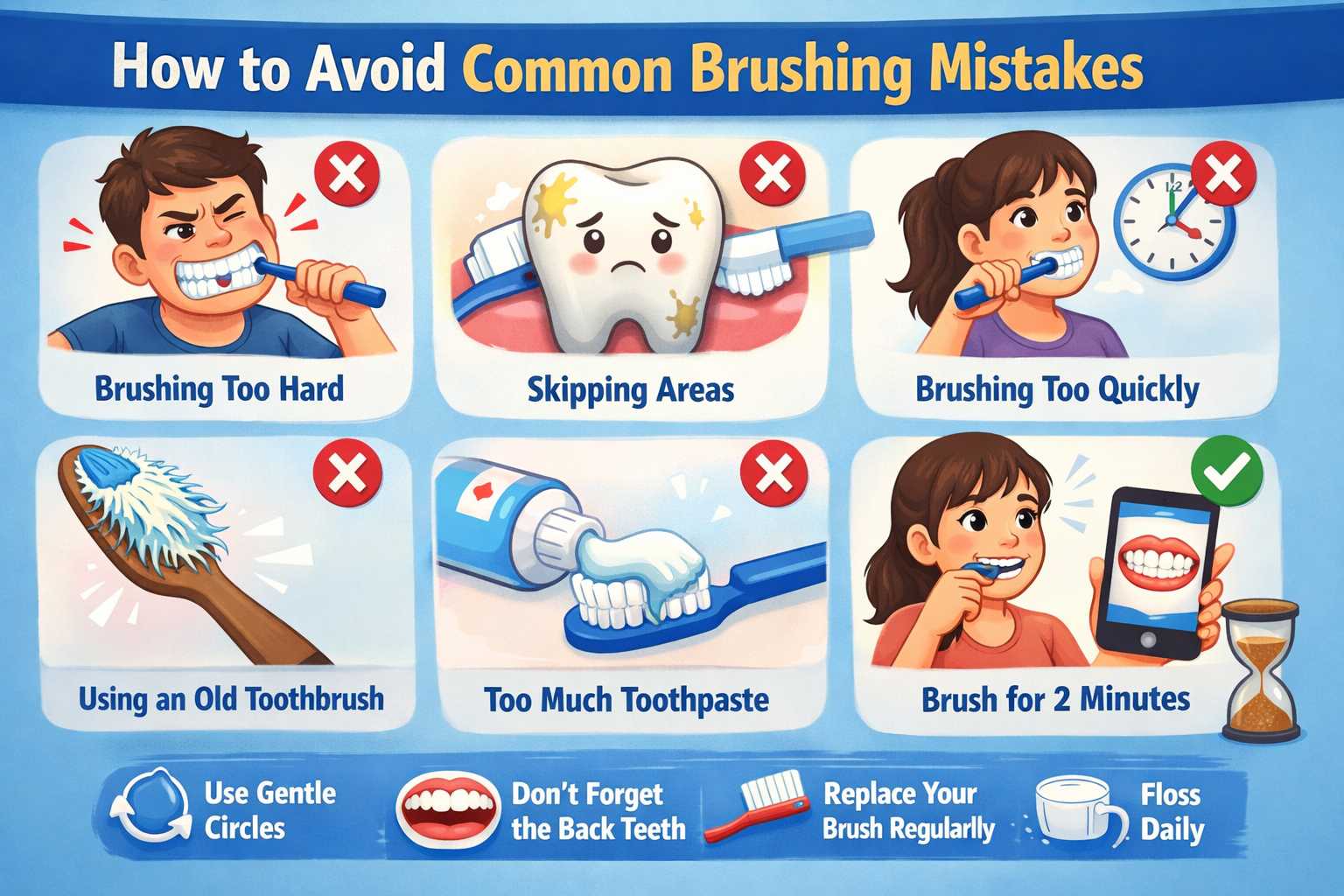
A soft-bristled toothbrush is usually best—it’s gentle on your gums and effective at cleaning without causing damage. Hard bristles might feel like they’re doing more, but they can actually wear down enamel over time.
Replacing your toothbrush every three months (or sooner if the bristles are worn) is another thing people forget.
Using an old, frayed toothbrush is like trying to clean with a worn-out brush—it just doesn’t work as well.
It’s Not About Perfection
One thing I realized over time is that a “perfect” oral care routine doesn’t exist.
There will be nights when you’re too tired. Mornings when you’re rushing. Days when you forget.
That doesn’t mean your routine is failing.
What matters is consistency over time.
It’s the small things you do most days that shape your oral health—not the occasional slip-ups.
A Routine That Feels Like Yours
What changed for me wasn’t just the steps—it was the way I thought about them.
My routine stopped feeling like a checklist and started feeling like a rhythm.
Wake up, drink water, brush with intention. Go through the day with a bit more awareness. End the night with care, not haste.
It became less about following rules and more about understanding why those rules exist.
And once you understand that, the routine starts to make sense.
What “Best” Really Means
When people ask for the “best” daily oral care routine, they’re usually looking for a fixed answer. A list. A formula.
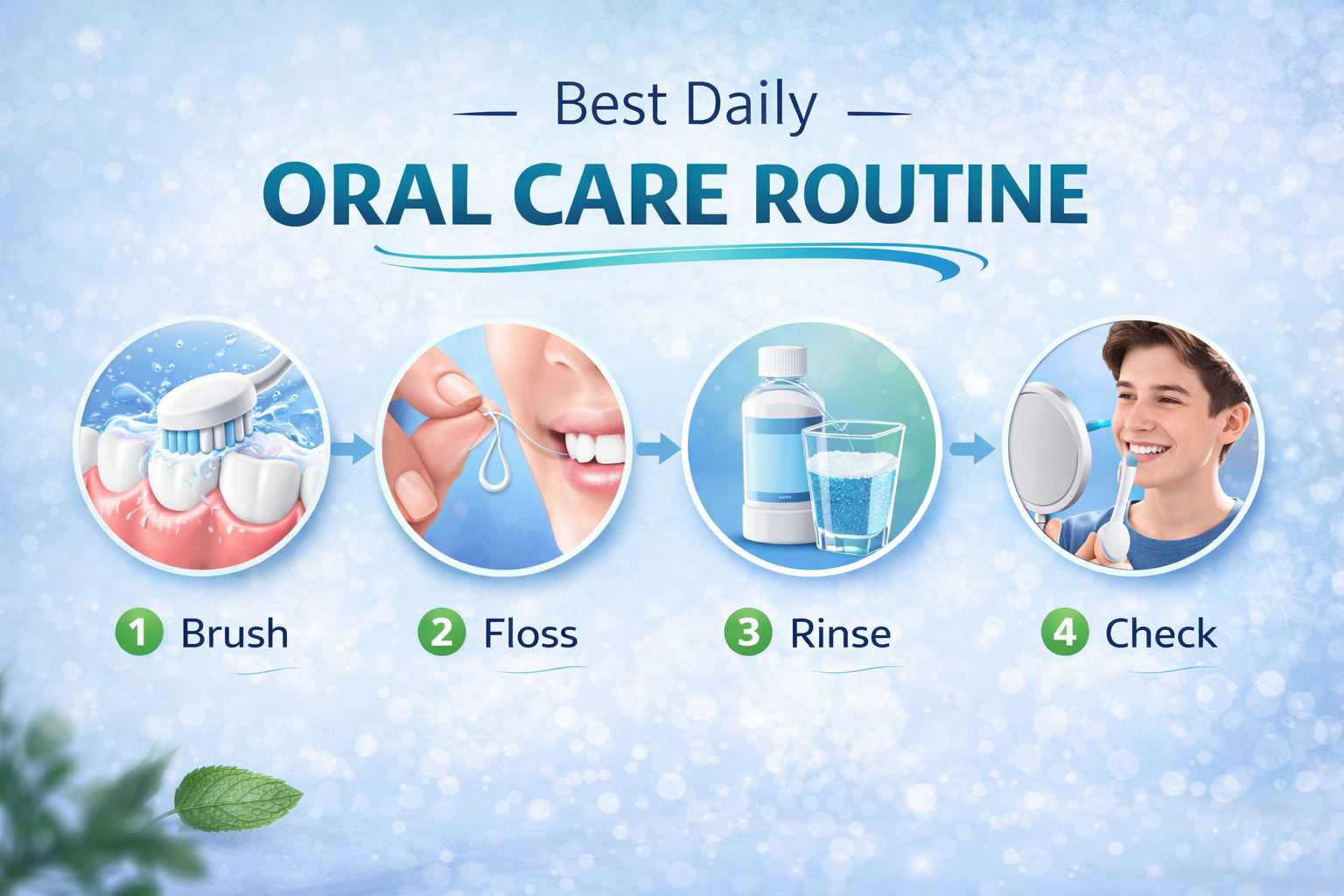
But the truth is, the best routine is one you can stick to—and one that you understand.
It includes:
- Brushing twice a day, properly
- Flossing daily
- Being mindful of what and when you eat
- Taking your time at night
- Using tools that support your needs
Simple things. Done consistently.
I still think back to that question sometimes.
Not “What do you use?” but “How do you go through your day?”
Because in the end, your oral care routine isn’t just about your teeth.
It’s about your habits. Your attention. The small choices you make when no one’s watching.
And maybe that’s why it matters more than we think.