I didn’t switch to an electric toothbrush because I wanted to.
I switched because my dentist paused mid-checkup, leaned back slightly, and gave me that look—the one that’s not quite disappointment, but not exactly approval either.
“You’re brushing,” she said, “but you’re not cleaning as well as you think.”
That sentence stuck with me longer than it should have.
I had always believed I was doing enough. Twice a day, sometimes three if I felt particularly disciplined. A decent toothbrush, a strong mint toothpaste, and a rushed two minutes before heading out the door. It felt like responsibility. It felt like effort.
But apparently, it wasn’t enough.
That’s when she brought up electric toothbrushes—not as a luxury, not as a trend, but as a tool that quietly fixes the mistakes we don’t realize we’re making.
The Illusion of “Good Enough”
There’s something comforting about routine. When you do something every day, it starts to feel automatic—and anything automatic feels correct.
That’s how I thought about brushing.
But the truth is, brushing manually leaves a lot of room for inconsistency. Some days you’re tired, so you rush. Some days you press too hard. Some areas get more attention than others, and some are almost completely ignored.
An electric toothbrush doesn’t rely on your mood, your energy, or your patience. It brings consistency into something most of us treat casually.
And consistency, as my dentist explained, is what really protects your teeth over time.
Letting the Brush Do the Work
The first time I used an electric toothbrush, it felt… strange.
It buzzed softly in my hand, almost like it had a mind of its own. I instinctively started scrubbing the way I always had, moving it quickly across my teeth.
Then I remembered what my dentist said:
“Don’t scrub. Just guide.”
That was harder than it sounded.
We’re used to thinking effort equals effectiveness. But with an electric toothbrush, too much effort can actually get in the way. The brush head is already moving—rotating, vibrating, or oscillating thousands of times per minute. Your job isn’t to add force; it’s to guide it slowly across each surface.
Once I stopped trying to control everything, the experience changed. It felt less like a chore and more like letting a tool do what it was designed to do.
The Pressure Problem
If there’s one mistake I didn’t realize I was making, it was brushing too hard.
It never felt aggressive. In fact, it felt productive—like I was being thorough. But over time, that pressure can wear down enamel and irritate gums.
Many electric toothbrushes come with pressure sensors. The first time mine lit up red, I was surprised.
“Too hard,” it seemed to say.
I adjusted. It lit up again.
It took a few days before I realized just how much pressure I had been using without noticing. That tiny feature—something I would have dismissed as unnecessary—ended up teaching me more about brushing than I expected.
It wasn’t just correcting me. It was retraining me.
Time Feels Different When You’re Paying Attention
Two minutes doesn’t sound like a long time—until you’re standing in front of a mirror doing nothing but brushing your teeth.
With a manual toothbrush, I used to guess. Maybe 30 seconds here, a quick pass there, done.
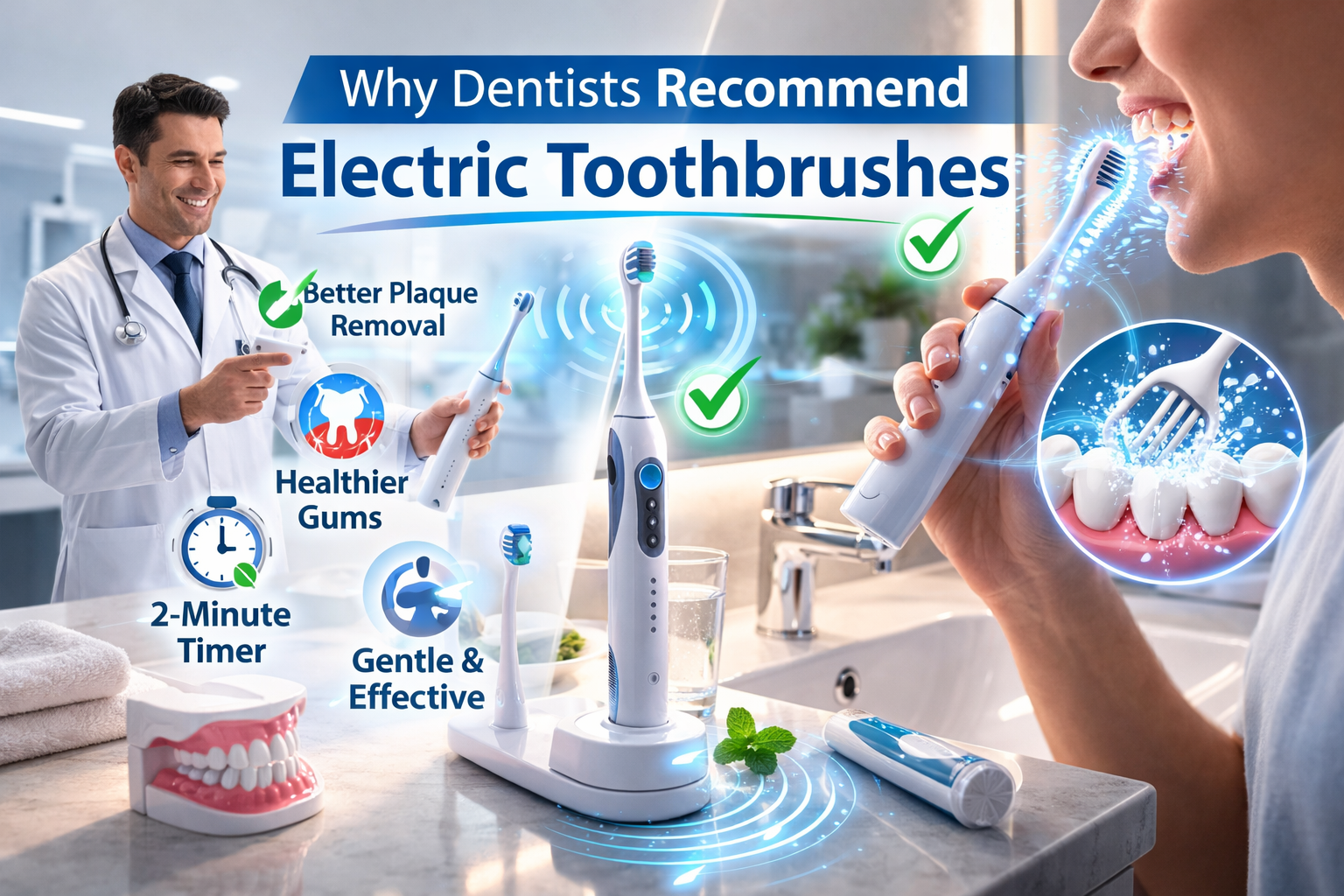
Electric toothbrushes often come with built-in timers, sometimes even dividing your mouth into quadrants. Every 30 seconds, there’s a subtle pause or vibration change, reminding you to move on.
At first, it felt unnecessary.
Then I realized something uncomfortable: I had never actually brushed for a full two minutes in my life.
Not consistently, at least.
Those guided intervals forced me to slow down. To give equal attention to each part of my mouth. To stop treating brushing like something to finish quickly and start treating it like something worth doing properly.
The Places You Forget
There are parts of your mouth that are easy to ignore. The back molars. The inner surfaces. The areas near the gumline.
Not because you don’t care—but because they’re harder to reach, harder to see, and easier to forget.
Electric toothbrushes, with their smaller, round heads (in many designs), make it easier to reach those areas. The motion does the detailed work, getting into spaces that manual brushing often misses.
I noticed it gradually.
That feeling of “just brushed” started to feel more complete. Cleaner, but not in a harsh way—more like everything had actually been taken care of, not just the visible parts.
It’s Not About Fancy—It’s About Function
Before all this, I thought electric toothbrushes were mostly about convenience or aesthetics. Something people bought when they wanted to upgrade their routine.
But dentists don’t recommend them because they look modern or feel high-tech.
They recommend them because they reduce human error.
That’s really what it comes down to.
We’re inconsistent. We rush. We use too much pressure. We miss spots. We get distracted.
An electric toothbrush quietly compensates for those habits.
It doesn’t make you perfect—but it makes it easier to be consistent.
Are They Necessary?
This was the question I asked before leaving the clinic.
“Do I have to switch?”
My dentist smiled slightly.
“No,” she said. “You can brush perfectly with a manual toothbrush.”
There was a pause.
“But most people don’t.”
That answer felt honest in a way I appreciated.
Electric toothbrushes aren’t magic. They don’t replace good habits. But they support them. They guide you, correct you, and sometimes slow you down just enough to do things right.
The Unexpected Shift
A few weeks after switching, I went back for a follow-up.
Same chair. Same smell of mint and clean surfaces. Same quiet moment while the dentist checked my teeth.
This time, though, she nodded.
“Better,” she said.
That was it. Just one word.
But it meant something.
Not because I had bought a new tool—but because I had changed how I approached something small and everyday.
What Dentists Really Mean
When dentists recommend electric toothbrushes, they’re not saying manual brushing doesn’t work.
They’re saying that most of us live busy, distracted lives. We don’t always have the time—or attention—to perfect small habits.
Electric toothbrushes act like a quiet assistant. They keep time. They manage pressure. They improve technique without demanding too much from you.
And over months, even years, those small improvements add up.
A Small Change That Stays With You
Now, brushing feels different.
Not dramatic. Not complicated. Just… more intentional.
I don’t rush as much. I don’t press as hard. I notice the rhythm, the timing, the way each part of my mouth gets its turn.
It’s still the same routine I’ve had since I was a kid.
But it doesn’t feel automatic anymore.
And maybe that’s the real reason dentists recommend electric toothbrushes—not just because they clean better, but because they help you pay attention.
And sometimes, paying attention is the difference between doing something… and doing it well.