I didn’t plan on changing the way I brushed my teeth.
At least, not in any meaningful way.
It started, like most small changes do, with curiosity. I was standing in the dental care aisle, staring at rows of toothbrushes that all promised the same thing—cleaner teeth, healthier gums, brighter smiles. But one section stood out: sleek handles, minimalist design, and a quiet but confident label—sonic technology.
I picked one up, turned it over in my hand, and wondered what made it so different. Was it just marketing? Or was there actually something happening beneath the surface—something I couldn’t see but could feel?
A week later, I found out.
The First Time Feels… Strange
The first time I used a sonic toothbrush, I almost laughed.
It didn’t feel like brushing.
There was no aggressive scrubbing, no harsh back-and-forth motion. Instead, there was this gentle, almost ticklish vibration—like the brush was doing something on its own while I just guided it along.
For a moment, I thought, There’s no way this is enough.
It felt too easy.
But when I rinsed and looked in the mirror, something was different. My teeth felt… smoother. Not just clean, but polished in a way I hadn’t experienced before.
That was the moment I realized: maybe effective doesn’t always feel intense.
What “Sonic” Actually Means
Before that experience, I assumed “sonic” was just a fancy word to justify a higher price.
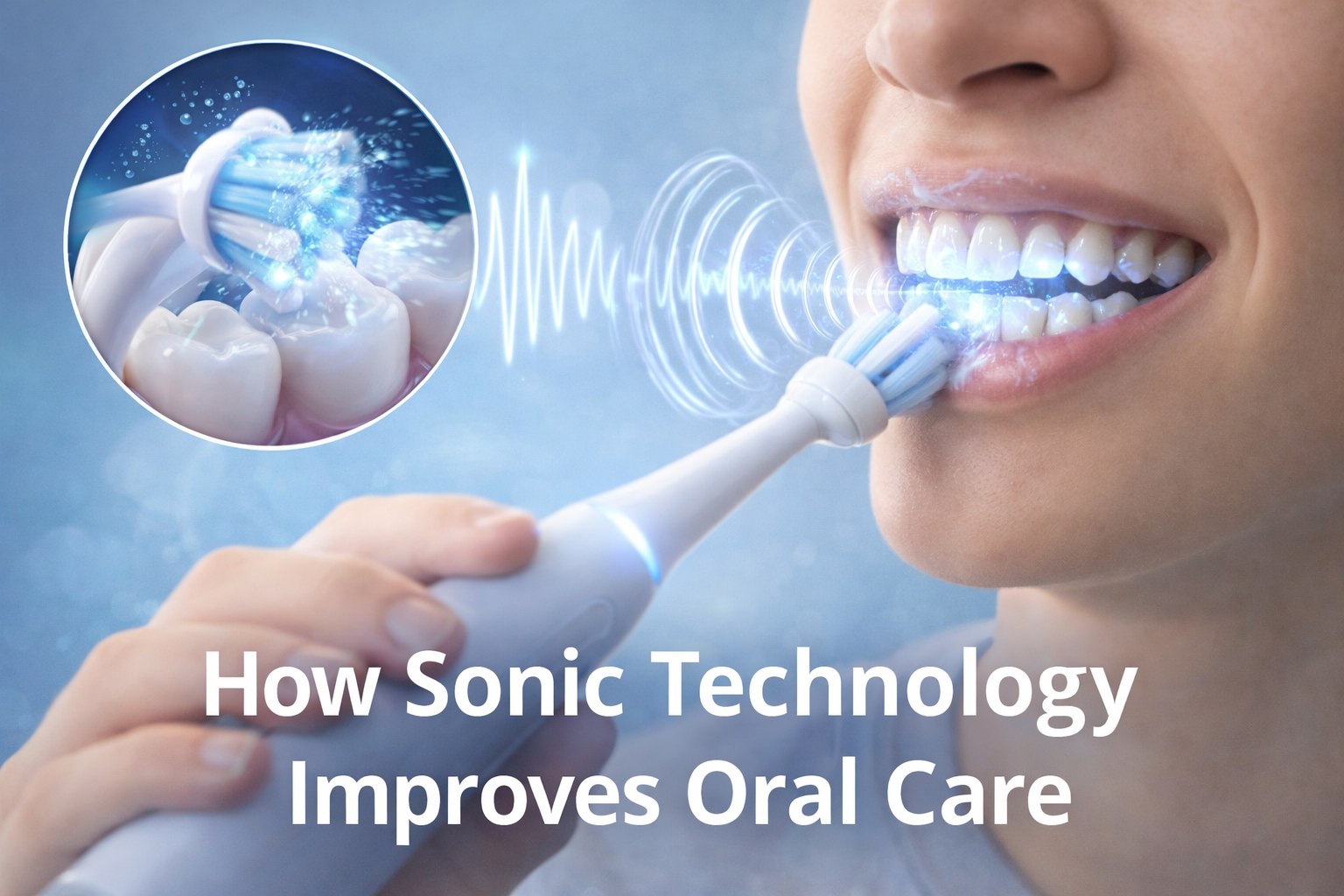
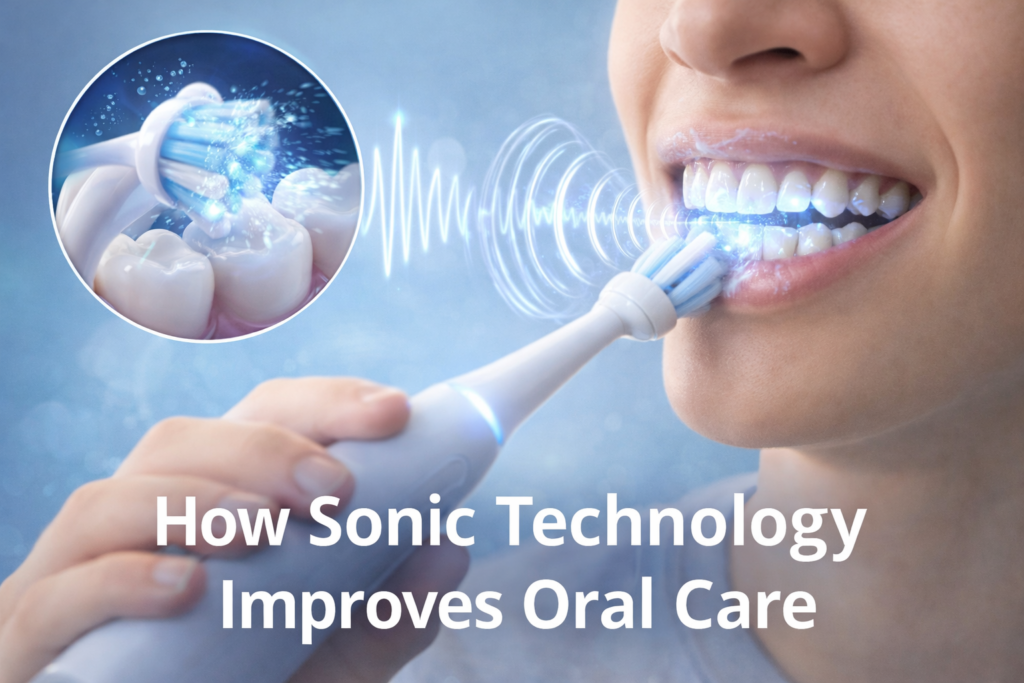
But it turns out, it refers to the speed of the brush’s vibrations—tens of thousands of movements per minute.
Not rotations. Not scrubbing. Vibrations.
These rapid movements create something subtle but powerful: fluid dynamics. When the brush vibrates at high speed, it agitates the mixture of toothpaste, water, and saliva in your mouth, creating tiny waves that can reach areas your bristles don’t physically touch.
It’s like cleaning beyond the surface—getting into the spaces between teeth and along the gumline without needing to force the brush in.
And that’s where things start to get interesting.
Cleaning Without Pressure
If there’s one thing dentists seem to repeat over and over, it’s this: most people brush too hard.
I used to be one of them.
There’s something instinctive about applying pressure, like you’re trying to “erase” plaque. But with sonic technology, pressure becomes almost unnecessary.
In fact, pressing too hard can reduce the effectiveness of the brush. Some models even warn you—either with a subtle change in vibration or a light indicator—when you’re pushing more than you should.
It’s a strange adjustment at first, learning to trust the brush instead of your own force.
But over time, it changes your habits. You become gentler, more precise, more aware.
And your gums notice the difference.
The Gumline: Where the Real Work Happens
One thing I hadn’t paid much attention to before was my gumline.
Teeth get all the attention—they’re what we see, what we show when we smile. But gums are just as important, if not more.
That thin line where your teeth meet your gums is where plaque tends to build up quietly. It’s also where early signs of gum issues begin.
Sonic toothbrushes are particularly effective in this area—not because they push harder, but because they move faster and more consistently than a human hand ever could.
By angling the brush slightly toward the gumline and letting the vibrations do the work, you can clean that delicate area without irritating it.
Over time, this can lead to healthier gums—less redness, less sensitivity, and a stronger foundation for your teeth.
The Built-In Discipline
One unexpected benefit of switching to a sonic toothbrush wasn’t physical—it was behavioral.
Most sonic brushes come with built-in timers. Some pause briefly every 30 seconds, reminding you to move to a different section of your mouth.
At first, it felt unnecessary. I thought I already brushed long enough.
But then I realized something: I had been rushing.
Without realizing it, I was spending more time on the areas I could see and less on the ones I couldn’t. The timer forced me to slow down, to be more balanced, to treat each part of my mouth with equal attention.
It turned brushing into something more structured—less of a habit, more of a routine with intention.
A Subtle Shift in Awareness
After a few weeks of using a sonic toothbrush, I noticed something I didn’t expect.
I was paying more attention.
Not just to brushing, but to my oral health overall. I noticed when my gums felt different. I became more aware of areas I used to ignore. I even started being more mindful about when I brushed—waiting after meals, choosing the right toothpaste, staying consistent.
It wasn’t that the toothbrush was doing everything for me.
It was that it made me more engaged in the process.
Is It Really That Different?
This is the question I kept coming back to.
Is sonic technology truly better, or just different?
The honest answer is: it depends on how you were brushing before.
If you already had excellent technique with a manual toothbrush—gentle pressure, proper angles, consistent timing—you might not see a dramatic change.
But for most people, brushing is imperfect. It’s rushed, uneven, sometimes too aggressive, sometimes too light.
Sonic toothbrushes help correct those inconsistencies. They don’t just clean—they guide.
And that guidance can make a noticeable difference over time.
The Quiet Confidence of Better Habits
There’s something subtle but satisfying about knowing you’re taking better care of yourself—even in small ways.
Brushing your teeth isn’t glamorous. It’s not something you show off or talk about often.
But it’s one of those daily rituals that quietly shapes your health.
Switching to a sonic toothbrush didn’t transform my life overnight. There was no dramatic before-and-after moment.
Instead, it was gradual.
A cleaner feeling that lasted longer. Less sensitivity in certain areas. A sense that I wasn’t just going through the motions anymore.
What Dentists See That We Don’t
During my next dental visit, something unexpected happened.
There was less to talk about.
No warnings about gum irritation. No reminders to be gentler. Just a simple nod and a “keep doing what you’re doing.”
It might not sound like much, but if you’ve ever sat in that chair wondering what they’ll find, you know how reassuring that can be.
Dentists notice patterns over time. They see the effects of habits—good and bad.
And while they might not always ask what kind of toothbrush you use, they can often tell when something has changed.
Technology That Supports, Not Replaces
One important thing I’ve learned through all of this is that technology doesn’t replace responsibility.
A sonic toothbrush won’t fix everything. It won’t make up for skipping brushing, ignoring flossing, or neglecting regular checkups.
But it can support better habits.
It can make good technique easier to maintain. It can reduce the margin of error. It can turn something routine into something more effective.
And sometimes, that’s enough.
Looking Back at a Simple Decision
If you had told me a year ago that I’d be thinking this much about toothbrushes, I probably would have laughed.
It’s such a small part of daily life.
But that’s exactly why it matters.
The smallest habits, repeated every day, have the biggest impact over time.
Switching to sonic technology wasn’t about chasing the latest trend. It was about understanding something I had taken for granted—and choosing to do it better.
So, Is It Worth It?
If you’re wondering whether sonic technology is worth trying, the answer isn’t complicated.
It’s not about needing it.
It’s about what it can help you improve.
If you’ve ever rushed through brushing, pressed too hard, missed certain areas, or just felt like you could be doing more—then yes, it might be worth exploring.
Not because it’s advanced.
But because it’s thoughtful.
And maybe that’s the real difference.
It doesn’t just change how you brush.
It changes how you think about brushing.