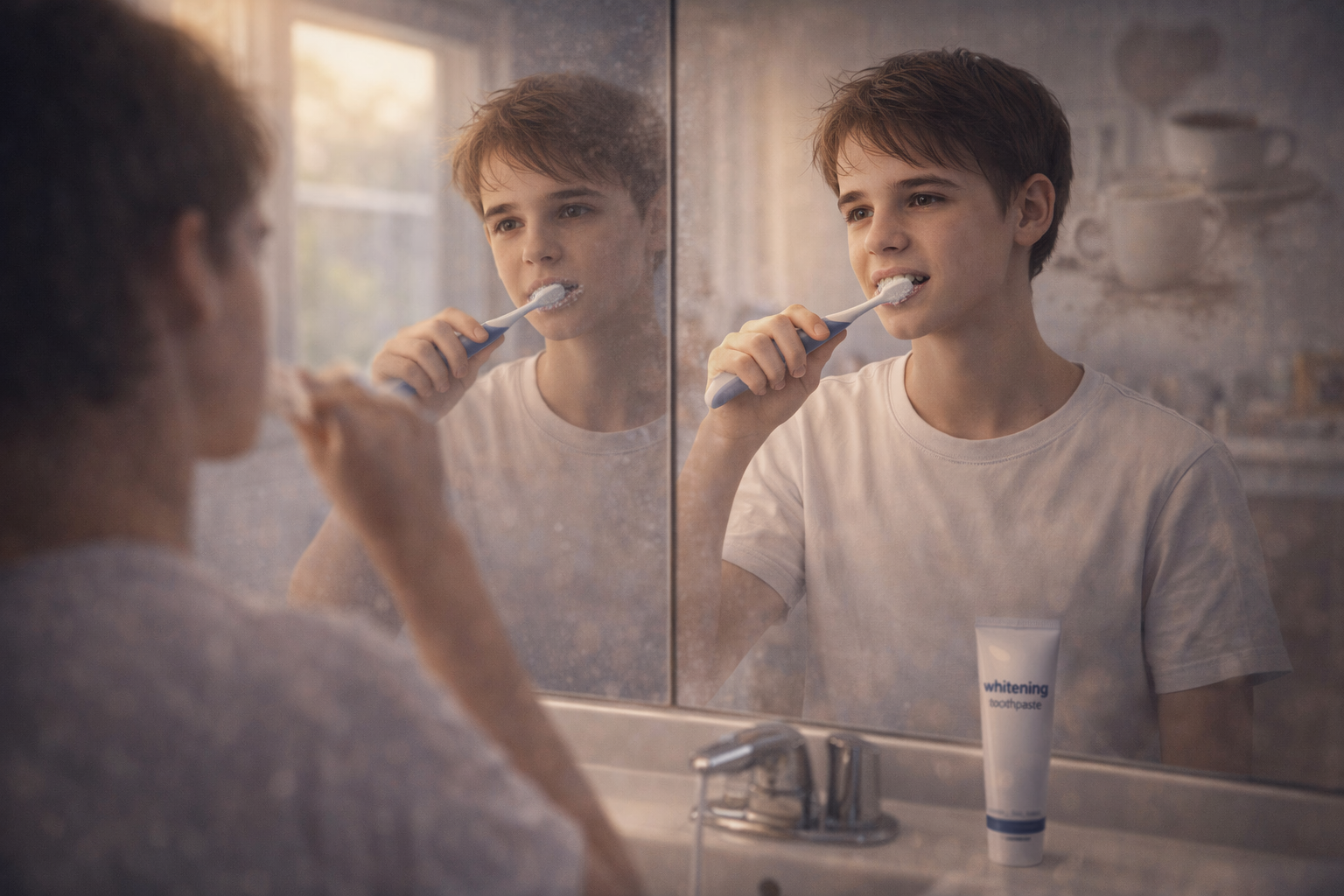
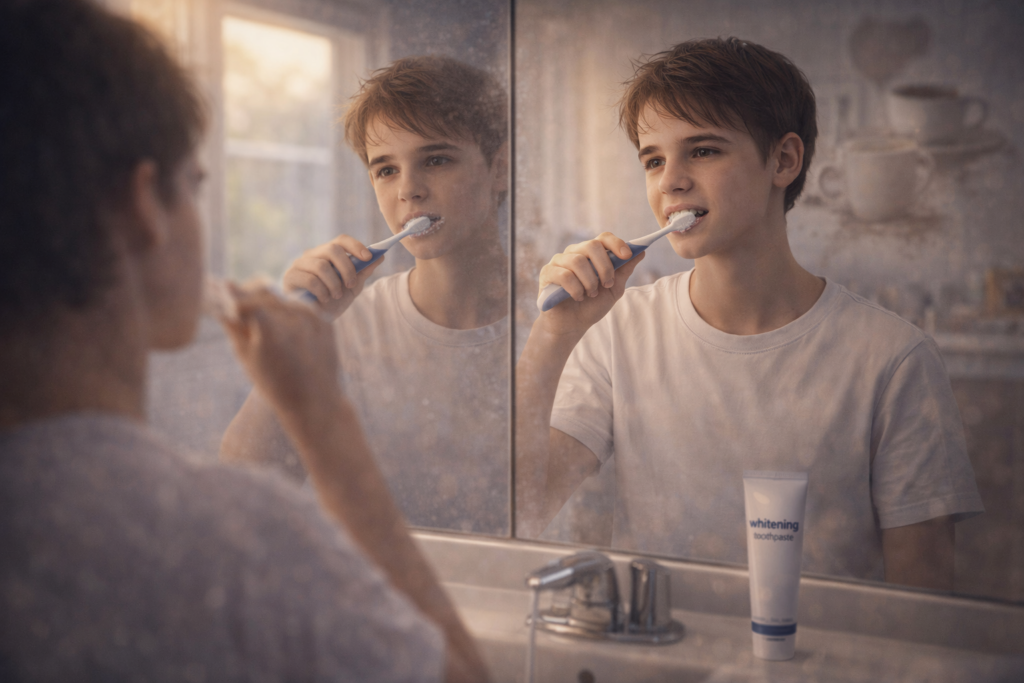
I didn’t start thinking seriously about whitening toothpaste until the day I caught my reflection in a café window.
It wasn’t dramatic. No sudden music shift, no slow-motion realization. Just a quick glance while waiting for my drink—and a quiet thought that lingered longer than I expected:
My teeth don’t look as white as I thought they did.
It’s strange how something so small can stick with you. I had always brushed regularly, never skipped dental visits, and still—there it was. Not yellow exactly, just… not bright. Not the kind of smile you see in ads or on perfectly filtered social media posts.
So I did what most people do. I went to the store and stood in front of a wall of toothpaste.
“Whitening.”
“Advanced whitening.”
“Extra whitening.”
“Instant whitening.”
Every tube promised something slightly different, yet somehow the same.
I picked one—more expensive than my usual—and convinced myself it would make a difference.
The First Few Weeks: Expectation vs. Reality
The first thing I noticed wasn’t the color of my teeth. It was the taste. Sharper. Colder. Almost like it was trying a little too hard to feel effective.
I brushed more carefully than usual, maybe even longer than two minutes, as if effort alone would speed up results.
Days passed. Then weeks.
I kept checking—bathroom mirror, phone camera, even that same café window. But if there was a change, it was subtle enough that I couldn’t tell if it was real or just wishful thinking.
That’s when curiosity turned into skepticism.
Was whitening toothpaste actually doing anything?
What “Whitening” Really Means
At my next dental visit, I decided to ask.
My dentist didn’t dismiss the question. In fact, she seemed almost relieved I asked.
“Whitening toothpaste can help,” she said, “but not in the way most people think.”
That sentence stayed with me.
Because I realized—I didn’t actually know what I thought it did. I just assumed “whitening” meant turning my teeth noticeably whiter.
But here’s the reality:
Most whitening toothpastes don’t change the natural color of your teeth. They don’t bleach your enamel or dramatically shift shade.
What they do is remove surface stains.
Coffee, tea, soda, certain foods—these leave behind stains over time. Whitening toothpaste uses mild abrasives or specific ingredients to polish those away.
So if your teeth are slightly dull from everyday habits, you might see improvement.
But if you’re expecting a dramatic, movie-star transformation… that’s not really what these products are designed for.
The Subtle Illusion of Progress
Once I understood that, everything made more sense.
Whitening toothpaste isn’t about transformation—it’s about maintenance.
It’s like cleaning a window. If the glass is dirty, wiping it makes a noticeable difference. But if the glass is already clean, wiping it again won’t suddenly make it clearer than it naturally is.
And that’s where expectations can get tricky.
Because when something is labeled “whitening,” it’s easy to expect visible, fast results. But in reality, the changes are often gradual and limited.
That doesn’t mean it’s useless. It just means it’s often misunderstood.
The Ingredient Conversation Nobody Has
I started paying more attention to what was actually inside the toothpaste.
Before, I chose based on branding or promises. Now, I was reading labels—even if I didn’t fully understand them at first.
My dentist explained that many whitening toothpastes rely on gentle abrasives to scrub away stains. Others include small amounts of chemical agents that help break down discoloration.
But here’s the catch:
If a toothpaste is too abrasive, it can slowly wear down enamel over time.
And enamel, once lost, doesn’t come back.
That realization shifted my perspective again. I wasn’t just choosing a product for appearance—I was making a long-term decision about my teeth’s health.
Balance became the key. Effective, but not aggressive.
The Sensitivity Trade-Off
After a few weeks of consistent use, I noticed something else.
Cold drinks felt… colder.
Not painfully so, but enough to make me pause.
At first, I ignored it. But then I remembered something my dentist had mentioned—some whitening products can increase sensitivity, especially if used too frequently.
It made sense. If you’re constantly polishing or slightly altering the outer layer of your teeth, even gently, it can affect how your teeth respond to temperature.
That doesn’t happen to everyone, but it’s common enough that it’s worth paying attention to.
I ended up alternating—using whitening toothpaste once a day instead of twice. The sensitivity faded, and everything felt more balanced.
Marketing vs. Reality
Standing in that toothpaste aisle again a few weeks later felt different.
I noticed how much the packaging focused on instant results. Words like “bright,” “radiant,” “visible change in days.”
But now I understood: those claims often refer to surface-level improvements, not deep whitening.
It’s not exactly misleading—but it’s definitely simplified.
Because real dental changes usually take time, consistency, and sometimes professional treatment.
Toothpaste alone can only do so much.
So… Is It Worth It?
That’s the question I kept coming back to.
And the answer isn’t a simple yes or no.
If your goal is to remove everyday stains and keep your teeth looking clean and polished, whitening toothpaste can absolutely help.
If your goal is to significantly change the natural shade of your teeth, you might end up disappointed.
It’s all about expectations.
For me, the biggest shift wasn’t in my teeth—it was in how I thought about them.
The Moment That Changed My Perspective
A few months after that first café reflection, I found myself in a similar situation.
Same kind of setting. Same casual glance at my reflection.
But this time, my reaction was different.
I didn’t immediately analyze or compare. I just noticed—and moved on.
Because somewhere along the way, the focus had shifted from chasing a perfect shade of white to simply taking better care of what I already had.
And oddly enough, that made the biggest difference.
What Dentists Wish You Understood About Whitening
If I had to sum up everything I learned, it would be this:
Whitening toothpaste isn’t magic—but it isn’t pointless either.
It’s a tool. A small part of a bigger picture.
Dentists don’t expect it to transform your smile overnight. They see it as one piece of a routine that includes proper brushing, regular check-ups, and understanding your own habits.
And maybe that’s the real takeaway.
We often look for quick fixes—something simple that delivers visible results fast.
But when it comes to your teeth, most meaningful changes happen slowly.
Quietly.
Almost unnoticed at first.
A Different Kind of Confidence
These days, I still use whitening toothpaste—but not with the same expectations.
I don’t check the mirror as often, searching for changes.
I don’t compare my smile to edited images or unrealistic standards.
Instead, I focus on consistency. Gentle brushing. Paying attention. Making small adjustments when something feels off.
And somehow, that feels more sustainable.
More real.
The Truth, After All
The truth about whitening toothpaste isn’t that it works—or that it doesn’t.
It’s that it works within limits.
And once you understand those limits, you stop expecting it to do everything… and start appreciating what it actually does.
Because sometimes, the goal isn’t to have the whitest smile in the room.
It’s to have a healthy one you don’t have to think twice about.
And that, in its own quiet way, might matter more than we realize.