I still remember the morning when I realized my retainer needed more care than I had been giving it.
It had been a few weeks since my braces came off. After years of orthodontic appointments, tightened wires, and careful brushing, I was finally enjoying my new smile. The retainer I wore every night seemed like a small final step in the process.
At first, my routine was simple. I would wake up, take out the retainer, rinse it quickly under the faucet, and place it back in its case. It seemed clean enough. After all, it was clear plastic—how dirty could it really get?
But one morning, something changed.
When I opened the retainer case, I noticed a faint smell. It wasn’t overwhelming, but it was noticeable. When I looked at the retainer closely, it also seemed slightly cloudy.
That was the moment I realized something many retainer wearers eventually learn: a retainer needs a proper daily cleaning routine.
Just like brushing your teeth or flossing, cleaning your retainer should become a simple habit you follow every day. Over time, I discovered a routine that works well and keeps the retainer fresh, clear, and comfortable to wear.
If you wear a retainer, here is the best daily cleaning routine dentists often recommend.
Why Daily Retainer Cleaning Is So Important
A retainer might look clean, but it spends hours inside your mouth every day. During that time, it comes into contact with several things:
- Saliva
- Oral bacteria
- Food particles
- Plaque
- Minerals from saliva
All of these substances can stick to the surface of the retainer.
Dentists often compare retainers to teeth in one important way: both collect bacteria over time. If plaque forms on your retainer and isn’t removed regularly, it can lead to unpleasant smells, cloudy buildup, and even oral health problems.
Daily cleaning prevents bacteria from accumulating and keeps the retainer hygienic.
It also keeps the appliance looking clear and new.
Step 1: Remove Your Retainer Carefully
The cleaning routine begins the moment you remove your retainer.
Most people remove their retainer in the morning after wearing it overnight. It’s best to handle it gently to avoid bending or damaging it.
Use both hands if possible and carefully lift it away from your teeth.
Once it’s out, you’ll notice that the retainer may be coated with saliva. This is normal, but it’s also why cleaning should happen immediately.
Letting saliva dry on the retainer can make bacteria and residue harder to remove.
Step 2: Rinse It Immediately
The next step is simple but very important.
Hold the retainer under lukewarm running water and rinse both sides thoroughly. This helps remove loose debris, saliva, and bacteria.
One important thing to remember is to avoid hot water.
Hot water can warp plastic retainers and change their shape. Even slight warping can make the retainer fit incorrectly.
Using lukewarm water keeps the retainer safe while still rinsing away surface residue.
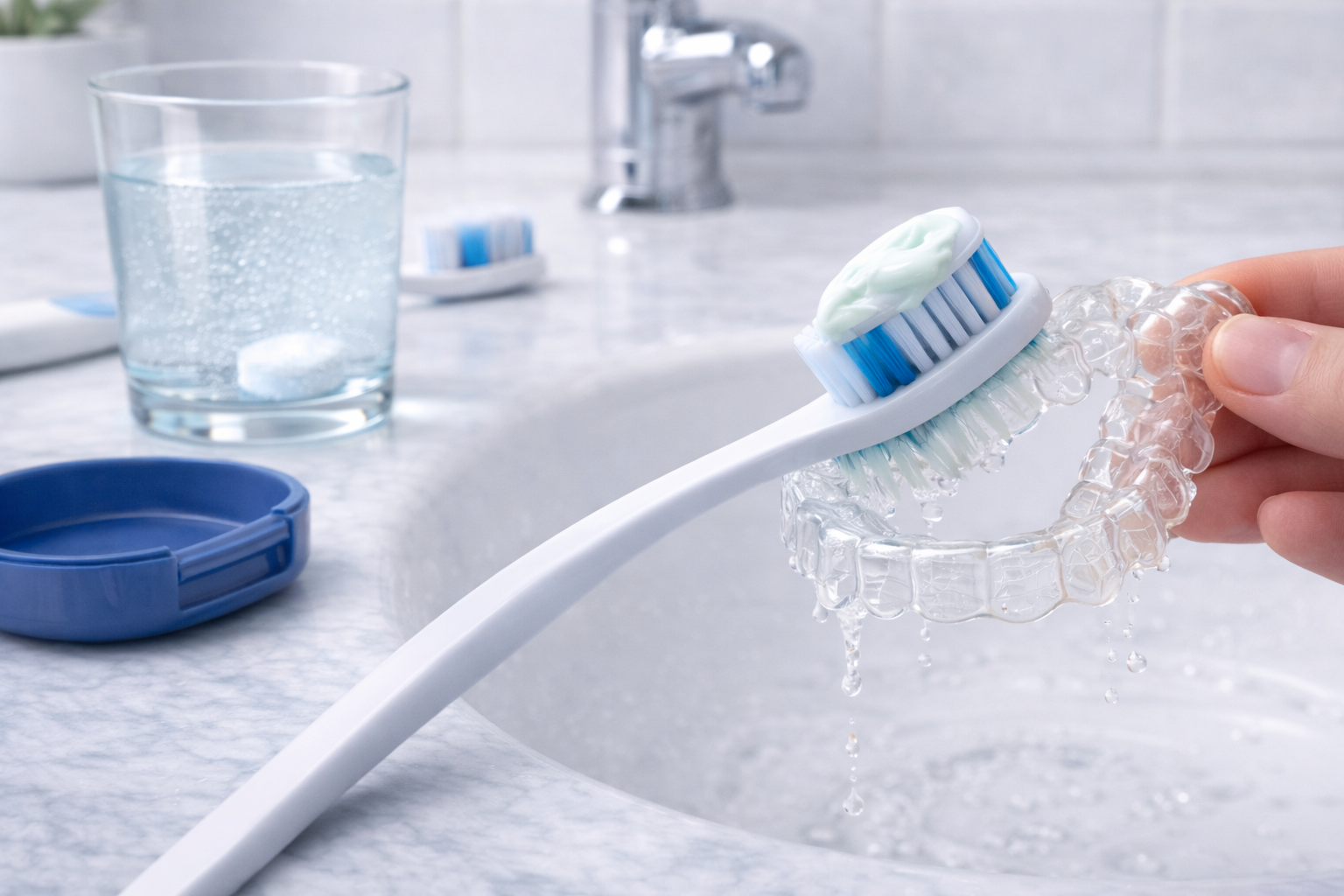
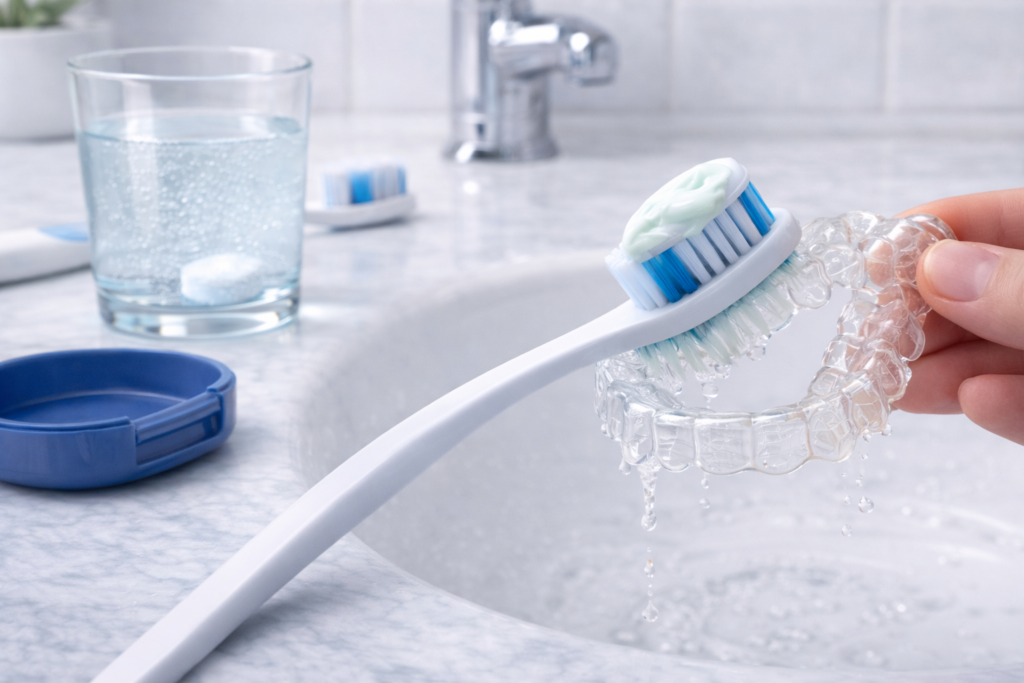
Step 3: Gently Brush the Retainer
After rinsing, it’s time to brush the retainer.
This is the step that removes plaque and bacteria from the surface.
Use a soft-bristled toothbrush and gently brush all parts of the retainer, including:
- The inside surface
- The outside surface
- Any small grooves or edges
The brushing should be gentle. Scrubbing too hard can scratch the plastic.
Those tiny scratches might not be visible at first, but they can create places where bacteria hide.
Some people use mild soap or baking soda while brushing. Many dentists recommend avoiding abrasive toothpaste because it can scratch clear retainers.
A gentle brushing for about 30 seconds to one minute is usually enough.
Step 4: Rinse Again Thoroughly
After brushing, rinse the retainer again under lukewarm water.
This removes any leftover cleaning residue and washes away loosened plaque.
Make sure the retainer feels smooth and clean before moving to the next step.
A quick inspection at this stage can also help you spot any buildup or damage.
Step 5: Let It Air Dry Slightly
Before placing the retainer back into its case, it’s helpful to let it air dry for a short time.
Retainers stored in a completely sealed environment while still wet may develop odors more easily.
Allowing a brief moment of airflow can help reduce moisture.
However, the retainer shouldn’t be left exposed for long periods where it might be lost or damaged.
Step 6: Store It in a Clean Case
The final step in the daily routine is storing the retainer properly.
Place it in its protective case whenever you’re not wearing it.
The case prevents:
- Dust
- Bacteria from surfaces
- Accidental damage
However, the case itself also needs regular cleaning.
A dirty case can quickly make a clean retainer smell again. Many dentists recommend washing the retainer case daily with soap and water.
Weekly Deep Cleaning
While daily brushing removes most bacteria, a deeper cleaning once or twice a week can help maintain the retainer even better.
This step helps remove mineral deposits that build up from saliva.
Some common options include:
- Retainer cleaning tablets
- Orthodontic cleaning solutions
- Gentle soaking products recommended by dentists
Soaking the retainer for about 15–20 minutes can help dissolve stubborn buildup.
After soaking, always rinse the retainer thoroughly before wearing it again.
Signs Your Retainer Needs Better Cleaning
Even with a daily routine, it’s helpful to watch for signs that your retainer needs extra care.
Some common signs include:
- A sour smell
- A cloudy appearance
- A rough or sticky surface
- A strange taste when wearing it
These signs usually indicate that bacteria or mineral deposits have started to accumulate.
Adjusting the cleaning routine often fixes the problem quickly.
A Routine That Only Takes a Few Minutes
One thing I learned over time is that retainer cleaning doesn’t need to be complicated.
In fact, the entire routine usually takes less than two minutes each morning.
Once it becomes part of your daily habits—like brushing your teeth—it barely feels like extra work.
But those few minutes can make a big difference.
A clean retainer feels more comfortable, smells better, and lasts longer.
Protecting the Smile You Worked For
After spending months or even years in orthodontic treatment, most people want to keep their results as long as possible.
Retainers play an important role in maintaining that straight smile.
But like any dental appliance, they work best when they’re properly cared for.
Developing a simple daily cleaning routine keeps the retainer hygienic and helps protect your oral health.
And once the habit becomes part of your day, it’s easy to maintain.
After all, a healthy smile is worth a few extra minutes of care each morning. 😁