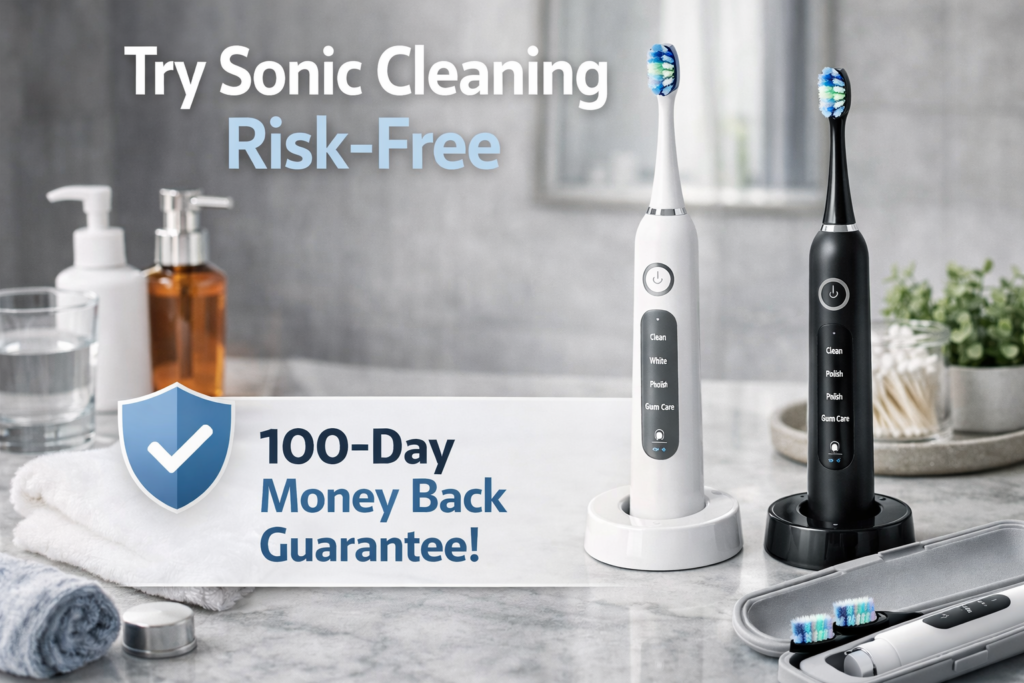
I didn’t trust the phrase at first.
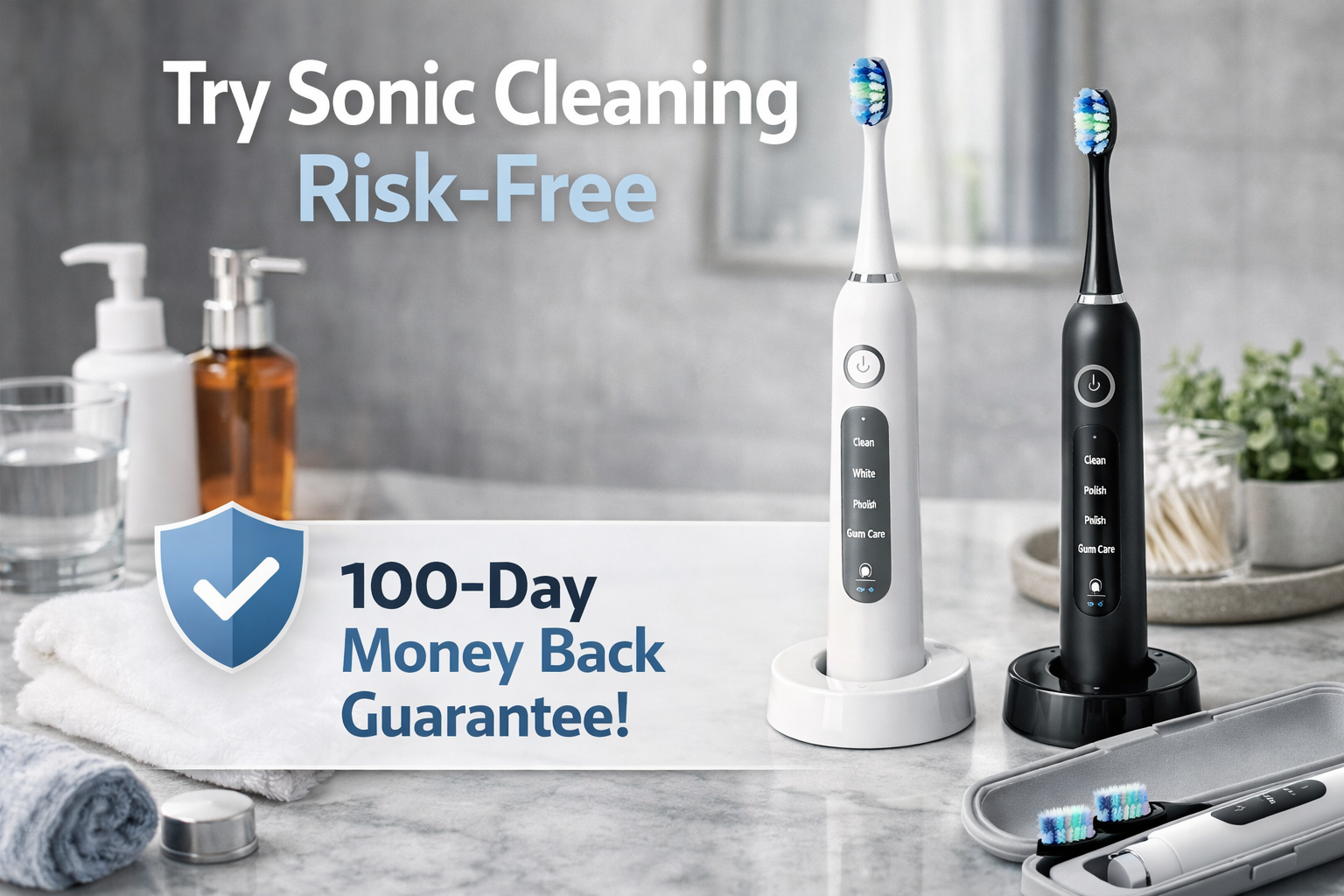
“Try Sonic Cleaning Risk-Free.”
It sounded reassuring on the surface—but also a little too convenient. Like one of those promises designed to lower your guard just enough to make you click “buy.”
And if I’m being honest, I had learned to be cautious.
Because “risk-free” doesn’t always mean what you think it means.
Sometimes it comes with conditions. Sometimes it’s more about marketing than reality. And sometimes, it’s simply not worth the effort of finding out.
So I hesitated.
Not because I wasn’t interested—but because I wasn’t sure if it was worth the uncertainty.
The Quiet Curiosity Behind the Doubt
Despite my hesitation, something kept pulling me back.
Not the offer itself—but the idea behind it.
Sonic cleaning.
I had heard about it before. Read about how it worked. Seen the claims about better cleaning, less effort, more consistency.
But there’s always a gap between knowing something—and experiencing it.
And that gap is often where doubt lives.
I found myself wondering:
What if it actually makes a difference?
And what if I never try it?
What “Risk-Free” Really Meant to Me
At first, I interpreted “risk-free” in the simplest way possible:
No financial risk.
No commitment.
No downside.
But the more I thought about it, the more I realized that wasn’t entirely accurate.
Because there’s always some form of risk.
Your time.
Your attention.
Your willingness to change something familiar.
Even trying something new—even something small—requires a decision.
And decisions, no matter how minor, carry weight.
The Real Barrier Wasn’t Money
If I’m honest, the cost wasn’t what stopped me.
It was uncertainty.
The question of whether this would actually improve anything—or just become another product I tried briefly and then forgot about.
We’ve all had experiences like that.
Things we thought would make a difference… but didn’t.
So we become cautious.
Not resistant—but selective.
The Moment I Decided to Try
What changed wasn’t the offer.
It was my perspective.
Instead of asking:
“What if this doesn’t work?”
I started asking:
“What if it does?”
That shift—small as it seems—was enough.
Because the “risk-free” part didn’t eliminate all risk.
But it lowered it enough for curiosity to take over.
And sometimes, that’s all you need.
The First Experience: Not What I Expected
The first time I used a sonic toothbrush, I paid close attention.
The sound.
The vibration.
The feeling.
It wasn’t uncomfortable—but it wasn’t familiar either.
And that’s the thing about new experiences.
They rarely feel “right” immediately.
They feel different.
And different takes time.
The Subtle Nature of Improvement
I think one of the reasons people underestimate sonic cleaning is because the results aren’t dramatic.
At least, not at first.
There’s no instant transformation.
No obvious before-and-after moment after a single use.
But there is something else.
A gradual shift.
After a few days, I started noticing:
- A smoother feeling on my teeth
- A cleaner sensation that lasted longer
- A more consistent routine
These weren’t big changes.
But they were real.
The Role of Consistency
If there’s one thing I learned quickly, it’s this:
The value of sonic cleaning comes from consistency, not intensity.
You don’t need to brush harder.
You don’t need to overthink it.
You just need to show up—twice a day—and let the tool do its job.
And over time, those small, repeated actions create something meaningful.
What Made It Feel “Worth It”
At some point, I stopped thinking about the trial.
Stopped evaluating whether it was “working.”
Because it had already become part of my routine.
And that’s when I realized something important:
The real success wasn’t in the results alone.
It was in the habit.
The fact that I was paying more attention.
Being more consistent.
Taking something simple—and doing it better.
The Hidden Benefit of Trying Something New
There’s a psychological side to all of this that I didn’t expect.
Trying something new—even something small—changes how you see things.
It breaks routine.
It creates awareness.
It reminds you that improvement doesn’t always require big changes.
Sometimes, it starts with a simple decision to try.
When “Risk-Free” Actually Matters
Not every “risk-free” offer is worth your time.
But some are.
The difference comes down to alignment.
- Are you already thinking about improving your routine?
- Does the product make sense for your needs?
- Are you open to trying something new?
If the answer is yes, then “risk-free” becomes meaningful.
Not because it guarantees results—but because it removes just enough friction to let you start.
What I’d Tell Someone Hesitating
If you’re on the fence—unsure whether to try sonic cleaning—I understand.
I was there.
And I wouldn’t tell you that it will change everything overnight.
Because it won’t.
But I would say this:
It might change how you approach something you do every day.
And that, over time, can lead to something bigger than you expect.
The Difference Between Trying and Committing
One of the reasons “risk-free” works is because it separates trying from committing.
You’re not making a long-term decision.
You’re just taking a first step.
And that first step is often the hardest part.
Once you take it, everything else becomes easier.
The Outcome I Didn’t Expect
In the end, the biggest change wasn’t just cleaner teeth.
It was a shift in mindset.
From:
- Passive → intentional
- Rushed → consistent
- Uncertain → curious
And that shift didn’t come from pressure.
It came from giving myself permission to try.
Final Thoughts
“Try Sonic Cleaning Risk-Free” isn’t just about the product.
It’s about the opportunity.
An opportunity to test something new.
To break routine.
To explore a small improvement without overcommitting.
You don’t have to be fully convinced.
You don’t have to be certain.
You just have to be willing to try.
Because sometimes, the only way to know if something works…
is to experience it for yourself.