The day my braces finally came off felt like a milestone I had been waiting for years to reach. I remember sitting in the orthodontist’s chair, running my tongue over my newly straight teeth, amazed at how smooth everything felt. After months of adjustments and careful brushing, the result was finally there.
But before I left the clinic, my orthodontist handed me something small, clear, and surprisingly important.
My retainer.
“This will keep your teeth from moving back,” she explained. “Wear it regularly—and make sure you keep it clean.”
At the time, I nodded confidently. Cleaning a retainer sounded easy enough. After all, how complicated could it be? It was just a small piece of plastic.
But a few weeks later, I realized something that many people discover sooner or later: cleaning a retainer properly is more important—and more detailed—than most people think.
One morning, I noticed my retainer looked slightly cloudy. Another day, it had a faint smell when I took it out of its case. That’s when I started asking questions and learning what dentists actually recommend.
What I discovered changed the way I cared for my retainer entirely.
If you wear a retainer or are about to start wearing one, this dentist-approved guide will walk you through the right way to clean it and keep it fresh.
Why Cleaning Your Retainer Matters
Before learning the right cleaning method, it helps to understand why retainers need regular care.
Retainers spend a lot of time inside your mouth—often 6 to 10 hours overnight, and sometimes longer depending on your orthodontic treatment plan.
During that time, they are exposed to:
- Saliva
- Oral bacteria
- Plaque
- Food particles
- Minerals in saliva
Your mouth naturally contains hundreds of types of bacteria. Most of them are harmless, but when bacteria accumulate on surfaces, they can form biofilm, which is the same sticky layer that develops on teeth.
Dentists often compare a retainer to a second set of teeth. If it isn’t cleaned regularly, plaque and bacteria can build up quickly.
Over time, this buildup may lead to:
- Bad odors
- Cloudy or white deposits
- Stains on the retainer
- Increased bacteria in the mouth
Fortunately, preventing these issues is simple when you follow the right routine.
Step 1: Rinse Your Retainer Immediately
One of the easiest habits dentists recommend is also one of the most effective.
Whenever you remove your retainer, rinse it right away with lukewarm water.
This simple step washes away saliva, bacteria, and debris before they have a chance to dry on the surface.
When residue dries, it becomes harder to remove later. That’s why rinsing immediately can make cleaning much easier.
However, dentists emphasize one important rule:
Never use hot water.
Hot water can warp the plastic and change the shape of the retainer, which may prevent it from fitting properly.
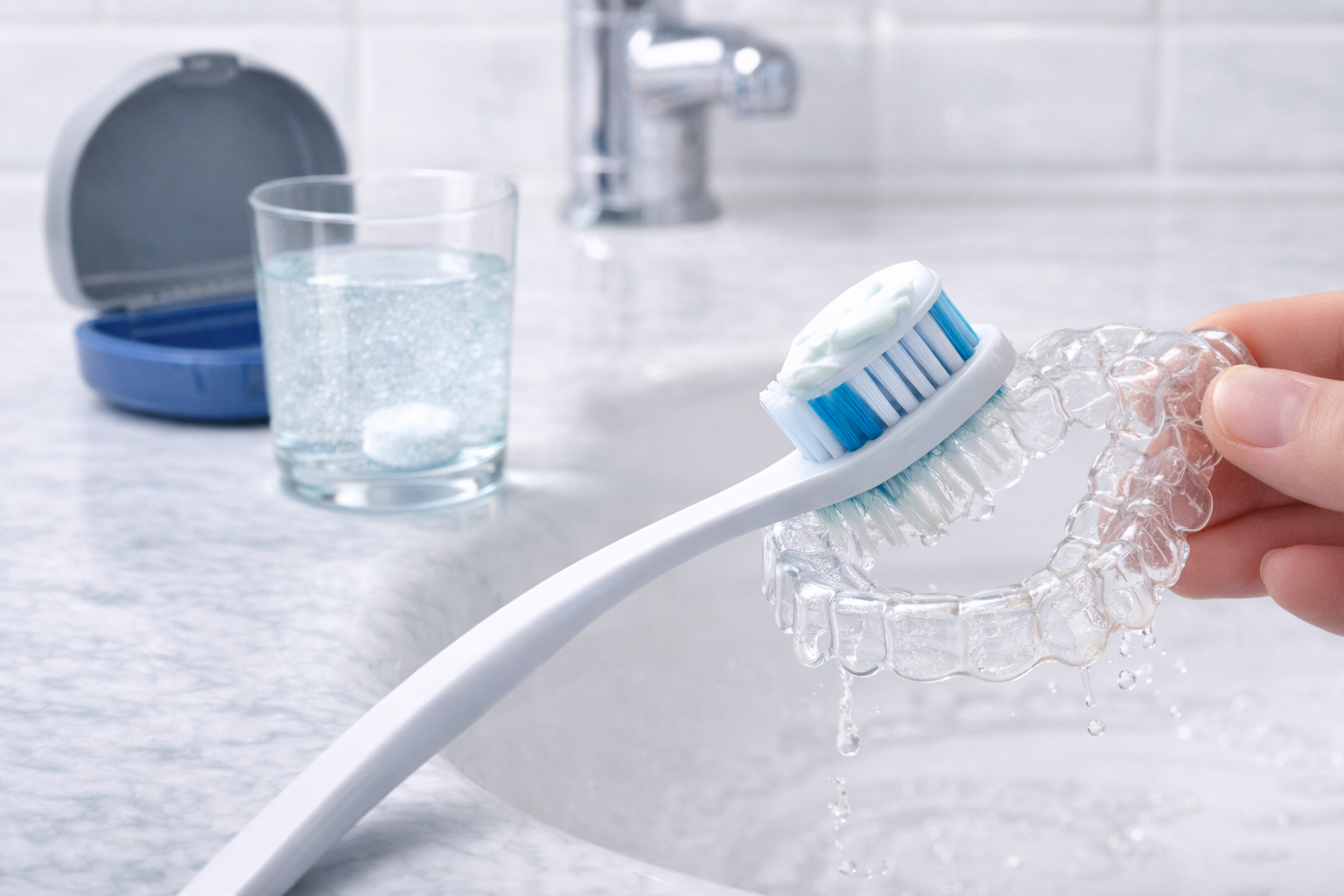
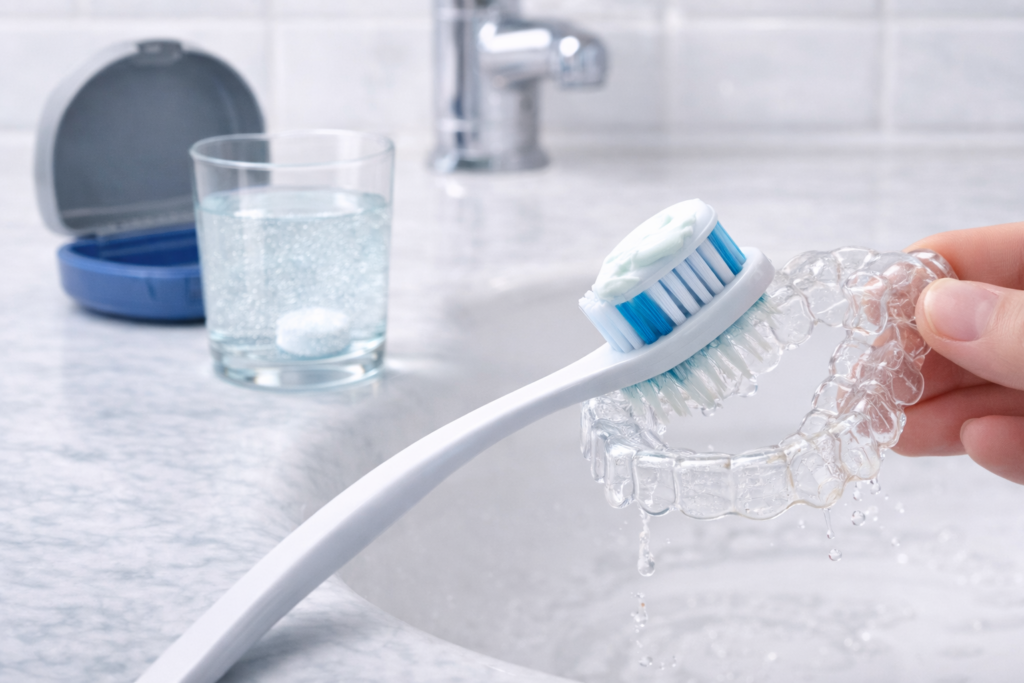
Step 2: Brush Your Retainer Gently
Just like your teeth, retainers benefit from gentle brushing.
Many orthodontists recommend brushing your retainer once a day, typically in the morning after removing it.
To do this properly:
- Use a soft-bristled toothbrush.
- Gently brush the entire retainer surface.
- Rinse it thoroughly with lukewarm water.
Brushing removes plaque and bacteria before they build up.
However, it’s important not to brush too aggressively. Scrubbing too hard can create tiny scratches in the plastic, and bacteria can hide inside those scratches.
Gentle cleaning is always better.
Step 3: Use the Right Cleaning Products
One mistake many people make is using regular toothpaste to clean their retainer.
It seems logical—after all, toothpaste cleans teeth.
But many toothpastes contain abrasive particles designed to remove stains from enamel. These particles can scratch the surface of a retainer.
Once the surface becomes scratched, it may turn cloudy and collect bacteria more easily.
Instead, dentists often recommend safer alternatives such as:
- Retainer cleaning tablets
- Mild dish soap
- Specialized orthodontic cleaners
These options help remove bacteria without damaging the retainer material.
Step 4: Deep Clean Your Retainer Weekly
Daily brushing is important, but sometimes retainers need a deeper cleaning.
Over time, minerals in saliva can accumulate on the retainer surface, creating thin deposits similar to tartar on teeth.
Dentists often suggest soaking the retainer once or twice a week in a cleaning solution.
A typical deep cleaning routine might include:
- Filling a glass with lukewarm water.
- Adding a retainer cleaning tablet.
- Placing the retainer in the solution for about 15–20 minutes.
- Rinsing it thoroughly afterward.
This soaking process helps break down stubborn buildup and keeps the retainer clear and fresh.
Step 5: Keep Your Retainer Case Clean
For a long time, I focused entirely on cleaning my retainer but ignored the case it was stored in.
Eventually I realized something surprising: the case itself had started to smell.
If the case isn’t cleaned regularly, bacteria can accumulate inside it. Each time you place your retainer in the case, those bacteria can transfer back onto the appliance.
Dentists recommend washing the retainer case daily with soap and water.
Allowing the case to dry completely before closing it also helps reduce bacterial growth.
Step 6: Brush and Floss Before Wearing It
Even if your retainer is perfectly clean, wearing it over unbrushed teeth can cause problems.
Food particles and plaque on your teeth can become trapped between the retainer and the tooth surface.
This creates a perfect environment for bacteria to grow.
For this reason, orthodontists almost always recommend brushing and flossing before putting your retainer back in.
This habit helps keep both your teeth and your retainer clean.
Step 7: Avoid Eating with Your Retainer
Another dentist-approved rule is simple: remove your retainer before eating.
Food can easily get trapped between the retainer and your teeth. Some foods may even stain or damage the plastic.
Sugary drinks can also leave residue inside the retainer, encouraging bacterial growth.
Water is usually the only drink that is safe to consume while wearing a retainer.
Signs Your Retainer Needs Cleaning
Sometimes retainers show obvious signs that they need attention.
You might notice:
- A cloudy appearance
- A sour or unpleasant smell
- A strange taste when wearing it
- Visible buildup on the plastic
If you notice these signs, it usually means bacteria or plaque has accumulated.
Fortunately, a thorough cleaning routine often restores the retainer to its clear, fresh state.
When to Replace Your Retainer
Even with excellent care, retainers don’t last forever.
Over time, they may develop small scratches, cracks, or wear that make them harder to keep clean.
Dentists may recommend replacing retainers if:
- They no longer fit properly
- The plastic becomes heavily worn
- Odors persist despite cleaning
Regular orthodontic checkups can help determine when replacement might be necessary.
A Small Routine That Makes a Big Difference
Looking back, I realized that caring for a retainer isn’t complicated—it simply requires consistency.
Once I built a small routine, the process became effortless.
Each morning I:
- Remove the retainer
- Rinse it
- Gently brush it
- Store it in a clean case
Once or twice a week, I also soak it in a cleaning solution.
The entire routine takes only a few minutes, but it keeps the retainer clear, comfortable, and free from unpleasant odors.
Final Thoughts
Retainers play an important role in protecting the results of orthodontic treatment. After months or years of wearing braces, they help ensure your teeth stay exactly where they should be.
But like anything that spends hours in your mouth, they require proper care.
By following a dentist-approved cleaning routine—daily brushing, regular rinsing, occasional soaking, and proper storage—you can keep your retainer clean and comfortable to wear.
And in the long run, those small habits help protect something incredibly valuable: the smile you worked so hard to achieve. 😁