I didn’t think much about my mouth guard when I first started using one.
It was just another part of my nightly routine. Brush my teeth, floss, rinse, and then slip the mouth guard into place before going to bed. My dentist had recommended it to protect my teeth from grinding, something I apparently did without realizing while I slept.
At first, everything seemed fine. The mouth guard felt a little strange for the first few nights, but eventually it became normal. Like many habits, it faded into the background of daily life.
But after a few weeks, I noticed something odd.
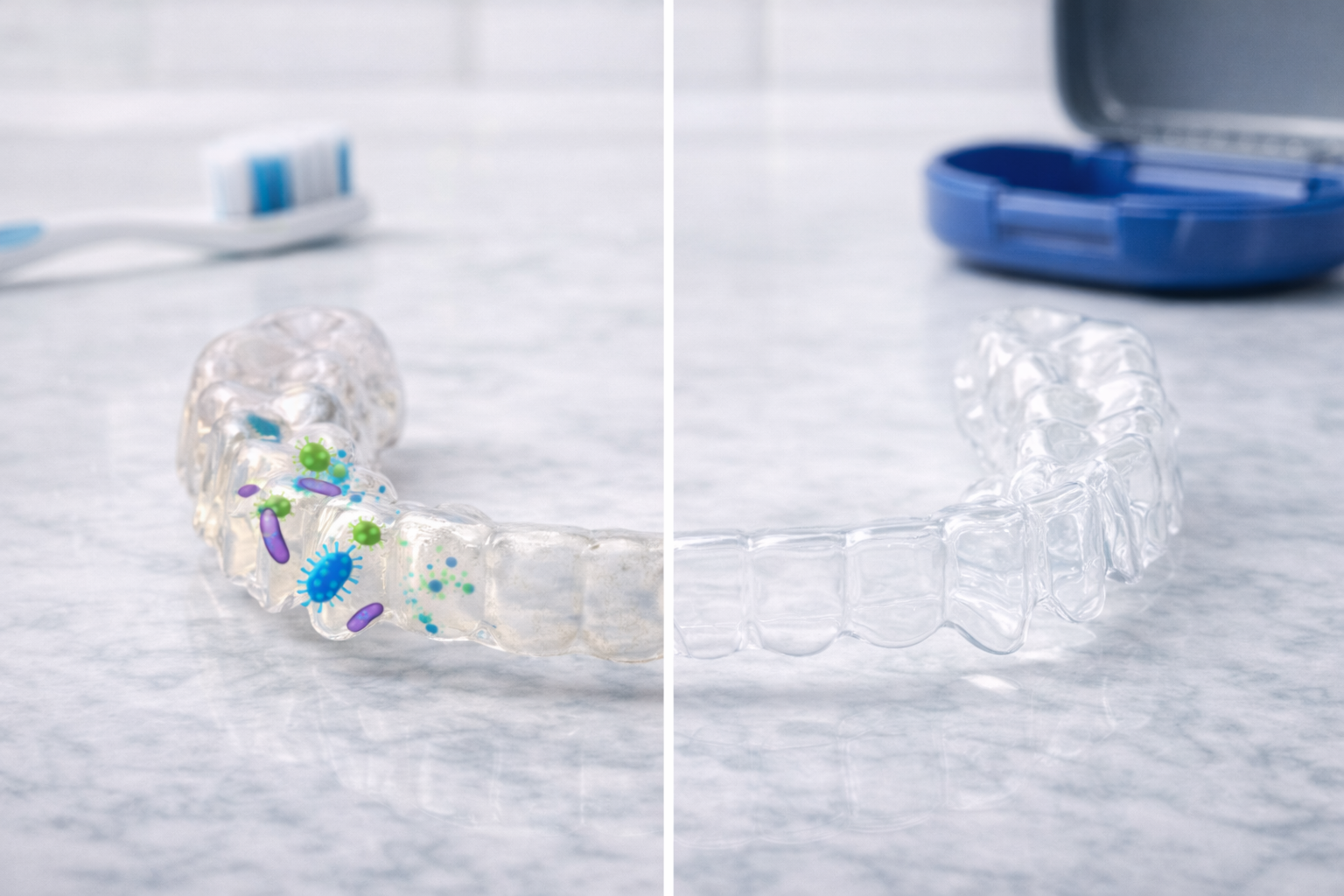
One night when I took the mouth guard out of its case, there was a faint smell. It wasn’t overwhelming, but it was definitely there. I held it closer to the light and saw that the once-clear plastic looked slightly cloudy.
That moment made me pause.
If something that sits in my mouth every night looks and smells like this… what’s actually living on it?
That simple question led me down a surprisingly eye-opening path. I started reading what dentists and dental hygienists say about mouth guards—and what I discovered was something most people rarely think about: a dirty mouth guard can pose real health risks.
Why Mouth Guards Get Dirty So Easily
At first glance, a mouth guard doesn’t look like something that could become particularly dirty. It’s just a piece of molded plastic designed to protect your teeth.
But dentists explain that the mouth is actually one of the most bacteria-rich environments in the human body.
Your mouth naturally contains hundreds of types of bacteria. Most of them are harmless, and many are even helpful. However, when bacteria accumulate on surfaces—like teeth, retainers, or mouth guards—they can form sticky layers called biofilm, which is the same substance that creates plaque.
A mouth guard creates the perfect environment for that buildup.
Think about where it spends most of its time:
- Inside a warm mouth
- Surrounded by saliva
- Pressed tightly against teeth and gums
- Often stored in a closed case afterward
For bacteria, that’s practically a luxury hotel.
And if the mouth guard isn’t cleaned regularly, microorganisms can multiply quickly.
The Bacteria You Can’t See
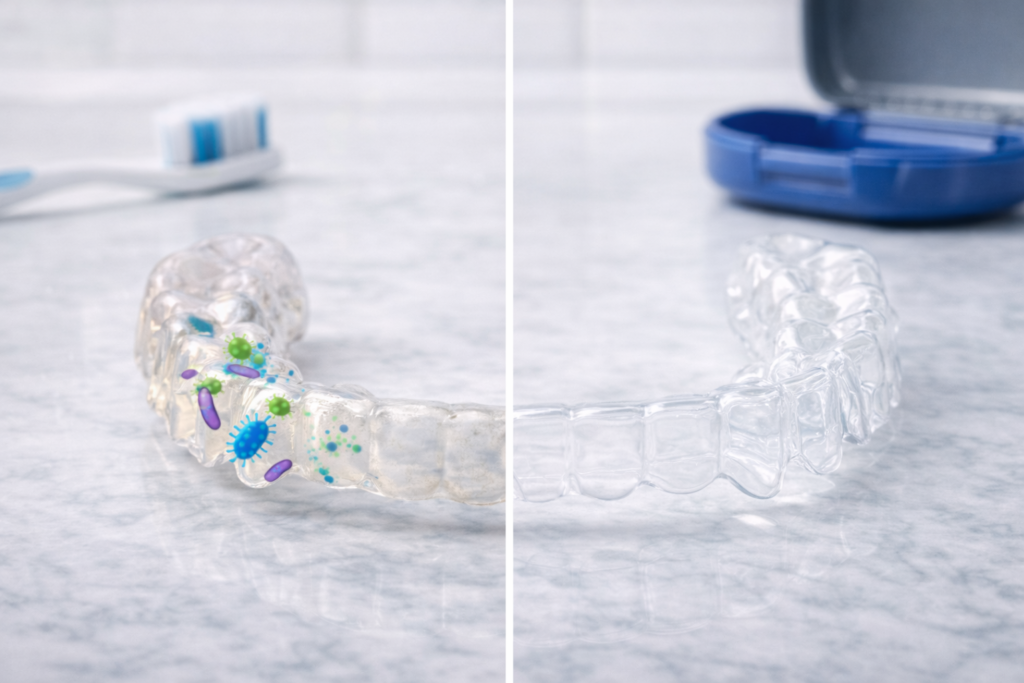
One of the most surprising things dentists point out is that a mouth guard can look relatively clean while still harboring millions of bacteria.
Studies examining sports mouth guards and night guards have found a wide variety of microorganisms, including:
- Streptococcus bacteria (linked to tooth decay)
- Staphylococcus bacteria
- Lactobacillus species
- Candida yeast
These organisms can attach to the surface of the guard and gradually build colonies.
Over time, the mouth guard becomes more than just a dental device—it becomes a surface where microbes can grow and survive.
And every night when you place it back into your mouth, those microbes come with it.
Hidden Health Risk #1: Persistent Bad Breath
The first sign many people notice with a dirty mouth guard is bad breath.
Bacteria produce sulfur-containing compounds as they break down food particles and proteins in saliva. These compounds are responsible for the unpleasant smell often associated with oral bacteria.
If your mouth guard hasn’t been cleaned properly, those bacteria remain trapped on the device.
So even if you brush your teeth carefully, placing a contaminated mouth guard back into your mouth can quickly reintroduce odor-causing bacteria.
Many people don’t realize that their mouth guard—not their teeth—may be contributing to persistent bad breath.
Hidden Health Risk #2: Increased Plaque and Cavities
Another issue dentists often mention is the way a dirty mouth guard can spread bacteria around your mouth.
Imagine wearing a mouth guard that has accumulated bacteria overnight. When it presses against your teeth and gums, those microbes can transfer directly onto the enamel surfaces.
This increases the likelihood of plaque buildup.
Over time, plaque can lead to tooth decay and cavities, especially if the guard is worn regularly without proper cleaning.
In other words, a mouth guard meant to protect your teeth could unintentionally contribute to dental problems if it isn’t maintained properly.
Hidden Health Risk #3: Gum Irritation
Sometimes people notice that their gums feel slightly irritated or sensitive after wearing a mouth guard.
While there can be several reasons for this, dentists say one possible cause is bacterial buildup on the guard.
When microbes accumulate along the edges of the mouth guard, they can irritate the gum tissue that comes into contact with it.
This irritation might appear as:
- Mild redness
- Tenderness
- Slight swelling
Keeping the mouth guard clean can help reduce the chances of this happening.
Hidden Health Risk #4: Fungal Growth
One of the less commonly discussed risks is the possibility of fungal growth, particularly Candida.
Candida is a type of yeast that naturally exists in the mouth. In balanced amounts, it usually doesn’t cause problems. But when conditions allow it to multiply—such as on a moist, unclean mouth guard—it can grow more rapidly.
This can contribute to oral conditions like thrush, which appears as white patches inside the mouth.
While this situation isn’t extremely common, dental professionals warn that poor mouth guard hygiene can increase the risk.
Hidden Health Risk #5: Respiratory Concerns
In rare cases, bacteria from contaminated mouth guards may contribute to infections if inhaled or introduced into the body.
For example, athletes who use sports mouth guards without proper cleaning have sometimes reported throat or respiratory irritation linked to bacterial contamination.
Dentists often mention this risk not to alarm people, but to highlight the importance of consistent hygiene.
Signs Your Mouth Guard Needs Cleaning
When I first started paying attention to my mouth guard, I realized that the signs were actually pretty obvious.
Here are some common indicators dentists mention:
- A strong or sour smell
- A cloudy appearance
- Yellow or brown discoloration
- A slimy or sticky texture
- A strange taste when wearing it
If you notice any of these signs, it’s usually time for a thorough cleaning.
What Dentists Recommend for Mouth Guard Care
After learning about the risks, I decided to change how I cared for my mouth guard.
Fortunately, dentists say that keeping a mouth guard clean doesn’t require complicated steps.
Clean It Daily
Rinse the mouth guard with lukewarm water after removing it and gently brush it with a soft toothbrush.
Avoid Hot Water
Hot water can warp the plastic material and change the fit of the guard.
Use Cleaning Solutions Occasionally
Special cleaning tablets or solutions can help remove buildup and bacteria.
Let It Dry
Allow the mouth guard to dry before placing it in its storage case. Moist environments encourage bacterial growth.
Clean the Case
The storage case can also collect bacteria, so it should be washed regularly with soap and water.
A Small Device That Deserves Attention
Before learning about mouth guard hygiene, I treated mine like an afterthought.
It was just something I wore while sleeping.
But once I understood how easily bacteria could build up on it, my perspective changed. That small device spends hours inside my mouth every night. Taking care of it is just as important as brushing or flossing.
Now, cleaning it has become part of my nightly routine.
It takes less than a minute, but it helps keep the mouth guard fresh, clear, and safe to use.
Final Thoughts
A mouth guard is designed to protect your teeth—whether from grinding during sleep or impact during sports. But if it isn’t cleaned regularly, it can become a hidden source of bacteria.
Dentists often remind patients that oral appliances require the same attention as teeth themselves.
The good news is that preventing problems is simple.
With regular cleaning, proper storage, and occasional deep cleaning, you can keep your mouth guard in good condition and reduce the health risks associated with bacterial buildup.
After all, something that spends hours inside your mouth deserves a little care. And that small habit can go a long way toward protecting your overall oral health. 😁🦷