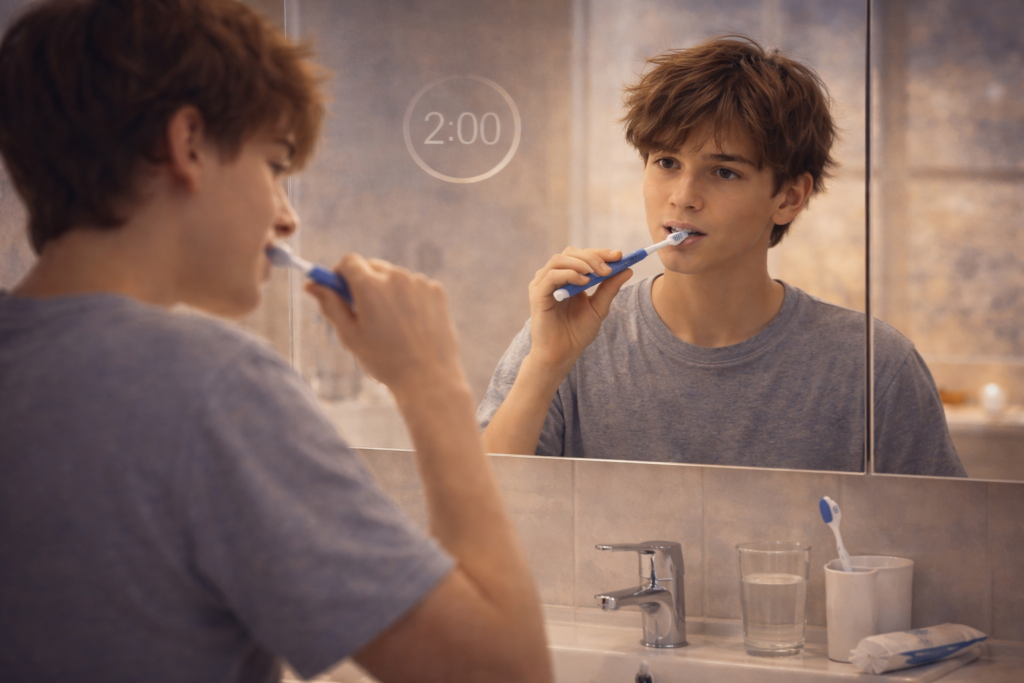
I used to think brushing my teeth was one of the simplest parts of my day.
Wake up, grab the toothbrush, squeeze some toothpaste, brush for a bit, rinse, done. At night, repeat the same routine—sometimes more carefully, sometimes half-asleep and rushing to get into bed.
If someone had asked me back then, “How long do you brush your teeth?” I probably would’ve said, “About two minutes,” without really thinking about it.
But if I’m being honest, those “two minutes” were more like a vague guess. Sometimes it was 45 seconds. Sometimes maybe a minute and a half. Rarely—if ever—an actual, measured two minutes.
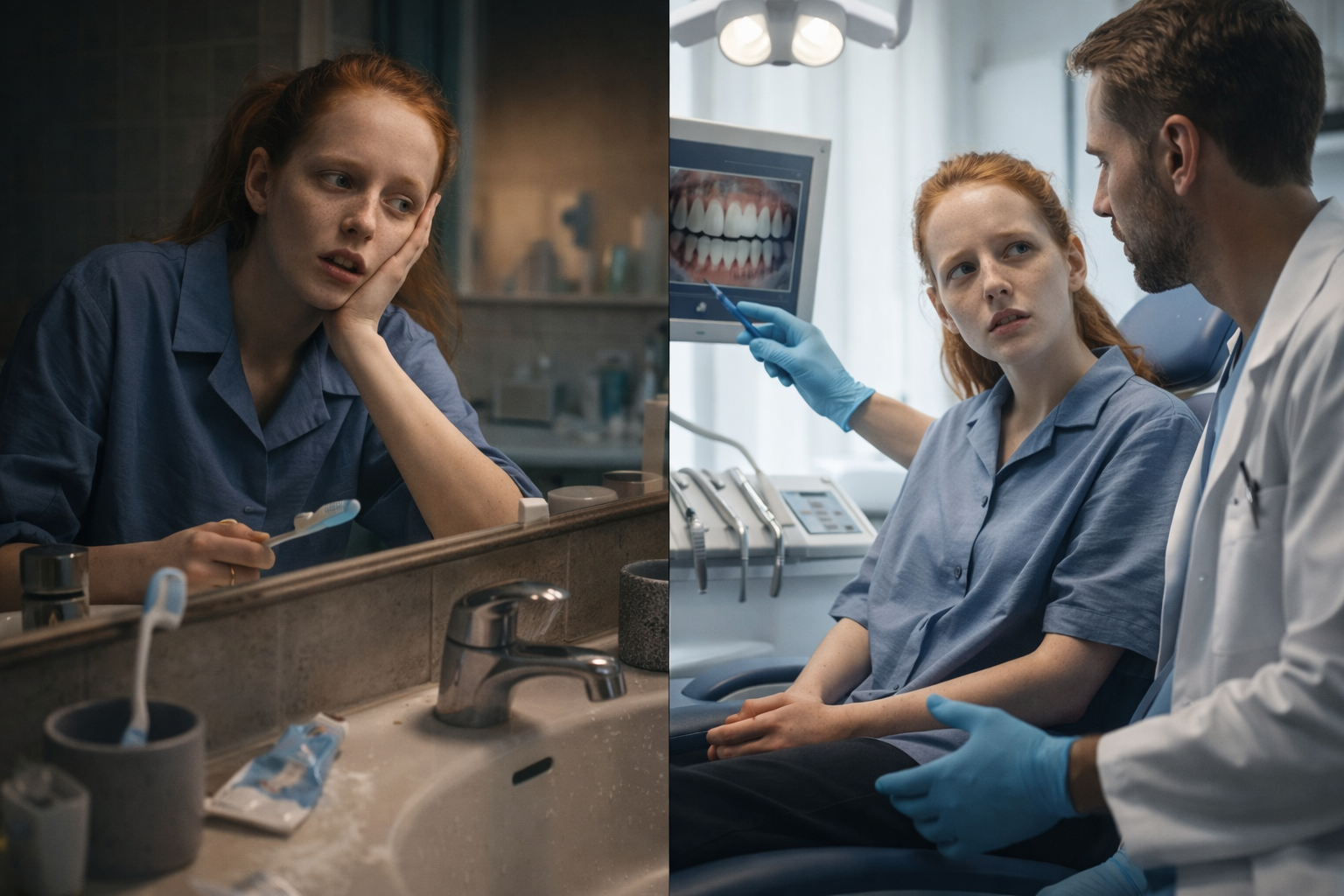
It wasn’t until a routine dental visit, one of those quiet afternoons where everything smells faintly of mint and antiseptic, that I realized how much that simple question actually matters.
The Question That Sounds Too Easy
My dentist asked me, casually, “So, how long do you brush your teeth?”
I gave the standard answer. “Two minutes.”
She nodded, but then followed up with something I didn’t expect:
“Do you actually brush for two minutes… or does it just feel like two minutes?”
That question stuck with me longer than I expected.
Because time, especially during small daily routines, has a strange way of slipping past us. What feels like two minutes might barely be one. And when it comes to brushing your teeth, that difference matters more than we think.
Why Two Minutes Became the Standard
Dentists recommend brushing your teeth for two minutes, twice a day. It’s one of those pieces of advice we hear so often that it almost loses meaning.
But there’s a reason behind it.
Two minutes is considered the minimum amount of time needed to thoroughly clean all surfaces of your teeth—front, back, chewing surfaces, and along the gumline. It gives you enough time to move carefully, reach difficult areas, and avoid rushing.
But here’s the part most people don’t realize:
Two minutes only works if you’re actually using that time well.
If you spend 90 seconds brushing the same easy-to-reach spots and ignore the back teeth or inner surfaces, then technically you brushed for two minutes… but not effectively.
The Illusion of “Long Enough”
After that appointment, I decided to test myself.
The next time I brushed my teeth, I didn’t look at a clock. I just brushed until I felt like two minutes had passed.
Then I checked the time.
It had been 52 seconds.
That was the moment everything clicked.
What we think is enough time is often shaped by habit, not accuracy. We rush without realizing it. We move automatically, without paying attention.
And brushing—something we do every single day—becomes more of a reflex than a conscious act.
Breaking Time Into Something Real
One of the simplest tips my dentist gave me was this:
“Don’t think of it as two minutes. Think of it as four sections.”
Divide your mouth into four parts:
- Upper left
- Upper right
- Lower left
- Lower right
Spend about 30 seconds on each section.
Suddenly, brushing becomes more structured. More intentional.
Instead of wondering “Am I done yet?”, you know exactly where you are in the process.
And something interesting happens when you do this—you slow down.
What Happens When You Rush
Before that visit, I thought brushing quickly was better than not brushing at all. And technically, that’s true.
But brushing too quickly leaves behind plaque, especially in the areas we tend to ignore:
- The back molars
- The inner surfaces of your teeth
- The gumline
Plaque doesn’t always feel obvious. You won’t necessarily notice it right away. But over time, it builds up, hardens, and leads to bigger problems like cavities or gum irritation.
The tricky part is that these problems develop quietly.
You don’t feel them on day one. Or day ten.
But weeks or months later, they show up—seemingly out of nowhere.
The Role of Attention (Not Just Time)
Here’s something I didn’t expect to learn:
Brushing longer doesn’t always mean brushing better.
You could brush for three or four minutes, but if you’re distracted—thinking about your day, scrolling your phone, or just going through the motions—you might still miss important areas.
On the other hand, a focused two minutes can be incredibly effective.
It’s less about stretching time and more about how present you are during those two minutes.
It’s one of the few moments in the day where you’re forced to pause, stand still, and take care of something small but important.
Electric Toothbrushes and Time
This is where electric toothbrushes quietly change the game.
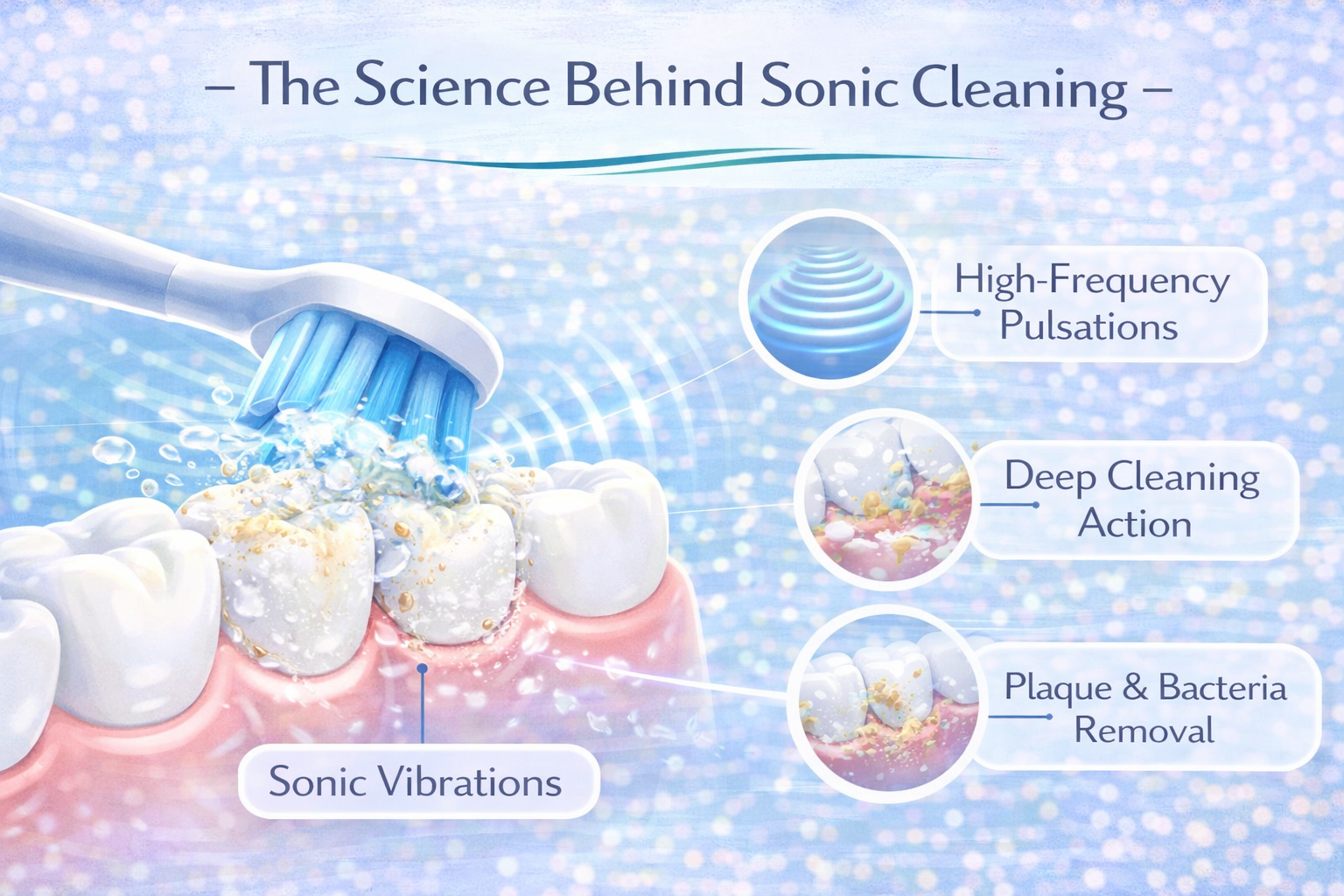
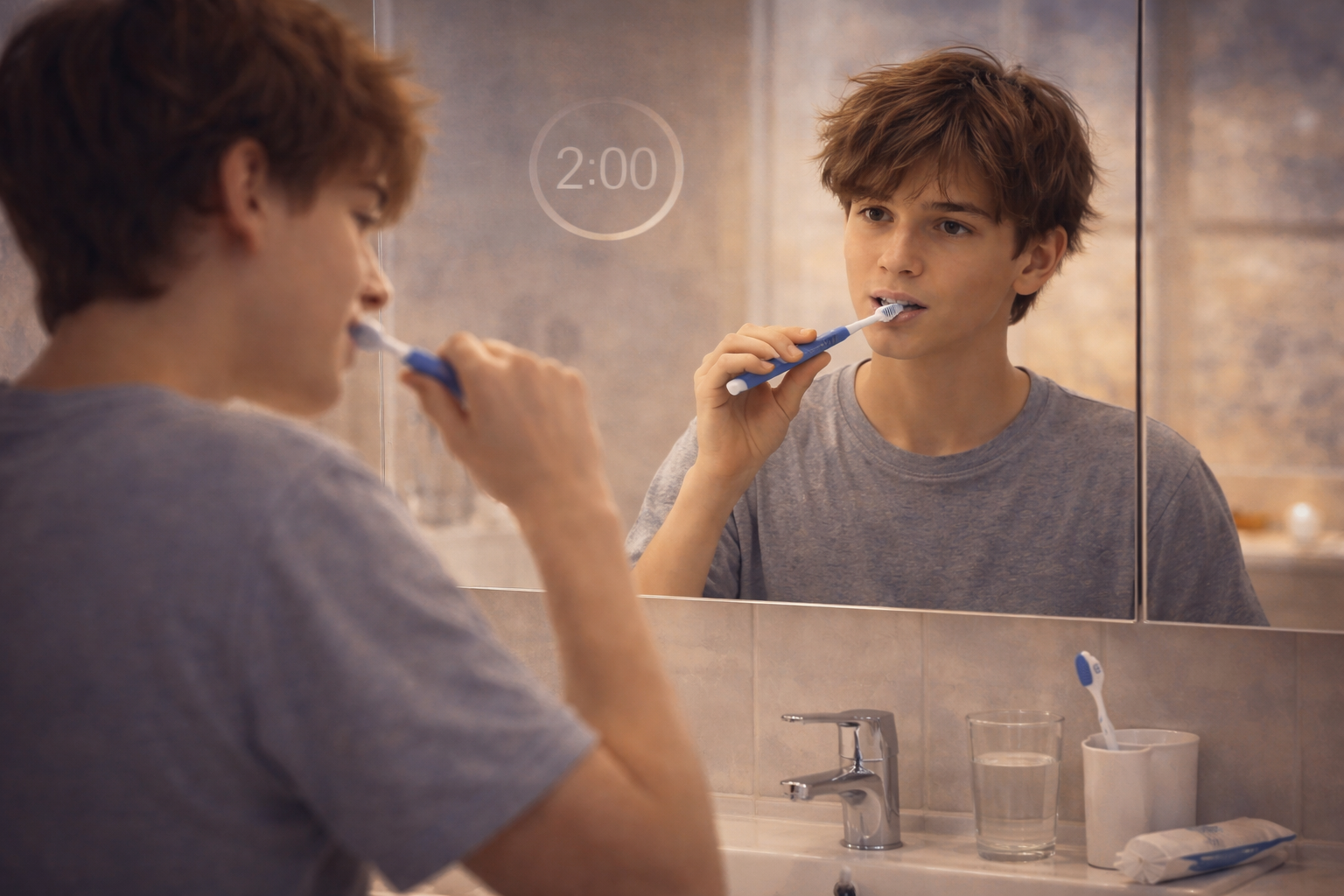
Many of them come with built-in timers that buzz every 30 seconds, guiding you from one section of your mouth to the next. After two minutes, they signal that you’re done.
At first, it felt unnecessary—almost like overkill.
But after using one, I realized how helpful that structure is.
You don’t have to guess anymore. You don’t have to count in your head. You just follow the rhythm.
It removes the uncertainty—and in a way, it also removes the temptation to rush.
The Night Routine Feels Different
Brushing at night hits differently.
In the morning, it’s about starting fresh. Waking up. Getting ready for the day.
But at night, brushing is the last thing you do before sleep. It’s your final reset.
And that’s when the two minutes matter the most.
Throughout the day, your teeth collect food particles, bacteria, and plaque. If you rush through brushing at night—or skip it altogether—you’re leaving all of that sitting on your teeth for hours while you sleep.
There’s no water, no eating, no natural cleaning happening.
Just time.
And as I learned, time can either protect your teeth—or slowly work against them.
Making Two Minutes Feel Natural
At first, brushing for a full two minutes felt… long.
Longer than it should have.
I found myself checking the clock, wondering if I was done yet, getting impatient.
But after a few days, something shifted.
It started to feel normal.
Almost calming, even.
Those two minutes became a small pause in the day—a moment where I wasn’t rushing, wasn’t multitasking, wasn’t thinking too far ahead.
Just brushing.
Just focusing on something simple.
What Dentists Really Mean
If you strip away all the technical advice, I think what dentists really mean when they say “brush for two minutes” is this:
“Give it enough time to actually matter.”
Not rushed. Not distracted. Not halfway done.
Just enough time to do it properly.
Because brushing your teeth isn’t just about avoiding cavities. It’s about consistency. Small actions, repeated every day, that quietly shape your health over time.
Looking Back at a Simple Question
Now, when I hear that question—“How long should you brush your teeth?”—it doesn’t feel as simple as it used to.
The answer is still two minutes.
But it means something different now.
It’s not just a number.
It’s a reminder to slow down. To pay attention. To take something small and do it properly.
Because sometimes, the smallest habits are the ones that matter the most.
And sometimes, all it takes is two minutes to do something right.