
There was a time when I thought taking care of my teeth was about doing things right—not necessarily doing them regularly.
I would have these sudden bursts of motivation. You know the kind. After a dental appointment, especially one that didn’t go so well, I’d walk out feeling determined. That night, I’d brush carefully for a full two minutes, floss like I was starring in a dental commercial, and even rinse with mouthwash for good measure.
“This is it,” I’d tell myself. “New routine. No more shortcuts.”
And for a few days, maybe even a week, I’d stick to it.
But then life would slowly creep back in.
A late night here. A rushed morning there. One skipped flossing session turned into a few. Brushing became quicker, less intentional. Before I knew it, I was back to doing the bare minimum—just enough to feel like I hadn’t completely neglected my teeth.
It wasn’t that I didn’t know what to do.
It was that I wasn’t doing it consistently.
The Illusion of “Catching Up”
One thing I used to believe—without really thinking about it—was that I could “make up” for missed days.
If I skipped flossing all week, I’d just floss extra thoroughly on Sunday night.
If I rushed brushing for a few days, I’d spend a long time scrubbing my teeth the next time.
It felt logical. Like balancing things out.
But oral care doesn’t work like that.
Plaque doesn’t politely wait for you to catch up. It builds up quietly, day by day, hardening into tartar if left too long. And once that happens, no amount of extra brushing at home can remove it—you need a professional cleaning.
Consistency, I learned, isn’t about perfection. It’s about preventing small problems from becoming bigger ones.
Small Actions, Compounded Over Time
A dentist once explained it to me in a way that stuck:
“Think of oral care like watering a plant. You can’t ignore it all week and then pour a bucket of water on it and expect it to thrive.”
That image stayed with me.
Because brushing and flossing don’t feel like big actions. They take a few minutes at most. They’re easy to skip because they seem small.
But that’s exactly why they matter.
It’s the repetition—the quiet, daily effort—that makes the difference.
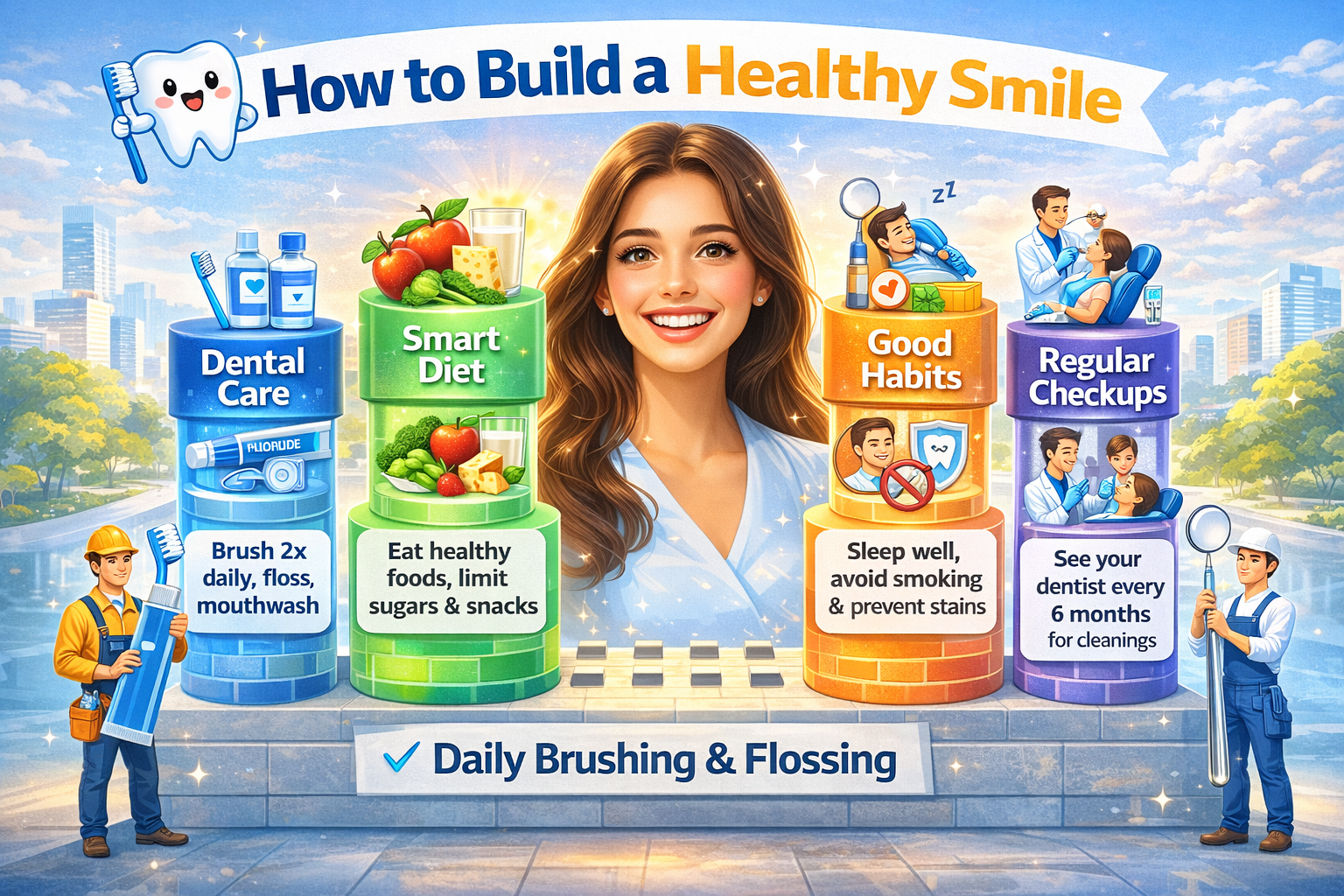
Each time you brush properly, you’re removing a layer of plaque before it becomes a problem. Each time you floss, you’re cleaning the spaces your toothbrush can’t reach. Each time you stick to your routine, you’re protecting your future self from discomfort, cost, and stress.
Individually, those actions feel insignificant.
Together, they shape your oral health.
Why Consistency Is So Hard
If it’s so simple, why do so many people struggle with it?
I asked myself that question more than once.
Part of it, I think, is that the consequences aren’t immediate.
If you skip brushing one night, nothing dramatic happens the next morning. Your teeth don’t suddenly ache. There’s no instant feedback telling you that you’ve made a mistake.
That delay makes it easy to justify skipping “just this once.”
But oral health works on a delay system. The effects of inconsistency show up later—sometimes weeks, sometimes months down the line.
By then, it’s easy to disconnect the outcome from the habit.
Another reason is routine fatigue.
When something becomes repetitive, it’s easy to start doing it on autopilot—or skipping it altogether when you’re tired or distracted.
And let’s be honest: brushing and flossing aren’t exactly exciting.
They’re not something you look forward to. They’re something you fit in.
Turning Routine Into Ritual
What changed things for me wasn’t a sudden burst of discipline. It was a shift in how I thought about the process.
Instead of treating oral care like a chore to get through, I started treating it like a small ritual.
Something steady. Something predictable.
I stopped rushing. I paid attention to what I was doing—the way the toothbrush moved, the areas I usually ignored, the feeling of actually cleaning my teeth instead of just going through the motions.
It sounds minor, but that shift made it easier to stay consistent.
Because it wasn’t just something I had to do anymore.
It was something I chose to do well.
The Role of Environment
Another thing I didn’t expect was how much my environment influenced my consistency.
When my toothbrush was old and worn out, I was less motivated to brush properly.
When my floss was tucked away in a drawer, I was more likely to skip it.
So I made small changes.
I replaced my toothbrush regularly. I kept floss somewhere visible. I chose a toothpaste I actually liked using.
None of these changes were dramatic. But they removed small barriers.
And sometimes, that’s all consistency needs—fewer obstacles.
Progress Over Perfection
There were still days when I didn’t get it “perfect.”
Nights when I was too tired. Mornings when I rushed.
But instead of seeing those moments as failure, I started seeing them as part of the process.
Consistency doesn’t mean never missing a day.
It means not letting one missed day turn into a pattern.
That mindset made it easier to come back to the routine without guilt.
Because the goal isn’t perfection.
It’s stability.
The Quiet Confidence of Showing Up
Over time, something subtle started to change.
I didn’t notice it all at once.
But I stopped worrying as much before dental appointments.
I didn’t feel that same sense of uncertainty, wondering what the dentist would find.
There was a quiet confidence that came from knowing I had been taking care of my teeth—not perfectly, but consistently.
And that feeling was different from the short-lived motivation I used to rely on.
It was steadier.
More reliable.
What Consistency Really Gives You
When people talk about oral care, they often focus on outcomes—whiter teeth, fewer cavities, healthier gums.
And those things matter.
But consistency gives you something less obvious, too.
It gives you peace of mind.
It removes the guesswork.
It turns something that used to feel like an obligation into something that feels like a normal part of your life.
You don’t have to think about it as much, because it’s already built into your day.
A Different Kind of Discipline
I used to think discipline meant pushing yourself to do things you didn’t feel like doing.
But with oral care, I’ve realized it’s more about creating a system that makes it easier to show up—even when you’re tired, distracted, or not in the mood.
It’s about making the right choice the easy choice.
And that doesn’t happen overnight.
It happens through small adjustments, repeated over time.
Looking Back
If I could go back and tell my younger self one thing about oral care, it wouldn’t be about technique or products.
It would be this:
“Don’t worry about doing everything perfectly. Just don’t stop showing up.”
Because in the end, consistency isn’t something dramatic.
It’s quiet.
It’s easy to overlook.
But it’s also the thing that makes everything else work.
Now, when I brush my teeth at night, it doesn’t feel like a decision anymore.
It’s just something I do.
And maybe that’s the real goal—not to rely on motivation, or bursts of effort, but to build something steady enough that it carries you, even on the days you don’t feel like trying.
Because those days matter more than we think.
And what you do on those days is what shapes the outcome in the long run.