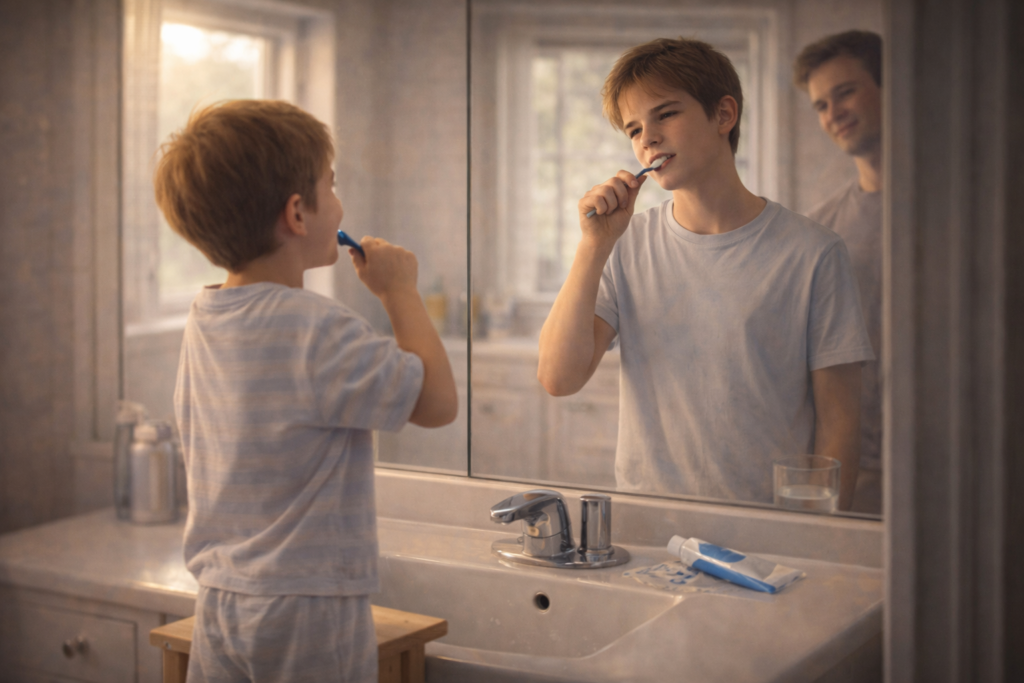
I didn’t think much about teeth when I was younger.
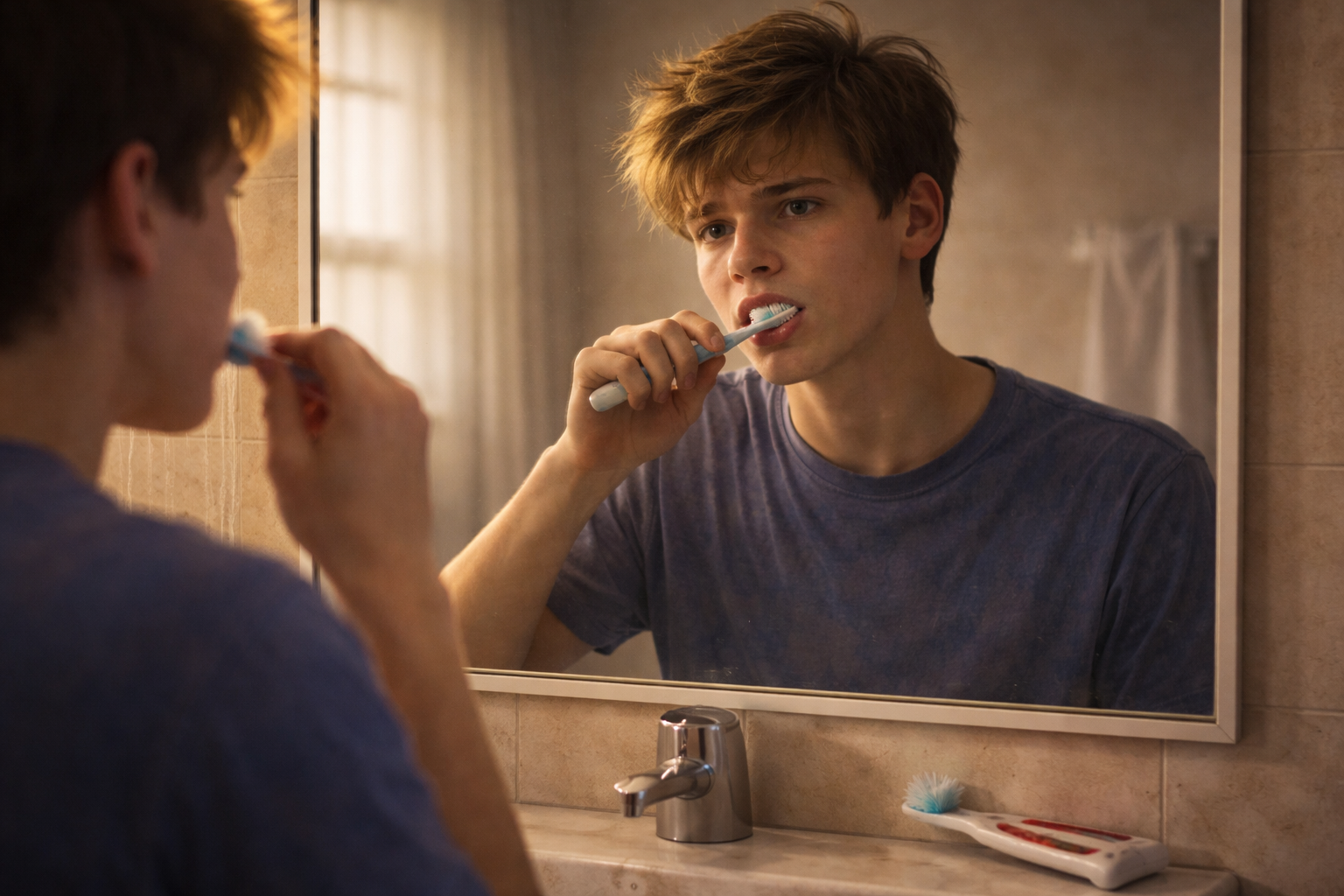
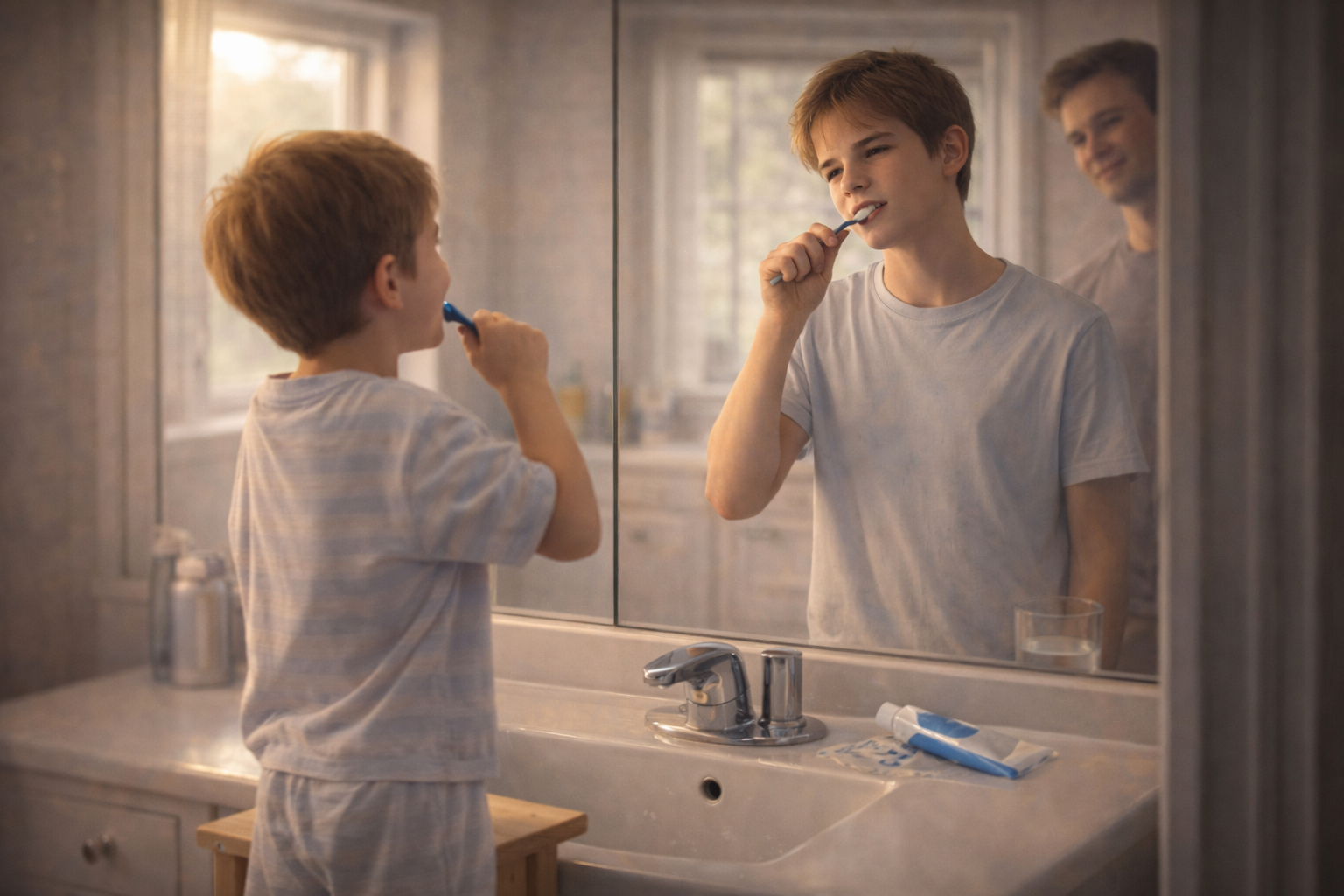
They were just… there. Something adults reminded me to brush before bed, something I rushed through so I could get back to whatever mattered more at the time—cartoons, homework, or scrolling on my phone as I got older. Brushing felt like a rule, not a reason.
It wasn’t until much later, sitting in yet another dental chair under that familiar bright light, that I began to understand something I wish someone had explained to me earlier:
Oral care doesn’t start when there’s a problem. It starts long before that—quietly, invisibly, in the habits we build when we don’t think they matter.
The First Lesson No One Really Explains
I remember a conversation with a dentist who asked me when I started brushing regularly. I gave a vague answer—something about childhood, probably when my parents made me do it.
She nodded, then said something that stuck with me:
“Most people think oral care starts when the first adult teeth come in. But really, it starts much earlier than that.”
At first, I didn’t quite get it. How could something so small—baby teeth that eventually fall out—matter that much?
But the more she explained, the more it made sense.
Baby teeth aren’t temporary in the way we think. They hold space for adult teeth, guide how your bite develops, and even influence how you speak and chew. Taking care of them isn’t just about the present—it shapes what comes next.
Small Habits, Big Impact
When you’re young, brushing your teeth feels like a tiny task. Two minutes, twice a day. It doesn’t feel important enough to affect your future.
But habits are strange like that. The smallest ones tend to grow roots the deepest.
If you learn early to brush properly, to be gentle, to be consistent, those actions become automatic. You don’t have to think about them later—they just become part of who you are.
On the other hand, if you grow up rushing through brushing or skipping it altogether, that pattern can follow you for years without you even noticing.
And by the time you do notice, it’s often because something has already gone wrong.
The Memory of Avoidance
There was a phase when I avoided dental checkups.
Not because anything hurt—but because I didn’t want to hear what I already suspected. That maybe I hadn’t been taking care of my teeth as well as I should have.
It’s funny how that works. We avoid small responsibilities, and over time, they turn into bigger problems that are harder to ignore.
If oral care becomes normal early on—just another part of daily life—there’s nothing to avoid. No guilt attached. No hesitation when it’s time for a checkup.
Just routine.
Learning Before It Becomes Urgent
One thing I’ve noticed is that people often learn about oral care only when something starts to hurt.
A sensitive tooth. Bleeding gums. A sudden awareness that something isn’t right.
But learning in response to pain is very different from learning in advance.
When you start early, you learn without pressure. You build understanding gradually—why brushing matters, how food affects your teeth, what healthy gums look like.
It becomes knowledge, not damage control.
And there’s a quiet confidence that comes with that. You’re not reacting—you’re preventing.
The Role of Parents (Even When We Don’t Realize It)
Looking back, I realize how much early oral care depends on the people around you.
Parents reminding you to brush. Buying the right toothbrush. Scheduling dental visits. Turning something boring into a routine you can’t skip.
At the time, it can feel annoying. Repetitive. Even unnecessary.
But those small reminders build a foundation.
Even the way adults talk about dental care matters. If it’s always framed as a chore or a punishment, that feeling sticks. If it’s treated as something normal, something worth paying attention to, it becomes easier to accept.
And eventually, to continue on your own.
It’s Not Just About Cavities
For a long time, I thought oral care was mainly about avoiding cavities.
But that’s only part of the story.
Healthy teeth and gums affect how you eat, how you speak, even how you feel about smiling. They influence confidence in ways that aren’t always obvious.
When oral care starts early, it supports all of that. It’s not just about preventing problems—it’s about making everyday life a little easier, a little more comfortable.
You don’t think twice about biting into food. You don’t hesitate before smiling in photos. You don’t deal with the distractions of discomfort.
It’s one of those things you only fully appreciate when it’s not there.
The Cost of Waiting
I’ve met people who started taking oral care seriously later in life.
And while it’s never too late to improve, they often say the same thing:
“I wish I had started earlier.”
Not because it’s impossible to fix problems—but because fixing them is harder than preventing them.
Time, money, discomfort—all of these become part of the process when issues build up over years.
Starting early doesn’t guarantee perfection. But it reduces the chances of those bigger challenges appearing in the first place.
Making It Feel Simple
One of the reasons people don’t take oral care seriously early on is because it feels overly complicated—or, on the flip side, too simple to matter.
In reality, it’s somewhere in between.
It’s simple enough to do every day. But important enough to do correctly.
You don’t need a complicated routine. Just consistency, a bit of attention, and a willingness to treat it as something worth doing well.
That balance is easier to build when you start young.
A Quiet Kind of Discipline
There’s something interesting about brushing your teeth.
No one really sees you do it. There’s no reward, no recognition, no immediate result.
It’s a quiet habit. A private one.
And maybe that’s why it matters so much.
Starting oral care early teaches a kind of discipline that isn’t about external pressure. It’s about taking care of something simply because it needs to be taken care of.
That mindset doesn’t stay limited to dental health—it carries over into other parts of life.
Looking Back, Looking Forward
If I could go back and explain one thing to my younger self, it wouldn’t be a lecture or a list of rules.
It would be something simpler:
“This matters more than you think—but it doesn’t have to feel like a big deal. Just pay a little attention.”
Because that’s really what early oral care is about.
Not perfection. Not fear. Not strict routines that feel impossible to follow.
Just small, consistent actions that quietly build something better over time.
The Takeaway That Stays With You
Why should oral care start early?
Because the earlier it starts, the more natural it becomes.
And the more natural it becomes, the less effort it takes to maintain.
It stops being something you have to remember—and becomes something you just do.
Like breathing. Like tying your shoes. Like all the habits that shape your life without asking for attention.
And maybe that’s the real goal.
Not to think about oral care all the time—but to build it into your life so well that you don’t have to.
Now, when I brush my teeth, it doesn’t feel like a chore anymore.
It feels like something I understand.
And that understanding… is what I wish had started earlier.