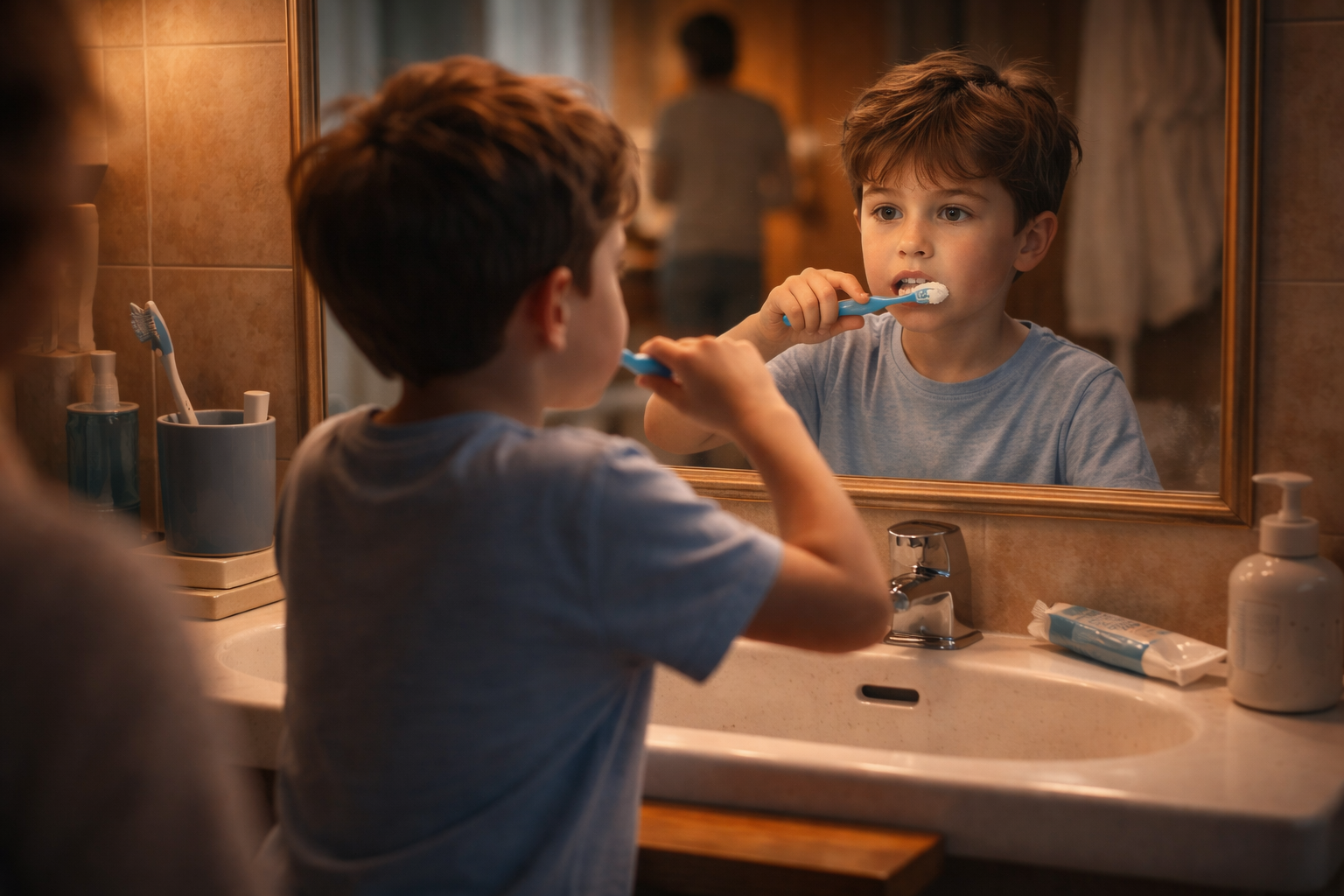
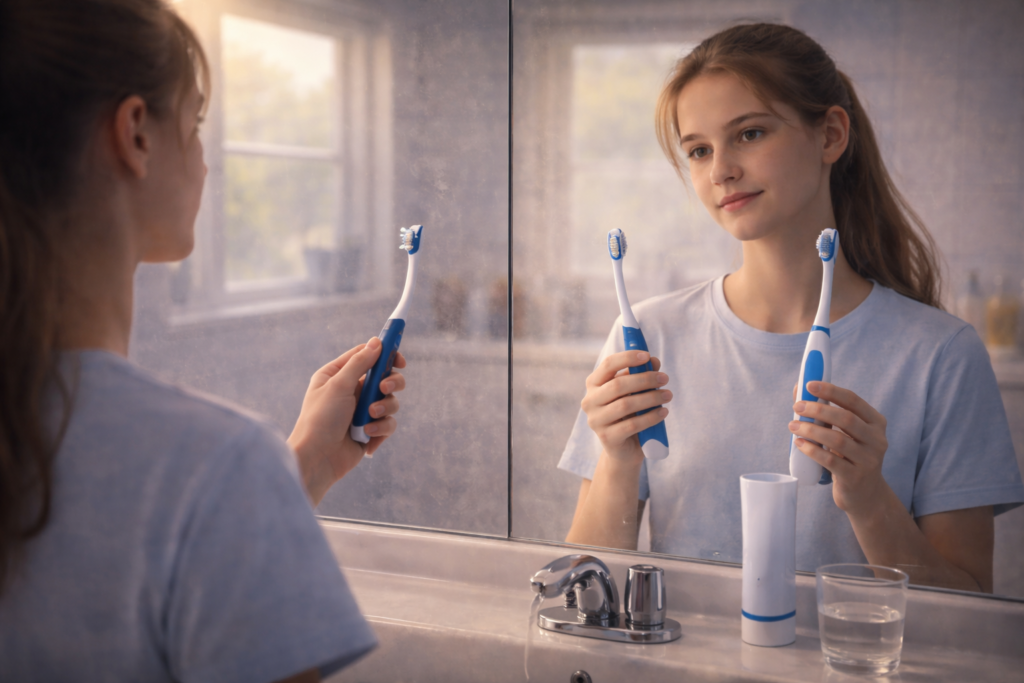
I didn’t think much about my toothbrush—at least, not beyond replacing it every few months and picking a color I liked. It sat there in the same cup by the sink, familiar and dependable, like a tool I had trusted my entire life without ever questioning.
Manual brushing was just… normal.
So when my dentist casually asked, “Have you ever considered switching to an electric toothbrush?” I shrugged.
“I mean, isn’t it basically the same thing?”
She didn’t answer right away. Instead, she leaned back slightly, the overhead light catching the edge of her glasses, and gave me a look that wasn’t judgmental—just curious.
“That depends,” she said. “How confident are you that you’re brushing every surface effectively, every single day?”
It was one of those questions that sounds simple but lingers longer than expected.
The Illusion of “Good Enough”
For years, I believed I was doing everything right. Twice a day, two minutes each time, decent toothpaste, no skipped nights unless I was truly exhausted.
By most standards, that’s considered good oral hygiene.
But what I didn’t realize was how much of brushing depends on consistency—not just in when you brush, but how you do it.
With a manual toothbrush, everything is in your control: the pressure, the speed, the angle, the coverage. And while that might sound like a good thing, it also leaves a lot of room for small mistakes.
Mistakes that don’t show up immediately.
Mistakes that build up quietly.
The Spots You Don’t Notice
Later that same appointment, my dentist showed me something I hadn’t seen before.
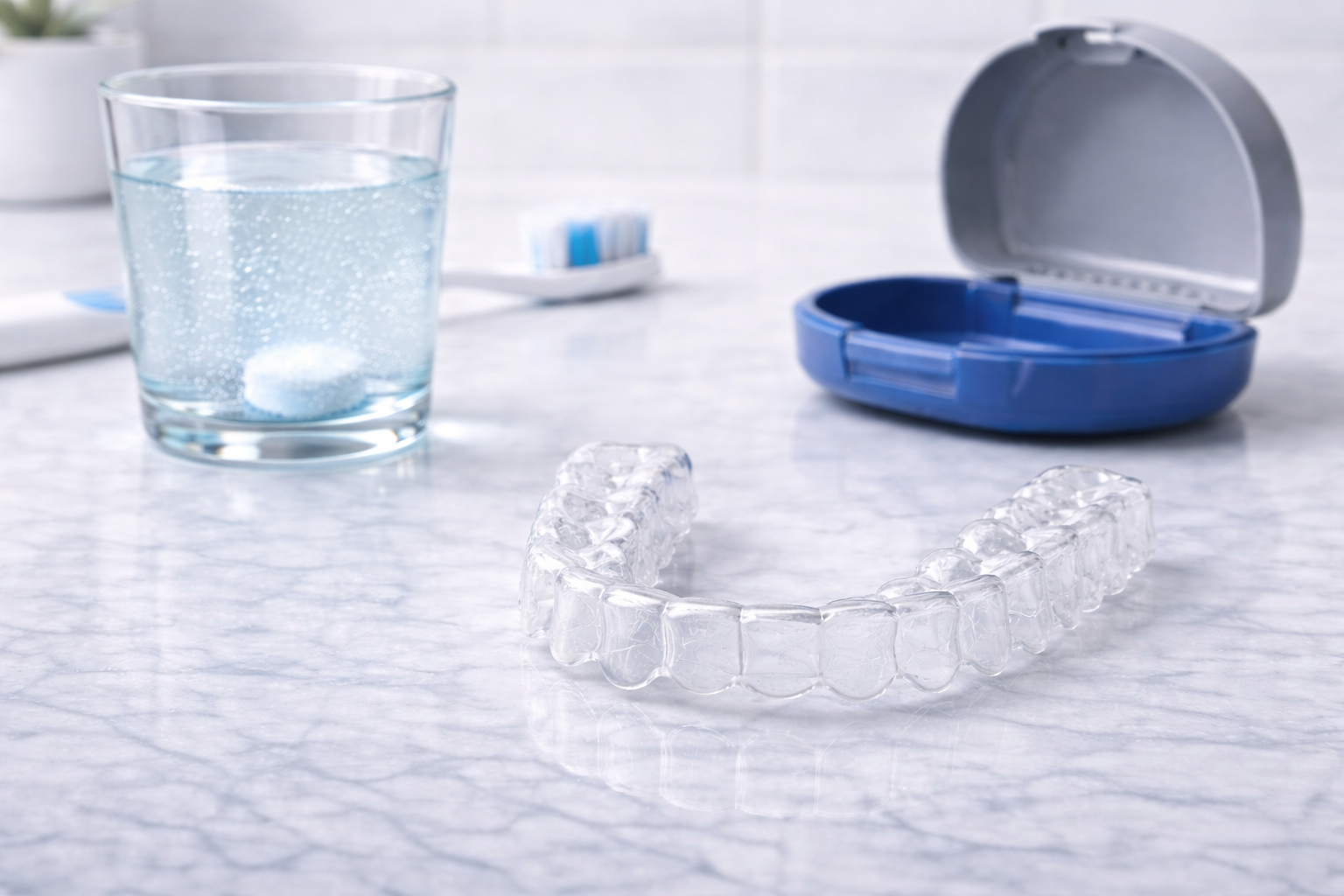
She used a disclosing tablet—a small chewable that temporarily stains plaque on your teeth. After rinsing, I looked in the mirror.
What I saw surprised me.
There were patches—faint, but clearly visible—along the gumline and between certain teeth. Areas I would have confidently said I brushed every day.
“That’s the thing,” she explained. “Most people don’t miss brushing entirely. They just miss specific spots—over and over again.”
And that’s where manual brushing can fall short.
It’s not about effort. It’s about precision.
Human Nature vs. Repetition
Brushing your teeth is repetitive by nature. The same motion, the same routine, twice a day.
And over time, repetition tends to become automatic.
You stop thinking about each stroke. You develop patterns—brushing certain areas first, spending more time on the front teeth (because you can see them), and rushing through the back.
It’s not laziness. It’s just how the brain works.
But the problem is, bacteria don’t care about your habits.
They settle in the places you consistently overlook.
Manual brushing relies heavily on your ability to stay mindful during a task that quickly becomes routine. And that’s harder than it sounds.
Pressure: Too Much or Too Little
Another thing I learned—something I had never consciously thought about—is how inconsistent brushing pressure can be.
Some days, you might brush too hard, especially if you’re in a hurry or feeling stressed. Other days, you might be too gentle, barely removing plaque.
With a manual toothbrush, there’s no feedback system. No indicator telling you, “That’s too much pressure,” or “You’re not doing enough here.”
You’re guessing.
And over time, those small inconsistencies can affect both your teeth and your gums.
Too much pressure can wear down enamel and irritate gums.
Too little pressure might leave plaque behind.
It’s a delicate balance—and not an easy one to maintain twice a day, every day, for years.
Time Feels Longer Than It Is
Have you ever thought you brushed for two minutes, only to realize it was probably closer to one?
I definitely have.
Time perception is strange, especially when you’re doing something routine. A quick glance at your phone, a wandering thought, and suddenly you’re done before you’ve really covered everything.
Electric toothbrushes often come with built-in timers, sometimes even pausing slightly every 30 seconds to signal when to switch areas.
Manual brushing doesn’t have that.
You have to keep track on your own—and most people don’t, at least not accurately.
Technique Isn’t Static
One of the more subtle points my dentist mentioned was this:
“Your brushing technique today might not be the same as it was a year ago.”
That caught me off guard.
But it made sense.
Maybe you changed your grip without noticing. Maybe you started brushing faster because your mornings got busier. Maybe you began skipping certain angles because they felt awkward.
With manual brushing, there’s no built-in consistency.
Everything depends on you maintaining the same level of care and technique over time.
And realistically, that’s hard.
Electric Doesn’t Mean Effortless—But It Helps
At this point, it might sound like manual brushing is ineffective.
It’s not.
You can achieve excellent oral hygiene with a manual toothbrush—if your technique is consistent, your timing is accurate, and your coverage is thorough.
But that’s a lot to ask from a daily habit that most people perform half-asleep or while thinking about something else.
Electric toothbrushes don’t replace good habits—but they support them.
They reduce the margin for error.
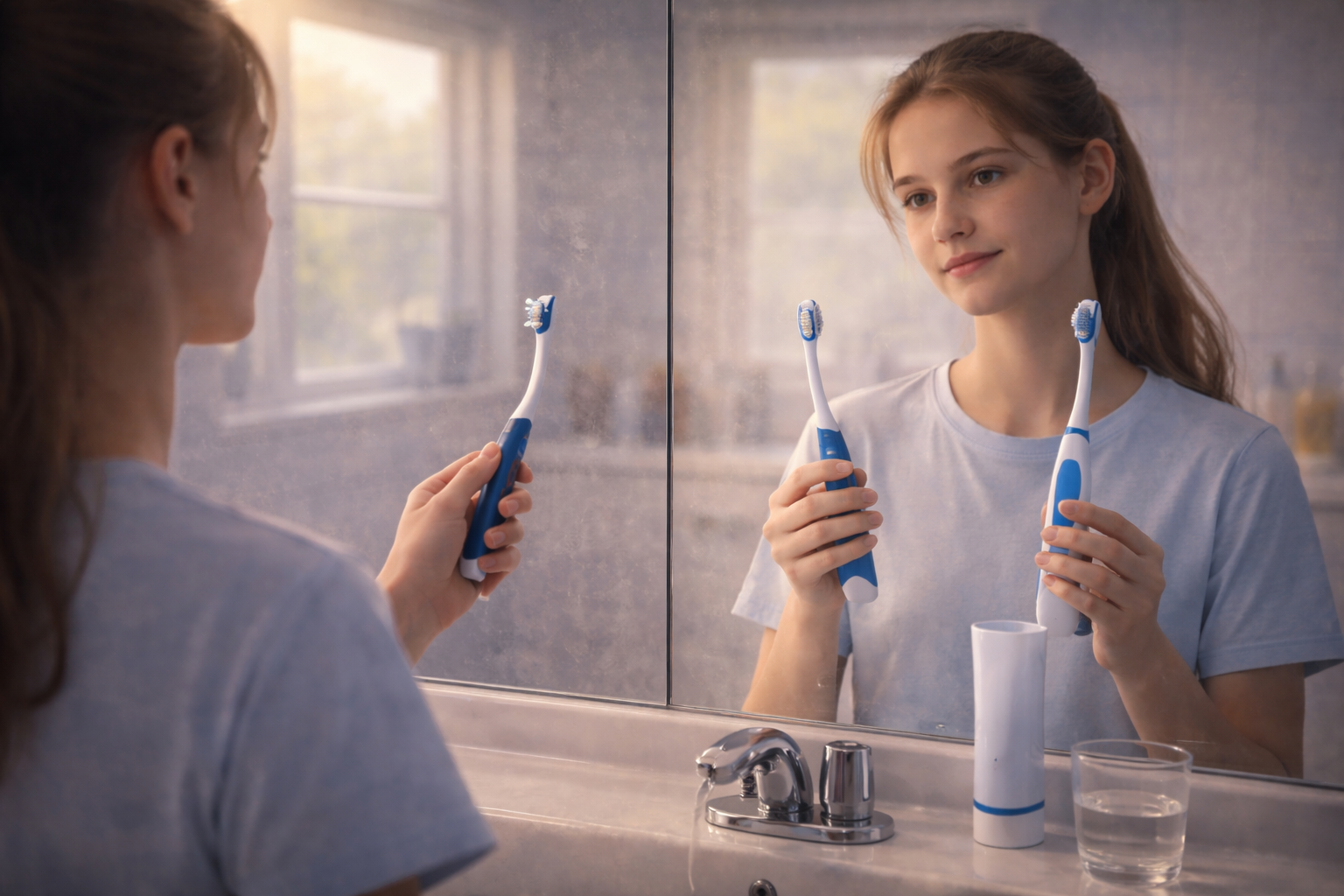
The brush head moves at a consistent speed. Some models use oscillating or sonic movements that can reach areas more effectively. Pressure sensors help prevent overbrushing. Timers keep you on track.
It’s not about doing something completely different—it’s about doing the same thing, more reliably.
The First Time I Switched
I didn’t switch immediately.
Like most people, I hesitated. It felt unnecessary, maybe even a bit excessive.
But eventually, curiosity got the better of me.
The first time I used an electric toothbrush, the sensation was… different. It felt almost too easy, like I wasn’t doing enough.
I had to remind myself not to scrub—just guide the brush slowly across each surface.
It forced me to slow down.
To pay attention.
And strangely, brushing started to feel less like a chore and more like a process.
Small Changes, Noticeable Results
After a few weeks, I began to notice subtle differences.
My teeth felt smoother—not just right after brushing, but throughout the day.
My gums seemed less sensitive.
Even my dental check-up felt different. Fewer comments about areas to “watch” or improve.
It wasn’t dramatic. No instant transformation.
But it was consistent.
And that’s what made the difference.
It’s Not About the Tool Alone
If there’s one thing I took away from this experience, it’s this:
No toothbrush—manual or electric—can compensate for complete neglect.
You still need to brush regularly. You still need to be mindful. You still need to care.
But the right tool can make that process easier to maintain over time.
Manual brushing asks more of you.
Electric brushing supports you.
And depending on your habits, your lifestyle, and your attention to detail, that support can matter more than you think.
Looking at It Differently
I used to see brushing as a simple task—something you either did or didn’t do.
Now, I see it as a skill.
Something that can be improved, adjusted, and refined.
Manual brushing isn’t bad. It’s just… limited by human consistency.
And maybe that’s the real point.
It’s not about saying one method is right and the other is wrong.
It’s about understanding where things can fall short—and choosing what helps you do better, day after day.
Sometimes, I still think back to that question:
“How confident are you that you’re brushing every surface effectively, every single day?”
I don’t think there’s a perfect answer.
But I do know this:
The more you understand your habits, the easier it becomes to improve them.
And sometimes, a small change—like switching your toothbrush—can quietly shift everything.