I didn’t think much of it the first time I noticed the blood.
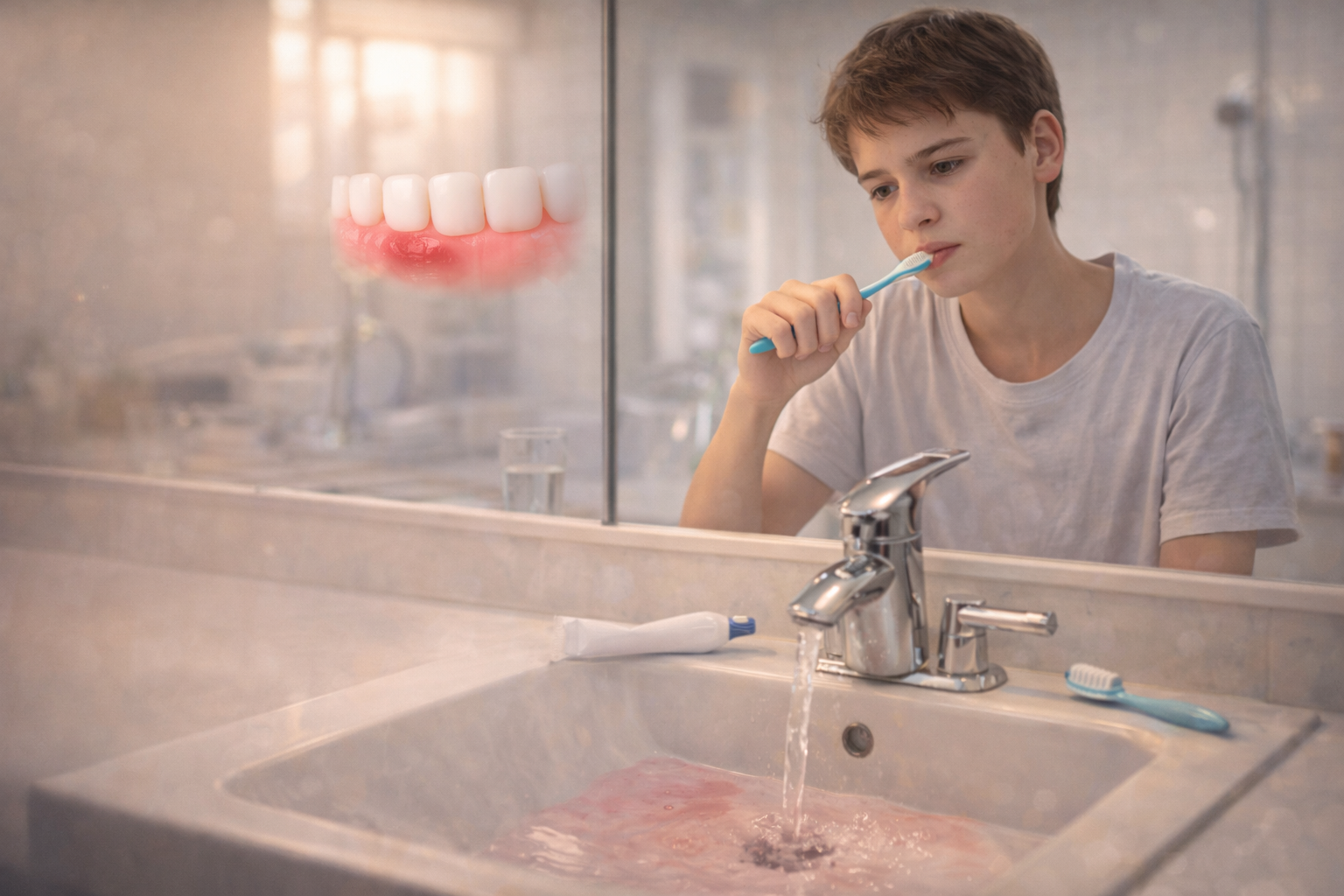
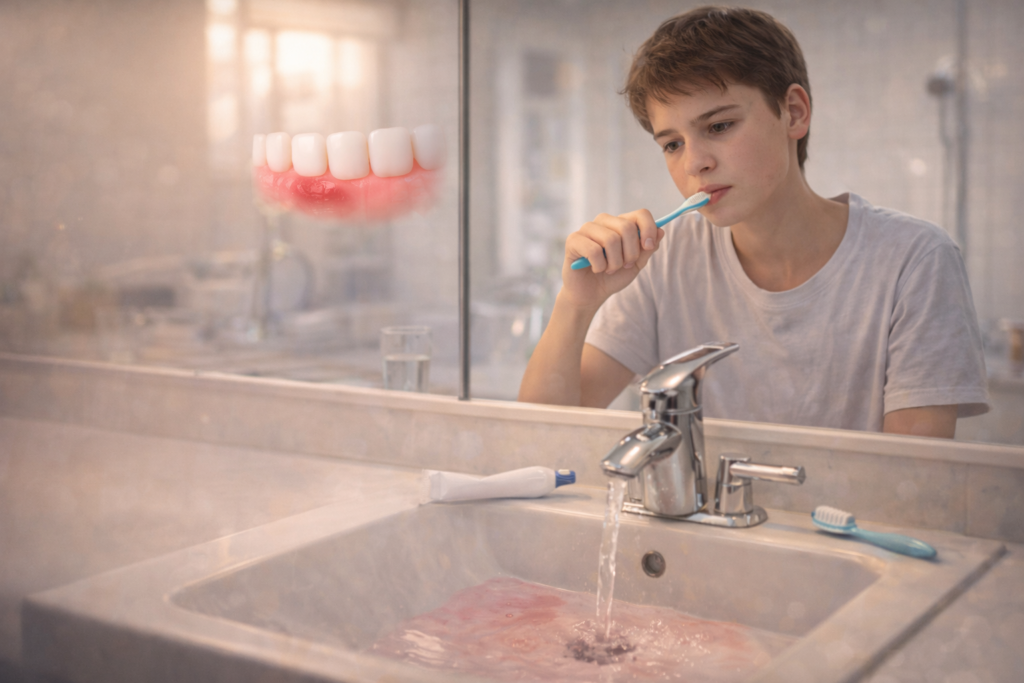
It was early, one of those rushed mornings where everything feels slightly out of place. I was brushing my teeth, half-awake, already thinking about the day ahead. When I leaned down to rinse, I saw a faint swirl of pink in the sink.
I paused for a second.
Then I shrugged it off.
“Probably brushed too hard,” I told myself.
It felt like a reasonable explanation. After all, I had always believed that brushing harder meant cleaning better. So I went on with my day, not realizing that small moment—barely noticeable, easy to ignore—was actually the beginning of something I didn’t understand yet.
The Signs We Learn to Ignore
Looking back, that wasn’t the only sign.
There were other small things. My gums sometimes felt a little sore, especially when I flossed after skipping a few days. Occasionally, my breath didn’t feel as fresh as I expected, even after brushing. Once or twice, my gums looked slightly darker, maybe a bit swollen—but it wasn’t dramatic, so I didn’t think it mattered.
That’s the tricky thing about gum disease.
It doesn’t arrive loudly.
There’s no sharp pain, no sudden emergency that forces you to pay attention. Instead, it shows up quietly, blending into your routine, disguising itself as something temporary or harmless.
And because of that, it’s incredibly easy to ignore.
Bleeding Isn’t “Normal”
When I finally mentioned the bleeding to my dentist during a routine visit, I expected a quick explanation and reassurance.
Instead, she stopped, looked at me through the mirror, and said gently:
“Your gums shouldn’t bleed when you brush.”
That sentence stuck with me.
We normalize things when they happen often enough. If your gums bleed every now and then, it starts to feel like part of the routine. But according to dentists, healthy gums don’t bleed from regular brushing or flossing.
Bleeding is usually one of the earliest signs of gum inflammation—also known as gingivitis.
And gingivitis, if ignored, can turn into something much more serious.
When Gums Start to Change
After that visit, I started paying closer attention.
Not obsessively—but enough to notice things I had overlooked before.
My gums weren’t as firm as I thought. Some areas looked slightly puffier than others. When I pressed gently with my tongue, they felt softer, almost tender.
There was also a subtle change in color.
Healthy gums are usually a light pink. Mine, in certain spots, had shifted to a deeper red.
It wasn’t dramatic. If you weren’t looking for it, you probably wouldn’t notice.
But once you do notice, it’s hard to ignore.
The Role of Plaque (and Why It Matters More Than You Think)
My dentist explained it in a way that finally made sense.
Every day, a thin layer of bacteria—plaque—forms on your teeth. If you brush and floss properly, you remove most of it. But if you miss certain areas, especially along the gumline, plaque starts to build up.
Over time, that buildup irritates your gums.
They become inflamed. They swell. They bleed more easily.
And if the plaque hardens into tartar, it becomes even harder to remove without professional cleaning.
What surprised me most wasn’t that plaque causes gum disease—it was how little it takes.
You don’t need to completely neglect your teeth. Even small inconsistencies in brushing or flossing can create the perfect conditions for gum problems to begin.
Bad Breath That Doesn’t Go Away
This was the part I hadn’t connected at all.
I always thought bad breath was just about food—garlic, coffee, or not brushing long enough.
But persistent bad breath can actually be one of the early signs of gum disease.
Bacteria trapped along the gumline release odors. And no matter how much gum you chew or mouthwash you use, it doesn’t fully go away—because the source is still there.
That realization made me rethink a lot of things.
Sometimes, what we treat as a surface-level issue is actually a deeper problem trying to get our attention.
Receding Gums: The Slow Shift
One afternoon, while brushing more carefully than usual, I noticed something subtle.
My teeth looked… slightly longer.
At first, I thought I was imagining it. But when I compared it mentally to how my smile used to look, there was a difference.
My gums had started to recede.
Gum recession doesn’t happen overnight. It’s gradual, almost unnoticeable at first. But as gums pull away from the teeth, they expose more of the tooth surface—and sometimes even the root.
This can lead to sensitivity, especially when eating something cold or sweet.
And once again, it’s easy to dismiss.
“Maybe my teeth have always been like this,” I thought.
But deep down, I knew they hadn’t.
Sensitivity That Feels “Random”
The sensitivity started quietly.
A sip of cold water would sometimes trigger a quick, sharp feeling. Not painful enough to worry about—but noticeable.
Then it happened with ice cream. Then occasionally with hot drinks.
It felt inconsistent, which made it easier to ignore.
But sensitivity can be linked to gum issues, especially when gums begin to recede and expose more vulnerable parts of the tooth.
It’s one of those signals your body sends—subtle, intermittent, but meaningful.
When It Becomes More Than Gingivitis
Here’s the part my dentist didn’t sugarcoat.
If gingivitis is caught early, it’s reversible. With proper care—better brushing, consistent flossing, and professional cleanings—your gums can return to a healthy state.
But if it’s ignored, it can progress into periodontitis.
And that’s a different story.
At that stage, the infection can affect the structures supporting your teeth. Gums pull away, pockets form, and bone loss can occur over time.
It’s not something that happens overnight—but it also doesn’t fix itself.
That was the moment things felt real.
Not scary—but serious enough to take action.
Changing Small Habits
I didn’t completely overhaul my routine overnight.
Instead, I started small.
I paid more attention to how I brushed—slowing down, focusing on the gumline instead of rushing through it. I started flossing more consistently, even on days when I felt tired.
I switched to a softer toothbrush after realizing I’d been brushing too hard for years.
And most importantly, I stopped ignoring the signs.
That shift—from passive habit to active awareness—made all the difference.
What Early Signs Are Really Telling You
If there’s one thing I’ve learned from this experience, it’s this:
Early signs aren’t there to scare you—they’re there to give you a chance to act.
Bleeding gums, slight swelling, bad breath, sensitivity—these aren’t random inconveniences. They’re signals.
And the earlier you notice them, the easier they are to address.
The problem is, we’re used to waiting for things to hurt before we take them seriously.
But gum disease doesn’t work that way.
Walking Away With Awareness
Now, when I brush my teeth, I notice more.
Not in an anxious way—but in a mindful one.
I notice how my gums look. How they feel. Whether anything has changed.
It only takes a few extra seconds, but it’s changed how I think about oral health entirely.
Because it’s not just about having clean teeth.
It’s about paying attention to the small things—before they become big ones.
A Quiet Reminder
If you’ve ever seen a bit of pink in the sink and ignored it, you’re not alone.
Most people do.
But maybe next time, you’ll pause for a second longer.
Not to panic—but to notice.
Because sometimes, the earliest signs are the most important ones.
And listening to them might be the simplest way to protect your smile for years to come.